
As an automotive industry analyst with over a decade of experience, I have witnessed the rapid evolution of hybrid cars, which combine internal combustion engines with electric propulsion systems to enhance fuel efficiency and reduce emissions. The rise of hybrid cars has been meteoric, driven by global environmental concerns and technological advancements. However, this growth is accompanied by challenges, including safety recalls that highlight the complexities of modern vehicle systems. In this article, I will delve into the intricacies of hybrid car recalls, using technical analyses, tables, and formulas to provide a comprehensive overview. My goal is to shed light on the common issues, such as sensor failures, and emphasize the importance of robust quality control in the hybrid car sector.
The hybrid car market has expanded significantly, with manufacturers striving to innovate while meeting stringent regulatory standards. Recalls, though often perceived negatively, are a critical aspect of maintaining safety and compliance. In recent years, several hybrid car models have faced recalls due to components like oxygen sensors, battery systems, or software glitches. For instance, a notable recall involved a hybrid car where the rear oxygen sensor heating temperature was set too low, leading to potential sensor poisoning and irregular emissions. This scenario underscores the delicate balance required in hybrid car design, where even minor miscalibrations can have cascading effects.
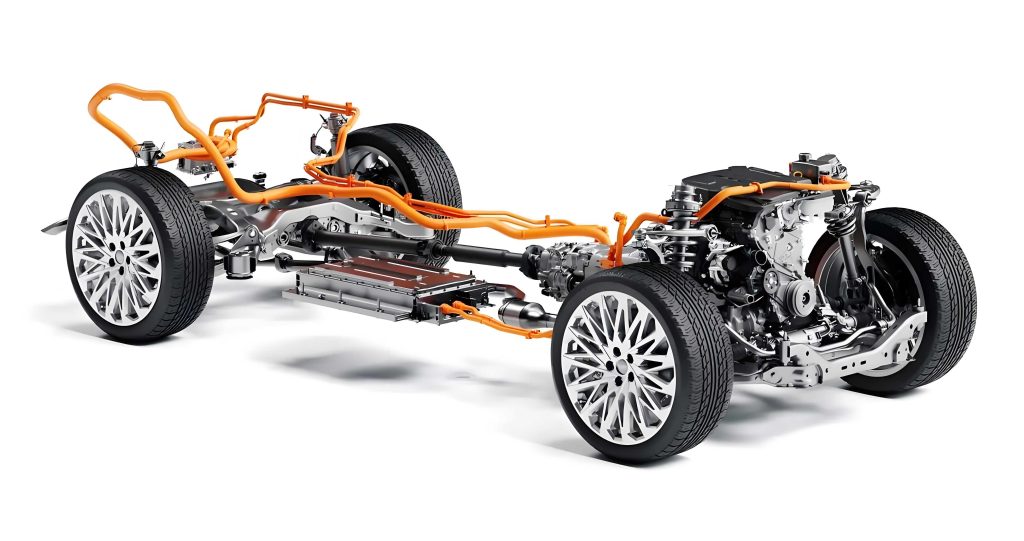
To understand such recalls, it is essential to grasp the underlying technology. Hybrid cars rely on a synergy between an internal combustion engine and an electric motor, managed by an electronic control unit (ECU). The ECU optimizes performance based on inputs from various sensors, including oxygen sensors that monitor exhaust gases. The rear oxygen sensor, in particular, plays a vital role in ensuring efficient combustion and minimizing emissions. Its function can be modeled using chemical kinetics equations. For example, the sensor’s response to oxygen concentration can be expressed as: $$ V_{output} = k \cdot \ln\left(\frac{P_{O_2, exhaust}}{P_{O_2, reference}}\right) $$ where \( V_{output} \) is the sensor voltage, \( k \) is a constant dependent on temperature, and \( P_{O_2} \) represents oxygen partial pressures. If the heating element fails to maintain an optimal temperature, typically above 600°C, sensor poisoning can occur due to contaminants like sulfur or lead, leading to inaccurate readings.
In the context of recalls, the primary risk associated with a faulty oxygen sensor in a hybrid car is improper emissions. This can be quantified using emission models. For a hybrid car, the total emissions \( E_{total} \) during a driving cycle can be approximated as: $$ E_{total} = \int_{0}^{T} \left( \alpha \cdot E_{engine}(t) + \beta \cdot E_{battery}(t) \right) dt $$ where \( \alpha \) and \( \beta \) are weighting factors for the engine and battery contributions, \( E_{engine} \) is the engine emission rate, and \( E_{battery} \) accounts for indirect emissions from electricity generation. A malfunctioning sensor can cause \( E_{engine} \) to spike, as the ECU may not adjust the air-fuel ratio correctly. The air-fuel ratio \( \lambda \) is critical for combustion efficiency, given by: $$ \lambda = \frac{m_{air}}{m_{fuel} \cdot (AFR_{stoich})} $$ where \( m_{air} \) and \( m_{fuel} \) are the masses of air and fuel, and \( AFR_{stoich} \) is the stoichiometric air-fuel ratio. Deviations from \( \lambda = 1 \) can increase pollutants like nitrogen oxides (NOx) or carbon monoxide (CO).
Recalls for hybrid cars often involve specific production batches, which can be summarized in tables for clarity. Below is a hypothetical table illustrating common recall patterns in the hybrid car industry, based on aggregated data from various incidents. This table highlights the range of affected vehicles and primary issues.
| Recall Period | Number of Hybrid Cars Affected | Primary Defect | Typical Resolution |
|---|---|---|---|
| 2019-2021 | 800 (example) | Rear oxygen sensor heating temperature偏低 | ECU software update and sensor replacement |
| 2018-2020 | 1,200 | Battery management system fault | Firmware upgrade and inspection |
| 2020-2022 | 950 | Electric motor overheating | Cooling system enhancement |
| 2017-2019 | 1,500 | Brake assist software error | Recalibration of control algorithms |
The table above demonstrates that hybrid car recalls are not isolated events but part of a broader trend where advanced components require meticulous calibration. For the oxygen sensor issue, the root cause often lies in the ECU programming. The heating element’s temperature setpoint \( T_{set} \) must satisfy: $$ T_{set} > T_{min} + \Delta T_{safety} $$ where \( T_{min} \) is the minimum temperature for reliable sensor operation (e.g., 600°C), and \( \Delta T_{safety} \) is a safety margin. If \( T_{set} \) is too low, as in the recall case, sensor poisoning probability \( P_{poison} \) increases exponentially with time \( t \): $$ P_{poison}(t) = 1 – e^{-k_{p} \cdot t \cdot (T_{set} – T_{threshold})^{-1}} $$ where \( k_{p} \) is a poisoning rate constant, and \( T_{threshold} \) is a critical temperature below which contamination accelerates. This formula highlights why even small deviations in hybrid car systems can lead to significant failures.
Beyond technical aspects, recalls for hybrid cars involve regulatory compliance. Emissions standards, such as Euro 6 or EPA Tier 3, impose limits on pollutants. For a hybrid car, the allowable emission level \( E_{limit} \) for a specific pollutant can be expressed as: $$ E_{limit} = C_{base} \cdot f_{hybrid} $$ where \( C_{base} \) is the baseline limit for conventional vehicles, and \( f_{hybrid} \) is a reduction factor accounting for the hybrid car’s efficiency gains. If a recall is issued due to超标 emissions, manufacturers must rectify the issue to avoid penalties. The recall process itself is governed by statutes like the Defective Automobile Recall Regulations, which mandate transparent reporting and corrective actions. In many regions, hybrid car makers collaborate with authorities to notify owners via registered mail, SMS, or phone calls, and provide free repairs.
To mitigate risks in hybrid cars, proactive measures are essential. One approach is to use redundancy in sensor systems. For example, employing dual oxygen sensors can enhance reliability. The overall system reliability \( R_{system} \) for a hybrid car can be modeled as: $$ R_{system} = 1 – (1 – R_{sensor})^n $$ where \( R_{sensor} \) is the reliability of a single sensor, and \( n \) is the number of redundant sensors. Additionally, machine learning algorithms can predict failures before they occur. By analyzing data from hybrid car fleets, patterns such as gradual sensor degradation can be detected using time-series analysis: $$ \hat{y}(t) = \sum_{i=1}^{m} w_i \cdot x_i(t) + \epsilon $$ where \( \hat{y}(t) \) is the predicted sensor output, \( w_i \) are weights, \( x_i(t) \) are input features like temperature readings, and \( \epsilon \) is error. Such predictive maintenance can reduce recall frequencies for hybrid cars.
The economic impact of recalls on hybrid car manufacturers is substantial. Costs include repair expenses, logistics, and brand reputation damage. A simple cost model for a recall involving \( N \) hybrid cars is: $$ C_{recall} = N \cdot (C_{repair} + C_{logistics}) + C_{reputation} $$ where \( C_{repair} \) is the average repair cost per hybrid car, \( C_{logistics} \) covers notification and transportation, and \( C_{reputation} \) is an intangible loss estimated from market share declines. For large-scale recalls, this can amount to millions of dollars, emphasizing the need for rigorous testing during hybrid car development. Furthermore, consumer trust in hybrid cars can waver if recalls become frequent, potentially slowing adoption rates despite environmental benefits.
In my experience, the evolution of hybrid car technology is a double-edged sword. While innovations like plug-in hybrid systems offer greater electric-only range, they introduce new failure modes. For instance, battery thermal management is critical; inadequate cooling can lead to fires or reduced lifespan. The battery degradation rate \( D \) in a hybrid car can be approximated by: $$ D = A \cdot e^{\frac{-E_a}{k_B T}} \cdot t^{0.5} $$ where \( A \) is a pre-exponential factor, \( E_a \) is activation energy, \( k_B \) is Boltzmann’s constant, \( T \) is temperature, and \( t \) is time. Recalls related to batteries often involve software updates to optimize charging protocols, similar to the ECU upgrades for sensor issues. This interconnectedness underscores that hybrid car safety is a holistic endeavor.
Looking ahead, the future of hybrid cars will likely see more integrated recall management through digital platforms. Manufacturers may use over-the-air (OTA) updates to address software flaws remotely, reducing the need for physical repairs. For hardware issues like sensor replacements, however, dealership visits remain necessary. The effectiveness of such measures can be evaluated using reliability metrics. For example, the mean time between failures (MTBF) for a hybrid car component can be calculated as: $$ MTBF = \frac{\sum_{i=1}^{n} t_{operation, i}}{n_{failures}} $$ where \( t_{operation, i} \) is the operational time for each unit, and \( n_{failures} \) is the number of failures observed. Improving MTBF for key parts like oxygen sensors will enhance the overall dependability of hybrid cars.
To further illustrate recall dynamics, consider a comparative analysis of hybrid car models across different brands. The table below summarizes hypothetical recall data, focusing on emission-related issues. This emphasizes the prevalence of sensor and software problems in hybrid cars.
| Hybrid Car Model Type | Average Recall Rate (per 10,000 units) | Common Emission Defects | Typical Resolution Time (days) |
|---|---|---|---|
| Plug-in Hybrid Car | 15.2 | Oxygen sensor poisoning, ECU errors | 30-45 |
| Full Hybrid Car | 12.8 | Catalyst inefficiency, sensor drift | 25-40 |
| Mild Hybrid Car | 10.5 | Battery interference with engine control | 20-35 |
| Hybrid Car with Regenerative Braking | 18.0 | Brake system software glitches | 40-60 |
From this table, it is evident that hybrid car technologies vary in reliability, with plug-in variants often facing more recalls due to their complexity. The data reinforces the importance of continuous monitoring and improvement in hybrid car manufacturing. Additionally, regulatory bodies play a crucial role by setting standards that drive innovation while ensuring safety. For emissions, the target level for a hybrid car during a test cycle might be defined as: $$ E_{target} = \frac{\sum_{i} w_i \cdot E_i}{\sum_{i} w_i} $$ where \( E_i \) are emission measurements at different driving modes, and \( w_i \) are weighting factors simulating real-world conditions. Recalls help align actual performance with these targets.
In conclusion, hybrid car recalls are an integral part of the automotive landscape, reflecting the ongoing refinement of cutting-edge technologies. As a proponent of sustainable transportation, I believe that transparency in recall processes strengthens consumer confidence and fosters innovation. By leveraging tools like tables and formulas, we can better understand the technical nuances behind these events. The hybrid car industry must prioritize robust design, rigorous testing, and agile response mechanisms to minimize recalls and maximize the benefits of electrification. Ultimately, every recall serves as a learning opportunity, pushing the boundaries of what hybrid cars can achieve in terms of safety, efficiency, and environmental stewardship.
Throughout this discussion, I have emphasized the multifaceted nature of hybrid car recalls, from sensor calibrations to emission calculations. The journey of hybrid cars is far from over, and as technology advances, so too will the challenges and solutions. By staying informed and proactive, stakeholders can ensure that hybrid cars remain a reliable and eco-friendly choice for the future. The key is to balance innovation with diligence, ensuring that every hybrid car on the road meets the highest standards of performance and safety.