
In today’s rapidly evolving automotive industry, the shift toward new energy vehicles (NEVs) represents a transformative era driven by the urgent need to address climate change and reduce greenhouse gas emissions. As a key player in this transition, I believe that higher vocational education institutions must adapt to cultivate skilled professionals capable of mastering the complexities of automotive electronic control systems. This article explores the challenges and solutions in training such talents, with a focus on the critical role of the motor control unit and related technologies. Through first-person insights, I will delve into the changing demands, current shortcomings, and strategic improvements necessary to align education with industry advancements.
The global commitment to carbon peak and neutrality has accelerated the adoption of NEVs, which rely heavily on sophisticated electronic control systems. Unlike traditional internal combustion engine vehicles, NEVs integrate advanced components like battery management systems, energy recovery mechanisms, and most importantly, the motor control unit, which governs the electric drive system. This shift necessitates a reevaluation of educational frameworks in higher vocational colleges, as they are primary sources of technical personnel for the automotive sector. I will analyze how curricula, faculty expertise, and practical training must evolve to meet these new demands, incorporating tables and formulas to summarize key points and enhance understanding.
Introduction to the New Energy Vehicle Revolution
The automotive industry is undergoing a profound transformation from fossil fuel-dependent vehicles to cleaner, smarter electric alternatives. This change is propelled by environmental concerns, with transportation accounting for a significant portion of global CO₂ emissions. In response, countries worldwide have pledged to achieve carbon reduction targets, making NEVs a cornerstone of sustainable development. From my perspective as an educator, this transition highlights the growing importance of electronic control systems, where the motor control unit serves as the brain of the vehicle, optimizing performance and efficiency. Higher vocational education must therefore prioritize the cultivation of professionals who can design, maintain, and innovate these systems to support the NEV ecosystem.
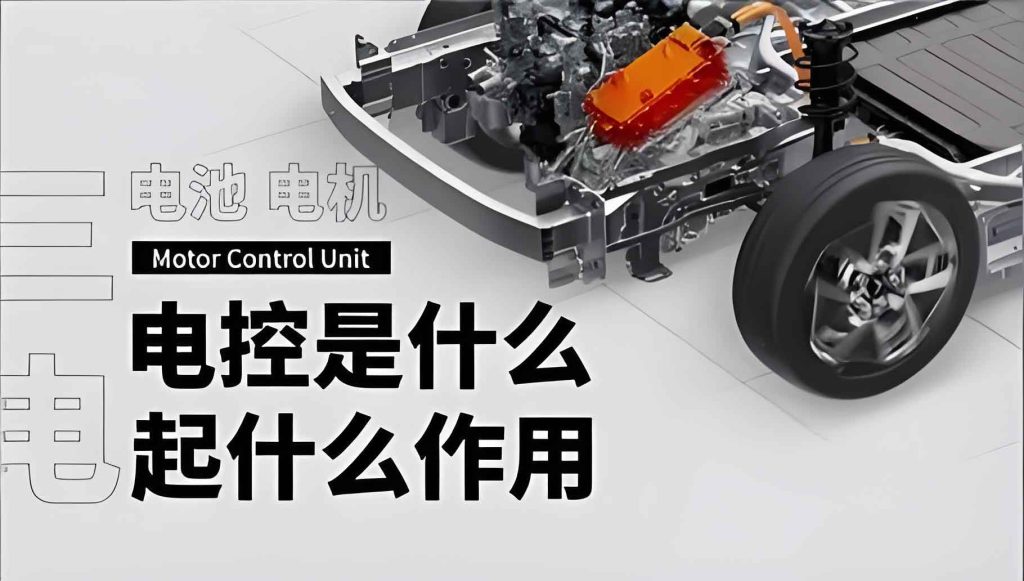
Electronic control systems in NEVs are far more complex than those in traditional vehicles. They encompass not only basic functions like stability control but also intricate processes such as battery management, regenerative braking, and motor control unit operations. The integration of software and hardware has become paramount, enabling enhanced functionality and personalized experiences. For instance, the motor control unit regulates torque and speed in electric motors, requiring precise algorithms and real-time adjustments. This complexity underscores the need for educational programs that bridge theory and practice, ensuring graduates are equipped with relevant skills.
To illustrate the technological core, consider the fundamental formula for electric motor torque, which is central to the motor control unit’s function: $$T = k_t \cdot I$$ where \(T\) represents torque, \(k_t\) is the motor torque constant, and \(I\) is the current. This equation highlights how control systems manipulate electrical inputs to achieve desired mechanical outputs. Similarly, energy management in batteries can be expressed as: $$E = \frac{1}{2} C V^2$$ where \(E\) is energy, \(C\) is capacitance, and \(V\) is voltage. These formulas exemplify the technical depth required in NEV education, emphasizing the motor control unit’s role in optimizing energy conversion.
Changing Demands for Electronic Control System Professionals
The shift to NEVs has drastically altered the skill sets required for electronic control system professionals. Traditional vehicles focused on internal combustion engines and mechanical transmissions, whereas NEVs rely on electric powertrains, battery systems, and advanced electronics. As I observe the industry, the demand now centers on expertise in areas like motor control unit programming, energy efficiency optimization, and integrated software-hardware development. Below is a table summarizing the key differences in skill requirements between traditional and NEV-focused roles.
| Aspect | Traditional Vehicles | New Energy Vehicles |
|---|---|---|
| Core Technology | Engine management, mechanical systems | Motor control unit, battery management, electric drive |
| Control Systems | Relatively simple, hardware-dominated | Complex, software-driven with hardware integration |
| Key Skills | Combustion dynamics, transmission control | Electric motor control, energy recovery, algorithm design |
| Industry Focus | Performance tuning, emission reduction | Range optimization, smart connectivity, sustainability |
From this comparison, it is evident that professionals must now master the motor control unit and its interactions with other systems. For example, the motor control unit coordinates with battery management to ensure efficient power distribution, a process governed by equations like: $$P_{out} = \eta \cdot P_{in}$$ where \(P_{out}\) is output power, \(P_{in}\) is input power, and \(\eta\) is efficiency. This requires a deep understanding of both electrical engineering and computer science, areas that higher vocational education must emphasize through updated curricula.
Moreover, the rise of autonomous driving and connectivity adds layers of complexity, where the motor control unit interfaces with sensors and communication networks. I have noted that industry reports predict a 30% annual growth in demand for specialists proficient in these domains, highlighting the urgency for educational reform. To meet this, colleges should introduce courses on real-time control systems, emphasizing the motor control unit as a pivotal component. For instance, a control loop for speed regulation can be modeled as: $$G(s) = \frac{K}{s + a}$$ where \(G(s)\) is the transfer function, \(K\) is gain, and \(a\) is a constant. Such mathematical foundations are essential for designing robust electronic control systems in NEVs.
Problems in Cultivating Higher Vocational Automotive Electronic Control Talents
Despite the growing need for skilled professionals, higher vocational institutions face several challenges in training students for NEV electronic control systems. Based on my experience, these issues primarily revolve around outdated curricula, insufficient faculty expertise, and limited practical opportunities. Each problem hinders the development of competencies related to the motor control unit and other critical technologies.
Curriculum Lag
Many vocational colleges struggle to keep pace with rapid technological advancements in the NEV sector. Curricula often remain rooted in traditional automotive electronics, neglecting emerging topics like motor control unit optimization or battery thermal management. This lag creates a gap between academic knowledge and industry requirements, leaving graduates unprepared for real-world challenges. For example, while students might learn basic circuit theory, they may lack exposure to advanced motor control unit algorithms used in modern electric vehicles. To quantify this, consider the following table outlining common curricular gaps.
| Traditional Course Content | Missing NEV-Relevant Topics | Impact on Skill Development |
|---|---|---|
| Internal combustion engine controls | Motor control unit programming and diagnostics | Limits ability to work on electric powertrains |
| Basic electrical systems | High-voltage battery management and safety | Reduces proficiency in NEV energy systems |
| Conventional sensor networks | IoT integration and vehicle-to-grid communication | Hinders adaptation to smart mobility trends |
This lag is exacerbated by slow textbook updates and a lack of industry collaboration. As I advocate for change, incorporating formulas like those for motor efficiency—$$\eta_m = \frac{P_{mech}}{P_{elec}}$$ where \(P_{mech}\) is mechanical power and \(P_{elec}\) is electrical power—can bridge theoretical and practical learning, but only if curricula are timely revised.
Inadequate Faculty Expertise
Another critical issue is the shortage of instructors with hands-on experience in NEV technologies. Many teachers in vocational colleges have backgrounds in traditional automotive engineering and may not be familiar with the latest developments in motor control unit design or electric drive systems. This knowledge gap translates into superficial teaching, where students miss out on nuanced insights into electronic control systems. From my interactions, I have seen that faculty often rely on outdated materials, failing to cover cutting-edge tools like model-based design for motor control unit development.
To emphasize this point, consider the formula for a PID controller commonly used in motor control units: $$u(t) = K_p e(t) + K_i \int_0^t e(\tau) d\tau + K_d \frac{de(t)}{dt}$$ where \(u(t)\) is the control output, \(e(t)\) is the error, and \(K_p\), \(K_i\), \(K_d\) are gains. Without faculty who can explain such concepts in the context of NEVs, students may struggle to apply them in practice. Moreover, the rapid evolution of technology necessitates continuous professional development for teachers, which is often overlooked due to resource constraints.
Lack of Practical Training and Internships
Practical experience is vital for mastering electronic control systems, yet many vocational colleges offer limited access to laboratories, workshops, or industry internships. Students often graduate without having handled a real motor control unit or performed diagnostic procedures on NEV components. This deficiency undermines their ability to troubleshoot and innovate in the workplace. In my view, the absence of hands-on training is a major barrier to producing job-ready graduates, especially as the motor control unit becomes more integral to vehicle performance.
For instance, a simple experiment involving motor control unit calibration might involve measuring torque response using: $$\tau = J \frac{d\omega}{dt}$$ where \(\tau\) is torque, \(J\) is moment of inertia, and \(\omega\) is angular velocity. Without lab access, students cannot validate such theories, limiting their practical skills. The table below summarizes the consequences of inadequate practical training.
| Training Deficiency | Student Impact | Long-Term Career Effect |
|---|---|---|
| Limited lab work on motor control units | Poor understanding of real-time control applications | Reduced employability in NEV companies |
| Few industry internships | Lack of exposure to workplace challenges and tools | Slower professional growth and adaptation |
| Minimal project-based learning | Weak problem-solving and teamwork skills | Difficulty in handling complex electronic control systems |
Addressing these problems requires a multifaceted approach, as I will discuss in the following sections, with a focus on enhancing the motor control unit expertise through updated methods.
Solutions for Improving Talent Cultivation
To overcome the challenges in higher vocational education for automotive electronic control, I propose actionable solutions centered on curriculum modernization, faculty development, and industry partnerships. These strategies aim to align training with the demands of the NEV era, ensuring graduates are proficient in technologies like the motor control unit.
Timely Curriculum Updates
Curricula must be dynamically revised to incorporate the latest advancements in NEV electronic control systems. This involves collaborating with industry experts to identify emerging trends, such as advancements in motor control unit algorithms or battery management software. From my perspective, a well-structured curriculum should blend foundational knowledge with specialized modules on NEV-specific topics. Below is a proposed course framework for an automotive electronic control program, designed to emphasize the motor control unit and related areas.
| Course Category | Course Title | Key Content | Relevance to Motor Control Unit |
|---|---|---|---|
| Foundation | NEV Fundamentals and Theory | Vehicle architecture, electric powertrain basics | Introduces the role of motor control unit in overall system |
| Core | Automotive Electronics and Control Systems | Sensors, actuators, control unit design | Deep dive into motor control unit hardware and software |
| Core | Electric Drive and Motor Control | Motor types, control strategies, efficiency optimization | Focus on motor control unit programming and calibration |
| Core | Battery Management and Energy Systems | Battery dynamics, thermal management, charging tech | Integrates motor control unit with energy distribution |
| Practical | Lab Sessions on Electronic Control | Hands-on experiments with motor control unit setups | Direct application of motor control unit concepts |
| Project | Capstone Design Projects | Real-world NEV control system development | Requires motor control unit implementation and testing |
In addition to courses, integrating mathematical models is crucial. For example, the dynamics of an electric motor controlled by a motor control unit can be described by: $$V = R I + L \frac{dI}{dt} + k_e \omega$$ where \(V\) is voltage, \(R\) is resistance, \(L\) is inductance, \(k_e\) is back-EMF constant, and \(\omega\) is speed. Teaching such formulas in context helps students grasp the motor control unit’s operational principles. Furthermore, regular workshops with industry professionals can keep content current, ensuring that topics like motor control unit cybersecurity or AI-based control are included.
Enhancing Faculty Technical Reserves and Continuous Learning
Teachers are the backbone of effective education, and their expertise must be continually updated to reflect NEV innovations. I recommend that vocational colleges invest in faculty development programs, such as industry secondments or certifications in motor control unit technology. By engaging with companies, instructors can gain firsthand experience with the latest electronic control systems, which they can then translate into classroom teachings. For instance, a teacher trained in motor control unit calibration methods can demonstrate practical tuning techniques using formulas like: $$K_p = \frac{2\xi\omega_n – a}{b}$$ where \(\xi\) is damping ratio, \(\omega_n\) is natural frequency, and \(a, b\) are system parameters, relevant for control loop design.
Moreover, hiring adjunct faculty from the automotive sector can enrich the learning environment. These professionals often bring cutting-edge knowledge about motor control unit applications in NEVs, bridging the gap between academia and industry. To support this, colleges should establish mentorship programs where experienced engineers guide teachers on emerging trends. The table below outlines strategies for faculty improvement.
| Strategy | Implementation Method | Expected Outcome |
|---|---|---|
| Industry Partnerships | Secondments at NEV manufacturers or tech firms | Teachers gain practical insights into motor control unit usage |
| Continuous Training | Workshops on latest tools (e.g., MATLAB/Simulink for control) | Enhanced ability to teach advanced motor control unit concepts |
| Recruitment of Experts | Hiring part-time instructors from automotive R&D | Direct infusion of industry knowledge into curricula |
| Research Collaboration | Joint projects on motor control unit optimization | Faculty stay at forefront of technological advancements |
From my viewpoint, empowering teachers with resources and opportunities not only boosts their confidence but also inspires students to explore the motor control unit and other electronic control systems deeply. For example, when instructors share real-case studies involving motor control unit failures and solutions, students learn to apply theoretical formulas like those for fault diagnosis: $$F(s) = \frac{Y(s)}{U(s)}$$ where \(F(s)\) is the fault transfer function, \(Y(s)\) is output, and \(U(s)\) is input.
Promoting School-Enterprise Cooperative Models
Collaboration between vocational colleges and automotive enterprises is essential for providing students with hands-on experience. Through internships, joint projects, and simulated work environments, learners can interact with actual motor control units and electronic control systems, solidifying their skills. I advocate for mixed teaching models where industry professionals co-teach courses, bringing real-world challenges into the classroom. This approach not only enhances practical abilities but also fosters innovation in areas like motor control unit design.
For instance, a partnership with an NEV company might involve students in a project to optimize motor control unit parameters for energy efficiency, using formulas such as: $$\eta_{overall} = \eta_{battery} \cdot \eta_{inverter} \cdot \eta_{motor}$$ where each \(\eta\) represents efficiency of a component. By working on such projects, students gain exposure to the integrated nature of electronic control systems. The table below summarizes benefits of school-enterprise cooperation.
| Cooperation Activity | Student Advantages | Contribution to Motor Control Unit Proficiency |
|---|---|---|
| Internships at NEV factories | Direct handling of motor control units in production lines | Develops hands-on skills in calibration and testing |
| Joint R&D projects | Involvement in cutting-edge control system development | Enhances understanding of motor control unit algorithms |
| Simulation software access | Practice with virtual motor control unit models | Allows experimentation without physical hardware risks |
| Guest lectures by engineers | Insights into industry best practices and trends | Keeps knowledge updated on motor control unit advancements |
Moreover, such collaborations can lead to the establishment of on-campus labs equipped with NEV components, including motor control unit test benches. Here, students can conduct experiments, like analyzing the response of a control system using: $$G_c(s) = \frac{\omega_n^2}{s^2 + 2\xi\omega_n s + \omega_n^2}$$ where \(G_c(s)\) is a second-order system model common in motor control unit applications. By integrating theory with practice, graduates become adept at tackling the complexities of modern electronic control systems.
Future Outlook and Conclusion
The transition to new energy vehicles presents both challenges and opportunities for higher vocational education in automotive electronic control. As I reflect on the necessary reforms, it is clear that a proactive approach—centered on curriculum agility, faculty empowerment, and industry engagement—is key to cultivating skilled professionals. The motor control unit, as a pivotal element in NEVs, exemplifies the need for specialized training that combines theoretical depth with practical prowess.
Looking ahead, I believe that vocational colleges must embrace continuous innovation to keep pace with technological evolution. This includes incorporating advanced topics like machine learning for motor control unit optimization or sustainable design principles. By fostering a learning environment where students regularly engage with formulas, tables, and real-world scenarios, education can effectively bridge the gap between classroom knowledge and industry demands. Ultimately, the goal is to produce graduates who are not only technically competent but also adaptable to the dynamic landscape of automotive electronic control systems.
In summary, the journey toward effective talent cultivation in the NEV era requires concerted efforts from educators, institutions, and industry partners. Through the strategies discussed—curriculum updates, faculty development, and校企合作—we can ensure that the next generation of professionals is well-equipped to handle the intricacies of the motor control unit and beyond, driving the automotive industry toward a greener, smarter future.