
The contemporary educational landscape in engineering disciplines is undergoing a profound transformation, driven by the dual imperatives of pedagogical innovation and value cultivation. The integration of Ideological and Political Education (IPE) into specialized curricula is no longer a supplementary endeavor but a fundamental pillar for achieving the holistic educational goal of “fostering virtue and talent.” This paradigm shift demands a meticulous re-engineering of course design, particularly for core engineering subjects where technical rigor traditionally dominates. The course “Automotive Electronic Control Technology,” central to disciplines like Vehicle Engineering, presents a unique and fertile ground for this synthesis. Its content, spanning the evolution, architecture, and application of electronic systems in modern vehicles, is inherently rich with narratives of scientific progress, engineering ethics, and national industrial development. To fully harness this potential and enhance the efficacy of both knowledge dissemination and value shaping, this article proposes and elaborates a comprehensive framework for embedding IPE within a blended online-offline teaching model. This approach strategically leverages the asynchronous, resource-rich environment of Massive Open Online Courses (MOOCs) for foundational knowledge and preparatory ideological exposure, coupled with the dynamic, interactive space of physical classrooms for deep discussion, critical analysis, and value internalization. The ultimate objective is to forge an inseparable bond between “imparting knowledge” and “building character,” thereby elevating the role of specialized courses in shaping responsible, innovative, and ethically grounded engineers for the new era.
The Blended Teaching Framework and IPE Integration Strategy
The blended learning model for “Automotive Electronic Control Technology” is architected to create a seamless flow of information and reflection across digital and physical domains. The integration of IPE is not an afterthought but is woven into the very fabric of each instructional phase. The design follows a multi-dimensional strategy, ensuring that ideological elements are extracted, contextualized, and delivered in the most effective medium.
The overarching framework operates on six interconnected dimensions, as summarized in the table below:
| Dimension | IPE Integration Focus | Primary Teaching Mode |
|---|---|---|
| 1. Course Educational Objectives | Infusing IPE requirements into overarching learning goals. | Syllabus Design |
| 2. Technical Case Studies | Discovering and highlighting IPE elements within specific technological solutions (e.g., the motor control unit). | Case-Based Learning (Online & Offline) |
| 3. Technology Evolution History | Extracting narratives of innovation, struggle, and national contribution from historical timelines. | Lectures & Online Resources |
| 4. Pre-class Preparation | Guiding students to explore IPE-related questions and material online. | MOOC Platform |
| 5. In-class Instruction & Discussion | Facilitating deep dialogue, ethical reasoning, and value connection in person. | Face-to-Face Classroom |
| 6. Post-class Consolidation | Reinforcing both technical and ideological insights through reflective assignments. | Online Assignments & Forums |
This structured approach ensures that IPE is not confined to isolated lectures but permeates the entire learning journey. For instance, while the technical objective for a module on the motor control unit might be to understand its PWM signaling and fault diagnostics, the integrated IPE objective would add the cultivation of a meticulous, safety-first engineering mindset and an appreciation for domestic innovation in semiconductor and control algorithms that power these units.
The choice of delivery mode—online versus offline—is carefully considered based on the nature of the IPE element. The MOOC platform excels at delivering curated content such as documentary clips showcasing factory automation, news articles on breakthroughs in domestic chip manufacturing for motor control units, or biographical profiles of pioneering engineers. These resources allow for self-paced exploration. Conversely, the classroom is the arena for synthesizing this information: debating the ethical implications of autonomous driving decisions processed by the central motor control unit, simulating trade-off analyses in control system design that reflect real-world constraints, or collectively reflecting on the historical context of technological dependence and the drive for self-reliance.
A Detailed Instructional Design Case Study: The Motor Control Unit (MCU)
To illustrate the practical application of this framework, we delve into a detailed course module focusing on the motor control unit, a critical component in systems like electric power steering, radiator fans, and window lifters. This case study demonstrates the step-by-step infusion of IPE.
1. Defining Integrated Learning Objectives
Technical Objectives: Students will be able to explain the functional architecture of a typical motor control unit, analyze its input/output signals (e.g., from sensors and to H-bridge drivers), and describe basic control strategies (e.g., closed-loop speed control).
IPE Objectives: Students will recognize the importance of precision and reliability in automotive electronics, connect the evolution of the motor control unit to broader trends in miniaturization and domestic supply chain security, and develop an awareness of the safety-critical responsibility borne by control system engineers.
2. Discovering IPE within Technical Content
The core technical challenge of a motor control unit is to translate a command (e.g., “roll up the window”) into precise, efficient, and safe actuator movement. This involves error detection, fault tolerance, and robust communication. The IPE element here is the engineering ethos: the relentless pursuit of reliability. A failure in a seemingly simple motor control unit can lead to safety hazards or system breakdowns. Teaching this inherently instills values of responsibility, meticulousness, and adherence to quality standards—cornerstones of the “craftsman spirit.”
3. Learning from Technological History
Tracing the evolution from electromechanical relays to monolithic microcontroller-based motor control units provides a powerful narrative. Early dependence on imported electronic control units (ECUs) and microcontrollers created vulnerabilities. The historical context of supply chain disruptions can be discussed to highlight the strategic importance of domestic R&D and production in areas like power semiconductors and microcontroller chips used in these units. Success stories of local companies mastering the design and manufacturing of sophisticated motor control units for new energy vehicles serve as potent examples of innovation and national industrial progress, fostering pride and a sense of mission.
4. Pre-class Online Activities (MOOC)
Prior to the classroom session, students engage with the following on the MOOC platform:
- Watch a short video documentary on the automated production line of a domestic automotive electronics manufacturer specializing in motor control units.
- Read a curated article on the challenges and breakthroughs in developing high-temperature, high-reliability IGBT modules for electric vehicle motor control units.
- Answer a forum prompt: “Based on your pre-reading, list three potential consequences of a faulty motor control unit in an electric power steering system and the corresponding engineering ethics considerations.”
This prep work primes students with both technical basics and the contextual (IPE) landscape.
5. In-class Discussion and Lecture
The face-to-face session builds upon the online preparation. It starts not just with a block diagram of the motor control unit, but with a discussion of the forum responses, explicitly linking technical failure modes to ethical and safety responsibilities. The control principle is explained mathematically. For example, the fundamental operation of a Proportional-Integral-Derivative (PID) controller within the motor control unit for speed regulation can be introduced:
$$ u(t) = K_p e(t) + K_i \int_0^t e(\tau) d\tau + K_d \frac{de(t)}{dt} $$
where \( u(t) \) is the control output (e.g., PWM duty cycle), \( e(t) \) is the error between desired and actual speed, and \( K_p, K_i, K_d \) are tuning gains. The discussion then pivots to the IPE dimension: tuning these gains requires systematic testing, patience, and a deep understanding of the system—a practice embodying scientific rigor. The potential for software bugs in the motor control unit firmware leads to a conversation on coding standards, verification protocols, and the cultural importance of “zero defect” mentality in mission-critical industries.
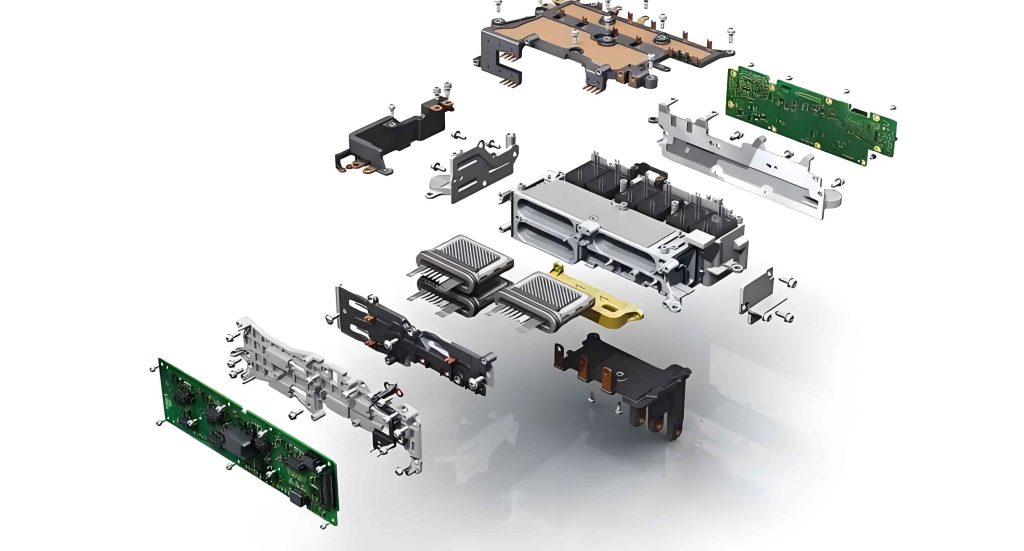
The inserted figure visually anchors the discussion, showing the physical and logical complexity of a modern motor control unit. The instructor can use it to point out components (like the microcontroller or power stage) where domestic technological advancement has been crucial, reinforcing the theme of innovation and self-reliance.
6. Post-class Reinforcement
The learning loop is closed with assignments that demand integration:
- Technical Task: Simulate a simple PID control loop for a DC motor control unit and analyze the response to a load change.
- IPE-Integrated Task: Write a brief report comparing the development path and market focus of a domestic versus an international automotive semiconductor company producing key components for motor control units. Reflect on the concept of technological sovereignty.
This combination ensures that the motor control unit is understood not just as a circuit, but as an artifact of engineering culture and industrial strategy.
Design of a Quantitative Assessment System for IPE Efficacy
Evaluating the success of IPE integration requires moving beyond qualitative impressions to a more structured, multi-dimensional assessment system. The proposed framework assesses impact across three primary stakeholders: Student Knowledge Acquisition, Student Value Cultivation, and Teacher Development. Each dimension is broken down into quantifiable indicators, blending objective metrics and structured subjective feedback.
| Assessment Dimension | Key Performance Indicators (KPIs) | Measurement Methods & Metrics |
|---|---|---|
| A. Impact on Knowledge Acquisition | 1. Enhanced Learning Initiative |
Objective Scoring (0-100): – Pre-class prep completion & quality (20 pts) – In-class engagement/participation (30 pts) – In-class attentiveness (30 pts) – Post-class assignment scores (20 pts) (Averaged across multiple sessions) |
| 2. Increased Interest in Technical Content |
Objective Scoring (0-100): – Cognitive: Quality of knowledge application in projects (10 pts), Critical thinking in discussions (10 pts) – Affective: Self-reported interest surveys (30 pts), Persistence in complex problem-solving (30 pts) – Behavioral: Utilization of additional learning resources (10 pts), Progression in project complexity (10 pts) |
|
| 3. Familiarity with Policy/Industrial Context | Subjective Evaluation: Scores on specific exam questions or short essays linking technology (e.g., motor control unit development) to national industrial policies or historical context. | |
| B. Impact on Student Values & Political Consciousness | 1. Strengthened National & Professional Identity | Structured Self-Reporting & Reflection: Using Likert-scale surveys (1-5) administered at course start, mid-point, and end. Sample statements: – “I understand the strategic importance of core technologies like the motor control unit for national industrial security.” (Identity) – “I feel a sense of responsibility to contribute to solving technical bottlenecks in my field.” (Mission) – “I am confident in the potential of domestic innovation in automotive electronics.” (Confidence) Trend analysis of scores shows value internalization. |
| 2. Sharpened Sense of Historical Mission | ||
| 3. Reinforced “Four Confidences”* | ||
| C. Impact on Teacher Development | 1. Improved Teaching Capacity | Composite Score (0-100): Weighted average of formal student evaluations (30%), departmental peer review (30%), institutional teaching audit (30%), and self-reflection reports (10%). Comparison with pre-blended-IPE scores. |
| 2. Enhanced Research Capability | Objective Metrics: Longitudinal tracking of research outputs (publications, grants, patents) tangentially related to teaching topics like advanced control algorithms for motor control units. Correlation with pedagogical refinement. | |
| 3. Elevated Pedagogical Awareness | Subjective Analysis: Content analysis of teacher’s reflective teaching portfolios, focusing on documented insights into the interplay of technical and value-based education. |
*The “Four Confidences”: Confidence in the Path, Theory, System, and Culture of Socialism with Chinese Characteristics.
This tripartite assessment system provides a holistic view of the blended IPE model’s effectiveness. For instance, tracking the “Enhanced Learning Initiative” score across a semester can quantitatively demonstrate if the engaging, context-rich approach (using stories about the motor control unit‘s evolution) improves student participation. Similarly, positive shifts in the survey scores for “Strengthened National & Professional Identity” provide evidence of successful value cultivation.
Conclusion and Forward Perspective
The integration of Ideological and Political Education into the blended teaching of “Automotive Electronic Control Technology” represents a necessary evolution in engineering education. By strategically deploying online platforms for exposure and context-building, and reserving physical classrooms for synthesis, debate, and value clarification, educators can create a powerful learning ecosystem. This approach transforms technical modules, such as the study of the motor control unit, from mere transmissions of factual knowledge into rich, multidimensional experiences that engage students’ intellect and ethos simultaneously.
The proposed framework—encompassing systematic IPE element extraction, phased instructional design, and a quantitative multi-dimensional assessment model—provides a actionable blueprint. Initial implementations suggest tangible outcomes: heightened student engagement and academic performance, a more pronounced sense of professional responsibility and innovation confidence among learners, and a reflective, improved teaching practice among faculty. The motor control unit, once just a component on a schematic, becomes a narrative device for discussing precision, safety, innovation history, and strategic autonomy.
Future developments will involve refining the digital resources, perhaps using virtual labs to let students “tune” a virtual motor control unit while considering cost-reliability trade-offs, and further objectifying the assessment metrics. The ultimate goal remains constant: to graduate engineers who are not only technically proficient in designing and managing complex systems like automotive networks but are also ethically aware, culturally confident, and driven by a sense of purpose to contribute meaningfully to societal progress through their mastery of technology.