
The relentless pursuit of advanced energy storage solutions is a defining challenge of our era. As a researcher deeply immersed in this field, I observe the ubiquitous presence of lithium-ion batteries powering everything from our personal electronics to the accelerating fleet of electric vehicles. However, this very success has brought its limitations into sharp focus. Traditional lithium-ion batteries, reliant on flammable liquid organic electrolytes, are approaching their theoretical energy density ceiling while presenting inherent safety risks. Thermal runaway events, though rare, underscore the critical need for safer alternatives. Consequently, the scientific and industrial communities are urgently seeking next-generation electrochemical storage devices that promise both superior safety and higher energy density. It is within this context that the solid-state battery emerges as a paramount candidate, poised to redefine the landscape of energy storage technology.
The fundamental innovation of a solid-state battery lies in the replacement of the conventional liquid electrolyte with a solid-state electrolyte (SSE). This single change cascades into a multitude of potential benefits. Firstly, the elimination of volatile and flammable organic solvents dramatically enhances the intrinsic safety of the battery cell, mitigating risks of leakage, fire, and explosion. Secondly, the use of a solid electrolyte can enable the integration of high-capacity metallic lithium anodes, which are largely incompatible with liquid electrolytes due to dendrite growth and safety concerns. This compatibility is a key enabler for achieving significantly higher energy densities. The general configuration and promise of this technology can be visualized as follows:
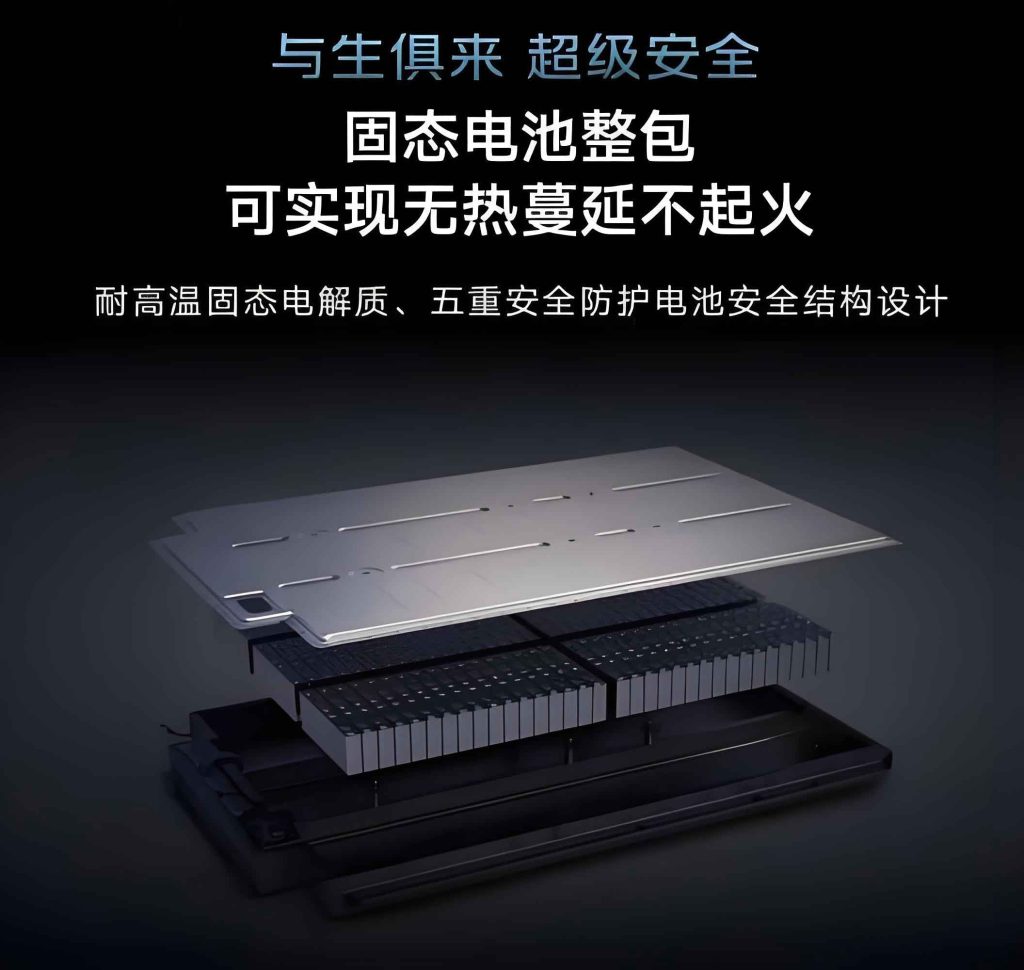
The overarching goal is to develop a solid-state battery that outperforms its liquid-based counterpart in every critical metric: energy density, power density, cycle life, operational temperature range, and, most importantly, safety. The journey toward this goal, however, is fraught with significant materials science and engineering challenges, primarily centered on the solid-state electrolyte itself.
The Solid Electrolyte Frontier: Materials and Hurdles
The heart of a solid-state battery is its electrolyte. Research efforts have branched into several distinct material families, each with its own set of advantages and drawbacks. The primary categories include inorganic solid electrolytes (ISEs), polymer solid electrolytes (SPEs), and composite/hybrid electrolytes.
Inorganic Solid Electrolytes, such as sulfides (e.g., Li10GeP2S12), oxides (e.g., LLZO, LLTO), and nitrides, typically exhibit high ionic conductivity at room temperature, rivaling or even exceeding that of liquid electrolytes. Their mechanical strength is also a potential advantage for suppressing lithium dendrites. However, they suffer from brittleness, poor processability, and high interfacial resistance with electrodes due to rigid solid-solid contact. The table below summarizes key properties of major SSE types:
| Electrolyte Type | Exemplary Materials | Ionic Conductivity (RT, S/cm) | Key Advantages | Major Challenges |
|---|---|---|---|---|
| Inorganic (Sulfide) | Li10GeP2S12 (LGPS), Li7P3S11 | ~10-2 | Very high ionic conductivity, good ductility (for sulfides) | Air sensitivity, narrow electrochemical window, interfacial instability |
| Inorganic (Oxide) | Li7La3Zr2O12 (LLZO), Li1.3Al0.3Ti1.7(PO4)3 (LATP) | ~10-3 to 10-4 | Good chemical/electrochemical stability, high mechanical strength | High grain boundary resistance, brittle, high processing temperature |
| Polymer | Poly(ethylene oxide) (PEO), Polycarbonates | ~10-5 to 10-4 (at 60-80°C) | Excellent flexibility, good electrode contact, low cost, easy processing | Low RT conductivity, low Li+ transference number, narrow electrochemical window |
| Composite/Hybrid | PEO + LLZO filler, Polymer-in-Ceramic | ~10-4 to 10-3 | Balanced properties, potential for synergistic effects | Complex optimization, interface management |
Polymer-based solid electrolytes, particularly those using Poly(ethylene oxide) (PEO) complexed with lithium salts (e.g., LiTFSI), offer a compelling alternative. Their strengths lie in exceptional flexibility, ease of fabrication into thin films, and the ability to form conformal, low-resistance contact with electrodes—a property that mitigates one of the biggest issues with rigid inorganic electrolytes. The ionic conduction in PEO-based SPEs primarily occurs in the amorphous phase above the polymer’s glass transition temperature (Tg), where segmental motion of the polymer chains facilitates Li+ transport. The conductivity (σ) follows an Arrhenius or Vogel-Tammann-Fulcher (VTF) relationship, indicating strong coupling between ion mobility and polymer chain dynamics:
$$ \sigma = \sigma_0 \exp\left(-\frac{E_a}{k_B T}\right) \quad \text{(Arrhenius)} $$
$$ \sigma = A T^{-1/2} \exp\left(-\frac{B}{T – T_0}\right) \quad \text{(VTF)} $$
where $E_a$ is the activation energy, $k_B$ is Boltzmann’s constant, $T$ is temperature, and $A$, $B$, $T_0$ are fitting parameters. The VTF model is more appropriate for polymer electrolytes where ion transport is coupled to polymer segmental relaxation.
Despite their processing advantages, traditional PEO-based solid-state battery systems face two critical, interconnected limitations: low room-temperature ionic conductivity due to high crystallinity, and a low lithium-ion transference number ($t_{Li^+}$). The transference number, defined as the fraction of the total ionic current carried by Li+ ions, is crucial. In a typical PEO-Li salt system, $t_{Li^+}$ is often below 0.3, meaning anions contribute more to conductivity, leading to detrimental concentration polarization during cycling and limiting power density. The relationship between the effective Li+ conductivity ($\sigma_{Li^+}$) and the total ionic conductivity is:
$$ \sigma_{Li^+} = t_{Li^+} \cdot \sigma_{total} $$
Therefore, enhancing both $\sigma_{total}$ and $t_{Li^+}$ is imperative for high-performance polymer-based solid-state battery devices.
Advancing Polymer-Based Solid-State Batteries: Strategic Innovations
My research and that of peers in the field are focused on addressing the core weaknesses of polymer electrolytes through innovative material design and interfacial engineering. The objective is to unlock the full potential of the solid-state battery concept using polymer matrices. Two primary strategic pathways have shown remarkable promise: enhancing the fundamental Li+ transport mechanism within the polymer, and engineering stable, low-resistance interfaces.
Strategy 1: Modifying the Polymer Matrix for Enhanced Ion Transport
A cornerstone approach involves suppressing PEO crystallinity to increase the amorphous content where ion transport occurs. This is traditionally done by adding inorganic fillers (e.g., Al2O3, TiO2, LLZO) which disrupt polymer chain packing. However, a more elegant and effective strategy involves using organic plasticizers or co-polymers. For instance, incorporating small organic molecules like succinonitrile (SN) has proven highly effective. SN acts as a solid plasticizer, dissolving lithium salts and creating alternative Li+ coordination sites. By precisely tuning the molar ratio between SN and the ethylene oxide (EO) units of PEO, one can maximally suppress crystallization and weaken the strong coordination between EO and Li+, thereby lowering the activation energy for Li+ hopping.
When the SN:EO molar ratio is optimized—for example, at 1:4—the ionic conductivity can be enhanced by two orders of magnitude. This creates a more homogeneous and continuous ion-conducting pathway on a microscopic scale. The performance gains are most evident at lower temperatures, enabling the solid-state battery to function effectively at room temperature and even at 0°C, a regime where traditional PEO-based cells are largely inert. The mechanism can be summarized as the creation of a percolating network for Li+ transport, decoupled from the slower polymer segmental motion.
Strategy 2: Crafting Functional Interfaces and In-situ Architectures
Even with an improved bulk electrolyte, the interfaces between the electrolyte and the electrodes remain critical failure points. A particularly innovative approach involves the in-situ construction of a functional interface within the polymer matrix itself. One method leverages concepts from lithium-sulfur battery chemistry. By designing a copolymer containing sulfur species (e.g., a copolymer of poly(ethylene glycol) methyl ether methacrylate (PEGMA) and sulfur) and electrochemically reducing it in-situ during cell formation, one can graft lithium polysulfide-like species (e.g., -S4Li) onto the PEO backbone.
These grafted anionic groups serve as fixed, negatively charged sites that can effectively immobilize the TFSI– or other anions via Coulombic interactions, while providing new pathways for Li+ migration. This design directly targets the low transference number problem. The effective $t_{Li^+}$ can be significantly increased, approaching or even exceeding 0.8, as described by the following conceptual relationship for the modified system:
$$ t_{Li^+} \approx \frac{\mu_{Li^+}}{\mu_{Li^+} + \mu_{A^-} \cdot f_{mobile}} $$
where $\mu$ represents mobility and $f_{mobile}$ represents the fraction of anions that remain mobile. By anchoring anions, $f_{mobile}$ decreases, raising $t_{Li^+}$.
Furthermore, this in-situ formed interface is inherently more stable and compliant, reducing interfacial resistance and preventing degradation during long-term cycling. The synergistic effect of high ionic conductivity and high transference number, coupled with a stable interface, can lead to extraordinary cycle life in a solid-state battery. For example, cells employing such engineered electrolytes have demonstrated stable cycling for over 1,200 cycles at moderate temperatures (e.g., 50°C) with minimal capacity fade.
Quantifying Performance: Metrics and Trade-offs
The success of these strategies must be evaluated against a comprehensive set of performance metrics. Beyond simple ionic conductivity, a practical solid-state battery must excel in several areas simultaneously. The table below outlines key performance targets and how advanced polymer electrolytes contribute:
| Performance Metric | Target for Viable SSB | Role of Advanced Polymer Electrolyte |
|---|---|---|
| Ionic Conductivity (σ) at 25°C | > 10-4 S/cm | Achievable via matrix plasticization (e.g., with SN) and composite effects. |
| Li+ Transference Number ($t_{Li^+}$) | > 0.6 | Enhanced by anion-trapping mechanisms (e.g., grafted anionic groups). |
| Electrochemical Stability Window | > 4.5 V vs. Li/Li+ | Moderate; can be extended with stable salts and fillers, but generally a limitation for high-voltage cathodes. |
| Mechanical Modulus | > 1 GPa (for dendrite suppression) | Typically lower than inorganic SSEs; requires composite reinforcement or multi-layer designs. |
| Interfacial Resistance | < 100 Ω cm² | Intrinsically low due to soft, conformal contact; further improved by in-situ interface engineering. |
| Cycle Life (Capacity Retention) | > 80% after 1000 cycles | Enabled by stable interfaces and homogeneous Li plating/stripping from high $t_{Li^+}$. |
| Operational Temperature Range | -20°C to 100°C | Widened by suppressing PEO crystallization, enabling sub-ambient operation. |
The optimization of a solid-state battery is a multi-variable problem. For instance, maximizing ionic conductivity might involve adding more plasticizer, but this could reduce mechanical strength and electrochemical stability. The challenge is to find the Pareto-optimal point in this multi-dimensional design space. Advanced characterization techniques and computational modeling are indispensable for navigating these trade-offs. The ultimate goal for a polymer-based solid-state battery is to satisfy a set of coupled conditions that ensure safe, long-lasting, and high-performance operation:
$$
\begin{cases}
\sigma_{Li^+}(T) = t_{Li^+} \cdot \sigma_{total}(T) \ge \sigma_{min} & \text{(Sufficient Li+ flux)} \\
R_{int} = \frac{\delta}{\sigma} + R_{SEI} \ll R_{bulk} & \text{(Low interfacial resistance)} \\
G \ge \gamma \cdot \frac{E}{h} & \text{(Mechanical stability vs. dendrites)} \\
\frac{\partial \eta}{\partial t} \approx 0 & \text{(Stable overpotential, i.e., minimal degradation)}
\end{cases}
$$
where $G$ is the shear modulus of the electrolyte, $\gamma$ is a geometric factor, $E$ is Young’s modulus of Li, $h$ is a feature size, and $\eta$ is the overpotential.
Future Trajectories and Integration Challenges
The evolution of the solid-state battery is not merely a materials science endeavor; it is a systems integration challenge that parallels the digital transformation journeys seen in modern industry. Just as enterprises integrate data from shop-floor sensors through to ERP systems to enable seamless, data-driven decision-making, the next-generation solid-state battery will be an integrated system of advanced materials, intelligent interfaces, and sophisticated management protocols.
Future research will likely focus on several convergent fronts:
- Multi-scale Hybrid Designs: Combining the best attributes of polymers and inorganic materials in rationally designed multi-layer or composite electrolytes. For example, a thin, mechanically strong inorganic layer against the Li metal to block dendrites, coupled with a soft polymer or organic composite layer for intimate cathode contact.
- Electrode Engineering: Developing composite cathodes with integrated ionic conductors to ensure effective Li+ transport within the thick electrodes required for high energy density.
- In-situ and Operando Diagnostics: Utilizing advanced imaging and spectroscopic tools to observe interface evolution and degradation mechanisms in real-time within an operating solid-state battery, enabling predictive modeling and corrective design.
- Scalable Manufacturing: Translating lab-scale innovations into cost-effective, high-throughput manufacturing processes. The processability of polymer-based systems is a significant advantage here, but methods for applying uniform thin films and ensuring perfect interfacial contact at scale need development.
The final implementation will resemble a “3D visualized management platform” for energy storage, where every component’s state (ionic flux, stress, potential, temperature) could, in principle, be monitored and managed to optimize performance, lifespan, and safety—truly achieving data-led operation for the battery cell itself.
Conclusion
The transition to a solid-state battery paradigm represents a fundamental and necessary evolution in energy storage technology, driven by the dual imperatives of safety and performance. While inorganic solid electrolytes have made impressive strides in ionic conductivity, polymer-based solid electrolytes offer a uniquely advantageous combination of processability, interfacial compliance, and tunability. Through strategic innovations—such as the use of molecular plasticizers like succinonitrile to unlock room-temperature operation and the in-situ grafting of anion-trapping groups to boost the lithium-ion transference number—the performance gaps are being closed rapidly.
The path forward is one of integrative design, where materials innovation is coupled with sophisticated engineering and a deep understanding of interfacial phenomena. The potential reward is immense: safer, longer-lasting, and more energy-dense batteries that can accelerate the adoption of electric vehicles, enable grid-scale storage for renewable energy, and power the next generation of portable electronics. The solid-state battery is more than an incremental improvement; it is a cornerstone technology for a sustainable and electrified future, and its continued development remains one of the most critical and exciting frontiers in applied science and engineering today.