
As I reflect on the current landscape of energy storage and electric mobility, it is evident that the global push toward electrification has placed immense focus on battery technologies. In today’s mainstream liquid lithium-ion battery systems, the global power battery industry map is heavily dominated by certain regions, with a significant portion of the top manufacturers originating from a single country. This has spurred other nations, including the United States, the European Union, Japan, and South Korea, to seek alternative pathways to gain dominance in the power battery sector. They aim to achieve this through a strategic shift toward all-solid-state batteries, viewing it as an opportunity for a technological leapfrog. Japan, in particular, has mobilized a national effort to commercialize all-solid-state batteries, forming government-industry-academia alliances, with major automakers like Toyota, Honda, and Nissan deeply invested in this technology. In this context, I believe that solid-state batteries represent a pivotal future direction for power batteries, offering transformative potential despite existing challenges.
To understand why solid-state batteries are garnering such attention, let me first explain their fundamental structure. A solid-state battery is an energy storage device where no liquid components are present; all materials exist in solid form. It consists of a cathode material, an anode material, and a solid electrolyte. In terms of working principle, solid-state lithium batteries are similar to traditional lithium batteries: both involve the migration of lithium ions between the cathode and anode during charging and discharging. However, the key difference lies in the electrolyte. In conventional liquid lithium-ion batteries, a liquid electrolyte facilitates ion transport, whereas in solid-state batteries, this is replaced by a solid electrolyte—often a gel-like or thin-film material sandwiched between the electrodes. This solid medium allows lithium ions to “wiggle” through, akin to small earthworms navigating through a membrane, effectively shifting the ion migration site to the solid electrolyte. Based on electrolyte morphology, power batteries can be categorized into liquid batteries, semi-solid batteries, and all-solid-state batteries.
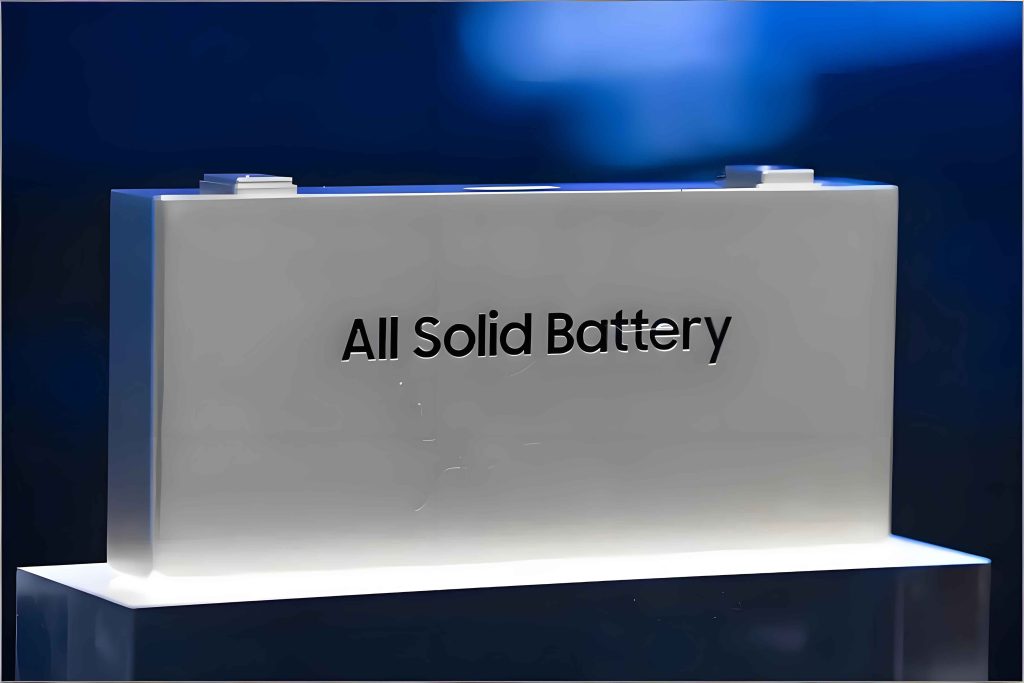
The competition for next-generation battery technology is centered on all-solid-state batteries, with sulfide electrolytes playing a crucial role. From my perspective, the advantages of solid-state batteries are substantial. Firstly, they exhibit superior temperature adaptability. Existing liquid lithium-ion batteries suffer from reduced range in low-temperature environments due to the temperature-dependent ionic conductivity of liquid electrolytes. In contrast, solid-state batteries utilize electrolytes that do not solidify or vaporize within a broad temperature range, say from –30°C to 100°C, eliminating the need for complex thermal management and preventing significant capacity drops in winter. This can be expressed through the Arrhenius equation for ionic conductivity: $$ \sigma = \sigma_0 \exp\left(-\frac{E_a}{kT}\right) $$ where $\sigma$ is the conductivity, $\sigma_0$ is a pre-exponential factor, $E_a$ is the activation energy, $k$ is Boltzmann’s constant, and $T$ is the temperature. For solid-state electrolytes, the activation energy $E_a$ is often lower or more stable across temperatures, leading to better performance in extremes.
Secondly, and perhaps most importantly, solid-state batteries offer enhanced safety. The solid electrolyte is non-flammable, reducing risks associated with leaks, short circuits, and thermal runaway. This addresses a critical drawback of liquid electrolytes, which are prone to combustion. The safety advantage stems from the inherent properties: non-combustibility, high-temperature resistance, non-corrosiveness, and non-volatility. This makes solid-state batteries less sensitive to temperature fluctuations and eliminates hidden hazards. To quantify safety, one might consider thermal stability metrics, such as the heat generation rate $Q$ during operation: $$ Q = I^2 R + \Delta H_{rxn} $$ where $I$ is current, $R$ is internal resistance, and $\Delta H_{rxn}$ is the enthalpy of side reactions. In solid-state batteries, $R$ may be higher, but $\Delta H_{rxn}$ is minimized due to the absence of flammable liquids.
However, transitioning to solid-state batteries is fraught with technical hurdles. As I delve into the challenges, the primary issue is the reduced ionic conductivity in solid electrolytes compared to liquids. This impedes fast charging capabilities. The ionic conductivity $\sigma_{ion}$ can be modeled as: $$ \sigma_{ion} = n q \mu $$ where $n$ is the charge carrier concentration, $q$ is the charge, and $\mu$ is the mobility. In solids, $\mu$ is often lower due to restricted ion diffusion paths. Another challenge is the poor interfacial contact between solid materials (solid-solid interfaces), leading to high internal resistance. This interfacial resistance $R_{int}$ can be described by: $$ R_{int} = \frac{\delta}{\sigma_{contact}} $$ where $\delta$ is the interface thickness and $\sigma_{contact}$ is the contact conductivity. Currently, there are no universally effective solutions to this problem. Additionally, even if material issues are resolved, the complex manufacturing processes, incomplete supply chains, and high production costs hinder mass production. The cost factor can be approximated by: $$ C_{total} = C_{materials} + C_{processing} + C_{scaling} $$ where each component is elevated for solid-state batteries due to novel materials and techniques.
Despite these challenges, the momentum behind solid-state battery development is strong. In my view, the path to industrialization involves multiple technology routes. Globally, sulfide-based all-solid-state batteries are a major focus, but in some regions, there is a diversified approach, with emphasis on semi-solid (solid/liquid hybrid) batteries. These hybrids offer a gradual transition, leveraging existing infrastructure while mitigating risks. Below is a table comparing different battery types based on key parameters:
| Battery Type | Electrolyte State | Ionic Conductivity (S/cm) | Safety Level | Temperature Range | Cost Estimate |
|---|---|---|---|---|---|
| Liquid Lithium-ion | Liquid | ~10-2 | Moderate | -20°C to 60°C | Low |
| Semi-solid (Hybrid) | Solid/Liquid Mix | ~10-3 to 10-2 | High | -30°C to 80°C | Medium |
| All-Solid-State (Sulfide) | Solid | ~10-4 to 10-3 | Very High | -30°C to 100°C | High |
| All-Solid-State (Oxide) | Solid | ~10-5 to 10-4 | Very High | -40°C to 150°C | Very High |
Looking at industrialization, I consider that a key benchmark for all-solid-state batteries is achieving a market share of at least 1%. This may seem small, but in the automotive sector, even 1% signifies a breakthrough, as it triggers competitive alerts and drives innovation. For instance, electric vehicles have only replaced about 30% of the market in some contexts, yet this has already caused significant disruption. Similarly, for solid-state batteries, reaching 1% adoption could catalyze rapid advancements. If all-solid-state batteries achieve industrialization by around 2030, it might take 20–30 years to capture 50% of the market, but the initial foothold is crucial. The growth trajectory can be modeled using a logistic function: $$ M(t) = \frac{K}{1 + e^{-r(t-t_0)}} $$ where $M(t)$ is market share at time $t$, $K$ is the carrying capacity (e.g., 50%), $r$ is the growth rate, and $t_0$ is the inflection point. For solid-state batteries, $r$ may accelerate post-1% adoption.
From a global perspective, the race for solid-state battery supremacy involves strategic investments. Japan’s national alliance model contrasts with the more fragmented efforts in other regions. In some areas, early focus on solid/liquid hybrid batteries has built a complete产业链, with companies testing vehicle integrations. This dual approach—advancing incremental semi-solid technologies while guarding against disruptive all-solid-state risks—is essential. In my analysis, the future power battery industry will require both low-cost products for mass adoption and high-specific-energy products for premium applications. Solid-state batteries, particularly all-solid-state versions, promise high energy densities. The energy density $E$ can be expressed as: $$ E = \frac{Q \times V}{m} $$ where $Q$ is capacity, $V$ is voltage, and $m$ is mass. For solid-state batteries, $V$ can be increased due to wider electrochemical windows, and $m$ reduced via lightweight materials, boosting $E$.
To delve deeper into material science, let’s consider solid electrolytes. Common types include sulfides, oxides, and polymers, each with trade-offs. Below is a table summarizing their properties:
| Electrolyte Type | Example Materials | Ionic Conductivity (25°C, S/cm) | Stability vs. Li Metal | Mechanical Flexibility | Processing Complexity |
|---|---|---|---|---|---|
| Sulfide | Li2S-P2S5 | 10-3 to 10-2 | Moderate | Low | High |
| Oxide | Li7La3Zr2O12 (LLZO) | 10-4 to 10-3 | High | Low | Very High |
| Polymer | PEO-LiTFSI | 10-5 to 10-4 | Low | High | Medium |
| Hybrid | Composite Materials | 10-4 to 10-2 | Variable | Medium | Medium |
In my experience, the development of solid-state batteries is not hindered by insurmountable technical barriers, but rather by persistent puzzles like interface engineering. The solid-solid interface resistance $R_{int}$ often dominates total impedance, affecting power density $P$: $$ P = \frac{V^2}{R_{total}} $$ where $R_{total} = R_{bulk} + R_{int}$. Researchers are exploring coatings, nanostructuring, and pressure application to reduce $R_{int}$. Moreover, manufacturing scalability is a hurdle. The cost per kWh for solid-state batteries is currently high, but learning curves suggest reduction over time: $$ C(n) = C_0 n^{-b} $$ where $C(n)$ is cost after $n$ units, $C_0$ is initial cost, and $b$ is the learning rate (typically 0.1-0.3 for batteries).
Looking ahead, I am optimistic about the prospects for solid-state batteries. By around 2030, breakthroughs in all-solid-state battery industrialization are highly probable, driven by concerted efforts across academia, industry, and government. This will require prioritizing both fundamental research and applied engineering. For instance, improving ionic conductivity in solid electrolytes might involve doping strategies to enhance carrier concentration $n$ in the conductivity equation. Similarly, interface modifications can optimize $\sigma_{contact}$. The ultimate goal is to achieve a balance between performance, safety, and cost.
In conclusion, the rise of solid-state batteries represents a paradigm shift in energy storage. As I see it, the transition will be gradual, with semi-solid batteries serving as a bridge, but all-solid-state batteries offering the endgame for high-performance applications. The global competition will intensify, and regions with cohesive strategies may lead. For sustainable growth, the industry must foster collaboration, invest in R&D, and build robust supply chains. The potential of solid-state batteries to enable safer, longer-range electric vehicles and grid storage is immense, and overcoming current challenges will unlock a new era of electrification. Through continued innovation, solid-state batteries can indeed become the cornerstone of future power systems, driving us toward a cleaner, more efficient energy future.
To further illustrate the progress, let’s consider some quantitative metrics. The volumetric energy density $\rho_E$ of solid-state batteries can surpass 500 Wh/L, compared to 300 Wh/L for advanced liquid lithium-ion batteries. This is calculated as: $$ \rho_E = \frac{E}{V} $$ where $V$ is volume. Additionally, cycle life $N$ can be extended due to reduced degradation: $$ N = \frac{\Delta Q_{loss}}{Q_0} $$ where $\Delta Q_{loss}$ is capacity loss per cycle and $Q_0$ is initial capacity. Solid-state batteries may achieve $N > 2000$ cycles with minimal loss. These improvements hinge on material advancements, such as using lithium metal anodes, which boost capacity but require stable solid electrolytes to prevent dendrites. The dendrite growth rate $v$ can be modeled: $$ v = \frac{J}{zF} \mu_{Li} $$ where $J$ is current density, $z$ is charge number, $F$ is Faraday’s constant, and $\mu_{Li}$ is lithium mobility. Solid electrolytes suppress $v$ by providing mechanical strength.
In summary, the journey toward widespread adoption of solid-state batteries is multifaceted, involving scientific discovery, engineering ingenuity, and market dynamics. As I emphasize, the keyword “solid-state battery” encapsulates this transformative technology, and its repeated mention underscores its centrality in future energy discussions. By addressing ionic conductivity, interface issues, and cost barriers, we can accelerate the commercialization of solid-state batteries, ultimately reshaping the global energy landscape. The road ahead is challenging, but with persistent effort, solid-state batteries will likely become the backbone of next-generation power solutions, offering unparalleled safety, performance, and sustainability.