
The transition towards sustainable transportation is fundamentally linked to advancements in energy storage technology. Among the most promising frontiers is the solid-state battery, which replaces the conventional liquid or gel electrolyte with a solid counterpart. This innovation promises a paradigm shift, offering significantly enhanced safety by eliminating flammable components and providing a pathway to higher energy densities, thereby directly addressing two critical limitations of current lithium-ion batteries: range anxiety and safety concerns. The strategic importance of this technology has catalyzed intense research and development efforts globally, with major automotive corporations positioning themselves at the forefront. Analysis of intellectual property, particularly patents, serves as a powerful lens through which to understand the strategic priorities, technical challenges, and evolutionary trajectories of key players in this competitive landscape.
Patent filings offer a unique, objective dataset that reveals where a company is investing its R&D resources, the specific technical problems it aims to solve, and the solutions it is pioneering. One entity consistently highlighted for its deep and sustained commitment to solid-state battery technology is Toyota. Their research portfolio, particularly in sulfide-based solid electrolytes, is extensive and offers a compelling case study. This article synthesizes a macro- and micro-level analysis of development trends, drawing on patent data to map the technological landscape. We will examine the overarching patenting strategy, dissect the core technological components, and delve into the key innovation areas such as electrolyte formulation, cell architecture, and module integration, utilizing tables and formulas to crystallize the insights.
The evolution of the solid-state battery is a story of overcoming persistent material science challenges. The core promise lies in its solid electrolyte, which can be broadly classified into three families: organic polymers (e.g., PEO), oxide ceramics, and sulfide glasses. Each family presents a distinct trade-off between ionic conductivity, electrochemical stability, and mechanical properties. Sulfide-based solid electrolytes have attracted significant focus due to their exceptionally high ionic conductivity at room temperature, which is a prerequisite for practical power output in automotive applications. However, they introduce other complex challenges, including sensitivity to moisture (leading to toxic H2S generation), interfacial instability with electrode materials, and mechanical brittleness. The patent history of a leader like Toyota effectively charts the course of attacking these very problems.
Patent Portfolio Analysis: Mapping the Strategic Focus
An examination of global patent filings reveals distinct phases in the development of the solid-state battery. Initial foundational work dates back decades, but a significant resurgence in industrial R&D began around 2007. The annual filing volume for a major player serves as a barometer for technological confidence and resource allocation.
| Phase | Time Period | Patent Activity Trend | Implied Development Stage |
|---|---|---|---|
| Resurgence & Growth | 2007 – 2011 | Steady increase to a peak | Foundational research, broad exploration of material systems and concepts. |
| Consolidation & Refocusing | 2012 – 2014 | Pronounced decline | Encountering significant technical bottlenecks; strategic reassessment and deeper focus on core challenges. |
| Re-acceleration & Breakthrough | 2015 – Present | Renewed and sustained growth | Targeted solutions to key bottlenecks (e.g., conductivity, interfaces); progression towards engineering and integration. |
A targeted analysis of the patent portfolio’s composition is even more revealing. When categorizing patents by their primary technical contribution, the distribution highlights the areas of greatest intensity. For instance, a breakdown of several hundred key patents shows a clear hierarchy of focus:
| Primary Technology Category | Approximate Portfolio Share | Key Objectives |
|---|---|---|
| Solid Electrolyte (Sulfide-based) | ~27% | Enhance ionic conductivity, improve atmospheric stability, suppress detrimental side reactions. |
| Battery Cell Design & Fabrication | ~25% | Improve electrode-electrolyte interfaces, mitigate capacity fade, enhance structural stability. |
| Cell Stacking & Module Integration | ~12% | Ensure mechanical integrity, manage thermal behavior, implement advanced safety architectures. |
| Anodes & Cathodes | ~18% | Develop compatible active materials, optimize composite electrodes for solid-state systems. |
| System-level & Manufacturing | ~4% | Scale-up processes, battery management strategies for solid-state packs. |
This distribution underscores that the heart of the solid-state battery challenge lies in the electrolyte material itself and the intricate interfaces it forms within the cell. Module-level integration, while critical for commercialization, receives less fundamental patent attention, suggesting that core material and cell-level issues are the primary gatekeepers.
Deep Dive: Core Innovation in Sulfide Electrolytes
The pursuit of the ideal solid-state battery electrolyte revolves around optimizing a matrix of properties. The ionic conductivity ($\sigma$) is paramount, dictating the power capability. It is governed by factors such as carrier concentration ($n$), charge ($e$), and mobility ($\mu$):
$$\sigma = n \cdot e \cdot \mu$$
In crystalline or glassy sulfide electrolytes, lithium ion mobility is the critical variable, heavily influenced by the lattice structure and the presence of dopants.
Patent analysis reveals a multi-front effort to boost conductivity and stability. A primary strategy involves compositional engineering through doping. For example, halogen doping (Cl, Br) is pursued to stabilize the interface and reduce resistance, but optimal levels must be found to avoid sacrificing bulk conductivity. The role of processing is equally vital, as the method of synthesis directly impacts particle morphology, crystallinity, and ultimately, ion transport pathways. A key patented process involves careful control of annealing atmospheres to prevent the formation of insulating phases. The data below illustrates how controlled atmospheric conditions during crystallization can drastically improve performance:
| Sample Type | Oxygen-Containing Compound (ppm) | Ionic Conductivity $\sigma$ (S/m) | Conclusion |
|---|---|---|---|
| Optimized Examples | < 100 ppm | 2.0 – 3.0 | Low impurity levels prevent the formation of resistive layers at grain boundaries, enabling high bulk conductivity. |
| Comparative Examples | > 100 ppm | 0.5 – 1.5 | Higher impurity concentrations lead to the growth of low-conductivity phases, severely limiting overall ion transport. |
Another significant challenge is the hygroscopic nature of sulfide materials, leading to degradation and gas generation:
$$ \text{Li}_2\text{S} + \text{H}_2\text{O} \rightarrow 2\text{LiOH} + \text{H}_2\text{S} \uparrow $$
Patents detail innovative approaches to mitigate this, such as the use of specific lithium precursors (e.g., LiHS) synthesized under controlled pH conditions or the creation of core-shell particles with a passivated surface to improve handling stability without compromising bulk ionic performance.
Battery Cell Technology: Engineering the Interfaces
Creating a high-performing solid-state battery cell is not merely about excellent electrolyte powder. The interfaces between the solid electrolyte and the solid electrodes are regions of high resistance and complex electro-chemo-mechanical evolution. Patent literature is rich with solutions addressing “interface engineering.”
A major focus is mitigating capacity fade during cycling. In a solid-state system, volume changes in alloy-based anodes (e.g., Si, Sn) during lithiation/delithiation can create localized stress points, disrupting ionic contact and leading to cell degradation. One inventive solution documented in patents involves patterning the electrode. By designing cathode layers with specific, segregated active material structures, the corresponding anode experiences a more uniform distribution of lithium flux and associated strain. This can be modeled conceptually by considering the local strain ($\epsilon$) as a function of lithium concentration ($C_{Li}$):
$$ \epsilon(x,y) = \beta \cdot \Delta C_{Li}(x,y) $$
where $\beta$ is a expansion coefficient. Patterning helps homogenize $\Delta C_{Li}(x,y)$, reducing peak $\epsilon$ and improving cycle life.
The table below summarizes key cell-level challenges and the corresponding patent-directed solutions:
| Cell-Level Challenge | Root Cause | Patent-Protected Solutions |
|---|---|---|
| High Interface Resistance | Poor physical contact, space-charge layers, interdiffusion. | • Introduction of ultra-thin buffer/interlayer coatings. • Use of electrolyte particles with tailored surface chemistry. • Co-sintering or hot-pressing processes. |
| Cycling Capacity Fade | Electrode particle cracking, contact loss from volume change. | • Strain-engineered electrode architectures (patterning, gradients). • Compliant composite electrode designs with mixed conductors. • Controlled formation protocols using specific gas atmospheres. |
| Manufacturing Defects | Cracks, delamination, inhomogeneous layers. | • Slurry-based processes for solid electrolytes. • Sequential stacking and lamination techniques. • In-situ polymerization of precursors. |
Stacking and Module Safety: Architecting for Reliability
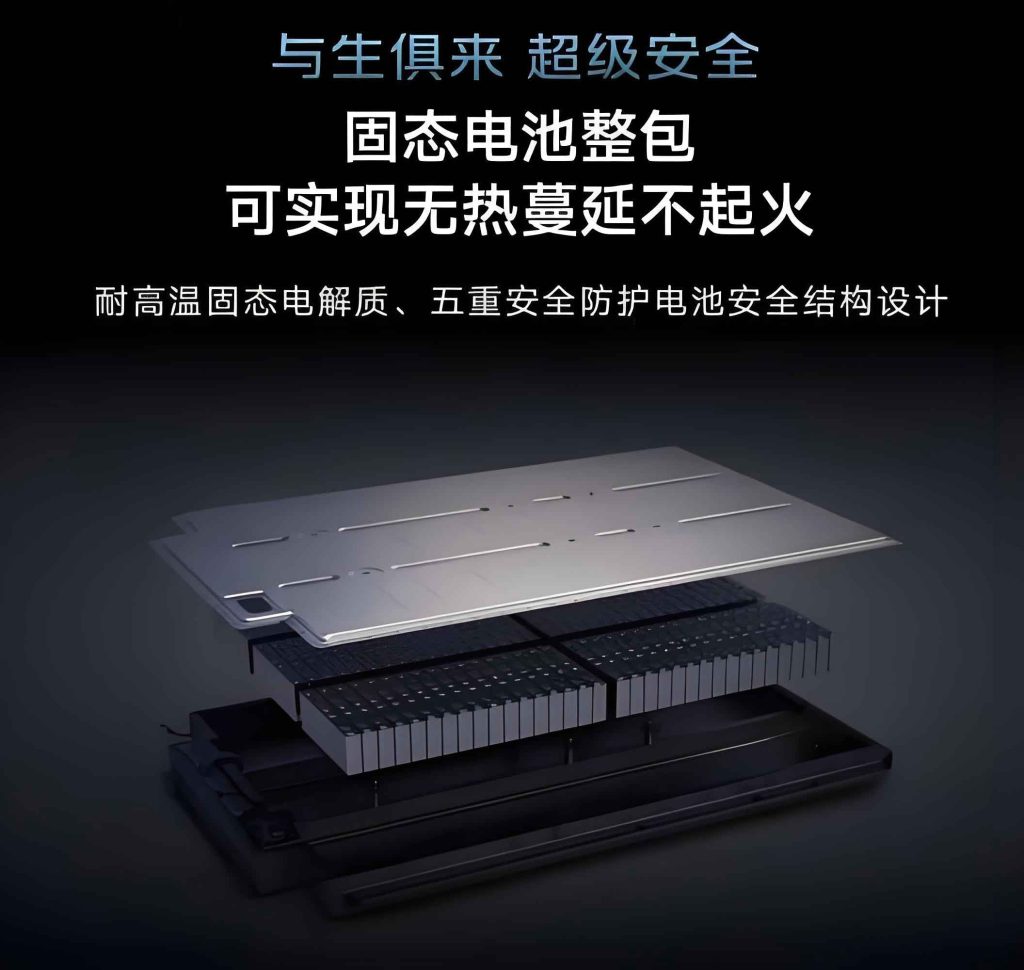
Scaling from a single solid-state battery cell to a multi-cell module introduces critical challenges in mechanical integrity and safety management. Unlike liquid cells, solids cannot flow to accommodate stack pressure variations or redistribute after a shock. Furthermore, safety protocols for internal short circuits must be reimagined.
Patents reveal sophisticated “failsafe” architectures for solid-state battery modules. One prominent concept involves integrating a dedicated “preferential short-circuit layer” within the cell stack, parallel to the main cell layers. This layer is designed to have a lower short-circuit resistance under mechanical abuse (e.g., from a nail penetration test) than the internal short path through the cell’s electrochemically active materials. When a nail penetrates the module, the current is deliberately shunted through this low-resistance bypass, which is connected to a fusible link. This causes the fuse to blow rapidly, isolating the module before significant thermal runaway can initiate in the main cells. The effectiveness hinges on the differential resistance:
$$ R_{short, bypass} \ll R_{short, cell} $$
This ensures current $I$ flows predominantly through the bypass ($I = V / R$), allowing the fuse to act swiftly.
Another advanced concept involves “current diversion layers” that are normally insulating. These layers contain a material with a carefully selected melting point or glass transition temperature ($T_m$). Under normal operation, $T_{operation} < T_m$. If an internal fault causes localized heating such that $T_{fault} > T_m$, the layer melts, creates an internal short within the diversion layer, and safely discharges the adjacent cells, preventing the temperature from reaching levels that would degrade the main cell components. This is a form of passive thermal management intrinsic to the solid-state battery design.
Conclusion and Future Trajectory
The strategic development of the solid-state battery, as illuminated through patent analysis, is a meticulous, multi-decade journey focused on conquering fundamental material science and interfacial engineering hurdles. The trajectory shows an initial phase of broad exploration, followed by a period of focused problem-solving on core issues like sulfide electrolyte conductivity and stability, and now an ongoing phase of cell and module integration. The overwhelming focus of intellectual property remains on the electrolyte and the single-cell unit, affirming that these are the critical path items for commercial viability.
The future path for solid-state battery technology will likely involve further refinement of sulfide and hybrid electrolyte systems, revolutionary electrode designs that work in harmony with solid electrolytes, and the development of high-throughput, low-cost manufacturing processes that can maintain the delicate structures required. The continued growth in patent filings around system-level integration and manufacturing hints at the approaching transition from laboratory breakthrough to industrial scale-up. As these challenges are met, the solid-state battery holds the potential to fundamentally reshape the capabilities and safety profile of electric vehicles, representing not just an incremental improvement, but a transformative step in energy storage technology.