
The relentless march towards vehicle electrification, automation, and connectivity has fundamentally redefined the requirements for automotive electronic control systems. Today’s vehicles are not merely mechanical conveyances but sophisticated cyber-physical systems where precise environmental perception, robust operational control, and instantaneous safety responses are paramount. The cornerstone enabling this evolution is the advanced integration and intelligent processing of data from a diverse array of sensors. Multi-sensor information fusion technology has thus transitioned from a niche enhancement to the central nervous system of the modern automobile. In this comprehensive analysis, I will delve into the architectural principles, algorithmic foundations, and transformative applications of this technology, with a particular focus on its critical role within and around the motor control unit and related systems, before projecting its future trajectory in the era of autonomous driving and vehicular networks.
At its core, multi-sensor fusion is the strategic process of combining observational data from multiple, often heterogeneous, sources to produce information that is more accurate, reliable, and complete than that which could be derived from any single sensor. The technical logic rests on the principles of redundancy, complementarity, and timeliness. Redundant sensors increase confidence and provide fault tolerance; complementary sensors expand the perceptual envelope (e.g., vision for classification and radar for velocity); and coordinated timely data enables dynamic state estimation. The system architecture is typically conceptualized in a three-layer model, each with distinct objectives and processing complexities.
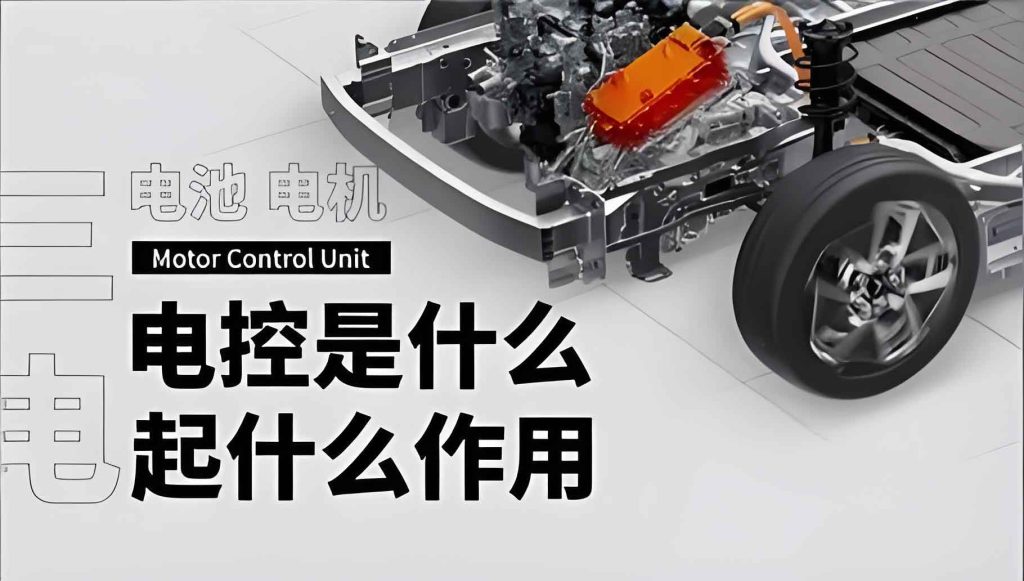
The first layer is Data-Level Fusion. This is the most fundamental layer, where raw or minimally pre-processed sensor data (e.g., voltage signals from an accelerometer, point clouds from LiDAR, pixel arrays from a camera) are combined directly. It requires precise time synchronization and spatial registration (coordinate transformation) to ensure all data streams refer to the same instant and frame of reference. Simple algorithms like weighted averaging or complementary filters are used here. While potentially offering high accuracy, it demands high communication bandwidth and is highly sensitive to sensor misalignment and noise correlation.
The second layer is Feature-Level Fusion. Here, characteristic features are first extracted independently from each sensor’s data stream. These features could be edges and corners from a camera image, range-and-Doppler clusters from a radar, or specific frequency components from a vibration sensor. These extracted feature vectors are then fused. This approach reduces the data volume compared to raw data fusion and allows for the fusion of disparate data types. It is widely used in object identification and tracking scenarios.
The third layer is Decision-Level Fusion. This is the highest abstraction level. Each sensor or processing node makes a preliminary decision or classification based on its own data. These local decisions (e.g., “obstacle detected,” “lane departure likely,” “battery cell imbalance”) are then fused by a central arbitrator using techniques like voting rules, Bayesian inference, or Dempster-Shafer theory. This method is modular, requires low bandwidth, and is robust to individual sensor failures, but may lose underlying information that could lead to a more optimal global decision.
The efficacy of any fusion architecture is determined by the algorithms employed. The choice of algorithm is a trade-off between estimation accuracy, computational load, real-time capability, and the nature of the system dynamics (linear vs. non-linear). The following table provides a comparative overview of core fusion algorithms pertinent to automotive systems, especially in contexts governed by the motor control unit.
| Fusion Algorithm | Mathematical Foundation / Key Formula | Strengths | Weaknesses | Computational Load | Typical Use Case in Motor Control Unit & Automotive Systems |
|---|---|---|---|---|---|
| Kalman Filter (KF) | $$ \hat{x}_{k|k-1} = F_k \hat{x}_{k-1|k-1} + B_k u_k $$ $$ P_{k|k-1} = F_k P_{k-1|k-1} F_k^T + Q_k $$ $$ K_k = P_{k|k-1} H_k^T (H_k P_{k|k-1} H_k^T + R_k)^{-1} $$ $$ \hat{x}_{k|k} = \hat{x}_{k|k-1} + K_k (z_k – H_k \hat{x}_{k|k-1}) $$ $$ P_{k|k} = (I – K_k H_k) P_{k|k-1} $$ |
Optimal for linear Gaussian systems; recursive and efficient; provides covariance estimate. | Only valid for linear models; sensitive to initial conditions and noise statistics. | Low to Moderate | Battery State of Charge (SOC) estimation (fusing voltage, current, temperature); vehicle speed and position estimation from wheel speed sensors and GPS. |
| Extended Kalman Filter (EKF) | Linearizes non-linear functions $f$ and $h$ around the current estimate using Jacobians: $$ F_{k} \approx \left. \frac{\partial f}{\partial x} \right|_{\hat{x}_{k-1|k-1}} $$ $$ H_{k} \approx \left. \frac{\partial h}{\partial x} \right|_{\hat{x}_{k|k-1}} $$ Then applies standard KF equations. |
Handles mild non-linearities; widely adopted and understood. | Linearization errors can cause divergence; Jacobian calculation can be complex. | Moderate to High | Engine torque and air-path estimation (non-linear dynamics); vehicle attitude estimation (roll, pitch, yaw) from IMU data for Electronic Stability Control. |
| Unscented Kalman Filter (UKF) | Uses a deterministic sampling technique (sigma points) to propagate the mean and covariance through the true non-linear model, avoiding Jacobian calculation. | More accurate than EKF for strong non-linearities; no need for derivative calculations. | Higher computational cost than EKF; tuning of sigma point parameters required. | Moderate to High | Highly non-linear vehicle dynamics models; sensor calibration and alignment in ADAS perception stacks. |
| Particle Filter (PF) | Represents the state distribution by a set of random samples (particles) with weights, which are recursively updated based on sensor measurements. $$ w_k^{(i)} \propto w_{k-1}^{(i)} \cdot p(z_k | x_k^{(i)}) $$ |
Excellent for highly non-linear, non-Gaussian, and multi-modal problems (e.g., data association). | Computationally intensive; can suffer from particle degeneracy; real-time implementation challenging. | Very High | Complex object tracking in cluttered environments (e.g., urban driving); simultaneous localization and mapping (SLAM) in parking scenarios. |
| Bayesian Fusion / Dempster-Shafer Theory | Bayesian: $$ P(H|E) = \frac{P(E|H)P(H)}{P(E)} $$ D-S: Combines mass functions from independent sources, handling uncertainty and ignorance explicitly. |
Strong probabilistic framework; D-S theory is powerful for handling conflicting evidence and ignorance. | Requires prior probabilities (Bayesian); computational complexity in D-S can be high for many hypotheses. | Moderate (Decision Level) | Decision-level fusion in ADAS (e.g., combining camera-based “pedestrian” classification with radar-based “object” detection); fault diagnosis in the motor control unit. |
| Deep Neural Networks (CNN, RNN, Transformer) | Learns complex, hierarchical feature representations and fusion mappings directly from data. End-to-end training replaces explicit algorithmic design. $$ y = f_{CNN}(I_{cam}) \oplus g_{PointNet}(P_{LiDAR}) $$ |
Unparalleled ability to learn from high-dimensional raw data (images, point clouds); can model highly complex relationships. | Requires massive, labeled datasets; “black-box” nature complicates safety certification; high computational demand. | Extremely High | End-to-end sensor fusion for object detection and segmentation (e.g., BEVFormer); predicting driver intent or component failure from multivariate time-series data. |
The practical application of these fusion principles and algorithms is most vividly demonstrated across the vehicle’s core functional domains. The propulsion system, particularly under the governance of the central motor control unit in electric vehicles (or the Engine Control Unit in ICE vehicles), is a prime example. Precise control of torque, speed, and efficiency hinges on fusing data from motor phase current sensors, resolver/encoder signals for rotor position and speed, DC-link voltage, and multiple temperature sensors (stator, inverter, coolant). A Kalman filter running within the motor control unit can fuse current and voltage measurements to estimate the motor’s magnetic flux and torque with higher bandwidth and lower noise than direct measurement alone, enabling superior field-oriented control (FOC). For battery management, which is tightly integrated with the motor control unit‘s power dispatch logic, fusion is critical. The State of Charge (SOC), a key parameter, cannot be measured directly. It is estimated by fusing battery terminal voltage, load current, and cell temperature measurements using an adaptive EKF or coulomb counting with dynamic correction, ensuring accurate range prediction and preventing overcharge/discharge.
In vehicle dynamics and chassis control, fusion creates a cohesive understanding of the vehicle’s state. The Anti-lock Braking System (ABS) and Electronic Stability Control (ESC) are classic beneficiaries. ABS traditionally relies on individual wheel speed sensors. By fusing these four signals with a vehicle acceleration estimate (from an IMU), a more robust reference vehicle speed can be derived, especially during cornering or on split-μ surfaces, leading to more accurate slip ratio calculation for each wheel. ESC fundamentally relies on the fusion of an Inertial Measurement Unit (IMU—providing longitudinal/lateral acceleration and yaw rate) with the steering wheel angle sensor and individual wheel speeds. A kinematic model, often updated via an EKF, fuses these data streams to continuously estimate the vehicle’s actual side-slip angle and compare it with the driver’s intended path (from steering input). This fusion-driven state estimation is what allows the ESC to detect understeer or oversteer and apply corrective braking automatically. The decisions made by the stability motor control unit are entirely dependent on the fidelity of this fused state vector.
The most sensor-dense and publicly visible application is in Advanced Driver-Assistance Systems (ADAS) and the pathway to autonomy. Here, the fusion challenge escalates to perceiving a complex, unstructured external environment. The paradigm employs complementary sensors: cameras for rich semantic understanding (traffic signs, lane markings, object type), radars for precise radial velocity and long-range distance in all weather, LiDAR for high-resolution 3D geometry, and ultrasonic sensors for short-range proximity. Early fusion (feature-level) might involve projecting LiDAR points onto the camera image plane to augment object detection. Late fusion (decision-level) is common, where a camera-based vision system identifies an object as a “car” with 85% confidence, and a radar identifies an object at the same location with a high confidence of being “real.” A Bayesian or D-S fusion node combines these beliefs into a single, higher-confidence track. This fused perception is the input to the decision-making and path-planning algorithms, which ultimately send commands to the steering, braking, and propulsion motor control units for execution. The reliability of automated lane keeping or emergency braking is a direct function of the accuracy and robustness of this multi-modal sensor fusion process.
Looking forward, the evolution of multi-sensor fusion is charting a course towards deeper integration, higher abstraction, and expanded connectivity. In high-level (L4/L5) autonomous driving, fusion is evolving into a holistic “sensor suite” perception model. Rather than treating each sensor independently, deep learning architectures like Transformer networks are being trained to perform attention-based fusion directly on raw or lightly processed data from all sensors simultaneously, learning which sensor to “trust” for which aspect of the scene dynamically. Furthermore, the fusion boundary is extending beyond the vehicle’s sensors via Vehicle-to-Everything (V2X) communication. The motor control unit and vehicle dynamics controller could receive information from infrastructure (e.g., traffic light phase, road ice warning) or other vehicles (e.g., emergency braking event ahead). Fusing this telematics data with onboard sensor data provides a superset of environmental awareness, overcoming line-of-sight limitations and enabling predictive control for enhanced safety and traffic flow.
Finally, the domain of predictive health management and digital twins represents a new frontier. By continuously fusing real-time operational data from the motor control unit (current harmonics, temperature gradients, vibration spectra), the battery pack, and other subsystems with historical fleet data, machine learning models can predict component degradation or impending failure. This fusion of time-series data across multiple physical domains enables condition-based maintenance, enhances safety, and optimizes the lifetime performance of the vehicle’s core electrical systems. In essence, the vehicle becomes a self-aware entity, with multi-sensor fusion serving as its foundational sense-making capability.
In conclusion, multi-sensor information fusion has transcended its role as a supportive technology to become the indispensable bedrock of intelligent automotive control. From ensuring the millisecond-precise management of torque in an electric drive by the motor control unit to constructing a 360-degree, failsafe model of the world for autonomous navigation, fusion algorithms synthesize disparate data into actionable intelligence. The ongoing convergence of more powerful and efficient algorithms—from classic Bayesian filters to transformative deep learning—with exponentially growing computational power in automotive-grade System-on-Chips (SoCs) promises even greater capabilities. As vehicles evolve into nodes in a connected mobility ecosystem, the principles of fusion will scale accordingly, integrating vehicular, infrastructural, and cloud data to realize the ultimate goals of safety, efficiency, and autonomous mobility. The journey of the automobile is, in many ways, now a journey of learning to see, think, and act as one coherent system, a feat made possible only through sophisticated multi-sensor fusion.