
The shift towards electric mobility represents a pivotal transformation in the global transportation sector. As electric cars transition from policy-driven niches to mainstream market adoption, their reliability and safety become paramount. A critical cornerstone of ensuring this reliability is an accurate and efficient fault diagnosis system. The integrated, electrified, and intelligent nature of modern electric cars presents unique challenges that render traditional diagnostic approaches, developed for internal combustion engine vehicles, increasingly inadequate. The core powertrain—comprising the battery, electric motor, and power electronics—exhibits complex, non-linear fault propagation characteristics that are difficult to capture with rule-based diagnostic models. Furthermore, the influx of heterogeneous data from connected systems, such as Battery Management System (BMS) telemetry and thermal imaging, lacks standardized analytical frameworks. High misdiagnosis rates and delayed warnings prevalent in the industry underscore a fundamental mismatch between single-dimension diagnostic tools and the systemic complexity of the electric car. This paper, from the perspective of ongoing research and development in the field, explores a multi-faceted strategy to reconstruct fault characterization under multi-physical field coupling conditions and to forge a new diagnostic path that synergizes data-driven intelligence with domain-knowledge guidance.
The imperative for accurate fault diagnosis in electric cars extends far beyond mere repair logistics; it is intrinsically linked to safety, economic viability, user satisfaction, and sustainable industrial growth. From a safety standpoint, the high-voltage architecture and energy-dense batteries of an electric car pose significant risks. Faults within the battery pack, such as thermal runaway precursors, or in the motor controller, leading to unintended torque, can have catastrophic consequences. Accurate diagnosis enables the early detection of these latent faults, allowing for preventive measures that are crucial for occupant safety. Economically, misdiagnosis leads to unnecessary part replacements, increased downtime, and higher ownership costs. Precise fault localization minimizes repair expenses and extends the operational life of expensive components like the traction battery. For user experience, the ability to quickly and correctly identify a problem reduces vehicle downtime and fosters trust in the technology. From an industrial development angle, advancing diagnostic capabilities drives innovation, pushing the boundaries of predictive maintenance and health management, which are essential for the long-term competitiveness and maturation of the electric car industry.
Understanding the landscape of failures is the first step towards improving diagnosis. Faults in an electric car are diverse and often interlinked.
| System | Common Fault Types | Primary Characteristics |
|---|---|---|
| Battery System | Cell Voltage Imbalance, Capacity Fade, Internal Short Circuit, Thermal Runaway, Sensor Fault (Voltage/Temperature). | Gradual degradation, strong thermal coupling, safety-critical, data-intensive. |
| Electric Drive System | Motor Winding Fault (short/open circuit), Bearing Degradation, Rotor Eccentricity, Insulation Failure. | Manifests in vibration/noise/current signatures, performance degradation, often progressive. |
| Power Electronics | IGBT/MOSFET Failure (open/short), DC-Link Capacitor Degradation, Gate Driver Fault, Overheating. | Sudden or intermittent, causes complete loss of function, related to thermal and electrical stress. |
| Charging System | Communication Handshake Failure, Connector Overheating, On-board Charger (OBC) malfunction, Grid-side issues. | Interaction between vehicle and infrastructure, protocol-dependent, user-visible failure. |
| Auxiliary & Vehicle Control | 12V Battery Failure, CAN Bus Communication Error, Brake System Fault (regenerative blending), Thermal Management Loop faults. | Can immobilize the vehicle, cause secondary faults in high-voltage system, often logged as error codes. |
The characteristics of these faults in an electric car are distinct:
Complexity arises from the tight coupling of electrical, thermal, and mechanical domains. A fault in the battery cooling system can precipitate a fault in the power electronics due to overheating.
Concealment is common; early-stage cell degradation or minor insulation wear may not immediately affect drivability but can be detected through subtle changes in operational data.
Correlation means a single root cause can trigger multiple symptoms across different subsystems, making isolation difficult.
Uncertainty stems from varied operating conditions and driver behavior, making fault signatures non-stationary. This can be partially modeled by the entropy $H(X)$ of the fault symptom set $X$:
$$H(X) = -\sum_{i=1}^{n} P(x_i) \log_2 P(x_i)$$
where $P(x_i)$ is the probability of symptom $x_i$ occurring. A higher $H(X)$ indicates greater diagnostic uncertainty, typical for electric car systems.
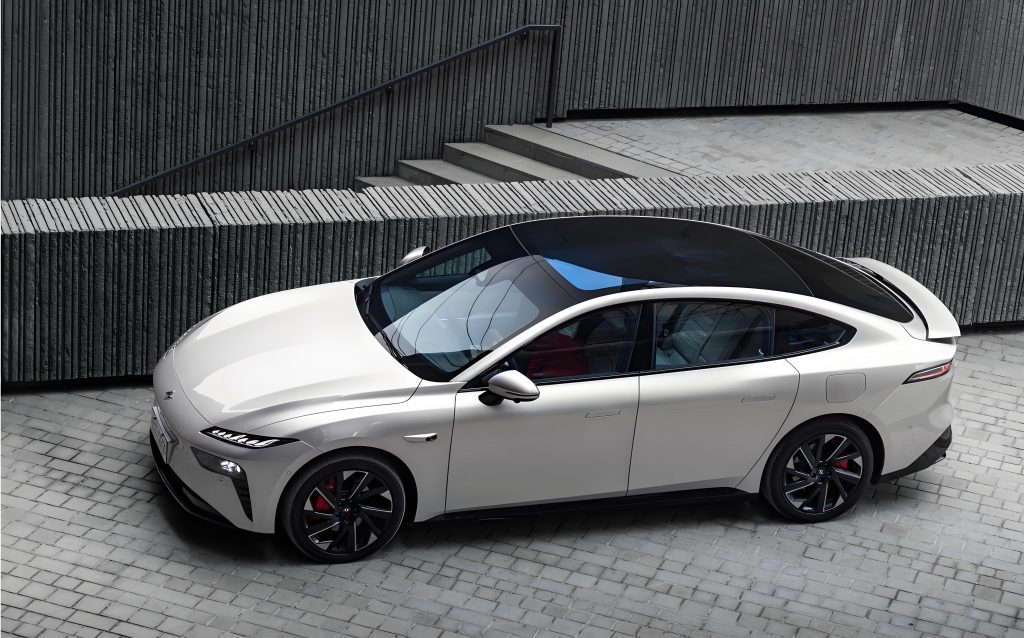
The image above illustrates the intricate web of interconnected systems within a modern electric car, highlighting the challenge of isolating faults in such a complex, interdependent environment. This complexity directly fuels the need for advanced diagnostic strategies.
Traditional and modern diagnostic methods form the toolkit for addressing these challenges. Each has its strengths and limitations when applied to the electric car.
| Method Category | Core Principle | Advantages for Electric Car | Limitations/Challenges |
|---|---|---|---|
| Model-Based | Uses mathematical models (e.g., equivalent circuit models for batteries, physics-based motor models) to generate residuals between predicted and measured behavior. | Provides deep insight into physical failure mechanisms. Useful for design-stage analysis and specific component monitoring (e.g., State of Health estimation). | Requires highly accurate models. Computationally expensive for real-time, full-vehicle diagnosis. Struggles with unmodeled dynamics and aging effects. |
| Data-Driven | Leverages machine learning (ML) and AI (e.g., SVM, Random Forests, Deep Neural Networks) to learn fault patterns directly from historical operational data. | Does not require explicit physical models. Excels at pattern recognition in complex, high-dimensional data (e.g., from BMS). Adaptable to new fault modes. | Demands large volumes of high-quality, labeled fault data. “Black-box” nature can reduce interpretability. Prone to overfitting on limited datasets. |
| Signal Processing | Analyzes time-series signals (current, vibration, acoustic noise) to extract features (FFT, wavelet transforms) indicative of faults. | Effective for real-time monitoring of rotating machinery (motor bearings) and power quality. Relatively low computational cost. | Sensitive to noise. Requires expert knowledge for feature selection. May miss faults with weak signal manifestations. |
| Knowledge-Based | Relies on encoded expert rules (Expert Systems) or fault tree analysis (FTA) to logically deduce the root cause from observed symptoms. | Transparent and interpretable. Excellent for diagnosing known, catalogued fault scenarios based on DTCs (Diagnostic Trouble Codes). | Knowledge acquisition bottleneck. Inflexible in handling novel or multiple concurrent faults. Maintenance of rule base is cumbersome. |
The future lies not in choosing one method, but in their fusion. A hybrid approach could use a data-driven model for initial, broad fault detection and a refined model-based or knowledge-based system for precise root-cause analysis, leveraging the strengths of each to serve the complex needs of the electric car.
To significantly elevate fault diagnosis accuracy, a holistic strategy encompassing technology, data, standards, human capital, and collaboration is essential.
1. Technology Innovation: Deploying Intelligent Diagnostic Systems
The core of modern diagnosis for electric cars lies in intelligent systems. Beyond basic algorithms, this involves:
Advanced Machine Learning Architectures: Utilizing Deep Neural Networks (DNNs), particularly Recurrent Neural Networks (RNNs) like LSTMs or GRUs, to model time-dependent fault progression in battery sequences. Convolutional Neural Networks (CNNs) can analyze 2D data like thermal images from battery packs. A simplified representation of a fault classifier can be:
$$y = \sigma(W \cdot \phi(X) + b)$$
where $X$ is the input feature vector (e.g., voltage, current, temperature histories), $\phi$ represents the (often non-linear) transformations of a deep network, $W$ and $b$ are weights and bias, and $\sigma$ is the activation function yielding a fault probability $y$.
Digital Twin Technology: Creating a high-fidelity virtual replica of the electric car, constantly updated with real-time sensor data. Faults are first simulated and diagnosed in the digital twin, allowing for predictive alerts and “what-if” repair scenario analysis before physical intervention.
Edge-Cloud Collaborative Computing: Deploying lightweight AI models on the vehicle’s edge computing unit for real-time, critical fault detection (e.g., short-circuit warning). Simultaneously, complex, resource-intensive diagnostics and model training are performed in the cloud using aggregated fleet data.
2. Data-Driven Foundation: Constructing an Integrated Big Data Platform
Data is the fuel for intelligent diagnosis. A comprehensive strategy requires:
Unified Data Lake: Ingesting and storing heterogeneous data from every electric car in a fleet: time-series BMS data, motor controller logs, vehicle CAN bus signals, charging events, geolocation, and even workshop repair records. This creates a holistic health profile.
Federated Learning for Privacy: Training diagnostic AI models across a decentralized network of electric cars without sharing raw data. Each vehicle trains a local model on its own data, and only model parameter updates are aggregated. This preserves privacy while improving the global model’s accuracy.
Advanced Analytics & Prognostics: Moving from diagnosis to prognosis. Using survival analysis and degradation models to predict the Remaining Useful Life (RUL) of key components. For a battery, a common prognostic model is based on capacity fade, which can be approximated by a dual-exponential or polynomial model learned from data:
$$Q(t) = Q_0 – \alpha \cdot \exp(\beta t) – \gamma \cdot t$$
where $Q(t)$ is capacity at time $t$, $Q_0$ is initial capacity, and $\alpha, \beta, \gamma$ are degradation parameters.
3. Standardization: Establishing Common Protocols and Frameworks
Standardization is the glue that enables scalable and accurate diagnosis across different electric car models and brands.
Unified Diagnostic Communication Protocols: Extending standards like ISO 14229 (UDS) and ISO 15118 (for charging) to include specific services and data identifiers for high-voltage components, cell-level battery data, and thermal management systems.
Standardized Fault Code Ontology: Developing a comprehensive, machine-readable taxonomy for electric car faults that goes beyond simple error codes. This ontology would define relationships between faults, symptoms, affected components, and severity levels, enabling more sophisticated reasoning by AI systems.
Open Data Model for Vehicle Health: Proposing a common schema (e.g., based on ISO 20077/20078) for structuring and exchanging vehicle condition data, making it interoperable across manufacturers, repair shops, and third-party service providers.
4. Talent Development: Cultivating a New Generation of Experts
The sophistication of the electric car demands a new skill set.
Interdisciplinary Curriculum: Educational programs must fuse automotive engineering with data science, electrical engineering, and software development. Focus areas should include high-voltage safety, battery technology, signal processing for condition monitoring, and machine learning applications.
Certification and Upskilling: Establishing industry-recognized certification programs for “High-Voltage Diagnostic Technicians” and “EV Data Analysts” to ensure a baseline of competency. Continuous upskilling for existing technicians is crucial.
Hands-On with Digital Tools: Training must increasingly incorporate simulation software, diagnostic software suites, and data analysis platforms, preparing technicians not just for wrenching, but for data-driven problem-solving.
5. Cross-Sector Collaboration: Building a Diagnostic Ecosystem
No single entity holds all the keys. Accuracy improves through collaboration.
Manufacturer-Supplier Data Alliance: Secure data-sharing agreements between OEMs and Tier-1 suppliers (e.g., battery cell makers, motor manufacturers) to gain deeper insight into component behavior and failure modes, enriching diagnostic models.
Open Research Challenges & Datasets: Industry consortiums should release anonymized, real-world fault datasets to the academic research community, accelerating algorithm innovation through open competitions.
Integration with Energy and Smart Grids: Collaborating with utility companies and grid operators. Data from charging infrastructure can provide crucial context for diagnosing charging-related faults in the electric car and vice-versa.
In conclusion, enhancing the fault diagnosis accuracy for electric cars is a multidimensional challenge requiring a concerted, systemic approach. It is not merely a technical problem but an operational and cultural shift within the automotive industry. By strategically integrating intelligent technologies like AI and digital twins, building robust data platforms grounded in privacy-conscious practices, championing industry-wide standardization, investing in future-proof talent, and fostering an open collaborative ecosystem, the industry can construct a diagnostic framework worthy of the electric car’s complexity. This will not only ensure safer, more reliable vehicles and superior user experiences but will also unlock the full potential of predictive maintenance, reducing lifecycle costs and solidifying the foundation for the sustainable mobility future. The path forward is one of convergence—where data, models, human expertise, and collaborative spirit converge to illuminate the inner workings of the electric car, ensuring its health and performance for the long journey ahead.