
As a dedicated analyst and enthusiast in the realm of sustainable transportation, I have observed firsthand the accelerating shift toward electric vehicles (EVs). This transformation is not merely about replacing internal combustion engines with batteries; it represents a profound reimagining of mobility, energy, and urban living. In this comprehensive exploration, I delve into the global projections, technological nuances, societal challenges, and geopolitical dynamics shaping the EV landscape, with a particular emphasis on the pivotal role of hybrid cars. Through data, formulas, and personal insights, I aim to illuminate the path to 2040 and beyond.
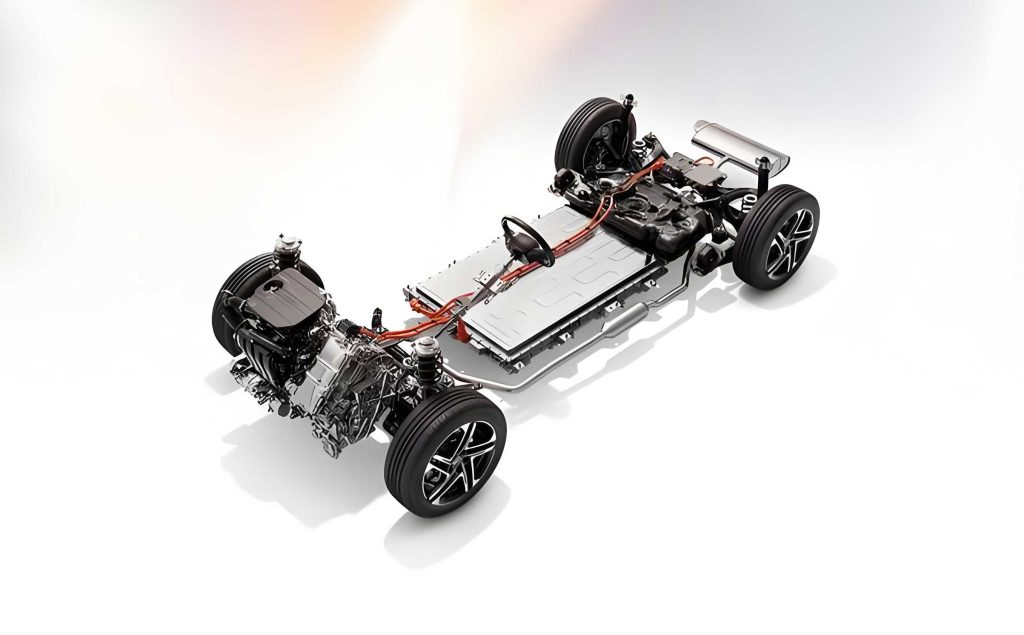
The global automotive fleet is on a trajectory of substantial growth. According to recent energy outlook reports, the total number of passenger cars worldwide is expected to nearly double, reaching approximately 2 billion units by 2040. Within this expansion, electric vehicles—encompassing both battery electric vehicles (BEVs) and plug-in hybrid electric vehicles (PHEVs)—are projected to exceed 300 million. Notably, PHEVs and BEVs are forecast to achieve rough parity in numbers by 2040, underscoring the enduring significance of hybrid cars as a transitional and complementary technology. Hybrid cars, especially plug-in hybrids, offer a versatile solution by combining electric propulsion with internal combustion engines, thereby addressing range anxiety and leveraging existing infrastructure while reducing emissions.
To quantify this evolution, consider the following table summarizing key projections:
| Year | Global Passenger Cars (Billions) | Electric Vehicles (Millions) | Share of Hybrid Cars in EV Fleet (%) | Annual Efficiency Improvement (%) |
|---|---|---|---|---|
| 2020 | 1.2 | 10 | 40 | 2.0 |
| 2030 | 1.6 | 150 | 45 | 2.5 |
| 2040 | 2.0 | 300 | 50 | 3.0 |
This data highlights the accelerating adoption of EVs, with hybrid cars maintaining a substantial share throughout the period. The efficiency gains, driven by stringent regulatory frameworks and governmental targets, can be modeled using a compound growth formula. If we denote the baseline energy efficiency as \( E_0 \) and the annual improvement rate as \( r \), the efficiency at time \( t \) is given by:
$$ E(t) = E_0 \times (1 + r)^t $$
For instance, with \( r = 0.025 \) (2.5% annual improvement) over \( t = 20 \) years, the cumulative efficiency enhancement factor becomes \( (1.025)^{20} \approx 1.638 \), signifying a 63.8% increase in overall efficiency. This progress is critical for reducing energy demand and emissions, particularly as the vehicle fleet expands.
The convergence of electric vehicles, shared mobility, and autonomous driving is reshaping transportation energy dynamics. In a gradual transition scenario, by 2040, electric powertrains are expected to account for 30% of all passenger car kilometers traveled, which is double the 15% share of EVs in the total vehicle fleet. This disparity arises because shared mobility services, such as ride-hailing and car-sharing, utilize vehicles more intensively. Since EVs have lower operational costs per kilometer, they are inherently more competitive in such high-usage contexts. The cost advantage can be expressed mathematically. Let \( C_{ice} \) represent the per-kilometer cost of an internal combustion engine vehicle, and \( C_{ev} \) for an electric vehicle. These costs include capital depreciation, energy, maintenance, and operational expenses. For a shared fleet, the total cost over distance \( D \) is:
$$ TC_{ev} = C_{ev} \times D $$
$$ TC_{ice} = C_{ice} \times D $$
With EVs typically having lower energy and maintenance costs, \( C_{ev} < C_{ice} \), leading to \( TC_{ev} < TC_{ice} \) for large \( D \). The advent of full autonomous driving around the mid-2020s is poised to amplify this effect by reducing labor costs and optimizing routing, further lowering \( C_{ev} \). A simplified model for autonomous EV cost per kilometer is:
$$ C_{ev,auto} = \frac{C_{capital} + C_{energy} + C_{maintenance} + C_{software}}{D_{annual}} $$
where \( C_{capital} \) is the amortized vehicle cost, \( C_{energy} \) is electricity expense, \( C_{maintenance} \) covers upkeep, \( C_{software} \) includes autonomy-related fees, and \( D_{annual} \) is the annual distance traveled. As autonomy matures, \( D_{annual} \) increases due to higher utilization, driving down \( C_{ev,auto} \) significantly. This synergy explains why shared mobility and EV adoption, including hybrid cars used in fleets, are projected to surge post-2030.
However, the rapid proliferation of electric vehicles, particularly smaller forms like electric bicycles and scooters, has introduced urban management challenges. In some densely populated areas, such as university campuses in major Chinese cities, the influx of delivery e-bikes for food and parcels has led to traffic congestion, accidents, and safety concerns. Authorities have responded with restrictive measures to curb these issues while promoting orderly mobility. For example, one institution implemented a comprehensive policy that bans delivery e-bikes from entering campus grounds, mandates registration for staff-owned electric vehicles, and establishes centralized distribution points for logistics. The effectiveness of such measures is summarized below:
| Policy Intervention | Description | Outcome Metric | Impact Assessment |
|---|---|---|---|
| Delivery E-bike Ban | Prohibition of food delivery and parcel e-bikes within campus | Traffic Violations Reduced | Over 1,400 incidents addressed initially |
| Staff EV Registration | Mandatory registration for faculty and staff electric vehicles | Registered Vehicles | Improved tracking and compliance |
| Designated Distribution Points | Creation of centralized hubs for parcel delivery via permitted vehicles | User Satisfaction | Positive feedback from campus community |
| Student E-bike Prohibition | Ban on student-owned e-bikes on campus | Confiscated Vehicles | Nearly 1,800 units seized in enforcement drives |
These localized actions reflect broader efforts to integrate EVs safely into urban ecosystems. They also hint at the need for standardized regulations as hybrid cars and EVs become more prevalent in shared spaces.
On the geopolitical front, government incentives are catalyzing EV production and supply chain localization. In Southeast Asia, for instance, one country has emerged as a hub for eco-friendly vehicle manufacturing due to aggressive policy support, including tax breaks and subsidies for local production of key components like batteries. This has attracted substantial investments from global automakers, particularly in battery manufacturing facilities for electric and hybrid cars. The strategic importance of hybrid cars is evident here, as many manufacturers are producing both BEVs and PHEVs to cater to diverse market segments. The following table outlines notable investments in battery production within this region:
| Investor Profile | Location | Estimated Investment | Production Timeline | Primary Focus |
|---|---|---|---|---|
| German Automotive Group A | Thailand | 10 million euros | Operational by 2019 | Batteries for EVs and hybrid cars |
| German Automotive Group B | Thailand | Confidential | Early 2020s | Batteries for plug-in hybrid cars |
| Japanese Automotive Major | Thailand | Significant capital | Around 2020 | Batteries for electric vehicles |
| Various Global Players | Thailand and regionally | Cumulative billions | 2020-2040 period | Diverse EV and hybrid car components |
These ventures not only secure supply chains but also enable automakers to benefit from governmental incentives, reducing costs and enhancing competitiveness. The production of batteries locally supports the assembly of hybrid cars, which are often seen as a stepping stone to full electrification in markets with developing charging infrastructure.
Technological innovation continues to drive the EV revolution forward. Beyond powertrains, advancements in safety features are noteworthy. For example, some electric bicycles now incorporate integrated fire suppression systems, such as pneumatic fine water mist devices, to mitigate battery-related risks. This attention to safety is crucial for gaining public trust and ensuring sustainable adoption.
The image above exemplifies such innovation, showcasing an electric bicycle equipped with advanced safety technology. This aligns with the broader trend of enhancing EV design to address practical concerns, a consideration equally relevant for hybrid cars that combine complex systems.
To further analyze the market dynamics, we can employ mathematical models for adoption rates. The diffusion of EVs, including hybrid cars, often follows an S-curve pattern, described by the logistic growth function:
$$ N(t) = \frac{K}{1 + e^{-r(t – t_0)}} $$
where \( N(t) \) is the number of EVs at time \( t \), \( K \) is the carrying capacity (e.g., maximum market penetration), \( r \) is the growth rate, and \( t_0 \) is the inflection point. For hybrid cars, which may experience earlier adoption due to their flexibility, parameters might differ. Assuming \( K = 150 \) million for hybrid cars alone within the EV segment by 2040, and an initial adoption phase around 2020, we can simulate growth. Additionally, the energy impact of EVs can be assessed through formulas like the reduction in gasoline consumption. If each hybrid car displaces a fraction \( f \) of gasoline usage compared to a conventional car, the total fuel savings \( S \) over a fleet of \( H \) hybrid cars is:
$$ S = H \times f \times G $$
where \( G \) is the annual gasoline consumption per conventional vehicle. With millions of hybrid cars on the road, the cumulative effect becomes substantial, contributing to energy security and emission reductions.
The interplay between policy, technology, and consumer behavior shapes the EV landscape. Governments worldwide are setting targets for EV penetration, often favoring hybrid cars in transitional phases due to their lower infrastructure demands. For instance, some regions offer purchase incentives for PHEVs, boosting their market share. To compare policy effectiveness, consider a simplified scoring model based on key criteria:
| Policy Tool | Description | Impact on Hybrid Car Adoption (Scale 1-10) | Cost to Government (Relative Units) |
|---|---|---|---|
| Purchase Subsidies | Direct rebates for EV buyers, including hybrid cars | 8 | High |
| Tax Exemptions | Reduced or waived taxes on EVs and components | 7 | Medium |
| Charging Infrastructure Grants | Funding for public and private charging stations | 6 (higher for BEVs) | Medium |
| Manufacturing Incentives | Tax breaks for local production of batteries and EVs | 9 | High |
| Usage Privileges | Access to bus lanes, free parking for EVs | 5 | Low |
This table illustrates that manufacturing incentives, as seen in Southeast Asia, score highly in promoting hybrid car production, albeit at significant cost. Balancing these tools is essential for sustainable growth.
Looking ahead, the integration of renewables with EV charging will be pivotal. The carbon footprint of an EV depends on the electricity generation mix. We can calculate the emissions \( E_{ev} \) per kilometer as:
$$ E_{ev} = \frac{EC \times CI}{100} $$
where \( EC \) is the energy consumption in kWh/km, and \( CI \) is the carbon intensity of electricity in gCO₂/kWh. For a hybrid car, emissions are a weighted average of electric and gasoline modes, depending on the utility factor \( u \) (fraction of distance driven electrically):
$$ E_{hybrid} = u \times E_{ev} + (1 – u) \times E_{gasoline} $$
As grids decarbonize, \( E_{ev} \) decreases, making both BEVs and PHEVs cleaner over time. This dynamic reinforces the value of hybrid cars as a flexible option during the energy transition.
In conclusion, the journey toward 2040’s projected 300 million electric vehicles is multifaceted, marked by technological strides, regulatory frameworks, and societal adaptations. Hybrid cars, serving as a bridge and a permanent niche, will continue to play a critical role in this evolution. From shared mobility algorithms to battery factory investments, every element intertwines to shape a more sustainable mobility future. As I reflect on these trends, it is clear that collaboration among policymakers, industry leaders, and consumers is essential to navigate challenges like urban integration and supply chain resilience. The electric mobility transformation, with hybrid cars at its heart, promises not only reduced emissions but also a redefined relationship with transportation—one that I am committed to observing and analyzing in the years to come.