
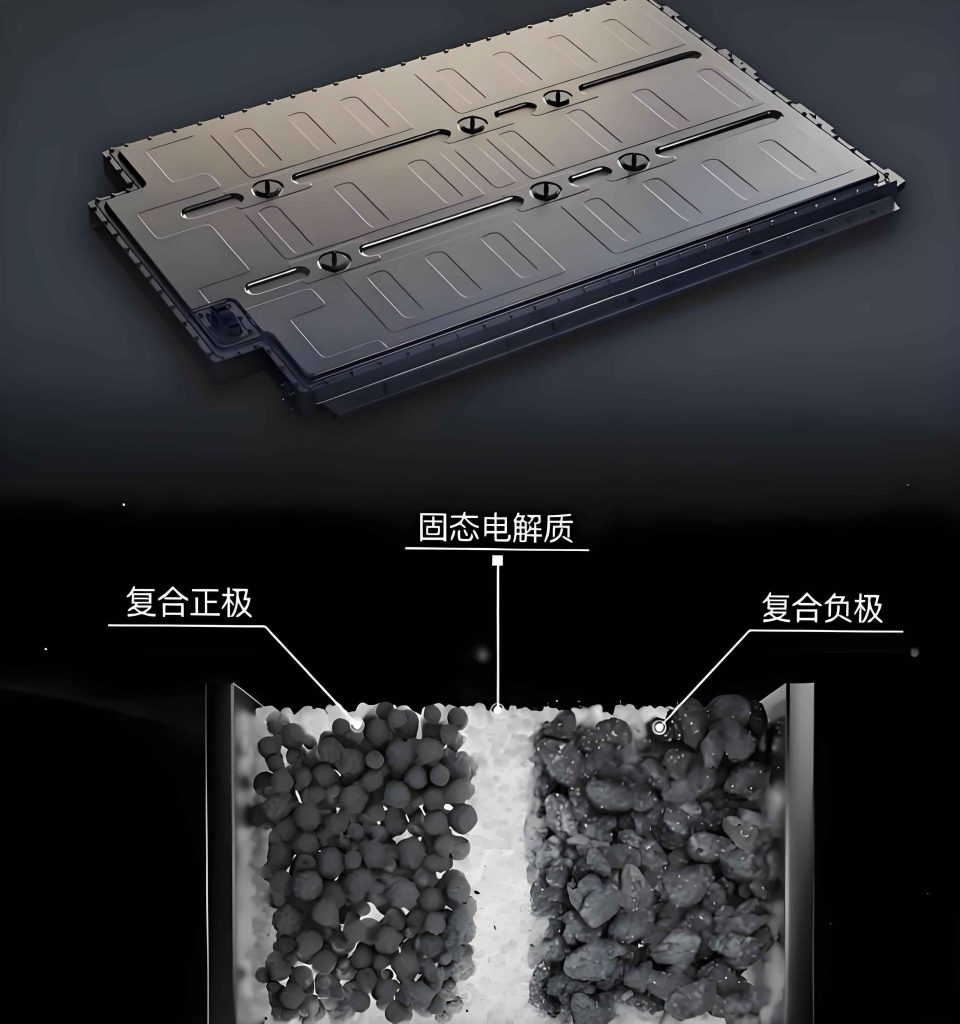
The pursuit of safer, higher-energy-density energy storage solutions has positioned solid-state batteries at the forefront of next-generation battery technology. Replacing flammable liquid electrolytes with solid counterparts fundamentally addresses critical safety concerns such as leakage, combustion, and thermal runaway. Among the various fabrication techniques for solid polymer electrolytes, the in-situ polymerization method offers distinct advantages. This process involves injecting a low-viscosity liquid precursor monomer into a pre-assembled cell, which subsequently polymerizes under specific thermal or radiation conditions. This technique ensures excellent interfacial contact between the electrolyte and the electrodes—a significant challenge in conventional solid-state battery assembly—leading to lower interfacial resistance and improved performance. However, the success of this method hinges on the properties of the porous substrate, or scaffold, that hosts the precursor before and during polymerization. This substrate must be electrochemically stable, mechanically robust, and, crucially, exhibit optimal wettability by the precursor solution to facilitate uniform polymerization and ionic conduction pathways.
Common substrates include traditional polyolefin separators like polypropylene (PP) and non-woven fabrics like polyester non-woven (PNW). While PNW, with its three-dimensional fibrous network and high porosity, often demonstrates superior wettability compared to the more closed structure of PP, this very characteristic presents a hidden vulnerability: hygroscopicity. Moisture is a well-known and formidable adversary in lithium-ion battery manufacturing, as it reacts with common lithium salts (e.g., LiPF6) to generate corrosive hydrogen fluoride (HF) and other detrimental species. These reactions lead to gas generation, electrode material corrosion, passive layer formation on electrodes, and ultimately, rapid capacity fade and safety hazards. In the context of a solid-state battery, where interfaces are paramount and self-healing mechanisms (like liquid electrolyte replenishment) are absent, the impact of residual moisture could be even more profound and detrimental. This investigation delves into the critical, yet often overlooked, role of substrate moisture content on the electrochemical and safety performance of in-situ polymerized solid-state batteries. By comparing systems based on PP and PNW substrates, we elucidate how moisture ingress compromises the promising future of this battery technology and underscore the non-negotiable requirement for stringent moisture control.
Experimental Methodology and Material Characterization
1. Precursor Solution and Electrolyte Formation
The solid polymer electrolyte was formed via the thermal-initiated free-radical polymerization of vinyl carbonate (VC). The precursor solution was formulated by dissolving lithium hexafluorophosphate (LiPF6) and ethylene carbonate (EC) as a plasticizer/stabilizer in VC monomer, followed by the addition of azobisisobutyronitrile (AIBN) as a thermal initiator. The resulting clear, low-viscosity solution (VC/EC/LiPF6/AIBN) was stable at room temperature. For cell assembly, this precursor was injected into cells containing either a PP separator or a PNW fabric as the supporting substrate. The cells were then subjected to a thermal curing protocol: 24 hours at 60°C followed by 10 hours at 80°C. This process triggered the polymerization, transforming the liquid precursor into a solid poly(vinylene carbonate) (PVC)-based electrolyte hosted within the substrate’s pores, denoted as PVC@PP and PVC@PNW, respectively.
2. Substrate Properties and Moisture Analysis
The inherent properties of the two substrates were first characterized. Scanning Electron Microscopy (SEM) revealed the distinct morphologies. The PP separator, produced via a dry-stretching process, exhibited a relatively uniform but low-porosity microstructure with small, slit-like pores. In contrast, the PNW fabric displayed a classic non-woven architecture—a three-dimensional network of intertwined polyester fibers creating large, interconnected pores and significantly higher overall porosity.
The critical parameter of moisture content was quantitatively assessed using Karl Fischer coulometric titration. Samples were heated to 140°C under a dry nitrogen carrier gas to liberate absorbed water, which was then titrated. The results, summarized in Table 1, highlight a clear correlation between structure and hygroscopicity. The porous, fibrous PNW absorbed and retained substantially more moisture than the dense PP film, even after a standard drying procedure.
| Substrate | Morphology | Porosity | Moisture Content (After Drying) | Key Property |
|---|---|---|---|---|
| Polypropylene (PP) | Dense, flat film with micropores | Low (~40%) | ~455 ppm | Electrochemically stable, low wettability |
| Polyester Non-Woven (PNW) | 3D fibrous network, macro-pores | High (>60%) | ~755 ppm | High wettability, strongly hygroscopic |
3. Cell Assembly and Testing Protocols
Two main cell configurations were employed for evaluation: symmetric Li||Li cells and full Li||NMC811 cells (both coin and pouch formats). The symmetric cells were used to isolate and study the electrolyte/electrode (Li metal) interface stability via electrochemical impedance spectroscopy (EIS) and galvanostatic cycling. Full cells with a LiNi0.8Mn0.1Co0.1O2 (NMC811) cathode were assembled to evaluate practical performance metrics like capacity, cycle life, and rate capability. Finally, safety performance was assessed using a nail penetration test on charged 4.5 Ah pouch solid-state battery prototypes.
Electrochemical Performance: A Tale of Two Interfaces
1. Ionic Conductivity and Interfacial Resistance
The effective ionic conductivity of the in-situ formed electrolyte and the stability of the Li/electrolyte interface are primary determinants of a solid-state battery’s performance. EIS measurements on Li||Li symmetric cells provided critical insights. The polymerization process itself increased the bulk resistance compared to the liquid state, as expected when transitioning to a solid medium. However, the more telling difference lay in the interfacial resistance ($R_{int}$), which corresponds to the charge transfer resistance at the Li metal surface.
The PVC@PP system exhibited a moderate and stable $R_{int}$ (~90 Ω). Conversely, the PVC@PNW cell showed an interfacial resistance approximately double that value (~180 Ω). This significant increase can be directly attributed to the higher moisture content in the PNW substrate. The deleterious chemical reactions are summarized below:
$$ \text{LiPF}_6 + \text{H}_2\text{O} \rightarrow \text{LiF} + \text{POF}_3 + 2\text{HF} $$
$$ \text{POF}_3 + \text{H}_2\text{O} \rightarrow \text{PO}_2\text{F}_2^- + 2\text{HF} + \text{H}^+ $$
The generated HF aggressively corrodes the Li metal anode, forming a thick, heterogeneous, and ionically resistive solid electrolyte interphase (SEI) composed of LiF, LixPOyFz, and other decomposition products. This degraded interface is the root cause of the elevated $R_{int}$ in moisture-compromised solid-state battery cells.
2. Lithium Metal Cycling Stability
Galvanostatic cycling of symmetric Li||Li cells at a current density of 0.2 mA cm-2 starkly illustrated the consequences of this unstable interface. The PVC@PP cell demonstrated stable lithium plating/stripping over 800 hours with a consistent overpotential of about 20 mV. In dramatic contrast, the PVC@PNW cell failed almost immediately. It exhibited an abnormally high initial overpotential (>2 V) and experienced severe voltage fluctuations, culminating in complete cell failure (open circuit) within a short period. This failure mode is characteristic of an irreversibly damaged interface where ion transport is severely hindered, leading to localized current hotspots and ultimately, contact loss.
3. Full Cell Performance: Capacity and Cycle Life
The performance divergence extended to practical full cells. The PVC@PP-based solid-state battery with an NMC811 cathode showed characteristic charge/discharge voltage profiles with minimal polarization. It delivered a stable cycling performance, retaining a high percentage of its initial capacity over 110 cycles at 0.2C. Subsequent decay was primarily linked to the well-known issue of Li metal anode morphology degradation (dendrite formation and pulverization) in solid-state systems, a challenge separate from moisture.
The PVC@PNW-based cell, however, exhibited profoundly poor performance from the outset. The voltage profiles were erratic, and the first charge cycle showed clear signs of “over-charge”—a continuous voltage rise without reaching a proper cutoff, indicative of massive parasitic reactions consuming current. This is a direct consequence of the electrochemical oxidation of water and the corrosion of the aluminum current collector by HF at the high-voltage cathode. The cell’s capacity faded rapidly and unpredictably, as shown in the comparative data in Table 2.
| Performance Metric | PVC@PP Solid-State Battery | PVC@PNW Solid-State Battery | Primary Cause of Difference |
|---|---|---|---|
| Interfacial Resistance ($R_{int}$) | ~90 Ω (Moderate & Stable) | ~180 Ω (High) | Moisture-induced SEI growth on Li anode |
| Li||Li Symmetric Cell Cycling | Stable for >800h, ~20mV overpotential | Failed within 50h, high & fluctuating overpotential | Unstable, resistive Li/electrolyte interface |
| Full Cell 1st Cycle Efficiency | Normal | Very Low, with Over-charge | Parasitic oxidation of water/Al corrosion at cathode |
| Capacity Retention (110 cycles @ 0.2C) | >85% | <50% (Unstable) | Continuous electrolyte/electrode degradation |
| Voltage Polarization | Low | High and Erratic | Increased internal resistance and unstable interfaces |
Safety Performance: The Ultimate Test
The paramount advantage of a solid-state battery is enhanced safety. This was put to the test using the nail penetration protocol, which simulates an internal short circuit. For this critical evaluation, 4.5 Ah pouch cells charged to 100% State of Charge (SOC) were used.
The PVC@PP solid-state battery passed the test convincingly. Upon nail penetration, no fire, smoke, or explosion occurred. Only a minor temperature rise and a faint odor from localized decomposition were detected. The solid electrolyte effectively suppressed thermal propagation and prevented the catastrophic failure typical of liquid-electrolyte cells.
In stark contrast, the PVC@PNW pouch cell underwent violent thermal runaway, igniting immediately upon penetration. This catastrophic failure demonstrates that the benefits of a solid electrolyte can be completely nullified by impurities. The residual moisture provided both a reactant for exothermic chemical reactions and corrosive agents (HF) that damaged the passivating layers on the cathode and anode, creating highly reactive fresh surfaces. The internal short circuit triggered by the nail then ignited this compromised and unstable system, leading to combustion.
| Cell Type | Observation Upon Penetration | Outcome | Inference |
|---|---|---|---|
| PVC@PP Pouch Cell | No flame, no smoke, minor temperature rise. | PASS – Safe failure mode. | The solid electrolyte matrix effectively isolates short and halts thermal propagation. |
| PVC@PNW Pouch Cell | Instant ignition, violent flaming, thermal runaway. | FAIL – Catastrophic failure. | Moisture-driven side reactions create a thermally unstable and reactive cell interior. |
Discussion and Mechanistic Insights
The experimental evidence conclusively establishes that substrate-originated moisture is a critical, performance-determining factor in in-situ polymerized solid-state batteries. The mechanism operates on multiple fronts:
1. Anode Interface Poisoning: At the lithium metal anode, water reacts with LiPF6 to generate HF. HF etches the native Li2O/ Li2CO3 layer and reacts with lithium to form a thick, inorganic-rich SEI dominated by LiF. While a thin LiF layer can be beneficial, a thick, spontaneously formed layer is highly resistive. The ionic conductivity ($\sigma_{i}$) of such an interface can be modeled as being inversely proportional to its thickness ($L$) and resistivity ($\rho$):
$$ \sigma_{i} \propto \frac{1}{\rho L} $$
Moisture-induced growth significantly increases the effective $L$ and $\rho$, causing $\sigma_{i}$ to plummet. This leads to high overpotential, uneven Li deposition, and ultimately cell failure during cycling.
2. Cathode and Current Collector Degradation: At the high-voltage cathode, water can be oxidized at potentials above ~4.0 V vs. Li/Li+, generating protons and oxygen. The protons accelerate the dissolution of transition metal ions from the cathode lattice, destabilizing its structure. Furthermore, HF aggressively corrodes the aluminum current collector:
$$ 2\text{Al} + 6\text{HF} \rightarrow 2\text{AlF}_3 + 3\text{H}_2 $$
This corrosion leads to increased contact resistance, loss of electrical connectivity, and the generation of hydrogen gas, which contributes to cell swelling and pressure build-up.
3. Bulk Electrolyte Degradation: The reaction products, particularly POF3 and HF, can further react with the polymer electrolyte matrix itself (e.g., attacking carbonate groups in PVC), leading to chain scission, loss of mechanical integrity, and a drop in bulk ionic conductivity. This creates a positive feedback loop of degradation.
The PNW substrate, despite its excellent wettability, acts as a Trojan horse due to its hygroscopic nature. Its high surface area and porous volume efficiently trap ambient moisture during handling, which is not fully removed by standard industrial drying processes. When the liquid precursor infiltrates this wet matrix, the water is dissolved and distributed throughout the future solid-state battery volume, initiating the destructive chain of reactions upon the first charge.
Conclusion and Outlook
This investigation underscores a pivotal engineering principle for advancing in-situ polymerized solid-state batteries: interfacial stability and ultimate cell safety are inextricably linked to impurity control, with moisture being a primary concern. While material choices like PNW substrates can improve precursor wettability and theoretically enhance ionic pathways, their propensity to absorb moisture can utterly defeat the purpose, leading to poor electrochemical performance and, most alarmingly, a severe compromise in the intrinsic safety advantage of a solid-state battery.
The findings mandate a dual-path strategy for future development:
- Stringent Dry Manufacturing: Implementing ultra-dry (<0.1 ppm H2O) assembly environments and developing more robust drying protocols for all components, especially porous substrates, is non-negotiable. Real-time moisture monitoring during production will be essential.
- Material Innovation: Research must focus on developing next-generation scaffolds that combine the optimal properties: high wettability for the monomer, mechanical strength, electrochemical stability, and intrinsic hydrophobicity or moisture-scavenging capabilities. Surface coatings or modifications of materials like PNW to impart hydrophobicity without sacrificing porosity could be a fruitful avenue.
- Electrolyte Formulation: Designing precursor formulations with built-in moisture scavengers (e.g., specific Lewis acid additives) or using lithium salts less susceptible to hydrolysis (e.g., LiFSI, with appropriate corrosion inhibitors for Al) could provide an additional layer of tolerance.
In conclusion, the journey towards commercializing reliable and safe in-situ polymerized solid-state batteries is as much about mastering the intricate electrochemistry at interfaces as it is about conquering the fundamental challenges of materials processing and environmental control. Eliminating the insidious influence of moisture is a critical step on this path, transforming the promising potential of this technology into a practical, high-performance, and truly safe reality for energy storage.