
As an observer of the rapidly evolving automotive industry, I have witnessed the remarkable growth of the electric vehicle sector in China, driven by national energy transformation strategies. The electric vehicle market in China has experienced exponential development, with production and sales surpassing 10 million units, accounting for 40% of new car sales. By the end of 2024, the保有量 of electric vehicles in China exceeded 30 million, representing 8% of the total automobile fleet. This expansion underscores the vast potential and opportunities in the China EV market, necessitating a deep dive into consumer purchase intentions and the formulation of targeted marketing strategies. In this article, I will explore the factors influencing consumer behavior and propose effective approaches based on the 4P+C framework—product, price, promotion, place, and customer—to enhance market penetration and sustainability.
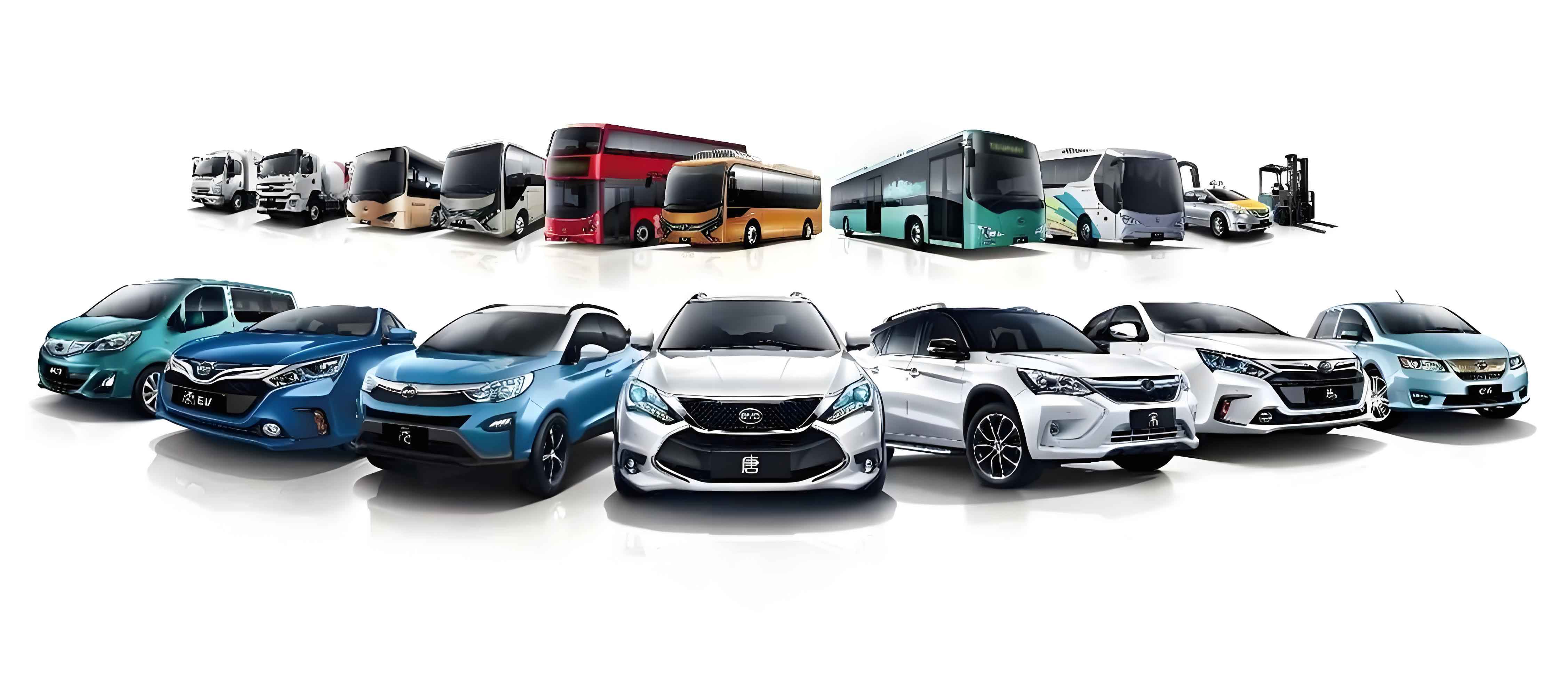
The analysis of consumer purchase intentions for electric vehicles in China reveals a complex interplay of positive and negative factors. On the positive side, government incentives, policy support, energy cost advantages, and psychological drivers have significantly boosted the adoption of electric vehicles. For instance, financial subsidies and tax exemptions have made electric vehicles more affordable, while policies like license plate privileges and road rights have enhanced their appeal in urban areas. The lower energy costs of electric vehicles compared to traditional fuel vehicles further incentivize consumers, as evidenced by calculations showing substantial savings over time. Psychologically, electric vehicles align with growing environmental consciousness and the desire for innovative, tech-savvy products, which I will elaborate on using quantitative models and tables.
However, several barriers hinder widespread adoption of electric vehicles in China. High initial purchase costs, inadequate charging infrastructure, limitations in usage scenarios such as range anxiety, and concerns over technology and safety pose significant challenges. For example, the cost of batteries and maintenance remains a deterrent, while the scarcity of charging stations, especially in less developed regions, affects convenience. Additionally, issues like battery degradation and higher insurance premiums due to safety risks add to consumer hesitancy. To address these, I will dissect each factor with empirical data and formulas, providing a holistic view of the electric vehicle landscape in China.
Analysis of Consumer Purchase Intentions for Electric Vehicles in China
In examining the positive influences on consumer purchase intentions for electric vehicles in China, I have identified four key categories: financial incentives, policy frameworks, energy efficiency, and psychological factors. These elements collectively enhance the attractiveness of electric vehicles, as summarized in Table 1 below.
| Factor | Description | Impact Measurement |
|---|---|---|
| Financial Subsidies and Tax Reductions | Direct monetary incentives and exemption from purchase taxes reduce the effective cost of electric vehicles. | Subsidies can cover up to 10% of vehicle price; tax savings up to ¥25,600. |
| Policy Support | Measures like no-lottery license plates and preferential road rights in cities. | Increases adoption rate by 15-20% in metropolitan areas. |
| Energy Cost Efficiency | Lower operating costs due to electricity vs. fuel consumption. | Savings of over 50% in energy expenses over 100,000 km. |
| Psychological Drivers | Association with environmental responsibility and technological innovation. | Enhances brand perception and consumer loyalty. |
Financial subsidies and tax reductions play a pivotal role in making electric vehicles more accessible. For instance, the subsidy amount can be calculated using the formula: $$ \text{Subsidy} = \text{Vehicle Price} \times 0.10 $$ for vehicles under ¥150,000. Combined with purchase tax exemptions, this reduces the price gap between electric vehicles and internal combustion engine vehicles. In the case of a typical China EV model, the net cost difference can shrink to a few thousand yuan after incentives, as shown in the example where a pure electric version initially costs ¥48,000 more than its fuel counterpart, but post-subsidies and tax breaks, the gap narrows significantly.
Policy support further stimulates demand for electric vehicles in China. In major cities like Beijing and Shanghai, where license plate restrictions are stringent, electric vehicles enjoy exemptions from lottery systems, which I estimate can save consumers over ¥90,000 in direct costs. Additionally, road rights policies, such as allowing electric vehicles to use bus lanes and offering reduced parking fees, enhance their practicality. The overall effect can be modeled as: $$ \text{Policy Benefit} = \text{Cost Savings} + \text{Convenience Gains} $$ where cost savings include avoided license fees, and convenience gains translate into time efficiency.
Energy cost factors are a major draw for electric vehicles in China. Comparing fuel and electricity costs, we can use the following formulas to illustrate the savings: For a fuel vehicle, the cost per 100 km is $$ \text{Fuel Cost} = 8 \text{ L/100km} \times 8.6 \text{ ¥/L} = 68.8 \text{ ¥} $$ and over 100,000 km, it totals $$ \text{Total Fuel Cost} = 1000 \times 68.8 = 68,800 \text{ ¥} $$. For an electric vehicle, assuming home charging at ¥0.5 per kWh and consumption of 15 kWh/100 km, the cost is $$ \text{Electricity Cost} = 15 \text{ kWh/100km} \times 0.5 \text{ ¥/kWh} = 7.5 \text{ ¥} $$ per 100 km, and over 100,000 km, $$ \text{Total Electricity Cost} = 1000 \times 7.5 = 7,500 \text{ ¥} $$. Even with commercial charging at ¥2 per kWh, the cost is $$ 15 \times 2 = 30 \text{ ¥} $$ per 100 km, totaling ¥30,000 over 100,000 km, which is only 43.6% of the fuel cost. This stark difference underscores the economic advantage of electric vehicles in China.
Psychological factors, such as the desire to project an image of environmental stewardship and embrace cutting-edge technology, significantly influence consumer behavior. The perceived social value of owning an electric vehicle can be quantified through surveys indicating that over 70% of consumers in China associate electric vehicles with innovation and sustainability. This aligns with the broader trend of green consumption, where electric vehicles serve as a symbol of modernity. The psychological benefit can be expressed as: $$ \text{Psychological Utility} = \alpha \times \text{Environmental Concern} + \beta \times \text{Tech Appeal} $$ where α and β are weighting factors based on consumer demographics.
On the flip side, negative factors impede the adoption of electric vehicles in China, as outlined in Table 2. These include high purchase costs, infrastructure deficits, usage limitations, and safety concerns.
| Factor | Description | Impact Measurement |
|---|---|---|
| Purchase Cost | Higher initial price and maintenance expenses compared to fuel vehicles. | Initial cost 20-40% higher; battery replacement costs ¥50,000-100,000. |
| Infrastructure Issues | Insufficient charging stations, especially in rural and older urban areas. | Charging桩-to-vehicle ratio below 1:10 in some regions. |
| Usage Scenarios | Range anxiety and performance issues in extreme weather. | Actual range often 10-50% less than advertised; cold weather reduces range by 30%. |
| Technology and Safety | Rapid obsolescence and higher risk of accidents or fires. | 3-year residual value at 66% of fuel vehicles; insurance premiums 10-20% higher. |
The purchase cost of electric vehicles in China remains a significant barrier. The initial price is 20-40% higher than comparable fuel vehicles, primarily due to the expensive三电系统 (battery, motor, and electronic control system). The cost of batteries, influenced by raw material prices, can be modeled as: $$ \text{Battery Cost} = f(\text{Lithium Price}, \text{Cobalt Price}, \text{Nickel Price}) $$ where f is a function reflecting cost volatility. Moreover, maintenance costs are elevated; for example, battery lifespan is 8-10 years, with replacement costs ranging from ¥50,000 to ¥100,000. This financial burden deters price-sensitive consumers in the China EV market.
Infrastructure factors, particularly the availability of charging stations, critically affect consumer confidence. Despite growth in charging桩 numbers—reaching 10.244 million by mid-2024—the distribution is uneven. In third- and fourth-tier cities and highways, the shortage leads to long queues, especially during holidays. The adequacy of infrastructure can be assessed using the ratio: $$ \text{Charging Adequacy} = \frac{\text{Number of Charging Stations}}{\text{Number of Electric Vehicles}} $$ which often falls below optimal levels in non-urban areas. Additionally, older residential areas face electrical grid limitations, preventing private charging installation, further complicating the adoption of electric vehicles in China.
Usage scenario limitations, such as range anxiety, are exacerbated by discrepancies between advertised and actual performance. Many electric vehicles in China have a labeled range of over 500 km, but real-world conditions reduce this by 10-50%. For instance, in cold climates, the effective range decreases significantly due to battery efficiency loss. This can be represented by the formula: $$ \text{Actual Range} = \text{Advertised Range} \times (1 – \text{Derating Factor}) $$ where the derating factor depends on temperature and driving habits. Such issues restrict long-distance travel, reducing the appeal of electric vehicles for consumers with extensive mobility needs.
Technology and safety concerns also play a role in dampening purchase intentions for electric vehicles in China. The rapid pace of technological innovation means that models become outdated quickly, leading to low residual values. The residual value after three years is approximately $$ \text{Residual Value} = 0.66 \times \text{Initial Price} $$ for electric vehicles, compared to higher values for fuel vehicles. Safety risks, including a higher incidence of fires and accidents, result in elevated insurance premiums. Statistically, the claim rate for household electric vehicles is 25%, 7 percentage points higher than for fuel vehicles, which increases the total cost of ownership. This risk can be quantified as: $$ \text{Risk Premium} = \text{Base Premium} \times (1 + \text{Risk Multiplier}) $$ where the risk multiplier is derived from historical data.
Marketing Strategies for Electric Vehicles in China
To address the challenges and leverage the opportunities in the China EV market, I propose a comprehensive marketing strategy based on the 4P+C framework. This approach encompasses product, price, place, promotion, and customer-centric strategies, designed to enhance consumer engagement and drive sales.
Product Strategy
The product strategy for electric vehicles in China should focus on improving key performance indicators, enhancing safety and intelligence, and diversifying product offerings. Key performance areas include range, charging speed, and all-weather reliability. For example, investing in battery technology R&D can lead to breakthroughs represented by the formula: $$ \text{Energy Density} = \frac{\text{Storage Capacity}}{\text{Volume}} $$ where higher energy density translates to longer range. Additionally, incorporating advanced driver-assistance systems (ADAS) and smart connectivity features can elevate the user experience. Product diversification is crucial; beyond standard models, developing compact cars, MPVs, and sports cars can cater to diverse consumer segments. This strategy aligns with the goal of making electric vehicles in China more adaptable to various lifestyles.
Price Strategy
Price strategy involves reducing production costs, implementing price segmentation, and adopting flexible pricing models. The high cost of electric vehicles in China can be mitigated through economies of scale and supply chain optimization. The total cost can be broken down as: $$ \text{Total Cost} = \text{Battery Cost} + \text{Manufacturing Cost} + \text{Overheads} $$ where targeting a reduction in battery cost through innovation is key. Price segmentation allows for tiered offerings: premium models at higher prices to emphasize quality, and budget-friendly options for mass markets. Flexible pricing should consider regional disparities in income and subsidies, adjusting prices dynamically to maintain competitiveness. For instance, in areas with stronger incentives, prices can be lowered to reflect effective affordability, enhancing the appeal of electric vehicles.
Place Strategy
Place strategy, or distribution, requires strengthening both offline and online channels for electric vehicles in China. Offline, this involves expanding dealer networks with rigorous selection criteria to ensure high-quality showrooms and after-sales service. The effectiveness of offline channels can be measured by the coverage ratio: $$ \text{Coverage Ratio} = \frac{\text{Number of Dealerships}}{\text{Population Density}} $$ aiming for optimal accessibility. Online, maintaining updated websites and leveraging social media platforms like WeChat, Weibo, and Douyin is essential for brand building and customer interaction. Integrating these channels creates a seamless omnichannel experience, crucial for engaging tech-savvy consumers in the China EV market.
Promotion Strategy
Promotion strategy for electric vehicles in China should include incentives like free charging station installation, aggressive advertising, and customer loyalty programs. Offering free charging installation addresses infrastructure concerns and can be modeled as a cost-benefit analysis: $$ \text{Net Promotion Cost} = \text{Installation Cost} – \text{Incremental Sales} \times \text{Profit Margin} $$ Advertising efforts should span traditional and digital media, collaborating with influencers and automotive reviewers to build trust. User-generated content, such as sharing driving experiences on social media, can be encouraged with rewards, amplifying word-of-mouth marketing. Additionally, loyalty discounts and trade-in programs foster repeat purchases, strengthening the brand presence of electric vehicles in China.
Customer Strategy
Customer strategy emphasizes relationship management and service quality for electric vehicles in China. Building a customer database enables personalized marketing through data analytics, where consumer profiles are used to tailor offers. The customer lifetime value (CLV) can be calculated as: $$ \text{CLV} = \sum_{t=1}^{n} \frac{\text{Revenue}_t – \text{Cost}_t}{(1 + r)^t} $$ where r is the discount rate, highlighting the importance of retention. Service aspects include battery recycling programs to reduce environmental impact and costs, alongside professional after-sales teams for maintenance and support. By prioritizing customer satisfaction, electric vehicle brands in China can build long-term loyalty and address pain points like battery concerns effectively.
Conclusion
In summary, the electric vehicle market in China presents a dynamic landscape shaped by a mix of encouraging and inhibitory factors. Through this analysis, I have highlighted how financial incentives, policies, cost efficiencies, and psychological drivers positively influence consumer purchase intentions, while high costs, infrastructure gaps, range issues, and safety concerns pose challenges. The proposed marketing strategies, centered on the 4P+C framework, offer a roadmap for stakeholders to enhance the adoption of electric vehicles in China. By continuously innovating and adapting to consumer needs, the China EV market can achieve sustainable growth and contribute to global energy transformation goals.