
As I delve into the evolving landscape of energy storage, it becomes increasingly clear that the solid-state battery represents a paradigm shift in battery technology. This innovation is not merely an incremental improvement but a fundamental rethinking of how we store and deliver electrical energy. The global race to master solid-state battery technology has intensified, with industries, particularly automotive, positioning themselves to harness its potential. In this article, I will explore the intricacies of solid-state batteries, their advantages, the formidable challenges they face, and the strategic moves by key players. The journey toward commercialization is fraught with obstacles, but the promise of a safer, more efficient energy future drives relentless innovation. Here, I aim to provide a comprehensive analysis, enriched with tables and formulas, to illuminate the path forward for solid-state battery adoption.
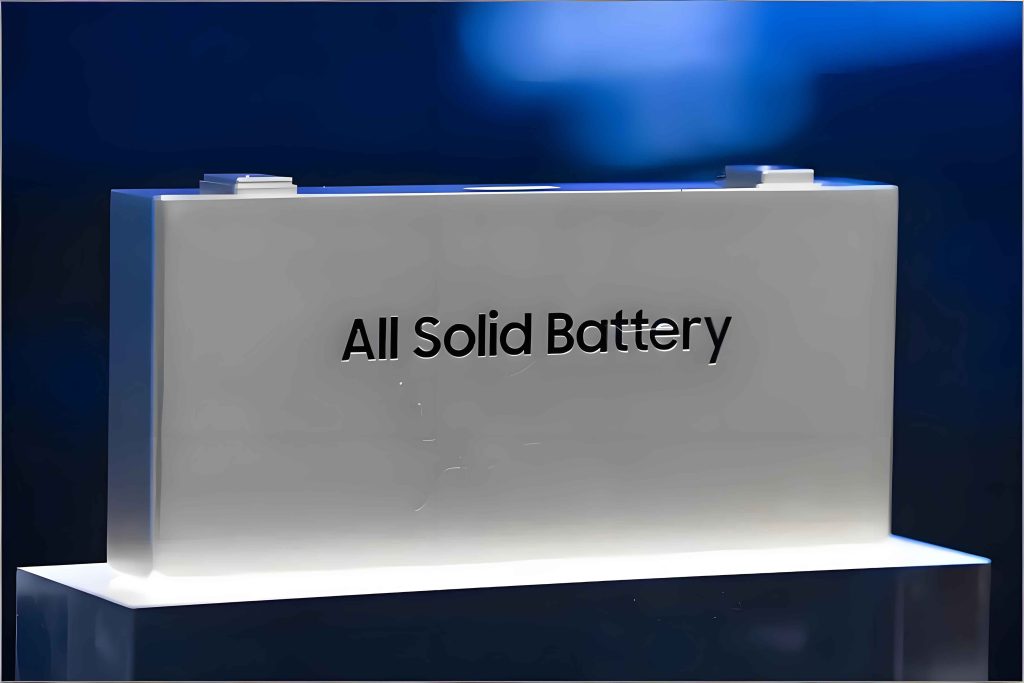
The core of a solid-state battery lies in its use of a solid electrolyte instead of the liquid or gel electrolytes found in conventional lithium-ion batteries. This shift eliminates flammable components, thereby enhancing safety—a critical concern in applications like electric vehicles. The solid electrolyte can be composed of ceramics, polymers, or composites, each offering distinct properties. For instance, ceramic electrolytes, such as lithium lanthanum zirconium oxide (LLZO), exhibit high ionic conductivity but face brittleness issues. The ionic conductivity, a key metric, can be expressed using the Arrhenius equation for solid electrolytes:
$$ \sigma = \sigma_0 \exp\left(-\frac{E_a}{k_B T}\right) $$
where $\sigma$ is the ionic conductivity, $\sigma_0$ is the pre-exponential factor, $E_a$ is the activation energy, $k_B$ is Boltzmann’s constant, and $T$ is the temperature. Achieving high $\sigma$ at room temperature remains a central challenge for solid-state battery development. Compared to liquid electrolytes, which typically have conductivities around $10^{-2}$ S/cm, solid electrolytes often lag, with values ranging from $10^{-4}$ to $10^{-3}$ S/cm for the best materials. This disparity underscores the need for material innovation to bridge the gap.
The advantages of solid-state batteries are multifaceted. Firstly, they offer higher energy density, potentially exceeding 500 Wh/kg, compared to the current lithium-ion batteries that max out around 250-300 Wh/kg. This is due to the ability to use lithium metal anodes without dendrite formation, a hazardous phenomenon in liquid systems. The energy density can be approximated by:
$$ E_d = \frac{Q \cdot V}{m} $$
where $E_d$ is the energy density, $Q$ is the charge capacity, $V$ is the voltage, and $m$ is the mass. With lithium metal anodes, $Q$ increases significantly, boosting $E_d$. Secondly, solid-state batteries enhance safety by removing organic solvents that can ignite under thermal runaway. Thirdly, they promise longer cycle life, with projections of over 1000 cycles at 80% capacity retention, thanks to stable electrode-electrolyte interfaces. However, realizing these benefits requires overcoming substantial technical hurdles.
One of the primary challenges is the interfacial resistance between the solid electrolyte and electrodes. In liquid batteries, the electrolyte permeates porous electrodes, ensuring good contact. In solid-state batteries, achieving intimate contact is difficult, leading to high impedance. This resistance, $R_{int}$, can be modeled as:
$$ R_{int} = \frac{\rho \cdot d}{A} $$
where $\rho$ is the resistivity of the interface, $d$ is the thickness, and $A$ is the contact area. Reducing $R_{int}$ through engineering solutions, such as nanostructuring or applying interfacial layers, is crucial. Another challenge is the mechanical stability; solid electrolytes must withstand stresses during cycling without cracking. Table 1 summarizes key challenges and potential solutions for solid-state battery technology.
| Challenge | Description | Potential Solutions |
|---|---|---|
| Low Ionic Conductivity | Solid electrolytes often have lower conductivity than liquids at room temperature. | Develop new materials (e.g., sulfide glasses, garnet-type ceramics); use composite electrolytes. |
| High Interfacial Resistance | Poor contact between solid electrolyte and electrodes increases impedance. | Employ thin-film techniques; add compliant interlayers; optimize sintering processes. |
| Dendrite Formation | Lithium metal anodes can still form dendrites through solid electrolytes. | Design asymmetric electrolytes; use alloy anodes; apply external pressure. |
| Manufacturing Complexity | Fabricating solid-state batteries at scale is expensive and technically demanding. | Adopt roll-to-roll processes; innovate in cell assembly; automate production lines. |
| Cost | Raw materials and processing costs are currently high compared to liquid batteries. | Scale up production; explore abundant materials (e.g., sodium-based systems). |
The automotive industry is at the forefront of adopting solid-state battery technology. Companies like Toyota, BMW, and Volkswagen have announced ambitious plans to integrate solid-state batteries into their electric vehicles by the late 2020s. This push is driven by the need for longer range, faster charging, and enhanced safety. For example, Toyota aims to launch vehicles with solid-state batteries by 2027, targeting a range of over 700 km on a single charge. The investment in research and development is staggering; global funding for solid-state battery projects exceeds $10 billion, with public and private sectors collaborating. Table 2 highlights the strategies of major automotive players in the solid-state battery space.
| Company | Key Initiatives | Target Timeline | Expected Benefits |
|---|---|---|---|
| Toyota | Developing sulfide-based solid electrolytes; pilot production lines. | 2027-2030 | High energy density, safety, and rapid charging. |
| BMW | Partnership with Solid Power; focus on oxide electrolytes for scalability. | 2026-2028 | Improved cycle life and cost reduction. |
| Volkswagen | Investment in QuantumScape; pursuing ceramic separator technology. | 2025-2030 | Enhanced thermal stability and energy density. |
| Ford | Collaborating with University of Michigan on polymer electrolytes. | 2028-2032 | Flexibility and lower manufacturing costs. |
| General Motors | In-house R&D on composite electrolytes; aiming for mass production. | 2026-2030 | Integration with next-generation EV platforms. |
The anticipated mass production window for solid-state batteries is 2026-2030, as per industry consensus. This timeline is based on current technological readiness and scaling challenges. To understand the progress, we can consider the technology readiness level (TRL) scale, where TRL 1 represents basic research and TRL 9 signifies full commercialization. Most solid-state battery projects are at TRL 4-6, indicating prototype validation in relevant environments. The transition to TRL 7-9 requires solving manufacturing bottlenecks, such as ensuring consistent quality in solid electrolyte films. The cost trajectory is also critical; analysts project that solid-state battery pack prices could fall below $100/kWh by 2030, making them competitive with liquid lithium-ion batteries. The learning curve, often modeled by the experience curve formula, applies here:
$$ C_n = C_0 \cdot n^{-b} $$
where $C_n$ is the cost after $n$ units produced, $C_0$ is the initial cost, and $b$ is the learning rate. For solid-state batteries, a steep learning rate is expected due to rapid innovation, but initial $C_0$ is high, around $500/kWh. Thus, scaling production is essential to drive down costs.
Beyond automotive applications, solid-state batteries hold promise for consumer electronics, grid storage, and aerospace. Their inherent safety makes them ideal for wearable devices, where thermal incidents are unacceptable. In grid storage, the long cycle life and high energy density could enable more efficient renewable energy integration. For instance, the round-trip efficiency $\eta$ of a battery system, crucial for grid applications, is defined as:
$$ \eta = \frac{E_{out}}{E_{in}} \times 100\% $$
where $E_{out}$ is the energy delivered and $E_{in}$ is the energy stored. Solid-state batteries may achieve $\eta > 95\%$, surpassing liquid systems due to lower internal resistance. However, each application poses unique demands; for aerospace, weight reduction is paramount, pushing the need for ultra-high energy density solid-state battery designs.
Material science is the backbone of solid-state battery advancement. Researchers are exploring a wide array of solid electrolytes, categorized into oxides, sulfides, polymers, and hybrids. Oxide electrolytes, like LLZO, offer stability but require high-temperature processing. Sulfide electrolytes, such as Li$_2$S-P$_2$S$_5$, exhibit high conductivity but are sensitive to moisture. Polymer electrolytes, including PEO-based systems, are flexible but suffer from low conductivity at room temperature. Hybrid systems combine materials to leverage synergies. The ionic transference number $t_+$, which indicates the fraction of current carried by lithium ions, is a key performance indicator:
$$ t_+ = \frac{\sigma_{Li^+}}{\sigma_{total}} $$
where $\sigma_{Li^+}$ is the lithium ion conductivity and $\sigma_{total}$ is the total conductivity. For ideal solid-state battery operation, $t_+$ should approach 1, minimizing polarization. Current materials have $t_+$ values around 0.5-0.8, indicating room for improvement. Table 3 compares different solid electrolyte classes.
| Material Class | Example | Ionic Conductivity (S/cm) at 25°C | Advantages | Disadvantages |
|---|---|---|---|---|
| Oxide | LLZO (Li$_7$La$_3$Zr$_2$O$_{12}$) | $10^{-4}$ to $10^{-3}$ | High stability, wide electrochemical window. | Brittle, requires high sintering temperatures. |
| Sulfide | Li$_2$S-P$_2$S$_5$ glass | $10^{-3}$ to $10^{-2}$ | High conductivity, good deformability. | Moisture sensitivity, toxicity concerns. |
| Polymer | PEO-LiTFSI | $10^{-5}$ to $10^{-4}$ | Flexible, easy processing, low cost. | Low conductivity at room temperature, poor mechanical strength. |
| Hybrid | Ceramic-polymer composites | $10^{-4}$ to $10^{-3}$ | Balanced properties, tunable design. | Interface issues, complex fabrication. |
Manufacturing solid-state batteries at scale presents another layer of complexity. Traditional slurry casting used for liquid batteries is inadequate due to the solid nature of electrolytes. Alternative methods include thin-film deposition, tape casting, and 3D printing. Thin-film techniques, like physical vapor deposition, enable precise control but are costly and slow. Tape casting, used for ceramics, can produce large-area sheets but requires careful drying to avoid cracks. The production yield $Y$ is a critical metric, defined as:
$$ Y = \frac{N_{good}}{N_{total}} \times 100\% $$
where $N_{good}$ is the number of defect-free cells and $N_{total}$ is the total produced. Current pilot lines report $Y < 50\%$, necessitating process optimization. Moreover, assembly in dry rooms is essential to prevent electrolyte degradation, especially for sulfide-based systems. Integrating solid-state batteries into existing supply chains also requires adaptation; for instance, anode production shifts from graphite to lithium metal foil, demanding new handling protocols.
The economic implications of solid-state battery adoption are profound. Analysts project that the global market for solid-state batteries could reach $30 billion by 2035, driven by electric vehicle demand. However, this growth hinges on overcoming cost barriers. A breakdown of costs shows that materials account for 60-70% of total cell cost, with solid electrolytes being a significant portion. Recycling solid-state batteries introduces new challenges, as separating solid components is more difficult than liquid systems. Lifecycle assessment models indicate that solid-state batteries could reduce environmental impact by 20-30% compared to lithium-ion batteries, due to longer lifespan and safer materials. The net present value (NPV) of investing in solid-state battery production can be calculated as:
$$ NPV = \sum_{t=0}^{T} \frac{C_t}{(1 + r)^t} $$
where $C_t$ is the cash flow at time $t$, $r$ is the discount rate, and $T$ is the horizon. For many companies, positive NPV requires government subsidies or partnerships to offset early-stage risks.
Looking ahead, the trajectory for solid-state battery commercialization appears promising but nonlinear. Breakthroughs in material science, such as the discovery of superionic conductors, could accelerate timelines. Concurrently, regulatory frameworks are evolving to support safety standards and recycling mandates. International collaboration, as seen in joint ventures between Japanese, European, and American firms, is fostering knowledge sharing. In my view, the solid-state battery revolution will likely unfold in phases: initial adoption in niche markets (e.g., medical devices) by 2026, followed by electric vehicles and grid storage by 2030. The ultimate success depends on a holistic approach, balancing technical innovation with economic viability.
In conclusion, the solid-state battery stands as a beacon of progress in energy storage. Its potential to redefine industries is undeniable, yet the path to widespread use is paved with scientific and engineering hurdles. As I reflect on the rapid advancements, it is evident that the solid-state battery is more than a technological trend; it is a cornerstone of a sustainable energy future. The coming years will witness intense competition and collaboration, shaping the destiny of this transformative technology. With persistent effort, the vision of safer, higher-performance batteries may soon become a reality, powering our world in ways we have only begun to imagine.