
In the rapidly evolving automotive industry, the integration of electronic control technology has revolutionized vehicle design, performance, and safety. As a researcher and practitioner in automotive engineering, I have witnessed firsthand how these advancements bring both opportunities and challenges to maintenance practices. Traditional repair methods, reliant on mechanical expertise and empirical knowledge, are increasingly inadequate for addressing the complexities of modern vehicles. This article explores the critical role of automotive electronic control technology in shaping contemporary maintenance strategies, with a focus on enhancing diagnostic accuracy, efficiency, and cost-effectiveness. Through detailed analysis, case studies, and strategic recommendations, I aim to provide a comprehensive guide for the industry to adapt and thrive in this technological era. The core of this discussion revolves around the motor control unit, a pivotal component that governs various vehicle systems, and its implications for maintenance workflows.
Automotive electronic control systems consist of interconnected components that manage engine operations, transmission, braking, and overall vehicle stability. At the heart of these systems lies the motor control unit, which processes inputs from sensors and executes commands to actuators. The evolution of this technology has led to sophisticated networks, such as Controller Area Network (CAN) buses, enabling seamless communication between units. For instance, the motor control unit in an engine system regulates fuel injection and ignition timing based on real-time data, optimizing performance and emissions. This can be modeled using control theory formulas. For example, a Proportional-Integral-Derivative (PID) controller in a motor control unit adjusts output based on error signals, represented as:
$$u(t) = K_p e(t) + K_i \int_0^t e(\tau) d\tau + K_d \frac{de(t)}{dt}$$
where \( u(t) \) is the control output, \( e(t) \) is the error between desired and actual states, and \( K_p \), \( K_i \), and \( K_d \) are tuning parameters. Such precision underscores the need for advanced maintenance approaches. The following table summarizes key electronic control domains and their functions, highlighting the pervasive role of the motor control unit:
| Control Domain | Primary Functions | Key Components Involving Motor Control Unit |
|---|---|---|
| Engine Management | Fuel injection, ignition timing, emission control | Engine Control Unit (ECU), sensors, actuators |
| Transmission Control | Gear shifting, torque management | Transmission Control Unit, solenoids |
| Braking Systems | Anti-lock braking, stability control | Brake Control Module, hydraulic modulators |
| Vehicle Dynamics | Traction control, electronic stability | Integrated motor control units, inertial sensors |
The complexity of these systems necessitates a deep understanding of their architecture. In my experience, the motor control unit often serves as a nexus for data exchange, making it central to diagnostic procedures. For example, a malfunctioning motor control unit can propagate errors across networks, leading to cascading failures. This interconnectedness is further illustrated by the increasing use of onboard diagnostics (OBD) systems, which log fault codes related to the motor control unit. As vehicles become more intelligent, the motor control unit’s role expands to include adaptive learning algorithms, such as those for predictive maintenance, expressed as:
$$P(failure) = \frac{1}{1 + e^{-(\beta_0 + \beta_1 x_1 + \cdots + \beta_n x_n)}}$$
where \( P(failure) \) is the probability of a component failure, \( \beta \) coefficients are derived from historical data, and \( x_i \) are sensor inputs monitored by the motor control unit. This mathematical approach enables proactive maintenance, reducing downtime and costs.
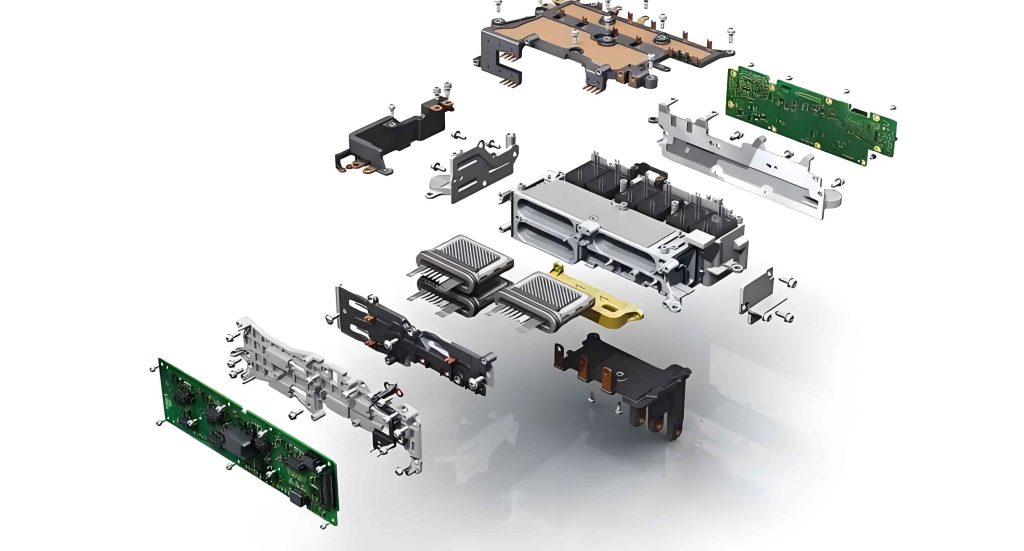
To ground this discussion in practical scenarios, I will analyze a detailed maintenance case involving electronic control systems. Consider a mid-sized passenger vehicle exhibiting intermittent engine stalling and ignition failures. Initial inspections suggested issues with the ignition system, but traditional checks proved inconclusive. As a technician, I employed a systematic diagnostic approach centered on the motor control unit. First, I retrieved fault codes via the OBD-II port, which indicated anomalies in the ignition control module—a subsystem governed by the motor control unit. Using a digital multimeter and oscilloscope, I measured voltage and current signals from the motor control unit to the ignition coil. The data revealed irregular waveforms during engine warm-up, pointing to a thermal-induced short circuit in the coil. This was consistent with the motor control unit’s logs showing elevated resistance values after seven minutes of operation, calculated as:
$$R(t) = R_0 (1 + \alpha \Delta T)$$
where \( R(t) \) is the coil resistance at time \( t \), \( R_0 \) is the initial resistance, \( \alpha \) is the temperature coefficient, and \( \Delta T \) is the temperature change. The motor control unit’s inability to compensate for this drift caused ignition timing errors, leading to no-spark conditions. The diagnostic process underscored the importance of integrating electronic tools with an understanding of motor control unit behavior. Below is a table outlining the step-by-step workflow I followed, emphasizing the role of the motor control unit:
| Step | Action | Tools Used | Involvement of Motor Control Unit |
|---|---|---|---|
| 1. Preliminary Inquiry | Gather vehicle history and symptoms | Interview checklist | Identify fault codes stored in motor control unit |
| 2. Visual Inspection | Check wiring, connectors, and components | Flashlight, inspection camera | Verify motor control unit connections for corrosion |
| 3. Data Retrieval | Scan OBD-II for fault codes | Diagnostic scanner | Extract codes from motor control unit memory |
| 4. Signal Analysis | Measure sensor and actuator signals | Oscilloscope, multimeter | Monitor outputs from motor control unit to ignition system |
| 5. Component Testing | Test ignition coil, spark plugs | Ohmmeter, spark tester | Compare results with motor control unit specifications |
| 6. Verification | Conduct post-repair tests | Dynamometer, road test | Ensure motor control unit parameters normalize |
This case highlights how the motor control unit serves as a diagnostic anchor. In another instance, I encountered a vehicle with erratic fuel consumption, traced to a faulty oxygen sensor feeding incorrect data to the motor control unit. By analyzing the sensor’s response time and the motor control unit’s adjustment algorithms, I formulated a repair plan that replaced the sensor and recalibrated the motor control unit. Such experiences reinforce the need for strategies that leverage electronic control technology.
Based on my observations and industry trends, I propose four key strategies for modern automotive maintenance, all hinging on the effective utilization of motor control unit technology. First, upgrading diagnostic and repair equipment is imperative. Traditional tools lack the capability to interface with advanced motor control units, leading to misdiagnoses. Investing in high-end devices, such as programmable scan tools and engine analyzers, allows technicians to communicate directly with the motor control unit, accessing real-time data and performing bidirectional controls. For example, a scan tool can command the motor control unit to actuate a fuel injector while monitoring feedback, expressed as a transfer function:
$$G(s) = \frac{Y(s)}{U(s)} = \frac{K}{Ts + 1}$$
where \( G(s) \) represents the system dynamics, \( Y(s) \) is the output (e.g., injector flow rate), \( U(s) \) is the input from the motor control unit, \( K \) is the gain, and \( T \) is the time constant. This mathematical modeling facilitates precise adjustments. The table below compares traditional versus modern equipment in relation to motor control unit interactions:
| Aspect | Traditional Equipment | Modern Equipment | Impact on Motor Control Unit Diagnostics |
|---|---|---|---|
| Fault Code Reading | Limited to generic codes | Manufacturer-specific, live data streaming | Enables deep analysis of motor control unit logs |
| Signal Measurement | Analog gauges, basic meters | Digital oscilloscopes, logic analyzers | Captures high-frequency signals from motor control unit |
| System Calibration | Manual adjustments | Software-based recalibration | Allows reprogramming of motor control unit parameters |
| Data Integration | Paper records, isolated data | Cloud-connected platforms | Aggregates motor control unit data for trend analysis |
Second, enhancing the综合素质 of maintenance personnel is crucial. As vehicles incorporate more motor control units, technicians must possess interdisciplinary skills in electronics, software, and data analysis. From my perspective, training programs should emphasize hands-on experience with motor control unit programming and network diagnostics. For instance, understanding CAN bus protocols, which facilitate communication between motor control units, is essential. The error frame rate in a CAN network can be calculated as:
$$FER = \frac{N_{error}}{N_{total}} \times 100\%$$
where \( FER \) is the frame error rate, \( N_{error} \) is the number of erroneous frames, and \( N_{total} \) is the total frames transmitted between motor control units. Technicians adept in such metrics can pinpoint network issues swiftly. Moreover, fostering a customer-centric mindset ensures that repairs address both technical faults and user concerns, reinforcing trust in services involving motor control unit repairs.
Third, strengthening the organization and application of maintenance data is vital. In my practice, I have leveraged databases to track motor control unit performance across vehicle fleets. By compiling historical repair records, sensor data, and fault patterns, predictive models can forecast motor control unit failures. For example, using regression analysis, the remaining useful life (RUL) of a motor control unit can be estimated as:
$$RUL = \frac{C – S(t)}{dS/dt}$$
where \( C \) is the failure threshold, \( S(t) \) is the current stress level (e.g., thermal cycling), and \( dS/dt \) is the degradation rate derived from motor control unit logs. Implementing cloud-based platforms allows real-time access to this data, enabling technicians to make informed decisions. The following table illustrates a data framework for motor control unit-centric maintenance:
| Data Type | Source | Application in Maintenance | Role of Motor Control Unit |
|---|---|---|---|
| Fault Codes | OBD-II systems, diagnostic tools | Identify specific motor control unit malfunctions | Primary generator of error codes |
| Sensor Readings | Temperature, pressure, speed sensors | Monitor system health and trends | Processes and logs sensor data |
| Repair Histories | Service records, workshop software | Predict recurrence and plan preventive actions | Referenced for past motor control unit issues |
| Performance Metrics | Dynamometer tests, road data | Calibrate and optimize motor control unit settings | Outputs performance parameters for analysis |
Fourth, actively applying modern repair techniques that integrate electronic control technology is indispensable. Microelectronics, for instance, enable non-intrusive testing of motor control units through signal emulation and simulation. By injecting test signals into a motor control unit’s input channels, technicians can observe responses without disassembling components. This is based on circuit theory principles, such as Thévenin’s theorem applied to motor control unit interfaces:
$$V_{th} = V_{oc}, \quad R_{th} = \frac{V_{oc}}{I_{sc}}$$
where \( V_{th} \) is the Thévenin equivalent voltage, \( V_{oc} \) is the open-circuit voltage, \( R_{th} \) is the equivalent resistance, and \( I_{sc} \) is the short-circuit current at the motor control unit terminal. Additionally, electronic ignition control technology, governed by the motor control unit, allows for detailed analysis of combustion efficiency. By correlating ignition timing with engine vibrations, faults can be detected early. In my work, I have used techniques like time-frequency analysis to diagnose motor control unit-related issues, represented as:
$$X(\tau, \omega) = \int_{-\infty}^{\infty} x(t) w(t-\tau) e^{-j\omega t} dt$$
where \( X(\tau, \omega) \) is the spectrogram of a signal \( x(t) \) (e.g., ignition pulse), \( w(t-\tau) \) is a window function, and \( \tau \) and \( \omega \) represent time and frequency, respectively. Such advanced methods reduce trial-and-error repairs, saving time and resources.
In conclusion, the integration of automotive electronic control technology, particularly through the motor control unit, has fundamentally transformed maintenance paradigms. From my viewpoint as an industry professional, embracing these changes requires a holistic approach that combines equipment innovation, skill development, data-driven insights, and cutting-edge techniques. The motor control unit stands as a cornerstone of this evolution, enabling precise diagnostics and efficient repairs. As vehicles continue to advance with autonomous features and connectivity, the role of the motor control unit will expand further, necessitating ongoing adaptation in maintenance strategies. By implementing the proposed strategies—upgrading equipment, enhancing personnel capabilities, leveraging data, and applying modern technologies—the automotive repair sector can ensure reliability, safety, and sustainability. This journey underscores the importance of continuous learning and collaboration, paving the way for a future where motor control unit expertise is synonymous with excellence in automotive maintenance.