
The pursuit of higher energy density and enhanced safety in rechargeable batteries has propelled the development of solid-state batteries (SSBs) to the forefront of energy storage research. Among the various solid electrolyte candidates, polymer-based electrolytes stand out due to their inherent flexibility, potential for low-cost manufacturing, and good interfacial compatibility with electrodes. However, the transition from promising material to practical cell component hinges on a critical process: solidification. This is the transformative step where a liquid precursor—a mixture of monomers, oligomers, salts, and additives—transforms into a solid or quasi-solid electrolyte film. The method and control of this solidification process directly dictate the electrolyte’s thickness, uniformity, interfacial adhesion, and ultimately, the performance and energy density of the resulting solid-state battery.
Historically, polymer electrolytes were prepared ex-situ, cast as standalone films, and then assembled into cells. While valuable, this approach often struggles with thick electrolytes (>50 µm) and poor solid-solid electrode-electrolyte contact, limiting energy density and rate capability. The paradigm is shifting towards in-situ solidification, where the liquid precursor is injected into a pre-assembled cell and solidified directly between the electrodes. This review, from my perspective as a researcher in the field, delves into the core solidification technologies for polymer-based electrolytes, analyzing their mechanisms, merits, challenges, and their pivotal role in realizing high-energy-density solid-state batteries.
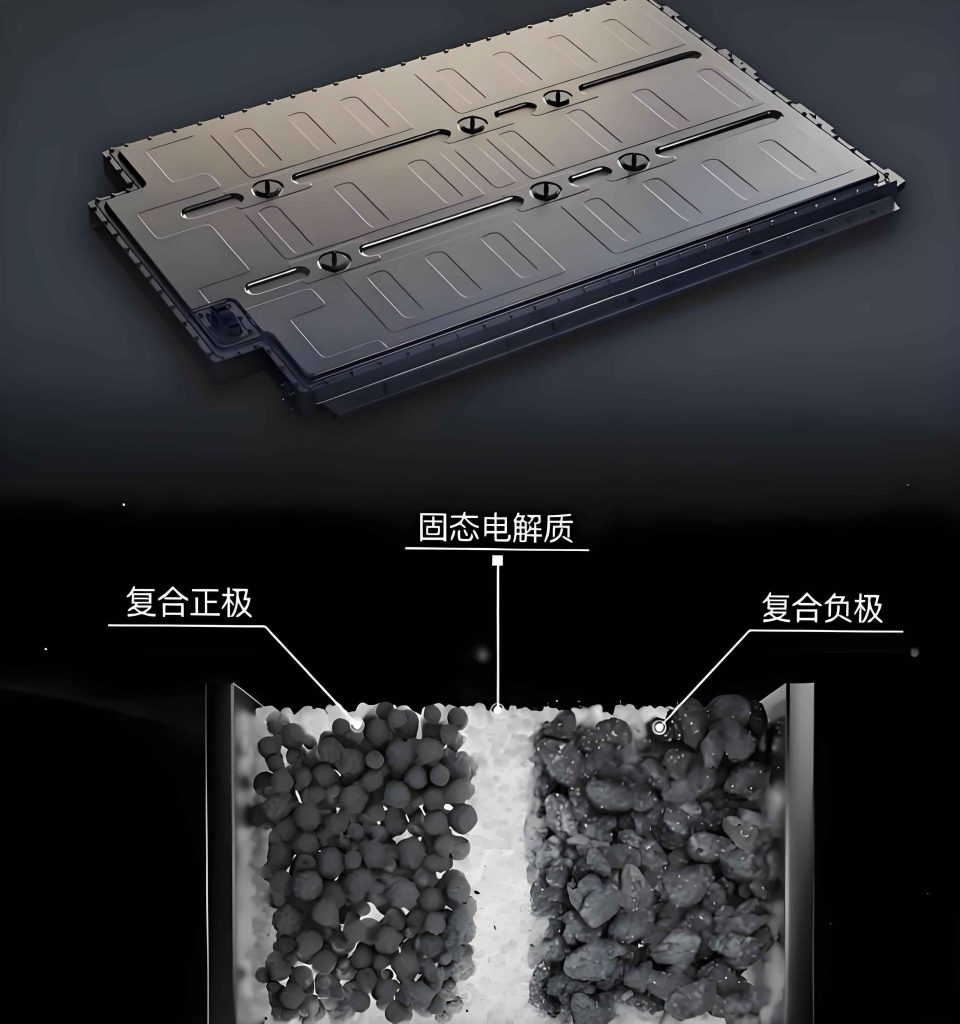
Why Solidification Matters for Solid-State Batteries
The performance metrics of a solid-state battery—energy density, power, cycle life, and safety—are intimately linked to the properties of its electrolyte. A high-performance solid-state battery demands an electrolyte that is thin to maximize active material volume, uniform to prevent current hotspots, and intimately bonded to both electrodes to minimize interfacial resistance. The solidification process is the engineering lever that controls these properties. An ideal solidification technique for a solid-state battery should:
- Enable ultra-thin (< 20 µm), pinhole-free electrolyte layers.
- Create seamless, conformal interfaces with high-loading electrodes.
- Be compatible with large-scale, roll-to-roll battery manufacturing.
- Minize volatile organic compound (VOC) emissions.
- Yield electrolytes with high ionic conductivity ($\sigma_{Li^+}$) and a wide electrochemical stability window.
The ionic conductivity, a prime figure of merit, often follows an Arrhenius-like relationship influenced by the polymer morphology created during solidification:
$$ \sigma = \sigma_0 \exp\left(-\frac{E_a}{k_B T}\right) $$
where $\sigma_0$ is the pre-exponential factor, $E_a$ is the activation energy for ion transport, $k_B$ is Boltzmann’s constant, and $T$ is the temperature. The solidification process critically determines the amorphous domain content and chain mobility, thereby affecting $E_a$ and $\sigma_0$.
Ex-Situ Solidification: The Traditional Pathway
Ex-situ methods involve creating a freestanding electrolyte film separately before battery assembly. The solidification is typically driven by solvent evaporation or physical gelation.
Solution Casting
This is the most prevalent technique. A polymer (e.g., PEO, PVDF) is dissolved in a volatile solvent (e.g., acetonitrile, DMF) along with a lithium salt (e.g., LiTFSI) and any fillers. The viscous solution is cast onto a substrate, and the solvent is evaporated, leaving behind a solid film. The process can be summarized as:
$$ \text{Polymer + LiSalt + Solvent} \xrightarrow[\text{Evaporation}]{\text{Casting}} \text{Solid Polymer Electrolyte Film} $$
The main advantage is simplicity. However, it faces significant hurdles for solid-state battery application: achieving sub-20 µm films without defects is challenging, solvent evaporation leads to high VOC emissions, and the resulting film has poor adhesion to electrodes, leading to high interfacial resistance ($R_{interface}$) in the assembled solid-state battery.
Electrospinning
This technique uses a high voltage to draw a polymer solution into fine fibers, which are collected as a non-woven mat. The solidification occurs through rapid solvent evaporation during fiber jetting. The mat, often highly porous, is subsequently compressed and/or infused with a liquid electrolyte to form a composite.
$$ \text{Polymer Solution} \xrightarrow[\text{High Voltage}]{\text{Jet \& Evaporation}} \text{Fibrous Mat} \xrightarrow[\text{Infusion}]{\text{Compression}} \text{Composite Electrolyte} $$
Electrospun electrolytes offer high porosity and good mechanical properties. However, the process is energy-intensive, sensitive to ambient humidity, and the final electrolyte thickness and uniformity are difficult to control precisely for large-scale solid-state battery production.
Chemical Polymerization (Ex-Situ)
Here, a liquid monomeric precursor is polymerized between two release liners or in a mold. Techniques like UV or thermal curing are used to initiate radical polymerization of acrylate or epoxy groups.
$$ \text{Monomers (e.g., Acrylates) + Initiator} \xrightarrow[\text{or Heat}]{\text{UV}} \text{Cross-linked Polymer Network} $$
This method produces dimensionally stable, mechanically robust films with well-defined networks. The challenge lies in integrating these sometimes brittle, pre-formed films into solid-state batteries without compromising interfacial contact, and in ensuring complete monomer conversion to avoid small-molecule plasticizers that can leak.
Summary Comparison of Ex-Situ Methods:
| Method | Solidification Driver | Typical Thickness | Advantages for SSB | Disadvantages for SSB |
|---|---|---|---|---|
| Solution Casting | Solvent Evaporation | > 50 µm | Simple, low equipment cost | Thick films, high VOCs, poor interfacial contact |
| Electrospinning | Evaporation in Jet | 30-100 µm | High porosity, good mechanics | Non-uniform, high energy/equipment cost, humidty-sensitive |
| Chemical Polymerization | Radical/Cationic Reaction | 20-100 µm | Stable network, good stability | Brittleness, interfacial gap, potential residual monomers |
In-Situ Solidification: The Game Changer for Solid-State Batteries
In-situ solidification addresses the core interfacial issue of solid-state batteries. A low-viscosity liquid precursor is injected into a pre-assembled cell containing the electrodes. This precursor perfectly wets the porous electrodes. Subsequently, it is solidified, creating a monolithic cell with ideal electrolyte-electrode contact. This process can reduce $R_{interface}$ by an order of magnitude and allows for electrolyte thicknesses limited only by the cell gap (often < 20 µm). The key is the polymerization chemistry.
1. Free Radical Polymerization
This is the most common in-situ method. It involves monomers with vinyl groups (C=C). An initiator (e.g., AIBN, BPO) decomposes under heat or UV light to generate radicals, which attack the double bonds, initiating a chain-growth polymerization.
Initiation: $$ I_2 \xrightarrow{\Delta or h\nu} 2I^\bullet $$
$$ I^\bullet + M \rightarrow I-M^\bullet $$
Propagation: $$ I-M^\bullet + n M \rightarrow I-(M)_n-M^\bullet $$
Termination: (e.g., Combination) $$ M_n^\bullet + M_m^\bullet \rightarrow M_{n+m} $$
Common monomers include vinyl ethylene carbonate (VEC), acrylates (e.g., PEGMEA), and vinyl-functionalized ionic liquids. The process is fast and versatile. However, the initiator and any unreacted monomers can side-react with lithium metal, compromising the longevity of the solid-state battery. The exothermic nature of the reaction also requires careful thermal management.
2. Cationic Polymerization
This method uses electrophilic initiators (Lewis or Brønsted acids) to attack electron-rich monomers. A major advantage is that common lithium salts can act as initiator precursors. For instance, LiPF$_6$ or LiDFOB can decompose to generate Lewis acids (PF$_5$, BF$_3$).
Initiation (e.g., with Ethers like DOL):
$$ \text{LiPF}_6 \rightarrow \text{LiF} + \text{PF}_5 $$
$$ \text{PF}_5 + \text{H}_2\text{O} \rightarrow \text{H}^+[\text{PF}_5\text{OH}]^- $$
$$ \text{H}^+ + \underset{\text{DOL}}{\chemfig{*5(-O-(-[::60]CH_2)=O-(-[::60]CH_2)-)}} \rightarrow \underset{\text{Oxonium Ion}}{\chemfig{*5(-O^(+)-(-[::60]CH_2)=O-(-[::60]CH_2)-)}} $$
Propagation: The oxonium ion opens the ring of another DOL molecule, continuing the chain. This method is highly attractive for solid-state batteries as it often uses battery-grade chemicals, requires mild conditions, and produces polymers (like poly-DOL) with good electrochemical stability.
3. Anionic Polymerization
Here, a nucleophilic initiator attacks an electron-deficient monomer. Notably, the lithium metal anode itself can serve as the electron donor/initiator for certain monomers like cyanoacrylates.
Initiation at Li anode:
$$ \text{Li}^0 + \chemfig{CH_2=\C(-CN)-C(=[::60]O)-O-R} \rightarrow \chemfig{Li^+ ^-CH_2-\C(-CN)-C(=[::60]O)-O-R} $$
The resulting carbanion rapidly propagates the chain. This method creates an exceptionally intimate and stable interface with the lithium metal electrode, which is crucial for cyclability in a solid-state battery. However, the choice of compatible monomers is more limited.
4. Physical Gelation
This process does not involve covalent bond formation. Instead, small molecule gelators or nanoparticles form a three-dimensional network via physical interactions (hydrogen bonds, van der Waals forces) that immobilize the liquid electrolyte.
$$ \text{Liquid Electrolyte + Gelator} \xrightarrow{\text{Self-assembly}} \text{3D Network (Gel)} $$
While simple and fast, the resulting gels are often thermally reversible and may have inferior mechanical strength compared to chemically cross-linked networks, raising concerns about long-term stability and dendrite suppression in a solid-state battery.
Summary Comparison of In-Situ Methods:
| Method | Initiator/Driver | Key Monomer Types | Advantages for SSB | Disadvantages for SSB |
|---|---|---|---|---|
| Free Radical | AIBN, BPO (Heat/UV) | Acrylates, Vinyl Carbonates | Fast, versatile, wide monomer choice | Initiator/monomer side reactions, exothermic |
| Cationic | Lewis Acid (from LiSalts) | Cyclic Ethers (DOL, Oxetane) | Uses battery chemicals, mild conditions, good stability | Moisture sensitive, monomer choice limited |
| Anionic | Nucleophile / Li metal | Cyanoacrylates | Perfect Li interface, no added initiator | Very limited monomer choice, sensitive |
| Physical Gelation | Gelator Self-assembly | Nanoparticles, Small Molecules | Simple, fast, no chemical change | Weak mechanics, thermally reversible |
Critical Considerations for High-Energy-Density Solid-State Batteries
Selecting and optimizing a solidification technology must be guided by the end goal: a safe, long-lasting, high-energy-density solid-state battery. Key interrelated factors form a complex optimization matrix:
1. Material Selection Matrix: The choice of monomer, salt, and additive is non-trivial. Their properties must satisfy multiple constraints simultaneously. We can express this as an optimization problem:
Maximize: $$ \text{Performance} = f(\sigma_{Li^+}, E_{window}, \text{Cycle Life}) $$
Subject to constraints:
$$ \text{HOMO}(Polymer) < \text{Cathode Potential} $$
$$ \text{LUMO}(Salt/Additive) > \text{Anode Potential} $$
$$ \text{Viscosity}(Precursor) < \text{Threshold for pore wetting} $$
$$ T_{decomp} > \text{Cell operating } T $$
For example, ether-based polymers (PEO, PDOL) offer good ionics but have a low oxidation potential (~3.8 V vs. Li/Li$^+$), limiting them to lower-voltage cathodes in a solid-state battery. Developing new monomer families with wider electrochemical windows is crucial for high-energy-density designs using Ni-rich NCM or high-voltage LCO.
2. The Role of Residual Species: No in-situ reaction is 100% complete. Residual unreacted monomers, oligomers, or initiator fragments can act as unwanted mobile plasticizers or participate in parasitic reactions at the electrodes, gradually increasing $R_{interface}$ and depleting active lithium. The stability of a solid-state battery over thousands of cycles depends on the “electrochemical cleanliness” of the solidified electrolyte.
3. Processing Uniformity and Scalability: For in-situ methods, achieving uniform polymerization in a large-format pouch cell is a monumental challenge. Heat distribution during thermal curing can lead to gradients in crosslink density. UV curing may be limited by shadowing effects from electrode materials. Precisely controlling the thickness of the injected precursor layer at scale is another engineering hurdle that directly impacts the energy density consistency of the solid-state battery pack.
Future Perspectives and Concluding Thoughts
The evolution of solidification technology is central to the narrative of polymer-based solid-state batteries. From my viewpoint, the field is moving decisively towards in-situ methodologies due to their unmatched ability to solve the interfacial problem. However, several frontiers demand focused exploration:
- Beyond Lithium Chemistry: The principles of in-situ solidification must be extended and adapted for sodium, potassium, and multivalent (Mg$^{2+}$, Ca$^{2+}$, Zn$^{2+}$) solid-state batteries. This requires designing new monomer and salt chemistries compatible with these alternative ions.
- Advanced Characterization: We need operando and post-mortem techniques (e.g., solid-state NMR, X-ray tomography, impedance tomography) to map the spatial and temporal evolution of the electrolyte structure and interfaces during and after solidification in a working solid-state battery.
- Multifunctional Solidification: Future precursors may be designed to solidify into electrolytes that also perform additional functions—such as forming an artificial SEI/CEI layer simultaneously or incorporating stress-relieving moieties to accommodate electrode volume changes.
- Intelligent Process Control: Integrating sensors and feedback loops into the solidification process (e.g., real-time dielectric constant monitoring to track conversion) will be key for quality assurance in gigawatt-hour-scale manufacturing of solid-state batteries.
In conclusion, solidification is far more than a final processing step; it is a fundamental design tool that shapes the microstructure, interfaces, and performance ceiling of polymer-based electrolytes. The transition from ex-situ to sophisticated in-situ curing represents a critical leap towards practical high-energy-density solid-state batteries. The ultimate solidification recipe will likely be a hybrid approach—perhaps a cationic ring-opening polymerization initiated by a cell-compatible salt, yielding a thin, conformal, and electrochemically robust network. Mastering this chemistry and its associated engineering is not just an academic exercise; it is the key to unlocking the vast potential of the solid-state battery, paving the way for safer, longer-range electric vehicles and more resilient grid storage systems.