
The global pursuit of clean energy and the explosive growth of electric vehicles (EVs) and energy storage systems have placed battery technology at the forefront of technological innovation. Among emerging solutions, the solid-state battery (SSB) stands out as a revolutionary advancement, promising significant leaps in energy density, safety, and cycle life compared to conventional liquid lithium-ion batteries. However, the path to its widespread commercial adoption is paved with critical engineering decisions, among which the choice of cell format is paramount. The cell’s form factor—be it cylindrical, prismatic, or pouch—profoundly influences its performance, manufacturability, cost structure, and integration into final applications. This in-depth analysis posits that the pouch format, leveraging aluminum-laminate film (Al-laminate) packaging, represents the most synergistic and promising path for the mass commercialization of solid-state batteries. We will dissect the technical compatibility, industrial landscape, cost dynamics, and future outlook of this powerful combination.
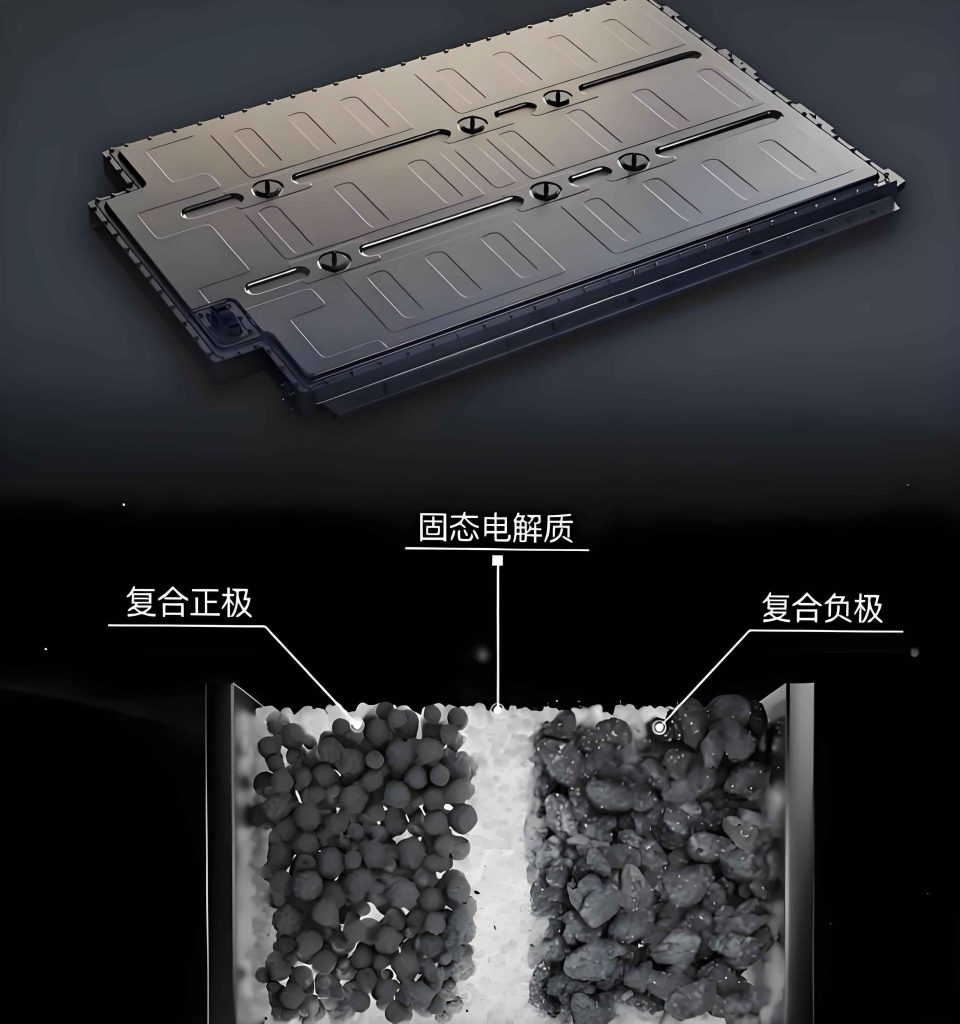
1. Technical Synergy: Why Pouch and Solid-State are a Perfect Match
The fundamental structure and operational characteristics of a solid-state battery create unique requirements that align exceptionally well with the inherent advantages of pouch cell construction.
1.1 Structural Integrity and Environmental Sealing
The core of pouch cell packaging is the multi-layer Al-laminate film. A typical high-grade film consists of:
- Outer Layer (Nylon/PET): Provides excellent mechanical strength, abrasion resistance, and protection against external physical damage.
- Middle Layer (Aluminum Foil): Acts as an impermeable barrier against moisture (H2O) and oxygen (O2) ingress. This is critically important for solid-state batteries, as most solid electrolytes (e.g., sulfides, some halides) are highly hygroscopic and react adversely with even trace amounts of moisture, leading to performance degradation and safety risks.
- Inner Layer (Cast Polypropylene – CPP): A thermoplastic layer that enables robust hermetic sealing through a hot-pressing process, creating a stable, isolated internal environment.
Unlike liquid electrolytes that can corrode or swell the CPP layer over time, the solid electrolyte in a solid-state battery presents a chemically benign interface with the film’s inner layer, ensuring long-term package integrity and reliability.
1.2 Lightweight and High Energy Density
The gravimetric and volumetric energy density advantage is a primary driver for solid-state battery adoption. The pouch format amplifies this advantage. By replacing the heavy metal casing (steel or aluminum) of cylindrical or prismatic cells with a lightweight Al-laminate, the overall cell weight is significantly reduced. For a given cell chemistry and design, this directly translates to higher specific energy (Wh/kg). The synergy can be expressed as a figure of merit:
$$
\eta_{\text{cell}} = \frac{E_{\text{intrinsic}}}{m_{\text{active}} + m_{\text{inactive}}}
$$
Where $E_{\text{intrinsic}}$ is the energy of the active materials, $m_{\text{active}}$ is their mass, and $m_{\text{inactive}}$ is the mass of inactive components (current collectors, separator, casing). The pouch format minimizes $m_{\text{inactive}}$ (casing), thereby maximizing $\eta_{\text{cell}}$ for a solid-state battery system.
1.3 Accommodation of Volume Change
One of the key challenges in adopting high-capacity anode materials like silicon (Si) or lithium metal (Li) is their substantial volume expansion during lithiation (charging). Silicon anodes can swell over 300%. A rigid metal casing constrains this expansion, generating immense internal stress that can fracture the electrode structure and solid electrolyte, leading to rapid capacity fade. The flexible nature of the pouch cell allows it to expand and contract in a “breathing” motion, accommodating volume changes without imposing destructive mechanical constraints. This preserves the vital solid-solid interfaces within the cell, which are crucial for stable long-term operation.
1.4 Thermal Management Compatibility
Traditional pouch cells with liquid electrolytes can face challenges with heat dissipation due to their stacked, planar geometry and lower thermal conductivity compared to metal cans. However, solid-state batteries possess inherent thermal advantages. Most solid electrolytes have higher thermal stability and are non-flammable. This reduces the criticality of rapid, localized heat removal. Therefore, the perceived thermal management disadvantage of the pouch form factor is mitigated when paired with a solid-state battery, creating a complementary relationship where the safety of the chemistry relaxes the packaging’s thermal requirements.
| Feature | Pouch (Al-laminate) | Prismatic (Hard Case) | Cylindrical (e.g., 4680) |
|---|---|---|---|
| Weight | Lightest (no metal can) | Heavy | Medium-Heavy |
| Volume Expansion Accommodation | Excellent (Flexible) | Poor (Rigid) | Poor (Rigid) |
| Barrier Properties (vs. H2O/O2) | Excellent | Excellent | Excellent |
| Thermal Management | Adequate (benefits from SSB safety) | Good | Very Good |
| Manufacturing for SSB (Stacking) | Ideal | Possible | Not Suitable |
| Form Factor Flexibility | High | Medium | Low |
2. Manufacturing Process Synergy
The assembly process for a solid-state battery naturally aligns with pouch cell manufacturing techniques, particularly lamination and stacking.
2.1 Electrode Stacking: Lamination over Winding
Solid-state batteries are inherently unsuited for the conventional winding process used for cylindrical and many prismatic cells. Winding creates curved edges where brittle solid electrolyte layers can crack, and it makes it impossible to achieve uniform, high-pressure interfaces between multiple solid layers. The industry-standard process for building solid-state battery cells is flat stacking.
This involves sequentially layering anode, solid electrolyte separator, and cathode sheets. This process is perfectly matched to pouch cell production lines, which are designed to handle flat, stacked “jellyrolls” or “Z-folded” assemblies. The final stacked assembly can then be directly inserted into a pre-formed Al-laminate pouch.
2.2 Hot Pressing: The Key to Intimate Interfaces
The most critical post-stacking process for a solid-state battery is hot pressing. This applies controlled heat and pressure to the entire cell stack to:
- Ensure intimate contact between the solid electrolyte and the porous electrodes, minimizing interfacial impedance.
- Actively sinter or bond interfaces in some material systems.
- Remove air gaps and create a monolithic, mechanically robust structure.
This hot-pressing step dovetails seamlessly with the final sealing step of pouch cell assembly, where the Al-laminate is sealed under heat and pressure. The entire cell—internal stack and external package—can be consolidated in a synchronized thermal-mechanical process. This integrated approach enhances structural stability and reliability.
| Process Step | Purpose | Synergy with Pouch Format |
|---|---|---|
| Slurry Coating & Calendering | Form dense, uniform electrode films. | Standard process for all formats. |
| Solid Electrolyte Layer Fabrication | Create free-standing or coated electrolyte films. | Produces flat sheets ideal for stacking. |
| Precision Stacking / Lamination | Build the multilayer cell structure. | Native process for pouch cell assembly. |
| Integrated Hot Pressing | Reduce interfacial resistance, bond layers. | Can be combined with pouch sealing; flexible pouch accommodates pressure. |
| Pouch Bag Formation & Cell Insertion | Create package and insert cell stack. | Core competency of pouch cell manufacturing. |
| Vacuum Drying & Final Sealing | Remove residual moisture, hermetically seal. | Critical for SSB longevity; Al-laminate provides excellent seal. |
3. Industrial Landscape and Commercialization Roadmap
3.1 Leading Player Strategies
Major battery manufacturers and automotive OEMs are actively developing pouch-format solid-state batteries, recognizing the technical synergies.
- Farasis Energy: A leader in pouch cell technology, Farasis has explicitly adopted a stacked pouch process for its solid-state battery development. They aim for scale-up verification in 2025 and pilot production by 2027.
- CATL: While strong in prismatic cells, CATL’s R&D in condensed matter and solid-state batteries is known to explore pouch formats to maximize energy density, especially for aviation and premium EV applications.
- Changan Auto: Announced its “Jinzhongzhao” all-solid-state battery using a pouch format, with plans for a functional prototype by end of 2025, vehicle integration testing in 2026, and mass production in 2027.
- Gotion High-tech, Qingtao Energy: These firms are also advancing pouch-style solid-state battery prototypes and pilot lines.
The strategic focus is clear: leverage the high energy density and design flexibility of the pouch format to overcome the early energy density penalty of first-generation solid-state batteries and to facilitate integration into vehicle chassis (e.g., cell-to-pack or cell-to-chassis designs).
3.2 Supply Chain Evolution: The Al-laminate Imperative
The rise of pouch-format solid-state batteries is catalyzing the advanced Al-laminate film supply chain. Historically dominated by Japanese players like Dai Nippon Printing (DNP) and Showa Denko, the market is seeing rapid growth and localization in China.
- Zijiang New Material: A subsidiary of Zijiang Enterprise, it is one of China’s earliest and largest domestic Al-laminate producers. It has steadily increased its market share, reaching ~16% in China and ~12% globally in 2022, supplying major battery makers like ATL, BYD, and Lishen. Investments from BYD and ATL signal strong downstream validation.
- Market Shift: The cost of Al-laminate has decreased significantly due to domestic competition. Prices have fallen from over ¥30/m² for imported film to around ¥14/m² for domestic product, a reduction of over 40%. This drastic cost reduction is a key enabler for the economic viability of pouch-format solid-state batteries.
The performance requirements for Al-laminate in solid-state batteries are even more stringent, especially for moisture barrier properties (lower water vapor transmission rate – WVTR) and long-term durability against possible outgassing from novel solid electrolytes.
3.3 Mass Production Timelines and Market Forecast
The industry is moving from lab samples to engineering prototypes and toward defined production schedules. Multiple players target the 2026-2027 window for initial commercial deployment in high-end EVs. Broader market penetration is expected post-2030. Analysts project global solid-state battery shipments to exceed 614 GWh by 2030, capturing approximately 10% of the total advanced battery market. Pouch format solid-state batteries are anticipated to claim a dominant share of this emerging segment due to the technical advantages outlined.
$$
\text{SSB Market Share}_{2030} = \frac{Q_{\text{SSB}}}{Q_{\text{Total}}} \approx 10\%
$$
Where $Q_{\text{SSB}}$ is solid-state battery shipment (GWh) and $Q_{\text{Total}}$ is total advanced battery shipment.
| Timeframe | Development Phase | Key Activities | Estimated Global SSB Capacity/Share |
|---|---|---|---|
| 2024-2025 | Engineering Development | A-sample testing, process locking, supply chain build-up. | < 1 GWh (Pilot lines) |
| 2026-2027 | Initial Commercialization | B/C-samples, launch in premium EV models, small-scale mass production. | 5 – 20 GWh (~1-2% share) |
| 2028-2030 | Scaling & Cost Reduction | Expansion to mainstream EVs, energy storage applications. Significant scale-up of production. | 100 – 300 GWh (~5-7% share) |
| Post-2030 | Mass Adoption | Broad adoption across transportation and grid storage. Potential cost parity with advanced liquid LIBs. | > 600 GWh (~10%+ share) |
4. Cost Analysis and the Path to Economical Viability
4.1 Current Cost Drivers
Today, the high cost of solid-state batteries is the primary barrier to adoption. The cost structure is dominated by:
- Material Costs: Exotic solid electrolytes (e.g., sulfide powders), high-performance cathode materials (high-nickel, lithium cobalt oxide variants), and lithium metal foil or advanced silicon anodes are expensive. For example, lithium sulfide (Li₂S) raw material can cost over \$700,000/ton.
- Processing Costs: The need for ultra-dry rooms (dew point < -60°C), precision stacking equipment, and integrated hot-pressing stations requires significant capital expenditure (CapEx). The yield rates in early production are also a challenge, adding to cost.
- Packaging Costs: While Al-laminate is cheaper than metal casing, the required grade for solid-state batteries (with enhanced barrier properties) carries a premium.
The total cost per kWh for a prototype solid-state battery today can be several times that of a mature lithium-ion battery.
4.2 Pouch Format as a Cost Mitigator
The pouch format directly addresses several cost factors. Let’s compare the casing cost for a sample cell (510mm x 120.3mm x 16.8mm):
- Aluminum Hard Case: Weight ~175g. With aluminum price at ~\$3.2/kg, material cost ≈ \$0.56.
- Al-laminate Pouch: Required area ~0.178 m². At a domestic price of \$2/m² (≈¥14/m²), material cost ≈ \$0.36.
This represents a ~36% reduction in casing material cost for the pouch. When using imported Al-laminate at older prices (~\$4.3/m² or ¥30.5/m²), the pouch was more expensive. The localization and scaling of the Al-laminate supply chain have flipped this equation, making pouch a cost-advantaged format.
Furthermore, the flexibility of the pouch format simplifies module and pack assembly by allowing more efficient space utilization (no rigid can walls), potentially reducing system-level integration costs.
4.3 The Scale Effect and Road to Cost Parity
The fundamental path to cost reduction for solid-state batteries mirrors that of all new technologies: scaling. As production volumes increase from MWh to GWh scale, several positive effects compound:
$$
\text{Unit Cost} = \frac{\text{Fixed Costs (CapEx, R&D)}}{\text{Production Volume}} + \text{Variable Costs (Materials, Labor)}
$$
Increased volume:
- Lowers Fixed Cost Allocation: Spreads high CapEx over more units.
- Reduces Material Costs: Enables bulk purchasing and incentivizes suppliers to scale and optimize their own production, lowering prices for electrolytes and specialty materials.
- Improves Yield and Process Efficiency: Learning curve effects lead to higher throughput and lower scrap rates.
- Stimulates Innovation: Drives R&D into lower-cost, earth-abundant solid electrolyte materials (e.g., argyrodites, halides).
Industry consensus suggests that with multi-GWh annual production, the cost of pouch-format solid-state batteries could approach that of today’s high-performance lithium-ion batteries, making them economically compelling given their superior energy density and safety profile.
5. Challenges and Future Perspectives
5.1 Remaining Technical Hurdles
Despite the synergy, challenges persist for pouch-format solid-state batteries:
- Stack Pressure Management: Some solid electrolyte systems, especially for lithium metal anodes, require constant external stack pressure (e.g., 1-10 MPa) to maintain interface contact. Designing a pouch cell system that applies and maintains this pressure over the cell’s lifetime is an engineering challenge.
- Tab Design and Sealing: Integrating robust current collectors (tabs) that pierce the Al-laminate seal without creating a leak path for moisture is critical. This requires advanced tab design and sealing techniques.
- Manufacturing Speed: Precision stacking and lamination are slower than high-speed winding. Innovations in high-speed, defect-free stacking equipment are needed to match the throughput of traditional battery lines.
5.2 The Future Outlook
The convergence of pouch cell architecture with solid-state battery chemistry is one of the most promising vectors in next-generation energy storage. The intrinsic advantages in weight, energy density, volume accommodation, and process compatibility create a powerful synergy that leading companies are betting on. While the current industry is heavily optimized for prismatic hard-case formats, the unique demands of the solid-state battery are catalyzing a shift.
By around 2030, we expect pouch-format solid-state batteries to transition from premium automotive applications to broader EV and energy storage markets. Success will depend on continued collaboration across the ecosystem: battery chemists developing more robust and cheaper solid electrolytes, material scientists advancing Al-laminate films, mechanical engineers designing novel cell and pack structures, and manufacturers perfecting high-yield, high-speed production processes. The pouch-form solid-state battery is not merely an incremental improvement but a foundational technology poised to reshape the landscape of electric mobility and grid storage, unlocking new levels of performance, safety, and design freedom.