
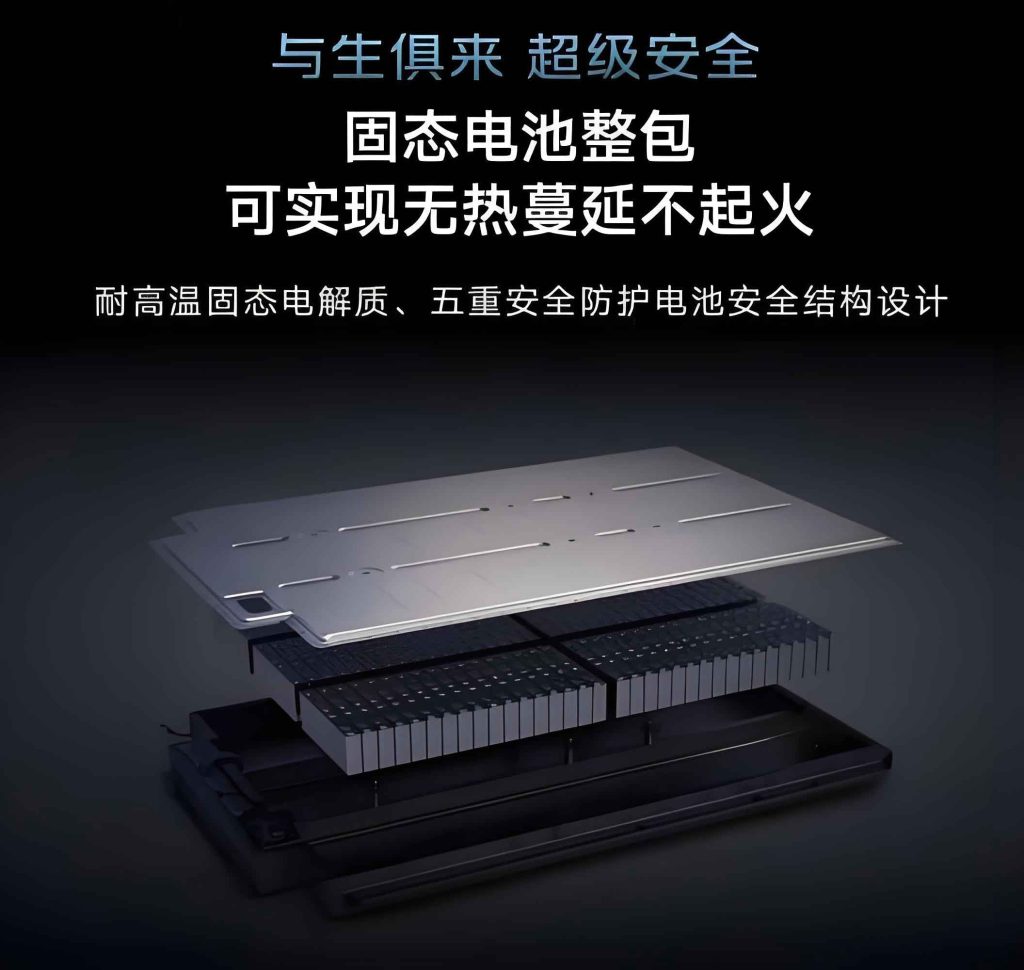
The transition towards electric mobility is fundamentally reshaping the automotive industry. At the heart of this revolution lies the quest for advanced energy storage systems that offer superior energy density, enhanced safety, and longer lifespan compared to conventional lithium-ion batteries. The solid-state battery has emerged as the most promising next-generation technology to meet these demands. By replacing the flammable liquid electrolyte with a solid ionic conductor, solid-state batteries promise to overcome critical limitations, enabling longer driving ranges, faster charging, and significantly reduced risk of thermal runaway. The global market for this technology is projected to experience exponential growth, underscoring its strategic importance.
Among the key players driving innovation in this field, Toyota Motor Corporation stands out as a pioneer and persistent force. The company initiated its research into solid-state battery technology as early as the 1990s and has since amassed one of the world’s most extensive and influential patent portfolios in this domain. Toyota’s technological pathway, particularly its focus on sulfide-based solid electrolytes, offers a critical case study for understanding the evolution and future direction of solid-state battery development. This article conducts a multi-dimensional analysis of Toyota’s patent activity to unravel the company’s technological focus, global strategy, collaborative model, and internal R&D dynamics in the realm of solid-state batteries.
Patent Data and Methodology
The analysis is based on patent data extracted from a global patent database, covering the period from January 1, 1996, to July 20, 2025. A targeted search strategy was employed to capture Toyota’s intellectual property related to solid-state batteries. The technology was decomposed into five key branches: electrolyte, positive electrode (cathode), negative electrode (anode), separator, and manufacturing processes. For each branch, a combination of industry-specific keywords and relevant patent classification codes was used to construct a comprehensive search query. The initial dataset was refined through manual review to eliminate noise and accurately categorize each patent document. The final dataset comprises 3,224 patent documents, which were further consolidated into 1,387 patent families based on shared priority applications, providing a clearer view of distinct inventions.
Analysis of Patent Trends and Development Stages
The annual filing volume of patent applications serves as a key indicator of R&D intensity and strategic focus. Toyota’s patenting activity in solid-state batteries reveals a distinct evolutionary pattern, demarcated by strategic partnerships.
| Development Stage | Time Period | Key Characteristic | Avg. Annual Filings |
|---|---|---|---|
| Incipient Stage | Pre-2008 | Foundational research, low-volume filing | < 10 |
| First Acceleration Phase | 2008 – 2017 | Post-collaboration with Ilika, sustained high activity | > 100 |
| Second Acceleration Phase | 2018 – Present | Post-collaboration with Panasonic, further increase and stabilization | > 240 |
The data shows that Toyota’s commitment transformed following its 2008 collaboration with Ilika Technologies on material research, triggering the First Acceleration Phase. A second, more pronounced surge began around 2018, coinciding with the deepening of its partnership with Panasonic aimed at industrialization. This partnership appears to have been a significant catalyst, pushing annual filings to consistently exceed 240, with a peak near 320. The recent announcement of a collaboration with Idemitsu Kosan for mass-production technology suggests a potential Third Acceleration Phase focused on commercialization, likely to be reflected in future patent filings. The timeline underscores Toyota’s strategy of leveraging external partnerships to propel specific stages of its solid-state battery development.
Global Patent Layout Strategy
Toyota’s patent filing jurisdiction map reveals its market prioritization and protection strategy for solid-state battery technology. The company has constructed a multi-layered global IP fortress.
| Jurisdiction Tier | Primary Jurisdictions | Patent Family Count* | Strategic Rationale |
|---|---|---|---|
| Tier 1 (Core) | Japan, United States | ~1,326 (JP), ~648 (US) | Home market and largest EV/automotive market; sites for planned production investment. |
| Tier 2 (Key Secondary) | China, South Korea, Germany | ~499 (CN), ~212 (KR), ~150 (DE) | Major manufacturing hubs and competitive battlegrounds for battery technology. |
| Tier 3 (Supplementary) | EPO, Austria, others in Europe & Asia | Varies (116 for EPO) | Important export markets and regions with manufacturing presence. |
*Counts are approximate based on patent family distributions.
A longitudinal view of the top five markets shows a notable strategic shift. While filings in Japan peaked earlier and have slightly declined, applications in the United States have seen strong and consistent growth, becoming the most targeted overseas jurisdiction in recent years. Filings in China have also risen significantly, reflecting the market’s importance. This geographical distribution aligns with Toyota’s announced investments of ¥730 billion in Japan and the U.S. for battery production, indicating that its patent strategy is tightly coupled with its manufacturing and market access roadmap for solid-state batteries.
Technological Composition and Focus Evolution
A breakdown of Toyota’s patent portfolio by technical component highlights its unwavering core research focus and evolving secondary priorities.
| Technology Component | Percentage of Portfolio | Key Details & Sub-focus |
|---|---|---|
| Electrolyte | 41% | Absolute core. Dominated by sulfide-based electrolytes (~24% of total portfolio), followed by oxide and polymer types. |
| Positive Electrode | 21% | Secondary focus. Primarily uses layered oxide materials (NCM, NCA, LCO). |
| Manufacturing Process | 21% | Critical for performance. Includes coating, pressing, and interfacial engineering techniques. |
| Negative Electrode | 15% | Secondary focus. Primarily carbon-based materials (e.g., graphite). |
| Separator | 2% | Minimal focus, as solid electrolyte often replaces traditional separator. |
The dominance of electrolyte technology, particularly sulfide-based, is Toyota’s defining technical signature. Sulfide solid electrolytes offer high ionic conductivity, a critical parameter for battery performance often described by the Arrhenius equation for ionic conduction:
$$ \sigma = A \exp\left(-\frac{E_a}{k_B T}\right) $$
where $\sigma$ is the ionic conductivity, $A$ is the pre-exponential factor, $E_a$ is the activation energy for ion migration, $k_B$ is Boltzmann’s constant, and $T$ is the absolute temperature. Toyota’s research aims to maximize $\sigma$ by developing materials with low $E_a$ and optimal structural properties.
An analysis of filing trends over time reveals a significant evolution within the portfolio. While electrolyte development has remained consistently high, the emphasis on manufacturing process patents has gradually declined since the start of the Second Acceleration Phase (post-2018). Conversely, patenting activity for both positive and negative electrodes has increased markedly during this same period. This suggests a strategic pivot: having established a lead in core electrolyte material science, Toyota is now intensifying efforts to integrate and optimize these electrolytes within complete cell architectures, focusing on electrode design and interfaces to solve remaining challenges in power density and cycle life for viable solid-state battery products.
Identification of Core Patents and Technological Influence
The impact and foundational nature of Toyota’s innovations can be gauged by analyzing patent citations. Highly cited patent families represent cornerstones of the company’s solid-state battery technology.
| Patent Family (Representative) | Citation Count | Core Technology Area | Key Contribution |
|---|---|---|---|
| WO2011118801A1 | 545 | Sulfide Electrolyte (Composition) | Defined crystalline sulfide electrolyte compositions with high Li-ion conductivity, protected via XRD characterization. |
| JP2011129312A | 533 | Sulfide Electrolyte (Synthesis) | Disclosed a two-step vitrification synthesis method reducing hazardous H₂S generation. |
| Other High-Impact Families (4) | 210-240 | Sulfide Electrolyte | Cover material optimization and synthesis process improvements. |
The citation analysis unequivocally confirms that Toyota’s most influential inventions reside in the domain of sulfide solid electrolytes. The two most-cited families, with over 500 citations each, are foundational to the entire field. The first protects key material compositions, while the second protects a critical, safer synthesis route. These patents have been extensively cited by major global competitors including LG Energy Solution, Samsung, Panasonic, and QuantumScape, demonstrating Toyota’s role in setting the foundational technological direction for sulfide-based solid-state batteries.
Collaborative Innovation Model
Toyota strongly employs open innovation and strategic partnerships to advance its solid-state battery ambitions. Approximately 19% of its related patents are co-applied with external entities, spanning academia and industry.
| Collaborator Type | Primary Collaborators (Examples) | Number of Co-applied Patents* | Typical Focus Area |
|---|---|---|---|
| Corporate Partner | Panasonic, Idemitsu Kosan, Kureha | 136 (Panasonic alone) | Electrolyte/Electrode scale-up, cell integration, manufacturing. |
| Academic & Research Institutes | Tokyo Tech, NIMS, Univ. of Maryland, Tsinghua Univ. | 162 (across 21 institutions) | Fundamental material science (sulfide/oxide/polymer electrolytes), novel concepts. |
*Counts represent patent documents, not families.
The collaboration with Panasonic is the most prolific, directly correlating with the surge in patent output in the Second Acceleration Phase and focusing on practical cell development. Collaborations with academia, particularly Tokyo Institute of Technology, have been instrumental in generating pioneering research on sulfide electrolytes. This dual-track model allows Toyota to explore fundamental breakthroughs through academia while pursuing industrial-scale engineering and integration with corporate partners, creating a robust pipeline for solid-state battery innovation.
Internal R&D Team Structure and Evolution
An analysis of inventor data reveals insights into Toyota’s internal organization for solid-state battery R&D. Historically, innovation was driven by a few concentrated, high-output teams led by key inventors focusing on electrolytes and electrode/process technology. However, a significant shift occurred around the beginning of the Second Acceleration Phase (2018-2019). The contribution share of the top ten inventors dropped substantially from over 30% of all filings (pre-2019) to about 16% (2019 onwards). This indicates a deliberate restructuring from a concentrated, star-inventor model to a more distributed and scalable R&D organization. This “decentralization” likely aimed to broaden the talent base, foster cross-disciplinary innovation, and accelerate development by engaging larger teams, effectively supporting the sustained high volume of patent filings observed in recent years. This adaptability in internal R&D management is a key component of Toyota’s overall strategy to maintain leadership in the complex solid-state battery race.
Conclusion and Strategic Implications
Toyota’s journey in solid-state battery technology, as revealed through its patent portfolio, exemplifies a long-term, strategic, and multi-faceted approach to disruptive innovation. The company has successfully navigated from early-stage research to the cusp of commercialization by adhering to a clear technological vision centered on sulfide solid electrolytes, while remaining adaptable in its secondary focuses and internal organization. Its global patent strategy is meticulously aligned with its production and market ambitions, securing key territories. Most notably, Toyota masterfully leverages external collaborations, using partnerships with academia for foundational discovery and with industry leaders for scale-up and integration, creating a powerful innovation ecosystem.
For other automakers, battery manufacturers, and researchers, Toyota’s model offers several lessons: the necessity of persistent, long-term investment in a core technology path; the strategic value of a globally coordinated IP strategy; and the power of selectively open innovation to accelerate development. As the competition for the next generation of solid-state batteries intensifies, understanding and learning from the patent-based strategies of established leaders like Toyota will be crucial for any entity aiming to secure a position in the future electric vehicle landscape.