
In the pursuit of next-generation energy storage systems, solid-state batteries have emerged as a pivotal frontier due to their potential to simultaneously enhance safety and energy density. As a researcher deeply immersed in this field, I have focused on addressing the critical challenges that hinder the commercialization of all-solid-state lithium metal batteries, particularly the compatibility between solid electrolytes and high-capacity conversion-type cathodes. The inherent issues of phase transformation at the cathode and lithium dendrite growth at the anode often deactivate electrode-electrolyte interfaces, leading to rapid performance degradation. In this comprehensive exploration, I present a novel approach centered on a hierarchical microsphere-stacked polymer electrolyte reinforced with graphitic carbon nitride (g-C3N4), which unlocks unprecedented performance in all-solid-state conversion batteries, specifically with iron fluoride (FeF3) cathodes. This work aims to provide a detailed analysis through extensive data, formulas, and tables, emphasizing the repeated theme of solid-state battery advancements.
The evolution of solid-state batteries hinges on the development of solid electrolytes that combine high ionic conductivity, mechanical robustness, and electrochemical stability. Traditional liquid electrolytes, while efficient, pose safety risks due to flammability and dendrite-induced short circuits. Solid polymer electrolytes (SPEs), such as those based on polyethylene oxide (PEO), offer flexibility and compatibility with existing battery manufacturing but suffer from low ionic conductivity at room temperature and poor mechanical strength. To overcome these limitations, the incorporation of fillers has been widely explored. Inorganic fillers like Al2O3 or SiO2 can improve conductivity but often add weight and may catalyze degradation. Organic fillers, such as g-C3N4, present a lightweight alternative with high mechanical strength and chemical stability. My research delves into the design of a hierarchical g-C3N4 microsphere filler that not only reinforces the polymer matrix but also enhances ion transport through unique interfacial interactions, paving the way for durable solid-state battery systems.
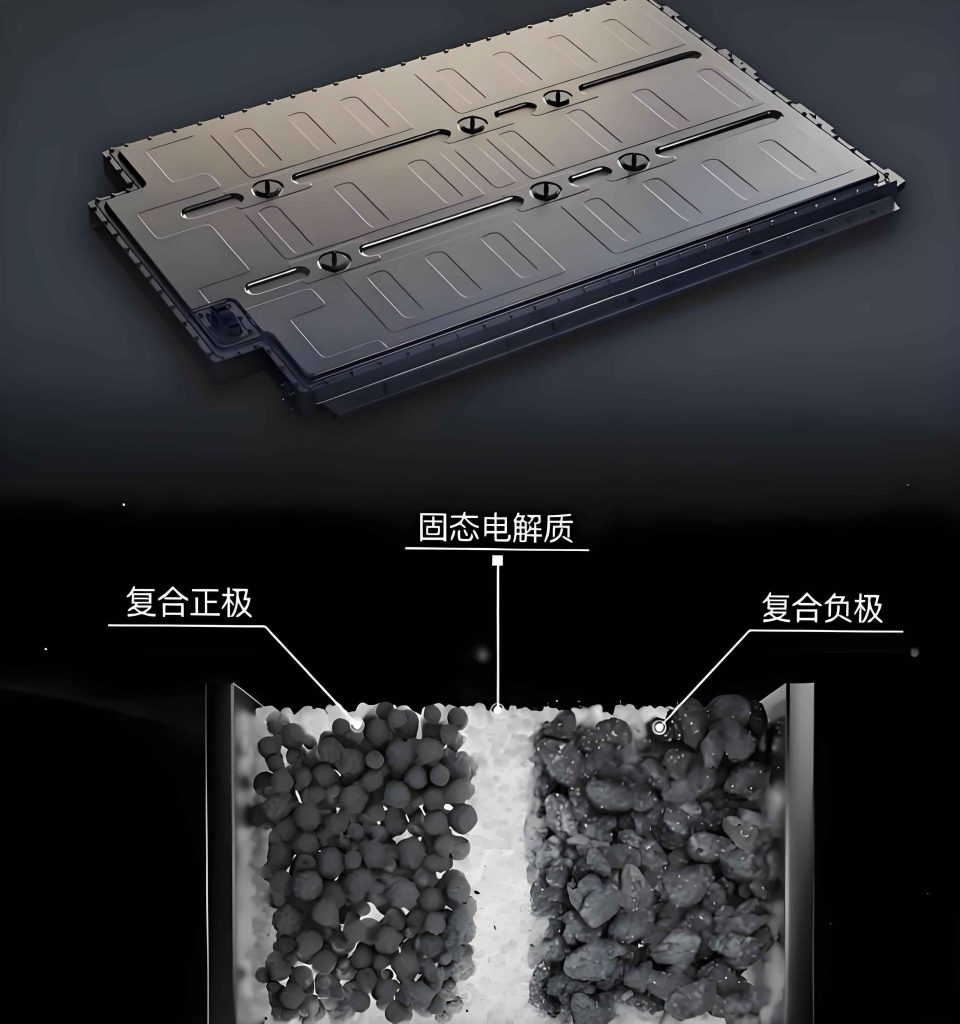
The fabrication of the composite polymer electrolyte, denoted as PEO-LiTFSI-xC3N4, involves a solution-casting process where g-C3N4 microspheres are blended with PEO and lithium bis(trifluoromethanesulfonyl)imide (LiTFSI) salt in acetonitrile. The g-C3N4 microspheres are synthesized via thermal polycondensation of melamine and cyanuric acid, resulting in a porous structure composed of two-dimensional nanosheets. This hierarchical architecture allows for deep penetration of PEO chains, creating a percolated network of conductive interfaces. The electrolyte membrane is formed by evaporating the solvent, yielding a flexible, brownish-yellow film with a thickness of approximately 60 μm. The key steps and parameters are summarized in Table 1, highlighting the systematic approach to optimizing solid-state battery components.
| Component | Role | Optimized Value | Impact on Solid-State Battery |
|---|---|---|---|
| PEO Matrix | Polymer host for ion transport | [EO]:Li+ = 20:1 molar ratio | Provides flexibility but low RT conductivity |
| LiTFSI Salt | Lithium ion source | 8 wt% in cathode mixture | Enables dissociation but can cause anion mobility issues |
| g-C3N4 Filler | Reinforcement and conductivity enhancer | 20 wt% (optimized for balance) | Improves mechanical strength and Li+ transference number |
| Acetonitrile Solvent | Processing medium | 15 mL for dissolution | Ensures homogeneous mixing, fully removed post-evaporation |
| Cathode Composition | Active material integration | FeF3 : Carbon : PEO : LiTFSI = 60:12:20:8 wt% | Enhances interface compatibility in solid-state battery |
The ionic conductivity of the composite electrolyte is a critical metric for solid-state battery performance. It is measured using electrochemical impedance spectroscopy with stainless steel blocking electrodes. The conductivity (σ) is calculated using the formula: $$\sigma = \frac{L}{R \cdot A}$$ where L is the thickness, R is the resistance derived from Nyquist plots, and A is the area. For PEO-LiTFSI-0.2C3N4 (with 20 wt% g-C3N4), the room temperature conductivity reaches 3.06 × 10⁻⁵ S/cm, which is an order of magnitude higher than that of pure PEO-LiTFSI (2.32 × 10⁻⁶ S/cm). At elevated temperatures, such as 60°C, the conductivity improves to 2.5 × 10⁻⁴ S/cm, facilitating efficient operation in solid-state battery applications. The temperature dependence follows the Arrhenius equation: $$\sigma = \sigma_0 \exp\left(-\frac{E_a}{k_B T}\right)$$ where σ₀ is the pre-exponential factor, Eₐ is the activation energy, k_B is Boltzmann’s constant, and T is the temperature. For the optimized composite, Eₐ is reduced to 0.47 eV, indicating lowered energy barriers for ion migration. Table 2 compares the conductivity and activation energies for different filler contents, underscoring the role of g-C3N4 in enhancing solid-state battery electrolytes.
| Filler Content (x in wt%) | Conductivity at 25°C (S/cm) | Conductivity at 60°C (S/cm) | Activation Energy, Eₐ (eV) | Implication for Solid-State Battery |
|---|---|---|---|---|
| 0 (Pure PEO-LiTFSI) | 2.32 × 10⁻⁶ | ~1.0 × 10⁻⁴ | 0.71 | Poor RT performance, high polarization |
| 10 | 3.18 × 10⁻⁵ | ~2.8 × 10⁻⁴ | 0.47 | Best conductivity but moderate mechanical strength |
| 20 (Optimized) | 3.06 × 10⁻⁵ | 2.5 × 10⁻⁴ | 0.47 | Balanced conductivity and dendrite suppression |
| 30 | ~1.0 × 10⁻⁵ | ~1.5 × 10⁻⁴ | 0.37 (high T) / 0.71 (low T) | Excess filler blocks ion pathways |
The enhancement in conductivity is attributed to the strong interaction between g-C3N4 and the TFSI⁻ anion, which promotes Li⁺ dissociation. Using density functional theory (DFT) calculations, the binding energy (E_b) between TFSI⁻ and g-C3N4 is estimated to be 5.95 eV, significantly higher than that between TFSI⁻ and PEO (0.71 eV). This interaction can be expressed as: $$E_b = E_T + E_P – E_{T+P}$$ where E_T is the energy of TFSI⁻, E_P is the energy of the polymer (g-C3N4 or PEO), and E_{T+P} is the energy of the combined system. The higher E_b for g-C3N4 indicates preferential anion binding, liberating more free Li⁺ ions and increasing the Li⁺ transference number (tₗᵢ₊). For PEO-LiTFSI-0.2C3N4, tₗᵢ₊ is measured to be 0.69, compared to 0.25 for pure PEO-LiTFSI, using the chronoamperometry method: $$t_{Li^+} = \frac{I_{ss}(\Delta V – I_0 R_0)}{I_0(\Delta V – I_{ss} R_{ss})}$$ where I₀ and I_ss are initial and steady-state currents, ΔV is the applied voltage, and R₀ and R_ss are interfacial resistances before and after polarization. This high tₗᵢ₊ reduces polarization in solid-state battery cells, enabling better rate capability.
Mechanical properties are vital for dendrite suppression in solid-state batteries. The Young’s modulus of PEO-LiTFSI-0.2C3N4 is 285 MPa, seven times higher than that of pure PEO-LiTFSI (37.7 MPa), as determined from stress-strain curves. This reinforcement stems from the compact stacking of g-C3N4 microspheres, which create a robust network resisting lithium deformation. The tensile strength also improves from 0.92 MPa to 3.97 MPa. Such mechanical integrity is quantified by the strain (ε) and stress (σ) relationship: $$\sigma = E \cdot \epsilon$$ where E is Young’s modulus. This enhancement directly correlates with the cycling stability of lithium metal anodes. In symmetric Li|Li cells, PEO-LiTFSI-0.2C3N4 enables ultra-long plating/stripping for over 10,000 hours at 0.1 mA/cm², with a voltage gap maintained below 100 mV. In contrast, pure PEO-LiTFSI cells short-circuit within 24 hours. The interfacial resistance (R_i) evolution, measured via electrochemical impedance spectroscopy, shows stabilization at around 400 Ω·cm² after 10 days for the composite, whereas pure electrolyte exhibits increasing R_i due to passivation. This underscores the critical role of filler-reinforced interfaces in solid-state battery durability.
For cathode compatibility, the composite electrolyte demonstrates extended electrochemical stability up to 5.12 V, compared to 4.6 V for pure PEO-LiTFSI, as verified by linear sweep voltammetry. This allows the use of high-voltage cathodes like LiNi₀.₈Co₀.₁Mn₀.₁O₂ (NCM811) in solid-state battery configurations. The cyclic voltammetry of Li|FeF₃ cells reveals two-stage redox peaks corresponding to insertion and conversion reactions, with high pseudocapacitive contributions. The current response (i) at a given potential (V) is deconvoluted using: $$i(V) = k_1 v + k_2 v^{1/2}$$ where v is the scan rate, k₁v represents capacitive currents, and k₂v¹/² represents diffusion-controlled currents. For FeF₃, the capacitive contribution exceeds 55% at 0.6 mV/s, facilitating high-rate performance in solid-state batteries. The lithium diffusion coefficient (D) is estimated via galvanostatic intermittent titration technique (GITT) using: $$D = \frac{4}{\pi \tau} \left( \frac{m_B V_m}{M_B S} \right)^2 \left( \frac{\Delta E_S}{\Delta E_\tau} \right)^2$$ where τ is the pulse time, m_B is active mass, V_m is molar volume, M_B is molar mass, S is electrode area, ΔE_S is steady-state voltage change, and ΔE_τ is transient voltage change. D values around 10⁻¹² cm²/s are observed, indicating efficient solid-state diffusion.
The performance of all-solid-state battery cells is summarized in Table 3, highlighting the advantages of g-C3N4 reinforcement. With LiFePO₄ cathodes, the cells deliver capacities of 80 mAh/g even at 12 C rate, while FeF₃ conversion cells achieve 300 mAh/g after 200 cycles and sustain 1200 cycles at 1 C with minimal degradation. These results are attributed to the synergistic effects of the hierarchical electrolyte: mechanical suppression of dendrites, enhanced ion transport, and stable interfaces. The pseudocapacitive behavior further supports high-rate capabilities, making this solid-state battery system promising for applications requiring both safety and energy density.
| Battery Configuration | Current Rate | Initial Capacity (mAh/g) | Capacity Retention | Key Solid-State Battery Attribute |
|---|---|---|---|---|
| Li|LiFePO₄ | 0.3 C | 163 | 140 mAh/g after 400 cycles | High cycling stability |
| Li|LiFePO₄ | 12 C | ~80 | Maintained at high rate | Exceptional rate capability |
| Li|FeF₃ | 0.1 C | ~700 | ~250 mAh/g after 200 cycles | High-capacity conversion |
| Li|FeF₃ | 1 C | 300 | 170 mAh/g after 1000 cycles | Ultra-long cycle life |
| Li|NCM811 | 0.5 C | ~150 | 133 mAh/g after 100 cycles | High-voltage compatibility |
In terms of thermal stability, thermogravimetric analysis shows that PEO-LiTFSI-0.2C3N4 decomposes above 350°C, similar to pure PEO-LiTFSI, but with a slower weight loss due to g-C3N4’s stability. Differential scanning calorimetry indicates a glass transition temperature (T_g) of -41.1°C for the composite, lower than -40.7°C for pure PEO-LiTFSI, confirming reduced crystallinity and improved segmental mobility. Fourier transform infrared spectroscopy reveals peak shifts, such as the O-H stretching at 3433 cm⁻¹ moving to lower wavenumbers, indicating weakened PEO entanglement and enhanced interaction with g-C3N4. These spectroscopic insights support the mechanism of conductivity enhancement in solid-state batteries.
The overarching theme of this work is the transformative potential of hierarchical filler design in solid-state battery technology. By integrating g-C3N4 microspheres, we address the triad of challenges: conductivity, mechanical strength, and interface stability. The porous structure of the filler enables percolated ion pathways, while its lightweight nature avoids energy density penalties. Future directions could involve optimizing filler morphology for even higher conductivities or exploring other metal-free fillers for sustainable solid-state battery development. Moreover, scaling up the electrolyte fabrication process and integrating with flexible electronics could broaden applications.
In conclusion, the reinforcement of polymer electrolytes with hierarchical g-C3N4 microspheres represents a significant leap forward for solid-state batteries. This approach not only suppresses lithium dendrites through mechanical robustness but also enhances ionic conductivity and transference number via strategic anion binding. The resulting all-solid-state conversion batteries, particularly with FeF₃ cathodes, demonstrate high capacity, long cycle life, and excellent rate performance. As the demand for safe, high-energy-density storage grows, such innovations will be crucial in advancing solid-state battery systems beyond conventional limitations. The continuous iteration of materials and interfaces, guided by fundamental insights, promises to unlock the full potential of solid-state batteries in powering the future.