
The relentless pursuit of higher energy density and enhanced safety in electrochemical energy storage has positioned solid-state batteries as a pivotal technology for the next generation of electric vehicles. Replacing the flammable organic liquid electrolytes of conventional lithium-ion batteries with non-flammable solid electrolytes promises a paradigm shift. However, the path to commercialization is obstructed by significant challenges, with the growth of lithium dendrites remaining a primary concern. Dendrites, metallic lithium protrusions, can penetrate the solid electrolyte, leading to internal short circuits, cell failure, and severe safety hazards. My research focuses on inhibiting this deleterious phenomenon through the rational design of composite solid electrolytes, specifically targeting systems suitable for scalable manufacturing.
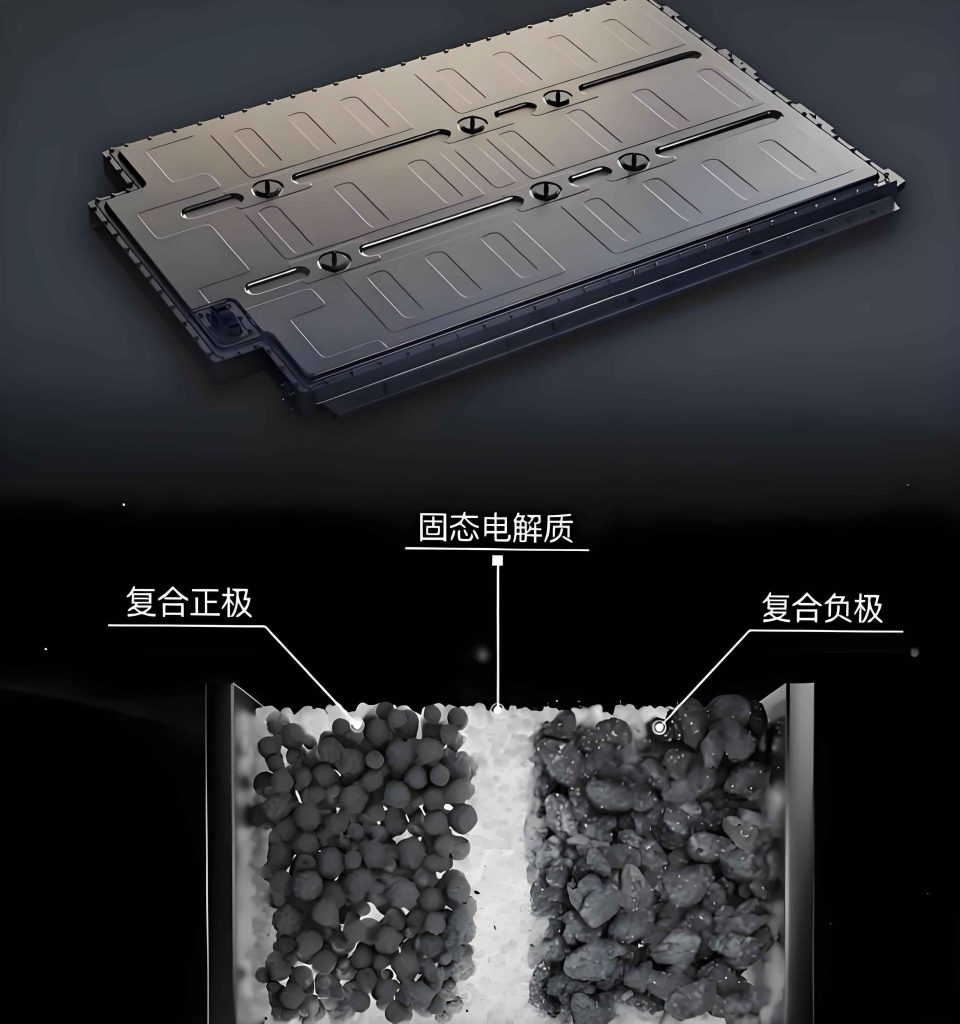
The core of a solid-state battery is its electrolyte, which must simultaneously possess high ionic conductivity, excellent electrochemical stability, and superior mechanical strength to block dendrites. Broadly, solid electrolytes are categorized into inorganic ceramics and solid polymers. Inorganic ceramics, such as garnet-type (e.g., Li7La3Zr2O12, LLZO), sulfide, and NASICON-type materials, often exhibit high ionic conductivity and high Young’s modulus. Their rigidity is theoretically effective against dendrite penetration. For instance, the ionic conductivity ($$\sigma$$) of a material is calculated from electrochemical impedance spectroscopy (EIS) data using the formula:
$$\sigma = \frac{L}{R_b A}$$
where \(L\) is the thickness, \(A\) is the contact area, and \(R_b\) is the bulk resistance obtained from the high-frequency intercept on the real axis in a Nyquist plot. While certain ceramics like LLZO can achieve $$\sigma > 10^{-4}$$ S/cm at room temperature, they suffer from high interfacial resistance with electrodes, brittleness, and high manufacturing costs.
On the other hand, solid polymer electrolytes, like those based on poly(ethylene oxide) (PEO) complexed with lithium salts (e.g., LiTFSI), offer excellent flexibility, good interfacial contact, and ease of processing. Their ion transport mechanism relies on segmental motion of the polymer chains. The conductivity follows the Vogel-Tammann-Fulcher (VTF) relationship, which is often approximated by the Arrhenius equation for analysis over limited temperature ranges:
$$\sigma T = A \exp\left(-\frac{E_a}{k_B T}\right)$$
where \(A\) is the pre-exponential factor, \(E_a\) is the activation energy for ion conduction, \(k_B\) is Boltzmann’s constant, and \(T\) is the absolute temperature. The primary drawback of pure PEO-based electrolytes is their semi-crystalline nature at room temperature, which severely restricts chain mobility, resulting in low ionic conductivity (typically ~10-7 to 10-6 S/cm at 25°C) and inadequate mechanical strength to resist lithium dendrite growth.
To bridge this gap, the composite electrolyte approach has emerged as a highly promising strategy. By dispersing inorganic fillers within a polymer matrix, one can create a hybrid system that synergistically combines the advantages of both components. The fillers can: 1) reduce the crystallinity of the polymer, enhancing ionic conductivity; 2) provide mechanical reinforcement to hinder dendrite propagation; and 3) potentially create new percolation pathways for lithium ions. The choice of filler is critical. While passive fillers like Al2O3 or TiO2 mainly improve mechanical properties, active ceramic fillers that are themselves Li-ion conductors, such as LLZO, offer the added benefit of boosting overall ionic conductivity. This work delves into the development and electrochemical evaluation of a PEO-LLZO composite electrolyte, with a specific focus on its efficacy in suppressing lithium dendrites, a critical step toward realizing safe, high-energy-density solid-state batteries for automotive applications.
The garnet-type LLZO was synthesized via a sol-gel method. Stoichiometric amounts of LiNO3, La(NO3)3·6H2O, and ZrO(NO3)2·xH2O (molar ratio 7.1:3:2) were dissolved in deionized water. Citric acid and ethylene glycol were added as chelating agents. The mixture was dried and subsequently calcined at 450°C and 750°C to remove organics. The resulting powder was pressed into pellets under 400 MPa and sintered at 1100°C for 12 hours under a protective atmosphere of mother powder to mitigate lithium loss. X-ray diffraction confirmed the formation of a pure cubic phase, which is essential for high ionic conductivity. For the composite electrolyte, PEO and LiTFSI (EO:Li+ ratio = 10:1) were dissolved in tetrahydrofuran (THF). LLZO powder was added to this solution at varying weight percentages (10, 20, 30, 40, 50 wt%). After thorough stirring and casting, the solvent was evaporated at elevated temperatures to form flexible, free-standing membranes. Pure PEO-LiTFSI membranes were prepared similarly without filler addition.
Electrochemical characterization was performed using symmetric Li/electrolyte/Li cells and blocking electrodes (stainless steel for polymers, sputtered Au for pure LLZO). Ionic conductivity was determined from EIS measurements. The critical current density (CCD), a direct metric for dendrite suppression capability, was evaluated by galvanostatically cycling symmetric Li cells with a stepwise increasing current density (0.2 mA/cm2 increment per step) until a sudden voltage drop signifying short-circuit occurred. Finally, practical performance was assessed in pouch cell configurations: a full cell with LiCoO2 (LCO) cathode and graphite anode, and a half-cell with LCO cathode and lithium metal anode, both employing the optimal composite electrolyte.
The ionic conductivity of the pure components established a baseline. The sintered LLZO pellet exhibited a high room-temperature conductivity of $$5.9 \times 10^{-4}$$ S/cm with a low activation energy ($$E_a$$) of 0.40 eV, confirming its quality as a fast ionic conductor. In stark contrast, the pure PEO-based membrane showed a conductivity of only $$9.8 \times 10^{-6}$$ S/cm with a higher $$E_a$$ of 0.57 eV, limited by its crystallinity. The incorporation of LLZO filler dramatically altered the properties of the polymer matrix. The ionic conductivity of the composite increased monotonically with LLZO content up to 40 wt%, beyond which it plateaued. This suggests the formation of an effective percolating network for ion transport through the LLZO particles at this concentration. The 40 wt% LLZO composite electrolyte achieved an optimal conductivity of $$3.8 \times 10^{-4}$$ S/cm—comparable to pure LLZO and nearly two orders of magnitude higher than pure PEO—with an intermediate $$E_a$$ of 0.43 eV. This significant enhancement is attributed to the disruption of PEO crystallinity and the additional ion-conducting pathways provided by the LLZO filler.
| Electrolyte System | Ionic Conductivity at 25°C (S/cm) | Activation Energy, $$E_a$$ (eV) | Critical Current Density (mA/cm2) | Interfacial Resistance with Li (Ω cm2) |
|---|---|---|---|---|
| Pure LLZO Ceramic | $$5.9 \times 10^{-4}$$ | 0.40 | 0.6 | >500 |
| Pure PEO-LiTFSI | $$9.8 \times 10^{-6}$$ | 0.57 | 0.4 | ~150 |
| PEO-40wt%LLZO Composite | $$3.8 \times 10^{-4}$$ | 0.43 | 1.6 | ~37 |
The most compelling evidence for improved dendrite resistance came from the CCD tests. As summarized in Table 1, the pure LLZO cell shorted at 0.6 mA/cm2, limited not by its mechanical strength but by high interfacial resistance causing inhomogeneous Li plating. The soft PEO cell failed at an even lower 0.4 mA/cm2. Remarkably, the PEO-40wt%LLZO composite cell withstood current densities up to 1.6 mA/cm2 before failure. This four-fold increase in CCD is a direct consequence of the composite’s synergistic design. The compliant PEO matrix ensures intimate interfacial contact with lithium metal, leading to a low and stable interfacial resistance of ~37 Ω cm2, which promotes uniform lithium deposition/stripping. Simultaneously, the dispersed, high-modulus LLZO particles act as physical barriers, mechanically impeding the progression of any nascent dendrites that form. This “soft yet strong” architecture is key to stabilizing the lithium metal interface in a solid-state battery.
To translate these material-level advantages into practical device performance, pouch cells were fabricated. The LCO/Composite Electrolyte/Graphite full cell (3.0-4.4 V) delivered an initial specific capacity of 167.5 mAh/g and an energy density of 218.2 Wh/kg at the pack level. More importantly, it demonstrated outstanding cycling stability, retaining 92.3% of its capacity after 1000 cycles at a 1C rate with no signs of internal shorting. This performance meets the stringent longevity requirements for automotive solid-state batteries. Pursuing even higher energy density, an LCO/Composite Electrolyte/Li metal half-cell (3.0-4.5 V) was assembled. It achieved a remarkable initial energy density of 334.5 Wh/kg, showcasing the transformative potential of pairing lithium metal with a dendrite-suppressing solid electrolyte. However, the cycling stability of this configuration was inferior, with capacity retention of 81.7% after 200 cycles. The increased polarization and capacity fade underscore the ongoing challenges of coulombic efficiency and morphological stability at the lithium metal anode, even with an improved composite electrolyte.
In conclusion, this study demonstrates that engineering composite solid electrolytes is a highly effective strategy for suppressing lithium dendrites. The integration of high-conductivity, high-modulus LLZO filler into a PEO matrix successfully created a hybrid electrolyte with enhanced ionic transport and superior mechanical resilience against lithium penetration. The composite enabled a critical current density of 1.6 mA/cm2 and stable long-term cycling in graphite-based full cells. While the leap to lithium metal anodes promises extraordinary energy density, further work is needed to perfect the interface and achieve comparable cycle life. The development of such composite electrolytes represents a crucial milestone on the road to commercializing safe, high-performance solid-state batteries that can fulfill the demanding requirements of the new energy vehicle industry. Future work will focus on optimizing filler morphology (e.g., 1D nanofibers, 3D scaffolds), exploring polymer/ceramic interfacial bonding, and integrating these electrolytes with high-voltage cathodes to unlock their full potential.