
From my perspective as an observer deeply embedded in the evolution of energy storage technologies, we stand at a pivotal moment. The transition from theoretical promise to tangible application is underway for a technology poised to redefine performance and safety benchmarks: the solid-state battery. The excitement within the industry is palpable, a clear signal that we are on the cusp of a significant leap forward. This article delves into the core principles, current developmental landscape, material challenges, and future trajectory of solid-state batteries, synthesizing the collective momentum driving us toward this new energy paradigm.
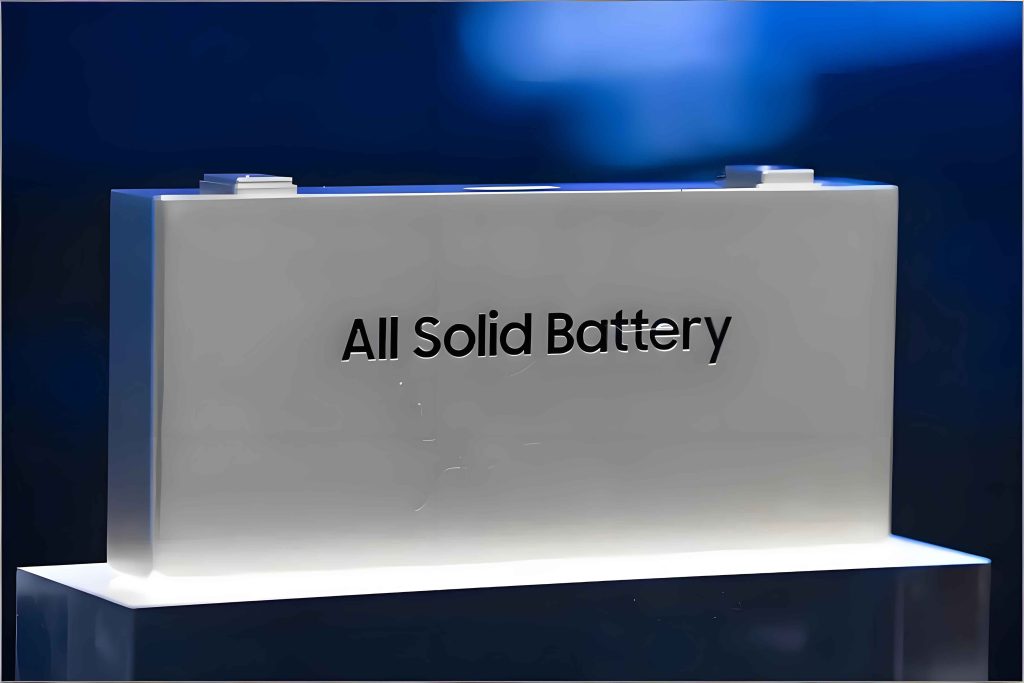
Fundamentally, a solid-state battery represents a paradigm shift from the conventional lithium-ion battery. The key differentiator lies in its physical structure. While traditional lithium-ion and lithium polymer batteries employ a liquid or gel electrolyte to facilitate the movement of lithium ions between the cathode and anode, a solid-state battery utilizes a solid electrolyte. This seemingly simple substitution unlocks a cascade of performance enhancements. The solid electrolyte’s denser, more stable structure allows for a greater accumulation of charge carriers at the electrodes, enabling the conduction of significantly larger currents. This fundamental characteristic is the cornerstone for the celebrated advantages of the solid-state battery. The energy density, a critical metric for both runtime and range, can theoretically be doubled. Imagine electric vehicles reliably achieving ranges exceeding 1000 kilometers on a single charge—a target now within strategic sight. Furthermore, the charging speed is projected to increase by a factor of three or more, largely unconstrained by the thermal limitations that plague current systems. Perhaps most importantly, the replacement of the volatile, flammable liquid electrolyte with a solid one dramatically elevates safety. The risks of leakage, thermal runaway, and fire, especially under catastrophic conditions like penetration, are vastly diminished. The solid-state battery, therefore, promises not just more energy, but safer energy.
The superiority of the solid-state battery can be quantified by comparing its target parameters against those of incumbent technologies. The following table summarizes the key comparative advantages:
| Feature | Conventional Liquid Li-ion | Target for Solid-State Battery | Impact |
|---|---|---|---|
| Electrolyte State | Liquid / Gel (Organic Solvents) | Solid (Ceramic, Polymer, Sulfide) | Eliminates flammability, enables novel cell design. |
| Energy Density (Volumetric) | ~700 Wh/L (Typical maximum) | >1000 Wh/L (Demonstrated in labs) | Smaller, lighter packs for same capacity; longer device/vehicle range. |
| Energy Density (Gravimetric) | ~250-300 Wh/kg (Commercial) | 360-500+ Wh/kg (Projected) | |
| Charging Rate | Limited by Li-plating & heat | Potentially 3x faster | Radically reduced charging times. |
| Operating Temperature | Degraded at low temps | Improved low-temp performance (+20% claimed) | More reliable performance in extreme climates. |
| Safety | Risk of thermal runaway | Inherently safer; passes severe penetration tests | Reduces risk of fire, enables simpler battery management. |
| Cycle Life | Degrades with electrolyte decomposition | Potentially much longer | Longer product lifespan, lower total cost of ownership. |
The potential of the solid-state battery is immense, but the path to mass production is layered with intermediate steps. The industry consensus has converged on a gradual evolution, moving from liquid to fully solid systems. This staged approach mitigates risk and leverages existing manufacturing knowledge. The progression can be visualized as a spectrum of electrolyte content:
| Development Stage | Electrolyte Description | Liquid Electrolyte Content | Status |
|---|---|---|---|
| 1. Traditional Liquid Battery | Porous separator soaked in liquid electrolyte | High (>95%) | Current mainstream technology. |
| 2. Gel Polymer Battery | Liquid electrolyte immobilized in a polymer matrix | High (>90%) | Used in some consumer electronics. |
| 3. Semi-Solid Battery | Solid electrolyte + reduced liquid electrolyte | Significantly Reduced (5-20%) | Current focus for near-term commercialization. |
| 4. Quasi-Solid Battery | Minimal liquid electrolyte, mostly solid | Trace Amounts (<5%) | Advanced R&D. |
| 5. All-Solid-State Battery | Entirely solid electrolyte, no liquids | 0% | The ultimate goal, subject of intensive R&D. |
Currently, the semi-solid battery represents the most viable bridge technology. It retains a small amount of liquid or gel electrolyte to maintain effective ion conduction at the interfaces between solid particles—a major technical hurdle for pure solid-state designs. This hybrid approach delivers a meaningful portion of the solid-state battery’s benefits—notably, improved energy density and enhanced safety—while remaining closer to existing manufacturing processes. It is estimated that a semi-solid production line may share up to 70% compatibility with traditional lithium-ion battery lines, lowering the barrier to initial commercialization. Numerous automakers and battery producers have announced plans to deploy semi-solid battery packs in premium vehicle models within the next 1-2 years, targeting that symbolic 1000km range milestone. However, it is crucial to recognize that the semi-solid configuration does not fundamentally solve the core interfacial challenges inherent to a purely solid-state system.
The performance of any battery, and particularly a solid-state battery, is governed by its material constituents. The solid electrolyte is the heart of the system, and its properties dictate the battery’s power, stability, and practicality. Three primary classes of solid electrolytes are under intense global investigation, each with distinct trade-offs:
| Electrolyte Type | Example Materials | Advantages | Challenges | Regional/Corporate Focus |
|---|---|---|---|---|
| Polymer | PEO (Polyethylene Oxide) with Li salts | Flexible, easier to process, good interfacial contact. | Low ionic conductivity at room temperature, narrow electrochemical window. | Historically favored by European and some US entities. |
| Oxide | LLZO (Garnet), LATP, LLTO | Good chemical stability, wide electrochemical window, high modulus. | Brittle, high interfacial resistance with electrodes, often require high sintering temperatures. | Strong focus in the US, China, and some European efforts. |
| Sulfide | LGPS, argyrodites (Li₆PS₅Cl) | Very high ionic conductivity (rivaling liquids), good ductility. | Poor stability in air (moisture-sensitive, releases H₂S), interfacial reactivity with high-voltage cathodes. | Dominant focus in Japan and South Korea. |
The choice of electrolyte directly influences the system design. The ionic conductivity ($\sigma_{ion}$) determines the internal resistance and power capability. A key challenge is that the total cell resistance ($R_{total}$) in a solid-state battery is often dominated not by the bulk electrolyte resistance, but by the interfacial resistances at the cathode-electrolyte ($R_{CEI}$) and anode-electrolyte ($R_{SEI}$) interfaces:
$$ R_{total} = R_{bulk} + R_{CEI} + R_{SEI} $$
Where $R_{bulk} = \frac{L}{\sigma_{ion} \cdot A}$, with $L$ being electrolyte thickness and $A$ the contact area. Achieving low, stable interfacial resistance—through engineered interfaces, compliant interlayers, or applied pressure—is arguably the single greatest materials science challenge for the practical solid-state battery.
On the anode side, the solid-state battery enables the use of lithium metal, the “holy grail” of anodes due to its extremely high theoretical capacity (3860 mAh/g) and low electrochemical potential. The energy density gain is substantial. We can approximate the gravimetric energy density ($E_{grav}$) of a cell as:
$$ E_{grav} \approx \frac{V \cdot Q_{cathode}}{Weight_{total}} $$
Where $V$ is the average cell voltage and $Q_{cathode}$ is the cathode’s specific capacity. Replacing a graphite anode (~372 mAh/g) with lithium metal drastically reduces the anode’s mass contribution to $Weight_{total}$ while maintaining or increasing $Q_{cathode}$, thereby pushing $E_{grav}$ toward the 500 Wh/kg frontier. However, integrating lithium metal requires solving the problems of dendrite formation and volume change during cycling, which a robust solid electrolyte is uniquely positioned to address—if the interfaces remain intact.
The global race to commercialize the solid-state battery reveals divergent strategies. In China, the emphasis has been on a pragmatic, incremental path. A vibrant ecosystem of startups, established battery giants, and automakers is actively pushing semi-solid batteries into the market. Significant capital is flowing into these ventures, with investments from both financial and strategic industrial players accelerating pilot production and supply chain development. The philosophy is to commercialize the intermediate benefit now while continuing R&D on the ultimate solid-state battery.
In contrast, key Japanese and Korean conglomerates, along with several European automakers, appear more focused on a direct assault on the all-solid-state battery, particularly using sulfide-based chemistries. They have announced ambitious, multi-year roadmaps targeting prototype vehicles by 2025-2028 and full-scale commercialization around 2030. These consortia often involve deep collaboration between automotive OEMs, battery manufacturers, materials companies, and national research institutions, aiming to overcome the fundamental scientific hurdles and establish a commanding intellectual property position. Their goal is not just improvement but transformation, targeting a 50% cost reduction per kWh and a doubling of energy density compared to today’s best liquid lithium-ion batteries.
The challenges to a true, mass-market all-solid-state battery remain formidable. They are not merely scientific but also economic and engineering in nature:
- Interfacial Engineering: Creating and maintaining low-impedance, mechanically stable contacts between solid materials throughout thousands of charge-discharge cycles is complex.
- Manufacturing Scalability: Processes for applying thin, uniform, defect-free solid electrolyte layers at high speed and low cost are still in development.
- Raw Material & Supply Chain: Scaling up production of high-purity sulfide or garnet powders and integrating lithium metal foil handling requires entirely new supply chains.
- Cost: While the long-term cost outlook is promising, initial production will be expensive due to novel materials and processes.
- System Integration: Solid-state battery packs may require different thermal management and applied stack pressure systems compared to current modules.
Despite these hurdles, the momentum is undeniable. The solid-state battery is transitioning from a laboratory curiosity to an industrial engineering project. The semi-solid battery will serve as the crucial first wave, proving concepts in the market and funding further development. As material innovations mature and manufacturing techniques evolve, the solid electrolyte content will incrementally increase, performance will rise, and costs will fall along the classic learning curve.
In conclusion, we are witnessing the formative years of a technology set to redefine energy storage. The solid-state battery is more than an incremental upgrade; it is a foundational shift toward safer, denser, and faster-charging power. The journey will be phased, with semi-solid solutions paving the way in the immediate future. The intense global competition across different material pathways ensures that innovation will continue at a rapid pace. While the timeline for ubiquitous, affordable all-solid-state batteries likely extends into the next decade, the direction is clear. Every announcement of a new pilot line, every capital raise for a solid-state battery startup, and every new research breakthrough confirms the inevitable: the future of batteries is solid.