
The global transition towards sustainable transportation has positioned the battery electric vehicle (BEV) as a pivotal technology. As adoption rates surge, the development of robust and user-friendly charging infrastructure has emerged as a critical challenge. Among the innovative solutions, wireless charging technology stands out, promising to redefine the user experience by eliminating the need for physical plugs and cables. This technology not only offers unparalleled convenience but also enhances durability by reducing mechanical wear and tear on connectors. Furthermore, it presents a foundational technology for future autonomous vehicle fleets and smart mobility systems, where vehicles could charge themselves with minimal human intervention. This article delves into the evolution, fundamental principles, current applications, and future trajectories of wireless charging for battery electric vehicles, providing a comprehensive analysis for researchers and practitioners in the field.
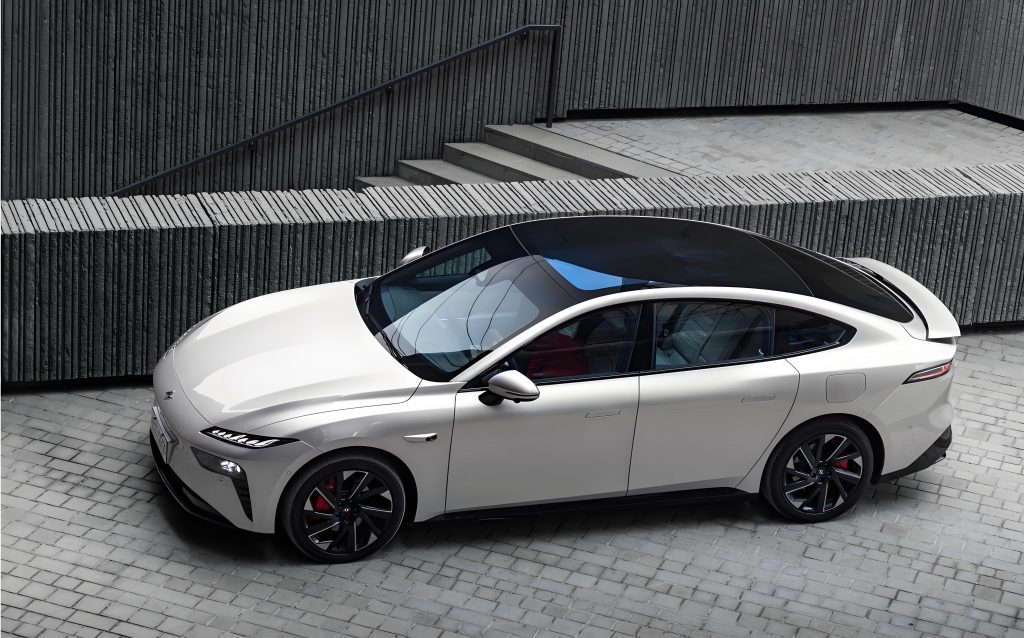
The core appeal of wireless charging, or inductive power transfer (IPT), for a battery electric vehicle lies in its seamless operation. The fundamental principle involves transferring electrical energy from a power source to the vehicle’s battery through an air gap via time-varying electromagnetic fields. This process circumvents the manual handling required in conductive charging, thereby improving safety and accessibility. The main technological pathways for wireless power transfer to a battery electric vehicle include electromagnetic induction, magnetic resonance coupling, and, to a lesser extent, capacitive coupling. Each method has distinct characteristics concerning efficiency, transfer distance, and cost. The successful integration of wireless charging into the broader ecosystem of the battery electric vehicle depends on overcoming hurdles related to efficiency, interoperability, cost, and safety standards.
Fundamentals of Wireless Charging for Battery Electric Vehicles
Overview of Wireless Charging Technology
Wireless charging technology for a battery electric vehicle enables the transfer of electrical energy without any galvanic connection. It operates on the principle of generating an oscillating electromagnetic field on a ground-based transmitter pad, which then induces an electrical current in a receiver pad mounted on the underside of the vehicle. This induced current is rectified and conditioned to charge the high-voltage battery pack. The primary advantage for the user of a battery electric vehicle is the convenience of simple alignment over a parking spot, as opposed to handling potentially heavy and dirty cables. For public and fleet operations, it reduces maintenance associated with connectors and enables opportunistic charging during short stops, increasing vehicle utilization.
Electromagnetic Induction Principle
This is the most mature technology for wireless charging of a battery electric vehicle. It is based on Faraday’s Law of Induction. When an alternating current (AC) flows through a transmitter coil (primary coil), it generates a time-varying magnetic field. If a receiver coil (secondary coil) is placed within this changing magnetic flux, an electromotive force (EMF) is induced, driving a current in the receiver circuit. The efficiency of this coupling is highly dependent on the alignment and the distance (air gap) between the two coils, requiring them to be in close proximity and well-aligned.
The fundamental relationship is given by Faraday’s Law:
$$ \mathcal{E} = -N \frac{d\Phi_B}{dt} $$
where $\mathcal{E}$ is the induced EMF, $N$ is the number of turns in the coil, and $\frac{d\Phi_B}{dt}$ is the rate of change of magnetic flux $\Phi_B$. For a system with loosely coupled coils, the mutual inductance $M$ defines the coupling:
$$ V_{secondary} = j \omega M I_{primary} $$
where $V_{secondary}$ is the induced voltage, $\omega$ is the angular frequency, and $I_{primary}$ is the primary coil current. High efficiency in a battery electric vehicle application demands precise positioning systems and often mechanical aids to guide the driver.
Magnetic Resonance Principle
Magnetic resonant wireless charging addresses the strict alignment and proximity limitations of basic inductive charging. In this method, both the transmitter and receiver coils are part of resonant circuits tuned to the same frequency. When the primary circuit is energized, energy is transferred efficiently to the secondary circuit via strong coupling in the near magnetic field, even at larger air gaps and with more positional freedom. This resonance effect significantly improves the tolerance to misalignment for a parked battery electric vehicle.
The system can be modeled as two coupled resonant circuits. The power transfer capability and efficiency are maximized when both circuits resonate at the same frequency $\omega_0 = 1/\sqrt{LC}$. The key parameters are the quality factors ($Q_1$, $Q_2$) of the coils and the coupling coefficient $k$ (where $k = M/\sqrt{L_1 L_2}$). The efficiency $\eta$ can be approximated under certain conditions by:
$$ \eta \approx \frac{k^2 Q_1 Q_2}{1 + k^2 Q_1 Q_2} $$
This shows that high $Q$-factors and a sufficient coupling coefficient are crucial. This technology is particularly promising for static charging of a battery electric vehicle in home, public, and depot scenarios, and is the basis for developing dynamic (in-motion) charging systems.
Basic System Architecture
A complete wireless charging system for a battery electric vehicle comprises several key subsystems, both on the grid side (Ground Assembly) and the vehicle side (Vehicle Assembly).
| Subsystem | Location | Key Components | Primary Function |
|---|---|---|---|
| Power Conversion & Generation | Grid-side | Grid rectifier, High-frequency inverter (e.g., 85 kHz) | Convert grid AC to high-frequency AC for the transmitter coil. |
| Transmitter (Primary) | Ground Assembly | Transmitter coil, Ferrite structure, shielding | Generate the oscillating magnetic field for energy transfer. |
| Receiver (Secondary) | Vehicle Assembly | Receiver coil, Ferrite structure, shielding | Capture the magnetic field and induce an AC current. |
| Power Conditioning & Control | Vehicle-side | Rectifier, Power Factor Correction (PFC), DC-DC converter | Convert induced AC to regulated DC suitable for the battery. |
| Communication & Alignment | Both sides | Wi-Fi, Bluetooth, Zigbee, or dedicated link; Guidance system | Initiate/stop charging, exchange power needs, safety data, and guide alignment. |
| Safety & Foreign Object Detection (FOD) | Primarily Grid-side | Sensor arrays (e.g., optical, thermal, magnetic) | Detect living objects or metallic debris in the charging zone and de-energize the system. |
Key Technologies and Developmental Progress
Enhancement of Charging Efficiency
Maximizing end-to-end efficiency from the grid to the battery of a battery electric vehicle is paramount for economic and ecological viability. Efficiency losses occur in power conversion stages and during the wireless transfer itself. Research focuses on optimizing coil design (e.g., bipolar or DD coil topologies), using Litz wire to reduce AC resistance, and employing advanced ferrite materials to guide and concentrate the magnetic flux. Furthermore, the use of wide-bandgap semiconductors (like SiC and GaN) in the inverters and rectifiers reduces switching losses. The system efficiency $\eta_{total}$ is a product of individual stage efficiencies:
$$ \eta_{total} = \eta_{grid} \cdot \eta_{inv} \cdot \eta_{coupling} \cdot \eta_{rect} \cdot \eta_{DC-DC} $$
Current state-of-the-art static wireless charging systems for battery electric vehicles aim for $\eta_{total} > 90\%$ at rated power, approaching the efficiency of high-quality conductive charging.
| Efficiency Factor | Typical Range/Technology | Improvement Strategy |
|---|---|---|
| Coil-to-Coil Coupling ($\eta_{coupling}$) | 95-97% (aligned) | Advanced coil geometries (DDQ, Bipolar), Ferrite design, Litz wire. |
| Power Electronics ($\eta_{inv}, \eta_{rect}$) | 97-99% per stage | Use of SiC/GaN transistors, soft-switching techniques (e.g., ZVS). |
| System Control & Tuning | Dynamic impedance matching | Adaptive frequency control or variable capacitance to maintain resonance under varying load/alignment. |
Optimization of Transfer Distance and Stability
The operational air gap for a battery electric vehicle wireless charger is typically standardized within the range of 100-250 mm to accommodate different vehicle ground clearances. Magnetic resonance technology is key to maintaining high efficiency across this gap and providing lateral misalignment tolerance (often up to ±100-150 mm). Stability is ensured through sophisticated control algorithms that regulate output power based on real-time communication from the vehicle. These systems must handle the variable nature of a battery electric vehicle’s charging state, from constant current to constant voltage phases, without destabilizing the power transfer. Techniques like frequency tuning, phase-shift control, and amplitude modulation are employed to maintain stable and efficient operation under all conditions.
System Safety and Electromagnetic Compatibility
Safety is a non-negotiable aspect of wireless charging for a battery electric vehicle. Key safety systems include:
Foreign Object Detection (FOD): Actively detects metallic objects (like coins, cans) or living organisms (pets) that may enter the magnetic field and overheat. Methods include loss measurement, resonant frequency shift detection, and dedicated sensor mats.
Living Object Protection (LOP): Specifically designed to prevent exposure of people or animals to electromagnetic fields exceeding international exposure limits (e.g., ICNIRP, IEEE).
Ground Clearance Detection: Ensures the vehicle is properly positioned before activating high-power transfer.
The system must also be electromagnetically compatible, not interfering with the battery electric vehicle’s onboard electronics, key fobs, or pacemakers. Shielding, both on the ground and vehicle units, is critical to contain the magnetic field.
Standardization and Interoperability
The widespread adoption of wireless charging for the battery electric vehicle market hinges on global standardization. This ensures that any compliant vehicle can charge at any compliant charging spot. Key standards have been developed:
SAE J2954: The leading standard in North America, defining power levels (WPT1: 3.7 kW, WPT2: 7.7 kW, WPT3: 11 kW, WPT4: 22 kW), frequency bands (85-90 kHz), interoperability requirements, and safety/EMF testing.
IEC 61980: The international counterpart standard series.
ISO 19363: Specific to electromagnetic field safety for electric vehicles.
These standards specify everything from coil geometries (Z-class for base alignment) and communication protocols (using the WiFi band at 5.9 GHz for SAE J2954) to testing procedures for FOD and LOP. Achieving true “plug-and-charge” interoperability is a major focus for industry consortia.
Current Application Landscape and Case Studies
Primary Application Domains
Wireless charging is finding its niche in several key areas that benefit from its automation and convenience:
1. Residential Charging: For the private owner of a battery electric vehicle, a wall-box mounted transmitter pad in a garage or driveway offers the ultimate daily convenience.
2. Fleet and Depot Charging: Ideal for buses, taxis, delivery vans, and shuttles. Vehicles can charge opportunistically at terminals or during scheduled breaks without driver intervention, maximizing uptime.
3. Public and Commercial Charging: Wireless pads embedded in parking spaces at shopping malls, airports, or workplaces provide value-added service.
4. Autonomous Vehicle Applications: As a cornerstone for autonomous mobility, wireless charging enables fully automated depot operations where self-driving vehicles position themselves over charging pads.
International Deployment Cases
Pilot projects and commercial deployments are underway globally. For instance, several European cities have deployed wireless charging for electric buses, allowing them to extend range through fast top-ups at bus stops (opportunity charging). In the consumer space, early adopter programs have seen luxury battery electric vehicle models offer wireless charging as an option for home garage installation. These real-world implementations provide valuable data on reliability, user acceptance, and total cost of ownership, driving further refinement of the technology.
Domestic Development Status
Significant research, development, and piloting activities are also progressing in major automotive markets like China, Europe, and Japan. National research initiatives often collaborate with domestic automakers and utility companies to develop tailored solutions. The focus is not only on static charging but also on ambitious projects for dynamic wireless charging, where a battery electric vehicle charges while driving on specially equipped road lanes, potentially reducing battery size and eliminating range anxiety.
Future Trajectories and Strategic Imperatives
Technology Innovation and Breakthroughs
The future roadmap for wireless charging of a battery electric vehicle involves several cutting-edge avenues:
Higher Power Levels: Scaling from current 11-22 kW systems towards 50-100 kW+ for faster charging, akin to DC fast conductive chargers. This requires breakthroughs in thermal management, semiconductor ratings, and EMF containment.
Dynamic Wireless Charging (DWC): Embedding transmitter coils in roadways to enable “charge-as-you-drive.” This technology could revolutionize long-haul transport for electric trucks and solve the battery size dilemma. The power transfer efficiency $\eta_{dwc}$ for a moving vehicle introduces complex variables like speed $v$ and continuous alignment:
$$ P_{received}(t) = f(P_{transmitted}, k(t), v, \text{road conditions}) $$
Bidirectional Power Flow (V2G): Enabling a wirelessly connected battery electric vehicle to send power back to the grid (Vehicle-to-Grid) or a home (Vehicle-to-Home). This requires symmetrical power electronics and communication protocols.
Material Science: Development of new superconducting or high-permeability materials could dramatically improve coupling efficiency and reduce system weight and size.
Market Diffusion and Commercialization Strategy
For wireless charging to move beyond early adopters, a concerted strategy is needed. Cost reduction through mass production and design simplification is critical. Integrators must work closely with battery electric vehicle manufacturers to offer factory-installed, seamlessly integrated receiver systems. Business models for public infrastructure, such as subscription-based or per-kWh billing integrated into parking fees, need development. Demonstrating clear total-cost-of-ownership benefits, especially for high-utilization fleet vehicles, will be a key driver for adoption.
Policy Framework and Regulatory Harmonization
Government policy plays an instrumental role. This can include direct subsidies for consumer or municipal installation of wireless charging systems, R&D tax credits, and mandates for including receiver hardware in public vehicle procurements. Crucially, regulatory bodies must continue to harmonize safety and EMF exposure standards globally (aligning SAE, IEC, ISO, and regional regulations) to avoid market fragmentation. Policymakers should also consider dynamic charging infrastructure as part of national transportation and energy security strategies.
Sustainability and Lifecycle Analysis
The environmental promise of the battery electric vehicle is amplified by convenient charging. A full lifecycle assessment (LCA) of wireless charging systems is necessary, considering the production of coils, ferrites, and electronics. The overall system efficiency directly impacts the carbon footprint of the electricity used. Future systems must prioritize recyclability, the use of non-critical raw materials, and designs that maximize longevity. When powered by renewable energy, wireless charging can contribute significantly to a fully decarbonized and automated transport ecosystem.
In conclusion, wireless charging technology represents a significant evolutionary step in the electrification of transport, offering a blend of convenience, automation, and potential for new mobility services. While technical challenges in efficiency, cost, and standardization persist, the trajectory is clear towards higher power, greater interoperability, and broader application scenarios from static to dynamic charging. Its successful integration into the ecosystem of the battery electric vehicle will depend on continued technological innovation, supportive and harmonized policies, and the development of viable business models. As these elements converge, wireless charging is poised to transition from a niche convenience to a mainstream enabler, supporting the widespread adoption of the battery electric vehicle and paving the way for a more sustainable and intelligent transportation future.