
As we step deeper into the Internet of Things (IoT) era, the demand for compact, safe, and reliable power sources has become paramount. Virtually every device is now interconnected, driving the need for enhanced battery performance beyond mere miniaturization and communication capabilities. Traditional lithium-ion batteries, while widely used in devices like smartphones, laptops, and electric vehicles, face limitations due to their flammable liquid electrolytes, which pose risks of leakage and fire. In response, the development of solid-state batteries has emerged as a next-generation solution, offering superior safety, reliability, and longevity. Our efforts have focused on advancing this technology, leading to the commercialization of innovative solid-state batteries that are set to transform the IoT landscape.
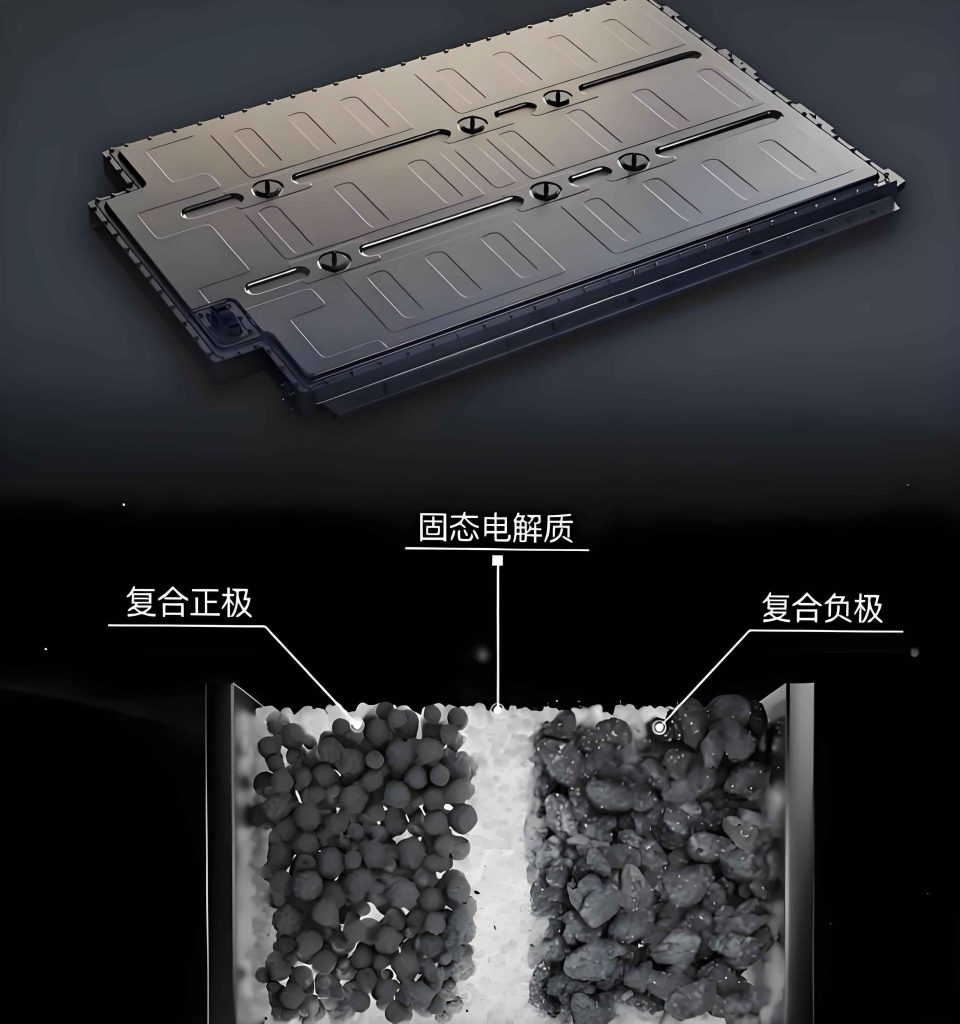
Solid-state batteries replace the liquid electrolytes in conventional lithium-ion batteries with solid electrolyte materials, which are inherently stable and non-flammable. This fundamental shift eliminates the dangers associated with thermal runaway and chemical leaks, making them ideal for sensitive IoT applications. The advantages of solid-state batteries can be summarized through key parameters, often expressed using formulas that describe their electrochemical behavior. For instance, the energy density of a battery can be represented as:
$$E_d = \frac{C \times V}{m}$$
where \(E_d\) is the energy density in Wh/kg, \(C\) is the capacity in Ah, \(V\) is the voltage in V, and \(m\) is the mass in kg. For solid-state batteries, the use of solid electrolytes can enhance \(E_d\) by enabling higher voltage and capacity while reducing mass, compared to traditional systems. Additionally, the ionic conductivity \(\sigma\) of solid electrolytes, crucial for battery performance, follows the Arrhenius equation:
$$\sigma = \sigma_0 \exp\left(-\frac{E_a}{kT}\right)$$
where \(\sigma_0\) is the pre-exponential factor, \(E_a\) is the activation energy, \(k\) is Boltzmann’s constant, and \(T\) is the temperature in Kelvin. Advances in material science have allowed us to optimize \(\sigma\) for solid-state batteries, ensuring efficient ion transport across a wide temperature range.
To illustrate the differences between conventional lithium-ion batteries and solid-state batteries, consider the following table that compares their core characteristics:
| Feature | Conventional Lithium-Ion Battery | Solid-State Battery |
|---|---|---|
| Electrolyte Type | Liquid organic solvent | Solid ceramic or polymer |
| Safety Risk | High (flammable, leakage prone) | Low (non-flammable, no leakage) |
| Operating Temperature Range | -20°C to 60°C | -40°C to 100°C |
| Lifespan (cycles) | 500-1000 | 1000-5000+ |
| Energy Density (Wh/kg) | 150-250 | 300-500 (projected) |
This table highlights how solid-state batteries address the limitations of their predecessors, paving the way for safer and more durable IoT devices. The transition to solid-state batteries is not just incremental; it represents a paradigm shift in energy storage technology.
The market for solid-state batteries is poised for exponential growth over the next decade, driven by the expansion of IoT and electric vehicles. Below is a projected market analysis based on global trends:
| Year | Global Market Size for Small Solid-State Batteries (USD billions) | Annual Growth Rate (%) |
|---|---|---|
| 2021 | 0.5 | — |
| 2023 | 1.2 | 55 |
| 2025 | 3.0 | 58 |
| 2030 | 15.0 | 60 |
This growth is fueled by the increasing adoption of solid-state batteries in various sectors, from consumer electronics to industrial sensors. As we develop these batteries, we focus on scalability and integration into surface-mount device (SMD) formats, which are essential for compact IoT designs. The solid-state battery technology enables thinner profiles and higher reliability, critical for next-generation applications.
Our pioneering work has led to the creation of a chip-sized solid-state battery, which we have successfully commercialized. This solid-state battery leverages advanced multilayer ceramic technology, offering nominal voltage of 1.5 V, capacity of 100 µAh, and an operating temperature range from -20°C to 80°C. The performance metrics can be modeled using equations for capacity retention over cycles. For example, the capacity fade of a solid-state battery often follows a logarithmic decay:
$$C_n = C_0 \times (1 – k \log(n))$$
where \(C_n\) is the capacity after \(n\) cycles, \(C_0\) is the initial capacity, and \(k\) is a degradation constant specific to the solid electrolyte. Our tests show that \(k\) values for solid-state batteries are significantly lower than those for liquid-based systems, indicating longer lifespan. Moreover, the power density \(P_d\) of these batteries is given by:
$$P_d = \frac{V^2}{R_i}$$
where \(R_i\) is the internal resistance. Solid electrolytes reduce \(R_i\) through improved ion mobility, enhancing \(P_d\) for high-demand IoT functions like Bluetooth Low Energy (BLE) communication.
The integration of solid-state batteries into IoT devices is already underway, with applications ranging from smart sensors to wearable technology. For instance, in a cooking thermometer, a solid-state battery powers multiple temperature sensors and a BLE module, enabling real-time monitoring via smartphones. This example underscores the reliability of solid-state batteries in high-temperature environments, where traditional batteries might fail. The solid electrolyte ensures no chemical leakage, even when inserted into food or exposed to oven heat up to 85°C. Such use cases demonstrate how solid-state batteries are unlocking new possibilities for IoT innovation.
Beyond consumer gadgets, solid-state batteries are being considered for industrial IoT solutions, such as smart meters and real-time clocks (RTCs). The miniaturization of these batteries allows them to fit into constrained spaces, while their safety profile makes them suitable for critical infrastructure. We are continuously improving the solid-state battery design to increase capacity and reduce size. The relationship between capacity \(C\) and volume \(V\) for a solid-state battery can be expressed as:
$$C = \epsilon \times A \times d$$
where \(\epsilon\) is the electrochemical efficiency, \(A\) is the electrode area, and \(d\) is the electrolyte thickness. By optimizing these parameters through material engineering, we aim to boost capacity without compromising the compact form factor. Future iterations of solid-state batteries may achieve capacities exceeding 1 mAh while maintaining sub-millimeter dimensions.
The environmental impact of solid-state batteries also warrants discussion. Unlike liquid electrolytes, solid materials are less toxic and easier to recycle, aligning with sustainability goals. The life cycle assessment of a solid-state battery involves calculating its carbon footprint \(F_c\):
$$F_c = \sum_{i=1}^{n} E_i \times c_i$$
where \(E_i\) is the energy consumed at stage \(i\) of production, and \(c_i\) is the carbon coefficient. Preliminary analyses suggest that solid-state batteries could reduce \(F_c\) by up to 30% compared to conventional lithium-ion batteries, due to longer lifespan and safer disposal.
In conclusion, the rise of solid-state batteries marks a transformative period for the IoT ecosystem. As we refine this technology, we anticipate broader adoption across diverse fields, from healthcare devices to autonomous systems. The solid-state battery represents not just an incremental improvement but a foundational shift toward safer, more efficient energy storage. Our commitment to advancing solid-state battery technology will continue to support the rapid expansion of IoT, enabling smarter and more connected world. With ongoing research into higher-capacity solid-state batteries and enhanced manufacturing techniques, we are confident that solid-state batteries will become the standard for powering the next generation of electronic devices.
To further illustrate the technical advancements, consider the following table summarizing key performance metrics of our latest solid-state battery prototypes:
| Parameter | Value | Unit |
|---|---|---|
| Nominal Voltage | 1.5 | V |
| Capacity | 100-500 | µAh |
| Operating Temperature | -40 to 100 | °C |
| Cycle Life | >3000 | cycles |
| Energy Density | 200-400 | Wh/kg |
These metrics highlight the robustness of solid-state batteries, making them ideal for harsh IoT environments. As we push the boundaries, formulas like the Nernst equation for cell potential \(E\) become relevant:
$$E = E^0 – \frac{RT}{nF} \ln Q$$
where \(E^0\) is the standard potential, \(R\) is the gas constant, \(T\) is temperature, \(n\) is the number of electrons transferred, \(F\) is Faraday’s constant, and \(Q\) is the reaction quotient. For solid-state batteries, \(E\) remains stable across temperature fluctuations due to the solid electrolyte’s consistent ionic activity.
The future of solid-state batteries is bright, with research focusing on novel materials like sulfide-based electrolytes that promise even higher conductivity. We are exploring composite solid electrolytes that blend ceramics and polymers to balance flexibility and performance. The evolution of solid-state battery technology will likely follow an S-curve, modeled as:
$$A(t) = \frac{K}{1 + e^{-r(t-t_0)}}$$
where \(A(t)\) is the adoption rate at time \(t\), \(K\) is the maximum adoption level, \(r\) is the growth rate, and \(t_0\) is the inflection point. Given current trends, \(r\) for solid-state batteries is accelerating, indicating rapid market penetration.
In summary, solid-state batteries are set to redefine power storage for IoT devices, offering unparalleled safety, longevity, and efficiency. Our journey in developing these batteries continues, with a focus on innovation and scalability. As the IoT era unfolds, solid-state batteries will play a crucial role in enabling seamless connectivity and smart functionality across countless applications.