
In recent years, the demand for high-energy-density and safe energy storage systems has driven intensive research into next-generation battery technologies. Among these, solid-state batteries have emerged as a promising alternative to conventional lithium-ion batteries with liquid electrolytes, primarily due to their enhanced safety profile and potential for higher energy density. The core of a solid-state battery lies in the use of solid electrolytes, which replace flammable organic liquids, thereby mitigating risks such as thermal runaway, leakage, and dendrite formation. When paired with a lithium metal anode, the energy density of a solid-state battery can be significantly boosted, but the choice of cathode material plays a pivotal role in realizing this potential. In this context, Li-rich Mn-based layered oxide (LRMO) cathodes have garnered considerable attention because of their high specific capacity, which stems from both cationic and anionic redox reactions. This article explores the structural characteristics, electrochemical behavior, and recent advancements in LRMO cathodes for solid-state batteries, focusing on strategies to overcome interfacial challenges and enhance performance. We will delve into bulk and interface design, ion/electron transport networks, and stability under high-voltage conditions, all critical for harnessing the full capacity of these materials in solid-state battery systems.
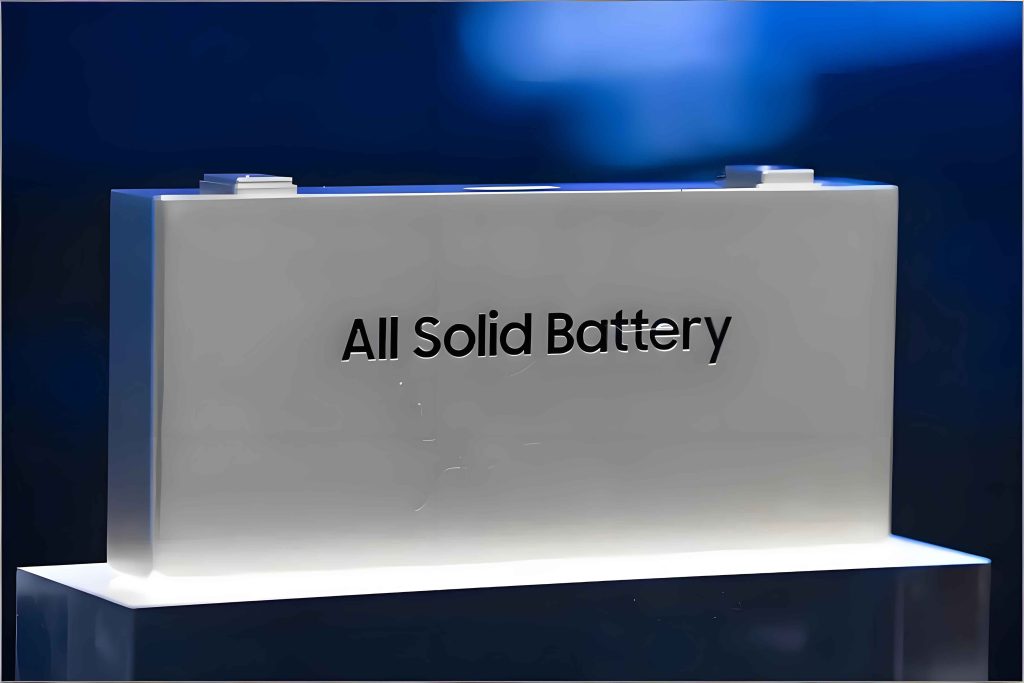
The transition to solid-state batteries is motivated by the limitations of current lithium-ion technology, including safety concerns and energy density ceilings. In a solid-state battery, the solid electrolyte not only prevents short circuits caused by lithium dendrites but also enables the use of high-voltage cathodes and lithium metal anodes, leading to energy densities that can exceed 600 Wh/kg. However, the integration of high-capacity cathodes like LRMO materials into solid-state batteries presents unique challenges. These cathodes, with a general formula of xLi2MnO3·(1-x)LiMO2 (where M = Mn, Ni, Co, and 0 < x < 1), offer specific capacities above 250 mAh/g, but their practical application is hindered by issues such as low electronic conductivity, irreversible phase transitions, and oxygen release during cycling. In a solid-state battery environment, the solid-solid interfaces between the cathode and electrolyte exacerbate these problems, requiring innovative solutions to ensure stable ion and electron transport. This review aims to provide a comprehensive overview of the progress in LRMO cathodes for solid-state batteries, highlighting key modifications and future directions to unlock their potential in next-generation energy storage.
To understand the behavior of LRMO cathodes in solid-state batteries, it is essential to first examine their crystal structure and electrochemical mechanisms. The LRMO material consists of two integrated phases: the Li2MnO3 phase, which can be represented as Li[LixMn1-x]O2, and the LiMO2 phase, both adopting a layered α-NaFeO2-type structure with oxygen in a cubic close-packed arrangement. In the Li2MnO3 component, the presence of Li-O-Li configurations leads to unhybridized O 2p states, enabling oxygen anions to participate in redox reactions. This anionic redox activity is responsible for the extra capacity beyond that provided by transition metal cations, but it also introduces instability, as oxygen loss can occur during charging, especially at voltages above 4.45 V. The first charge cycle involves lithium extraction from both phases, with the Li2MnO3 activation leading to oxygen oxidation and the formation of O2, resulting in an irreversible capacity loss. The overall reaction can be expressed as:
$$ \text{Li}_2\text{MnO}_3 \rightarrow \text{MnO}_2 + \text{Li}_2\text{O} $$
This process creates vacancies that allow for reversible lithium insertion in subsequent cycles, but the net removal of Li2O contributes to a low initial Coulombic efficiency. In solid-state batteries, the absence of liquid electrolytes can mitigate transition metal dissolution, yet the solid-solid interfaces must accommodate volume changes and prevent oxidative decomposition of the solid electrolyte. The electronic and ionic conductivities of LRMO cathodes are inherently low, typically around 10-6 S/cm for electronic conductivity and 10-11 cm2/s for lithium-ion diffusion, necessitating the design of composite cathodes with conductive additives and tailored interfaces. For instance, the lithium-ion diffusion coefficient (DLi) can be approximated using the following equation from electrochemical impedance spectroscopy:
$$ D_{\text{Li}} = \frac{R^2 T^2}{2 A^2 n^4 F^4 C^2 \sigma^2} $$
where R is the gas constant, T is temperature, A is electrode area, n is number of electrons, F is Faraday’s constant, C is lithium concentration, and σ is Warburg coefficient. Enhancing DLi is crucial for improving rate capability in solid-state batteries.
The integration of LRMO cathodes into solid-state batteries involves multiple electrolyte types, each with distinct advantages and challenges. Below is a table summarizing recent performance metrics of LRMO-based solid-state batteries across different solid electrolyte systems:
| LRMO Cathode Composition | Solid Electrolyte Type | Initial Discharge Capacity (mAh/g) / Coulombic Efficiency | Cycling Performance (Rate, Cycles, Retention) | Temperature (°C) |
|---|---|---|---|---|
| Li1.2Ni0.13Co0.13Mn0.54O2 | Sulfide | ~225 / ~70% | 0.5 C, 1000 cycles, 83% | 27 |
| Li1.2Ni0.13Co0.13Mn0.54O2 | Sulfide | ~220 / ~67.7% | 0.5 C, 1000 cycles, 87% | 27 |
| Li1.2Ni0.13Co0.13Mn0.54O2 | Sulfide | 204 / 67.8% | 1 C, 2022 cycles, 72% | 55 |
| Li1.2Ni0.13Co0.13Mn0.54O2 | Halide | 248 / 94% | 1 C, 300 cycles, 81.2% | 25 |
| Li1.2Ni0.13Co0.13Mn0.54O2 | Halide | 230 / 83% | 0.5 C, 431 cycles, 60% | 25 |
| Li1.2Ni0.13Co0.13Mn0.54O2 | Halide | 231 / 90% | 1 C, 2000 cycles, 80.4% | 25 |
| Li1.2Ni0.13Co0.13Mn0.54O2 | Halide | 244 / 73% | 1 C, 750 cycles, 88.6% | 45 |
| Li1.2Ni0.13Co0.13Mn0.54O2 | Halide | 235.4 / 74.83% | 1 C, 1200 cycles, 84.1% | 25 |
| Li1.2Ni0.2Mn0.6O2 | Polymer | ~245 / 84% | 1 C, 200 cycles, 82.7% | 25 |
| Li1.2Ni0.16Co0.08Mn0.56O2 | Polymer | N/A | 1 C, 400 cycles, 84.8% | 25 |
| Li1.2Ni0.2Mn0.6O2 | Polymer | N/A | 0.2 C, 200 cycles, 91% | 30 |
| Li1.2Ni0.167Co0.067Mn0.567O2 | Oxide | 226 / N/A | 30 cycles, N/A | 80 |
| Li1.2Ni0.2Mn0.6O2 | Oxide | 245 / N/A | 0.2 C, 200 cycles, 100% | 25 |
This table illustrates the diversity in solid electrolyte systems and their impact on LRMO cathode performance. For instance, halide-based solid-state batteries often show higher initial Coulombic efficiencies, attributed to better interfacial stability, while sulfide electrolytes enable long cycling at elevated temperatures. The choice of solid electrolyte is critical because it influences the interfacial resistance, which can be modeled using the following equation for charge transfer resistance (Rct) at the cathode-electrolyte interface:
$$ R_{\text{ct}} = \frac{RT}{nF i_0} $$
where i0 is the exchange current density. Reducing Rct is essential for improving kinetics in solid-state batteries, and strategies such as surface coating or doping can enhance i0 by facilitating lithium-ion transfer.
One of the primary challenges in using LRMO cathodes in solid-state batteries is the incompatibility between the Li2MnO3 phase and the solid electrolyte. This phase tends to release oxygen at high voltages, which can oxidize the solid electrolyte, forming insulating decomposition products that increase interfacial impedance. Additionally, the poor electronic conductivity of LRMO materials, typically below 10-5 S/cm, limits the utilization of active material in composite cathodes. To address these issues, researchers have developed various modification strategies focused on bulk doping, surface coating, and particle morphology control. For example, doping with elements like Ru or W can stabilize the lattice oxygen and enhance ionic conductivity. The effect of doping on oxygen stability can be described by the bond dissociation energy (Ebd) of M-O bonds, where higher Ebd values correlate with reduced oxygen loss. A simplified formula for Ebd is:
$$ E_{\text{bd}} = \frac{E_{\text{total}}(\text{M}) + E_{\text{total}}(\text{O}) – E_{\text{total}}(\text{MO})}{n} $$
where Etotal denotes total energy of species, and n is number of bonds. Doping with high-Ebd elements strengthens the M-O bonds, suppressing oxygen evolution in solid-state batteries.
In terms of particle design, both polycrystalline and single-crystal LRMO cathodes have been explored for solid-state batteries. Polycrystalline materials, composed of aggregated primary particles, offer high tap densities but suffer from grain boundaries that impede ion transport and cause mechanical stress during cycling. In contrast, single-crystal cathodes with reduced grain boundaries exhibit better structural integrity and smoother lithium-ion pathways. The diffusion time (t) for lithium ions in a particle of radius r can be estimated using the equation:
$$ t = \frac{r^2}{D_{\text{Li}}} $$
Thus, smaller single-crystal particles (e.g., sub-micrometer size) reduce diffusion time, enhancing rate capability. Recent studies have shown that single-crystal LRMO cathodes in halide-based solid-state batteries achieve capacities above 240 mAh/g with improved cycling stability, owing to better interfacial contact and minimized crack formation.
Surface engineering is another key approach to improving LRMO cathodes for solid-state batteries. Coatings such as Li3PO4, Li2ZrO3, or Li2WO4 can act as protective layers, preventing direct contact between the cathode and solid electrolyte while allowing lithium-ion conduction. These coatings often have high ionic conductivity (e.g., Li3PO4 with σi ~10-6 S/cm at room temperature) and can be applied via methods like atomic layer deposition or mechanochemical processing. The effectiveness of a coating can be evaluated by the interface resistance (Rint), which should be minimized to ensure efficient charge transfer. For a bilayer system, Rint can be expressed as:
$$ R_{\text{int}} = \frac{d}{\sigma_{\text{coat}}} + R_{\text{ct,coat}} $$
where d is coating thickness, σcoat is ionic conductivity of coating, and Rct,coat is charge transfer resistance at coating-electrolyte interface. Optimizing these parameters is crucial for solid-state battery performance.
Moreover, the activation of anionic redox in LRMO cathodes is sensitive to the local environment in solid-state batteries. In liquid systems, electrolyte penetration can facilitate oxygen redox, but in solid-state batteries, the limited contact areas may hinder this process. To enhance anionic redox reversibility, strategies like introducing oxygen vacancies or using redox mediators have been proposed. The redox potential of oxygen (EO2) can be related to the Fermi level (EF) of the cathode material:
$$ E_{\text{O2}} = E_{\text{F}} + \Delta E_{\text{redox}} $$
where ΔEredox is the energy difference between O 2p states and transition metal d states. By tuning EF through doping or strain engineering, the oxygen redox activity can be stabilized, reducing voltage decay in solid-state batteries.
Looking ahead, the development of LRMO cathodes for solid-state batteries requires a multidisciplinary approach. Machine learning and computational modeling can accelerate the discovery of optimal compositions and interfaces. For instance, high-throughput screening can identify dopants that maximize ionic conductivity while minimizing oxygen loss. Additionally, advanced characterization techniques, such as in situ X-ray diffraction and transmission electron microscopy, are essential for understanding degradation mechanisms at solid-solid interfaces. The future of solid-state batteries hinges on overcoming these interfacial challenges to achieve commercial viability.
In conclusion, LRMO cathodes hold great promise for high-energy-density solid-state batteries, but their success depends on addressing inherent limitations through innovative materials design. By combining bulk doping, surface modification, and particle engineering, we can enhance ionic/electronic transport, stabilize anionic redox, and improve interfacial compatibility. As research progresses, solid-state batteries incorporating LRMO cathodes may soon enable safer and more efficient energy storage solutions for applications ranging from electric vehicles to grid storage. The journey toward practical solid-state batteries is complex, but with continued efforts, these systems could revolutionize the battery industry.