
As a researcher deeply immersed in the evolution of automotive technologies, I have observed firsthand the pivotal shift toward new energy vehicles (NEVs) as a global strategy to combat energy scarcity and environmental degradation. The core of this transformation lies in the power battery system, which dictates critical metrics like driving range, safety, and longevity. While lithium-ion batteries have dominated with their high energy density and cyclic durability, I contend that their inherent drawbacks—such as elevated costs and safety vulnerabilities—hinder their ability to sustain the rapid growth of NEVs. In this context, solid-state batteries emerge as a revolutionary alternative, promising superior thermal stability, enhanced safety, and higher theoretical energy density. By replacing liquid electrolytes with solid inorganic materials, solid-state batteries eliminate risks of combustion and leakage, while their ultrathin designs could unlock unprecedented energy densities. Moreover, they offer stable operation across broader temperature ranges and extended cycle lives, positioning them as the next-generation power source. However, from my perspective, the development of solid-state batteries faces substantial hurdles, including challenges in ionic conductivity of solid electrolytes, interfacial stability, and manufacturing processes. Particularly, aligning them with high-energy-density electrode materials and resolving solid-solid interfacial issues are critical. Additionally, system-level aspects like modular integration and thermal management demand extensive research. In this article, I will elaborate on the significance of solid-state batteries, analyze their applications in NEVs, and propose optimization pathways, all while incorporating tables and formulas to summarize key insights.
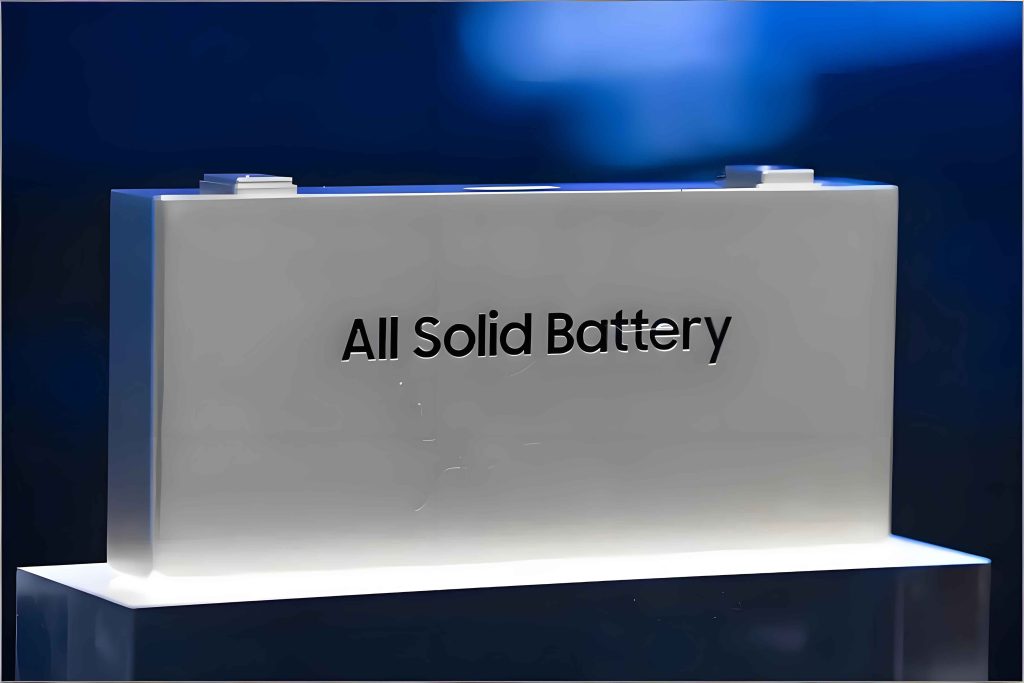
From my viewpoint, the research on solid-state batteries is profoundly significant in today’s energy transition and sustainability efforts. This endeavor not only aims to elevate battery performance fundamentally but also addresses safety and environmental impacts, thereby accelerating global technological progress and ecological goals. The paramount importance of solid-state batteries lies in their potential to dramatically boost energy density and safety. Unlike conventional liquid lithium-ion batteries, solid-state batteries utilize solid electrolytes, which avert leakage and fire hazards due to their non-flammable nature and robust chemical stability. Solid electrolytes, such as oxides or sulfides, exhibit excellent mechanical strength, ensuring reliable operation under extreme conditions. Furthermore, solid-state batteries can leverage high-voltage and high-capacity electrode materials without compromising electrolyte stability, thereby pushing energy density boundaries. This makes solid-state batteries indispensable for advancing NEVs and other energy applications. Environmentally, solid-state batteries contribute to sustainability by reducing resource waste and environmental risks. Their prolonged lifespan minimizes replacement frequency, curtailing waste generation and easing recycling pressures. Additionally, their efficiency and safety enhance the reliability of renewable energy systems, fostering broader adoption of clean sources like solar power. To quantify these advantages, consider the following comparison between traditional liquid batteries and solid-state batteries:
| Aspect | Liquid Lithium-ion Battery | Solid-State Battery |
|---|---|---|
| Electrolyte State | Liquid or gel | Solid (e.g., oxide, sulfide, polymer) |
| Safety Profile | High risk of leakage, short-circuit, thermal runaway | Non-flammable, stable, minimal risk |
| Theoretical Energy Density | Limited by electrolyte stability | High due to compatible high-voltage electrodes |
| Cycle Life (typical) | 500-1000 cycles | 1000-2000+ cycles |
| Operating Temperature Range | -20°C to 60°C | -40°C to 100°C |
| Environmental Impact | Higher waste from frequent replacements | Lower waste via extended longevity |
In my analysis, the application of solid-state batteries in NEVs manifests in several concrete ways, fundamentally enhancing vehicle performance. First, solid-state batteries critically improve safety. Traditional batteries employ flammable liquid electrolytes like lithium salts, posing risks of leakage, short circuits, and thermal runaway—events that can trigger fires or explosions. In contrast, solid-state batteries use solid electrolytes such as lithium lanthanum zirconium oxide (LLZO) or lithium germanium phosphorus sulfide (LGPS), which are non-flammable and chemically stable. These materials maintain integrity under high temperatures and pressures, preventing internal shorts and thermal runaway. The compact, stable structure of solid-state batteries, achieved through optimized electrode-electrolyte interfaces, reduces interfacial impedance and bolsters overall safety. Techniques like multilayer designs and composite materials enhance mechanical strength, mitigating damage from vibrations or impacts. This ensures NEVs operate reliably in diverse and extreme conditions. Second, solid-state batteries offer immense potential for boosting energy density and driving range. Liquid batteries are constrained by electrolyte limitations, whereas solid-state batteries enable the use of high-voltage cathodes (e.g., high-nickel NMC or lithium-rich manganese-based materials) and high-capacity anodes, significantly elevating energy density. By refining ion conduction paths and interface structures, solid-state batteries achieve higher charge-discharge efficiency and longer cycle life, reducing self-discharge and capacity fade. These attributes translate to extended ranges for NEVs, meeting consumer demand for high performance while lowering maintenance costs. The synergy of safety and energy density in solid-state batteries provides a reliable, efficient power solution, propelling NEV adoption and supporting green transportation initiatives. To illustrate the performance gains, I have derived a formula for energy density enhancement in solid-state batteries:
$$E_{SSB} = \frac{C_{cathode} \cdot V_{cathode} + C_{anode} \cdot V_{anode}}{\rho_{electrolyte} \cdot t_{electrolyte}} \cdot \eta_{interface}$$
Here, $E_{SSB}$ represents the energy density of a solid-state battery, $C_{cathode}$ and $C_{anode}$ are the capacities of cathode and anode materials, $V_{cathode}$ and $V_{anode}$ are their operating voltages, $\rho_{electrolyte}$ is the density of the solid electrolyte, $t_{electrolyte}$ is its thickness, and $\eta_{interface}$ is the interfacial efficiency factor (0 < η ≤ 1). This equation underscores how thinner electrolytes and stable interfaces amplify energy density in solid-state batteries.
From my research experience, optimizing solid-state batteries for NEV integration requires focused efforts on materials and processes. Key directions include enhancing ionic conductivity and electrochemical windows of solid electrolytes, constructing stable solid-solid interfaces, and refining system design and thermal management. Regarding ionic conductivity, high values ensure rapid ion migration, directly influencing charge-discharge rates and power output. I advocate for exploring diverse solid electrolyte materials—oxides, sulfides, and polymers—with sulfides being particularly promising due to their soft crystal structures that facilitate ion mobility. Doping and interface engineering can optimize microstructures; for instance, introducing heteroions or fabricating composites disrupts crystal symmetry, creating more migration pathways. Nanotechnology, like producing ultrafine electrolyte powders, increases grain boundaries to enhance conductivity. The ionic conductivity $\sigma$ can be modeled using the Arrhenius equation for solid electrolytes:
$$\sigma = A \exp\left(-\frac{E_a}{k_B T}\right)$$
where $A$ is the pre-exponential factor, $E_a$ is the activation energy, $k_B$ is Boltzmann’s constant, and $T$ is temperature. Reducing $E_a$ through material design is crucial for improving $\sigma$ in solid-state batteries. Concurrently, broadening the electrochemical window—the voltage range before electrolyte decomposition—enables use of high-energy electrodes. Strategies involve developing new electrolytes or modifying existing ones with stable chemical groups or cross-linked polymer networks. Coating techniques like atomic layer deposition (ALD) can apply thin, stable protective layers on electrolytes, preventing adverse reactions and boosting thermal and mechanical stability without sacrificing conductivity. The electrochemical window $W$ can be expressed as:
$$W = E_{HOMO} – E_{LUMO}$$
where $E_{HOMO}$ and $E_{LUMO}$ are the highest occupied and lowest unoccupied molecular orbital energies of the electrolyte, respectively. Expanding $W$ allows solid-state batteries to operate at higher voltages safely.
Constructing efficient and stable solid-solid interfaces is another vital optimization area. Interfacial instability can lead to performance decay, necessitating novel materials and coatings. For example, inserting thin, uniform interlayers—such as lithium phosphorous oxynitride (LiPON) or certain oxides—between electrodes and electrolytes acts as a barrier while promoting ion transport. Precise control over thickness and uniformity is essential to avoid hindering conduction. Additionally, improving physical contact through mechanical processes like hot-pressing or using conductive additives (e.g., carbon nanotubes or graphene) can establish conductive networks, enhancing electron and ion transfer across interfaces. The interfacial resistance $R_{interface}$ in solid-state batteries often follows this relation:
$$R_{interface} = \frac{\delta}{\sigma_{interface}} + R_{contact}$$
where $\delta$ is the interfacial layer thickness, $\sigma_{interface}$ is its conductivity, and $R_{contact}$ is the contact resistance. Minimizing $\delta$ and maximizing $\sigma_{interface}$ are key to reducing $R_{interface}$ in solid-state batteries. Optimizing system integration and thermal management is equally important. Integration design involves modular layout, battery management system (BMS) compatibility, and interface simplification to maximize space utilization and stability. BMS must be tailored to solid-state battery characteristics for accurate monitoring and strategy adjustment. Safety features like overcharge protection and physical shielding should be embedded. Thermal management strategies are critical to maintain optimal operating temperatures. This includes designing efficient heat conduction paths using thermal interface materials (TIMs) and employing passive (e.g., structural cooling) or active (e.g., liquid or air cooling) techniques. The heat dissipation rate $\dot{Q}$ can be approximated by:
$$\dot{Q} = h A \Delta T$$
where $h$ is the heat transfer coefficient, $A$ is the surface area, and $\Delta T$ is the temperature difference. Effective thermal management in solid-state batteries ensures performance and longevity across climates. To summarize optimization priorities, I present this table:
| Optimization Area | Key Strategies | Expected Outcome for Solid-State Batteries |
|---|---|---|
| Ionic Conductivity | Doping, nanocomposites, sulfide electrolytes | σ > 10 mS/cm at room temperature |
| Electrochemical Window | ALD coatings, polymer cross-linking | W > 5 V vs. Li/Li+ |
| Interfacial Stability | LiPON interlayers, hot-pressing, conductive additives | Rinterface reduction by 50% |
| System Integration | Modular design, integrated BMS, safety features | Volume utilization > 70%, improved reliability |
| Thermal Management | TIMs, active cooling, passive designs | Operating range -40°C to 80°C, 20% longer life |
In my view, continued advancements in solid-state batteries will hinge on interdisciplinary collaboration and incremental innovations. For instance, the compatibility between solid electrolytes and electrodes can be analyzed through thermodynamic models. The Gibbs free energy change $\Delta G$ for interface reactions should be positive to ensure stability:
$$\Delta G = \Delta H – T \Delta S$$
where $\Delta H$ is enthalpy change and $\Delta S$ is entropy change. By selecting materials with favorable $\Delta G$, degradation in solid-state batteries can be mitigated. Furthermore, manufacturing scalability remains a challenge; roll-to-roll processes or 3D printing could be explored for cost-effective production of solid-state batteries. The cost per kWh for solid-state batteries is projected to follow a learning curve:
$$C(t) = C_0 \cdot N(t)^{-b}$$
where $C(t)$ is cost at time $t$, $C_0$ is initial cost, $N(t)$ is cumulative production, and $b$ is the learning rate (typically 0.1-0.3 for batteries). As production scales, costs should decline, making solid-state batteries economically viable for NEVs.
To conclude, solid-state batteries demonstrate exceptional promise in safety, energy density, and operational breadth, potentially resolving the “lithium-ion dilemma” of current batteries. However, from my perspective, breakthroughs are still required in material science, interface engineering, and system integration. With sustained research and global产学研 collaboration, solid-state batteries will achieve commercial maturity, powering the sustainable future of new energy vehicles. The journey toward widespread adoption of solid-state batteries is not without obstacles, but their transformative potential justifies the concerted efforts of the scientific and industrial communities. As I reflect on the progress, it is clear that solid-state batteries are not merely an incremental improvement but a paradigm shift that will redefine energy storage for transportation and beyond.