
I begin this investigation by acknowledging the pressing demands for advanced energy storage solutions driven by the transition to clean energy and carbon neutrality goals. The performance and safety requirements for batteries in new power systems and electric transportation are escalating. All-solid-state batteries (ASSBs) have garnered significant attention due to their potential for high energy density, superior cycling stability, and enhanced safety, which could address the flammability, leakage risks, and limited energy density associated with conventional organic liquid electrolytes. Within this paradigm, silicon anodes and sulfide-based solid electrolytes (SEs) are considered foundational components for next-generation solid-state battery architectures. Silicon offers a high theoretical capacity (approximately 4200 mAh/g for Li4.4Si), a low lithiation potential, and natural abundance. Sulfide SEs, such as Li3PS4 (LPS) and Li10GeP2S12 (LGPS), exhibit high lithium-ion conductivity and good mechanical compatibility with electrodes. However, the electrochemical and interfacial stability between these promising materials remains a critical and unresolved challenge. Issues like spontaneous lithiation-induced degradation of the SE, increasing interfacial resistance, lithium dendrite growth, and soft short circuits severely impact the longevity and safety of the solid-state battery.
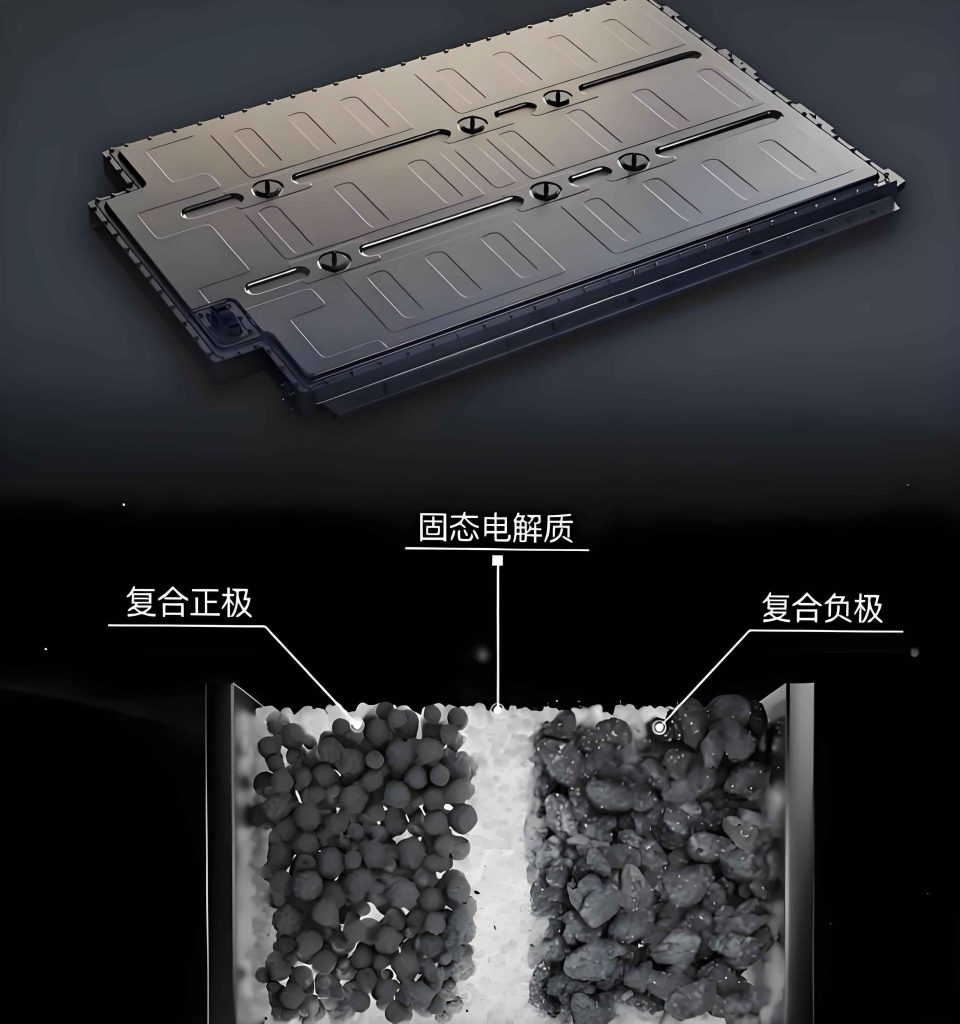
My research focuses on the atomic-scale processes that govern the stability of this key interface. While prior studies have documented the large volume expansion of silicon (~400%) and the decomposition of sulfide SEs into less conductive interphases, a fundamental understanding of how the silicon anode itself influences the degradation pathway and mechanical failure of the sulfide electrolyte at their shared interface is lacking. This study aims to fill that gap. I employ first-principles density functional theory (DFT) calculations, combined with ab initio molecular dynamics (AIMD) and experimental validation, to systematically unravel the structural evolution, thermodynamic driving forces, and morphological changes during the lithiation and delithiation cycles at the silicon-sulfide electrolyte interface. The goal is to provide predictive models for interfacial evolution and establish design principles for more robust solid-state battery systems.
Computational Methodology and Experimental Design
My first-principles calculations are performed using the Vienna Ab-initio Simulation Package (VASP) based on density functional theory. The electron-ion interactions are described by the projector augmented-wave (PAW) method. For the exchange-correlation functional, I adopt the Perdew-Burke-Ernzerhof (PBE) formulation of the generalized gradient approximation (GGA). A plane-wave cutoff energy of 450 eV is used. The Brillouin zone is sampled using a Gamma-centered 3×3×3 k-point mesh for geometry relaxations. All atomic positions and cell volumes are fully relaxed until the total energy and ionic forces converge to 10−5 eV and 10−2 eV/Å, respectively. For AIMD simulations used to model structural evolution during lithiation, only the Gamma point is used for k-sampling, and the temperature is controlled using a Nosé-Hoover thermostat.
The modeling of the lithiation process for silicon and sulfide electrolytes is achieved through a melt-quench approach via AIMD. Starting from the crystalline structure of Si, LPS, or LGPS, lithium atoms are randomly inserted into the simulation cell, ensuring a minimum distance of 1.7 Å from existing atoms. The system then undergoes a series of steps: volume optimization, heating to 2000 K at a rate of 0.5 K/fs, equilibration at 2000 K for 5 ps, cooling back to 0 K at 0.5 K/fs, and final volume optimization. This procedure is repeated stepwise to generate structures across the entire lithiation range (LixSi, LixLPS, LixLGPS). To ensure statistical reliability, three independent structural calculations are performed for each composition. The delithiation models for LixSi are constructed by sequentially removing lithium atoms from the fully lithiated Li4.4Si structure and subjecting it to the same melt-quench procedure.
Key properties are calculated from the optimized structures. The formation energy ($E_f$) for a lithiated compound, indicating its thermodynamic stability, is calculated as:
$$E_f(\text{Li}_x\text{M}) = E_{\text{Li}_x\text{M}} – x E_{\text{Li}} – E_{\text{M}}$$
where $E_{\text{Li}_x\text{M}}$, $E_{\text{Li}}$, and $E_{\text{M}}$ are the total energies of the lithiated compound, bulk bcc lithium, and the host material (Si, LPS, LGPS), respectively. The average voltage ($U$) versus Li/Li+ is derived from the derivative of the formation energy:
$$U_x = -\frac{d E_f(\text{Li}_x\text{M})}{d x}$$
The volume change during lithiation, crucial for understanding mechanical stress, is computed relative to the separated reactants:
$$\Delta V = V_{\text{Li}_x\text{M}} – (x V_{\text{Li}} + V_{\text{M}})$$
where $V$ denotes the volume per formula unit. Radial distribution functions (RDFs) and coordination numbers are analyzed from AIMD trajectories at 300 K to quantify structural disorder.
For experimental validation, I fabricate symmetric cells. The silicon anode is prepared by coating a slurry of nano-silicon particles, conductive carbon, and lithium polyacrylate (70:15:15 by weight) on copper foil. This electrode is pre-lithiated in a half-cell against lithium metal to obtain Li4.4Si. The solid-state symmetric cells (Li|LPS|Li and LiSi|LPS|LiSi) are assembled by cold-pressing 150 mg of LPS powder at 300 MPa to form a ~0.6 mm thick electrolyte pellet, followed by pressing the electrodes on both sides at 50 MPa. Galvanostatic cycling is performed at a current density of 0.1 mA/cm2. Post-cycling, the microstructure of the LPS electrolyte near the interface is examined using scanning electron microscopy (SEM).
| Parameter | Setting/Value |
|---|---|
| Software | VASP |
| Functional | PBE-GGA |
| Pseudopotential | PAW |
| Cut-off Energy | 450 eV |
| k-point mesh (Relaxation) | 3×3×3 (Γ-centered) |
| k-point mesh (AIMD) | Γ-point only |
| Energy Convergence | 10−5 eV |
| Force Convergence | 10−2 eV/Å |
| AIMD Thermostat | Nosé-Hoover |
| Lithiation Modeling Method | Melt-Quench via AIMD |
Results and Discussion
1. Structural and Energetic Evolution of the Silicon Anode
My calculations first elucidate the transformative journey of the silicon anode during cycling. Pristine crystalline silicon (c-Si) with a diamond structure (Si-Si bond length = 2.34 Å) undergoes rapid amorphization upon initial lithium insertion. At a composition of LiSi (x=1), the long-range crystalline order is completely lost. As lithiation proceeds to Li4.4Si, the silicon network fragments into isolated Si atoms surrounded by a Li matrix. Crucially, the delithiation process does not restore the original crystal structure. The final delithiated state is an amorphous silicon (a-Si) network, marking an irreversible structural change induced by the first cycle in a solid-state battery.
The RDF analysis quantitatively confirms this evolution. The first Si-Si peak broadens and shifts from 2.34 Å in c-Si to ~2.39 Å in a-Si, indicating a less ordered and slightly expanded local environment. The Si-Si coordination number drops from 4.0 in c-Si to nearly 0.5 in Li4.4Si and recovers only to 3.6 in a-Si, signifying a permanently more open structure. This has direct consequences for the energetics and volume. The formation energy $E_f$ becomes increasingly negative during lithiation, reaching a minimum of -0.78 eV/formula unit for Li4.4Si, confirming the thermodynamic driving force for lithium uptake. Upon delithiation, $E_f$ rises to +0.48 eV/formula unit for a-Si, indicating that the cycled anode is in a metastable, higher-energy state compared to its original crystalline form.
The voltage profile derived from $E_f$ shows a decrease from ~0.45 V (vs. Li/Li+) for c-Si to near 0 V for Li4.4Si during lithiation. During delithiation, the voltage rises to about 1.04 V for a-Si. This hysteresis and the higher end-point voltage suggest a loss of energy density and increased polarization in subsequent cycles, a critical factor for solid-state battery performance. Most significantly for interfacial stability, the volume evolution reveals a massive ~426% expansion from c-Si to Li4.4Si. However, the relative volume change $\Delta V$, which considers the volume of the products versus the separated reactants, is negative during lithiation, reaching -21.5 ų for Li4.4Si. This implies a net chemical contraction. Upon delithiation to a-Si, $\Delta V$ becomes positive at +21.9 ų. This delithiation-induced expansion is a key finding, as it suggests the silicon anode can physically “push” against the solid electrolyte during charge, potentially mitigating void formation.
| Property | c-Si (x=0) | Li4.4Si (x=4.4) | a-Si (x=0 after cycle) | Implication for Solid-State Battery |
|---|---|---|---|---|
| Structure | Crystalline | Amorphous (isolated Si) | Amorphous (network) | Irreversible amorphization |
| Avg. Si-Si Distance (Å) | 2.34 | ~2.45 | ~2.39 | Permanent structural dilation |
| Si-Si Coordination Number | 4.0 | ~0.5 | ~3.6 | Loss of network connectivity |
| Formation Energy (eV/f.u.) | 0.00 | -0.78 | +0.48 | Cycled anode is metastable |
| Voltage vs. Li/Li+ (V) | 0.45 | ~0.00 | ~1.04 | Increased polarization, capacity loss |
| Total Volume Expansion (%) | 0 (Ref.) | ~426% | ~107% (vs. c-Si) | Source of mechanical stress |
| Relative Volume Change, ΔV (ų) | 0 | -21.5 | +21.9 | Delithiation expansion can fill voids |
2. Thermodynamic and Mechanical Instability of Sulfide Electrolytes
I next analyze the intrinsic instability of sulfide electrolytes against lithium. The lithiation of LPS and LGPS proceeds via the breaking of P-S and Ge-S bonds, eventually forming decomposition products like Li3P, Li2S, and Li15Ge4. The formation energy $E_f$ for LixLPS and LixLGPS is negative across the entire lithiation range and decreases monotonically, reaching -9.29 eV/f.u. and -8.21 eV/f.u. at full lithiation (x=8 for LPS, corresponding to Li8PS4), respectively. This confirms that the reaction with lithium metal is thermodynamically spontaneous for both, a fundamental challenge for solid-state battery longevity. The less negative $E_f$ for LGPS suggests that Ge doping enhances the chemical stability of the sulfide electrolyte slightly.
The volume change $\Delta V$ during lithiation is profoundly negative for both electrolytes, reaching -11.2 ų for LPS and -10.3 ų for LGPS at full lithiation. This represents a substantial chemical contraction of over 20%. In a cell with a lithium metal anode, this contraction at the interface would inevitably lead to the creation and widening of voids or gaps, decoupling the electrolyte from the anode and increasing interfacial resistance—a primary failure mode in sulfide-based solid-state battery systems.
3. Interfacial Modeling: Silicon Anode as a Stabilizing Agent
The core of my investigation involves direct modeling of the interface between the electrolyte and different anodes. I construct atomistic models for Li/LPS and Li4.4Si/LPS interfaces and simulate their evolution upon contact and during subsequent annealing at 300 K to mimic room-temperature aging.
My calculations reveal a stark contrast. At the Li/LPS interface, spontaneous and rapid lithiation of the LPS occurs. This reaction is accompanied by the large chemical contraction predicted earlier. Consequently, significant interfacial voids form immediately. During the 20 ps annealing simulation, these voids coalesce and grow, evolving into extended, percolating cracks along the interface. The total cavity volume increases by 45.8%, and the system’s energy drops sharply by 46.5 eV due to the exothermic decomposition reaction. The decomposition products (e.g., PS33-, S2-) do not form a coherent passivation layer, allowing continued lithium infiltration and sustained degradation. This scenario perfectly models the observed interfacial deterioration and rising impedance in lithium metal solid-state battery cells.
In striking contrast, the Li4.4Si/LPS interface exhibits markedly improved stability. The key finding is the formation of strong P-Si covalent bonds at the interface upon contact. This reaction effectively passivates the LPS surface by consuming reactive P-sites and leads to the rapid formation of a Li2S-rich layer. Crucially, the delithiation-induced expansion of the silicon anode (the positive $\Delta V$ identified earlier) provides a counteracting mechanical force. My simulations show that the initial interfacial cavity volume in the Li4.4Si/LPS system remains virtually unchanged, with a net change of only -0.4% after annealing. The overall energy drop is limited to 30.1 eV, approximately 65% of that at the Li/LPS interface. This demonstrates that the silicon anode both chemically and mechanically suppresses the severe degradation observed with lithium metal.
The chemical equations governing the coupled reactions help illustrate the difference. For the lithium anode, the reaction is simply the lithiation of LPS:
$$ \text{Li} + \text{Li}_3\text{PS}_4 \rightarrow \text{Li}_x(\text{PS}_4) + \text{Li}_{(1-x)} \ (\text{ultimately forming Li}_3\text{P, Li}_2\text{S}) $$
For the silicon anode, the reaction involves a competition where silicon interacts with the electrolyte:
$$ \text{Li}_{4.4}\text{Si} + y\text{Li}_3\text{PS}_4 \rightarrow \text{Li}_{4.4-x}\text{Si} + \text{Li}_{x+3y}\text{P}_{y}\text{S}_{4y} + \text{Si-P compounds} $$
The formation of Si-P bonds alters the decomposition pathway, stabilizing the interface but also potentially introducing new electrochemical plateaus and reducing reversible capacity.
| Interface Characteristic | Li/LPS Interface | Li4.4Si/LPS Interface | Implication |
|---|---|---|---|
| Initial Reaction | Spontaneous, rapid LPS lithiation | Formation of P-Si bonds & Li2S layer | Si passivates the LPS surface |
| Primary Driving Force | Large negative ΔE, ΔV (contraction) | Moderated by Si delithiation expansion | Mechanical counterforce from Si |
| Cavity Volume Change | +45.8% (Major increase) | -0.4% (Negligible change) | Si anode prevents void formation |
| Total Energy Change (ΔE) | -46.5 eV | -30.1 eV | Reduced thermodynamic drive for degradation |
| Interphase Layer | Incoherent mixture of products | More coherent Li2S-rich layer | Better passivation but higher initial resistance |
| Long-term Trend | Voids coalesce into cracks | Interface remains morphologically stable | Enhanced cycling stability for solid-state battery |
4. Experimental Validation
To validate my computational predictions, I perform experimental tests on symmetric cells. The Li|LPS|Li cell shows a gradual increase in voltage polarization during cycling at 0.1 mA/cm², indicating rising interfacial resistance. After 72 hours, the voltage rise becomes more pronounced. Post-mortem SEM analysis reveals the presence of large micro-cracks (1.9 – 2.6 µm wide) within the LPS pellet near the lithium interface, directly corroborating the calculated void formation and crack propagation.
In contrast, the LiSi|LPS|LiSi cell exhibits a different behavior. While the voltage also increases over time—likely due to the continuous formation of the Li2S interphase and possible interfacial inhomogeneity—the rate is initially different. Most importantly, SEM imaging of the cycled LPS from the silicon-based cell shows significantly smaller and fewer cracks (0.7 – 1.1 µm wide). This experimental observation strongly supports the computational conclusion that the silicon anode effectively mitigates the severe mechanical degradation and void formation at the sulfide electrolyte interface in a solid-state battery.
Conclusion
In this comprehensive first-principles study combined with experimental characterization, I have unraveled the complex interfacial dynamics between silicon anodes and sulfide-based solid electrolytes. The key findings provide fundamental insights for designing more stable solid-state battery systems:
- Silicon Anode Transformation: The silicon anode undergoes irreversible crystallization upon the first lithiation-delithiation cycle, resulting in a metastable amorphous structure with a higher energy state and a net volume expansion compared to its original crystalline form. This delithiation expansion is a critical intrinsic property.
- Suppression of Sulfide Electrolyte Degradation: The silicon anode significantly improves the interfacial stability with sulfide electrolytes like LPS. It acts through two synergistic mechanisms: (a) Chemical Passivation: The formation of P-Si bonds alters the decomposition pathway, leading to a more passivating interphase layer. (b) Mechanical Counteraction: The volume expansion of silicon during delithiation physically counteracts the chemical contraction of the lithiating sulfide electrolyte, thereby preventing the formation and growth of interfacial voids and cracks.
- Quantitative Advantage: My interfacial models quantify this improvement. The energy release due to interfacial reactions is reduced by ~35%, and the catastrophic void growth observed with lithium metal (45.8% increase) is virtually eliminated (0.4% change) with a silicon anode.
- Trade-offs: This stabilization comes with trade-offs, including the irreversible capacity loss due to silicon amorphization and the formation of resistive interphase products like Li2S, which can increase initial interfacial resistance.
This work establishes a predictive framework for understanding failure mechanisms at the anode-solid electrolyte interface. The insights gained—specifically how electrode materials can be selected or designed to mechanically and chemically stabilize reactive solid electrolytes—are crucial for overcoming key barriers related to interfacial resistance, dendrite growth, and cycle life in high-energy-density solid-state battery technology. Future work should focus on engineering the silicon anode morphology and composition to optimize the beneficial mechanical effect while minimizing the associated capacity and resistance penalties.