
As I reflect on the rapid transformations in the energy and automotive sectors, I am struck by the synergistic advancements that are reshaping our world. From hydrogen energy initiatives to the rise of smart connected vehicles, and from the robust growth of new energy vehicle supply chains to groundbreaking breakthroughs in battery technology, the pace of change is unprecedented. In this article, I will delve into these developments, emphasizing the critical role of solid-state battery innovations, while using tables and formulas to summarize key data and principles. The integration of these technologies heralds a new era of sustainability and efficiency, with solid-state battery solutions at the forefront of enabling higher performance and safety.
Hydrogen energy has emerged as a cornerstone of the global transition to clean energy. Recently, a state-owned hydrogen technology company announced a funding round aimed at raising significant capital to accelerate research and development in fuel cells and PEM electrolysis equipment. This move underscores the growing investment in hydrogen infrastructure, which is vital for decarbonizing industries such as transportation and energy storage. Hydrogen fuel cells, for instance, convert chemical energy directly into electricity with high efficiency, and their adoption is expanding in various applications. The reaction in a typical proton exchange membrane fuel cell can be represented as: $$ 2H_2 + O_2 \rightarrow 2H_2O + \text{energy} + \text{heat} $$ where hydrogen and oxygen combine to produce water, releasing energy. This process highlights the potential for zero-emission power generation. To illustrate the scope of hydrogen applications, consider the following table summarizing key areas:
| Application Sector | Primary Technology | Current Challenges | Future Outlook |
|---|---|---|---|
| Transportation | Fuel Cell Vehicles | High cost of infrastructure | Expansion with government support |
| Energy Storage | PEM Electrolyzers | Efficiency improvements needed | Integration with renewables |
| Industrial Use | Hydrogen Production | Carbon-intensive methods | Shift to green hydrogen |
The efficiency of hydrogen production via electrolysis can be expressed using the formula: $$ \eta = \frac{E_{\text{output}}}{E_{\text{input}}} \times 100\% $$ where $$ \eta $$ represents efficiency, $$ E_{\text{output}} $$ is the energy content of hydrogen produced, and $$ E_{\text{input}} $$ is the electrical energy supplied. Advances in PEM technology aim to push $$ \eta $$ closer to 80%, making hydrogen more viable. As I analyze these trends, it is clear that hydrogen energy complements other clean technologies, including the burgeoning field of solid-state battery systems, which offer high energy density for mobile applications.
Turning to the automotive industry, smart connected vehicles are rapidly gaining traction. Penetration rates for L2-level automation have surged, indicating a shift toward more autonomous driving features. However, I observe that standardization efforts are struggling to keep pace with technological advancements. This lag poses risks, particularly in data security and functional safety, which are paramount for public trust and regulatory compliance. The reliability of autonomous systems can be modeled using probability theory; for example, the failure rate $$ \lambda $$ in a Poisson process describes the likelihood of system malfunctions over time: $$ P(N(t) = k) = \frac{(\lambda t)^k e^{-\lambda t}}{k!} $$ where $$ P(N(t) = k) $$ is the probability of $$ k $$ failures in time $$ t $$. Ensuring low $$ \lambda $$ through robust standards is essential to mitigate accidents. The following table outlines key standardization gaps in smart connected vehicles:
| Standardization Area | Current Status | Urgency Level | Potential Impact |
|---|---|---|---|
| Data Security | Under development | High | Prevents cyber threats |
| Functional Safety | Partial coverage | High | Reduces accident risks |
| Vehicle-to-Everything (V2X) | Emerging protocols | Medium | Enhances communication |
As I delve deeper, it becomes evident that synchronization between standards and innovation is crucial. Without it, the industry may face setbacks, similar to early issues with autonomous features that lacked rigorous testing. This underscores the need for proactive regulatory frameworks, especially as vehicles become more integrated with energy systems, including those powered by advanced solid-state battery packs, which require their own safety and performance standards.
The new energy vehicle sector has demonstrated remarkable resilience, with production and sales figures reaching new heights. Recent data shows that in a single month, over 750,000 units were produced, reflecting a substantial year-on-year increase. This growth is not limited to整车; the entire supply chain, particularly the lithium battery segment, is thriving. I attribute this to robust demand and supportive policies that have fostered a conducive environment for expansion. The relationship between production volume and market share can be analyzed using growth models, such as the logistic function: $$ P(t) = \frac{K}{1 + e^{-r(t-t_0)}} $$ where $$ P(t) $$ is production at time $$ t $$, $$ K $$ is the carrying capacity, $$ r $$ is the growth rate, and $$ t_0 $$ is the inflection point. This model helps predict saturation levels in the market. Below is a table summarizing key production and export statistics:
| Metric | Value (Recent Period) | Year-on-Year Change | Significance |
|---|---|---|---|
| Monthly Production | 755,000 units | +110% | Indicates rapid scaling |
| Monthly Sales | 708,000 units | +93.9% | Reflects strong demand |
| Market Share | 27.1% | Increasing | Shows mainstream adoption |
| Export Volume (Q1-Q3) | 389,000 units | +100%+ | Highlights global competitiveness |
The lithium battery industry, a critical component of this supply chain, has seen exponential growth. The performance of these batteries can be quantified by metrics like energy density, which for traditional lithium-ion batteries is around 250-300 Wh/kg. However, emerging technologies like the solid-state battery are pushing boundaries, with prototypes achieving much higher values. The energy density $$ E_d $$ is defined as: $$ E_d = \frac{E}{m} $$ where $$ E $$ is energy in watt-hours and $$ m $$ is mass in kilograms. As I explore further, the advancements in solid-state battery technology are poised to redefine energy storage, offering not only higher $$ E_d $$ but also improved safety—a key concern for electric vehicles and beyond.
One of the most exciting developments I have encountered is in the realm of solid-state battery research. Recently, a breakthrough was announced by a space agency, highlighting a solid-state battery designed for aviation with an energy density of 500 Wh/kg. This solid-state battery achievement is nearly double that of leading electric vehicle batteries, such as those used in popular models, which typically range around 300 Wh/kg. The significance of this solid-state battery innovation cannot be overstated; it promises to revolutionize not just aviation but also automotive and portable electronics sectors. To understand the superiority of solid-state batteries, consider the comparison in the table below:
| Battery Type | Typical Energy Density (Wh/kg) | Safety Profile | Key Applications |
|---|---|---|---|
| Liquid Li-ion | 250-300 | Moderate (fire risk) | EVs, consumer electronics |
| Solid-state Battery (NASA) | 500 | High (resistant to thermal runaway) | Aviation, high-end EVs |
| Future Solid-state Battery Targets | 600+ | Very High | Grid storage, drones |
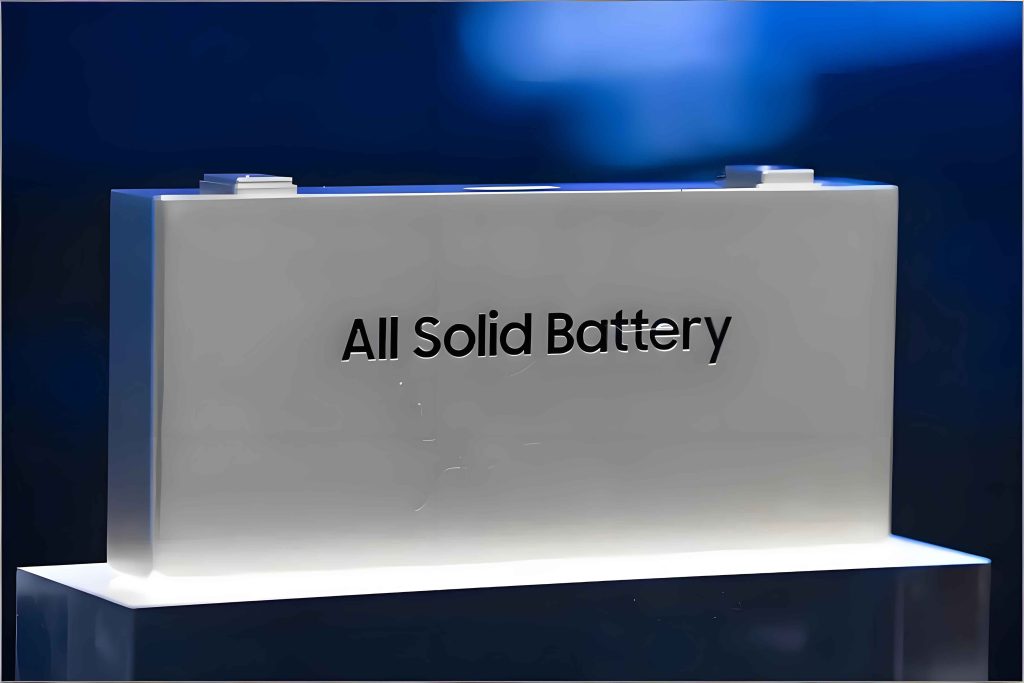
The solid-state battery technology leverages solid electrolytes instead of liquid ones, which enhances safety by reducing flammability and enabling more compact designs. The electrochemical principles behind a solid-state battery can be described using equations for charge transfer. For instance, in a lithium-based solid-state battery, the anode reaction might be: $$ \text{Li} \rightarrow \text{Li}^+ + e^- $$ and the cathode reaction: $$ \text{S} + 2e^- \rightarrow \text{S}^{2-} $$ though specific chemistries vary. The solid-state battery developed by the agency uses sulfur-selenium chemistry, which offers high theoretical capacity. The overall cell voltage $$ V $$ can be derived from the Nernst equation: $$ V = V^0 – \frac{RT}{nF} \ln Q $$ where $$ V^0 $$ is the standard potential, $$ R $$ is the gas constant, $$ T $$ is temperature, $$ n $$ is the number of electrons transferred, $$ F $$ is Faraday’s constant, and $$ Q $$ is the reaction quotient. This solid-state battery approach minimizes degradation and increases cycle life, making it ideal for demanding applications like electric aircraft.
As I analyze the impact, the solid-state battery breakthrough aligns with broader trends in energy diversification. For example, hydrogen fuel cells and solid-state batteries could complement each other in hybrid systems, where the solid-state battery provides high-power bursts and the fuel cell offers sustained energy. The synergy can be modeled using power management algorithms: $$ P_{\text{total}} = P_{\text{battery}} + P_{\text{fuel cell}} $$ where each source is optimized for efficiency. Moreover, the solid-state battery’s high energy density makes it a candidate for renewable energy storage, smoothing out intermittency from sources like solar and wind. The table below illustrates potential integration scenarios:
| Integration Scenario | Role of Solid-state Battery | Benefits | Challenges |
|---|---|---|---|
| Electric Aviation | Primary power source | Extended range, reduced weight | Cost and scalability |
| Grid Storage | Peak shaving and backup | High efficiency, long lifespan | Infrastructure adaptation |
| Automotive Hybrids | Supplement to fuel cells | Improved acceleration, regenerative braking | System complexity |
Looking ahead, the solid-state battery ecosystem is expected to evolve rapidly, with research focusing on materials science to enhance performance. For instance, the ionic conductivity $$ \sigma $$ of solid electrolytes is a critical parameter, given by: $$ \sigma = n e \mu $$ where $$ n $$ is charge carrier concentration, $$ e $$ is electron charge, and $$ \mu $$ is mobility. Improving $$ \sigma $$ is key to reducing internal resistance in solid-state battery designs. Additionally, manufacturing processes for solid-state battery units must be scaled to meet mass production demands, which involves optimizing parameters like pressure and temperature during fabrication. The continued emphasis on solid-state battery innovation will likely drive down costs through economies of scale, similar to trends seen in lithium-ion batteries over the past decade.
In conclusion, I am optimistic about the convergence of hydrogen energy, smart connected vehicles, and advanced battery technologies like the solid-state battery. Each domain reinforces the others, creating a resilient and innovative landscape. The solid-state battery, in particular, stands out as a transformative technology that can address energy density and safety limitations, paving the way for sustainable mobility and energy systems. As standards evolve to keep pace with these advancements, and as supply chains strengthen, the future promises greater efficiency and reduced environmental impact. The journey toward a cleaner, smarter world is well underway, with the solid-state battery playing a pivotal role in powering this transition.