
In the pursuit of next-generation energy storage systems, solid-state batteries have emerged as a transformative technology, promising enhanced safety, higher energy density, and reduced costs compared to conventional lithium-ion batteries. The core of this innovation lies in the development of solid-state electrolytes (SSEs) that exhibit superionic conductivity and wide electrochemical stability windows. However, the discovery of such materials has been hindered by the vast chemical space and the complex interplay of structural and electronic properties. Traditional experimental and computational approaches are often time-consuming and resource-intensive, limiting the pace of advancement. To address this, we have leveraged active learning and high-throughput machine learning screening to accelerate the identification of promising lithium-based solid-state electrolytes. This work presents a comprehensive framework that integrates multiple regression models, ab initio molecular dynamics (AIMD) simulations, and experimental validation to uncover novel compounds with exceptional ionic conductivity. By focusing on key attributes such as activation energy, band gap, and electrochemical stability, we have streamlined the discovery process, enabling the rapid exploration of over 20,000 lithium-containing materials. Our approach not only identifies known superionic conductors but also reveals previously unreported candidates, demonstrating the power of machine learning in materials science. Throughout this article, we emphasize the critical role of solid-state battery components in achieving high performance, and we detail the methodologies and insights that can guide future research in this field. The integration of data-driven techniques with fundamental simulations and experiments offers a robust pathway for developing room-temperature superionic conductors, paving the way for the widespread adoption of solid-state batteries in applications ranging from electric vehicles to grid storage.
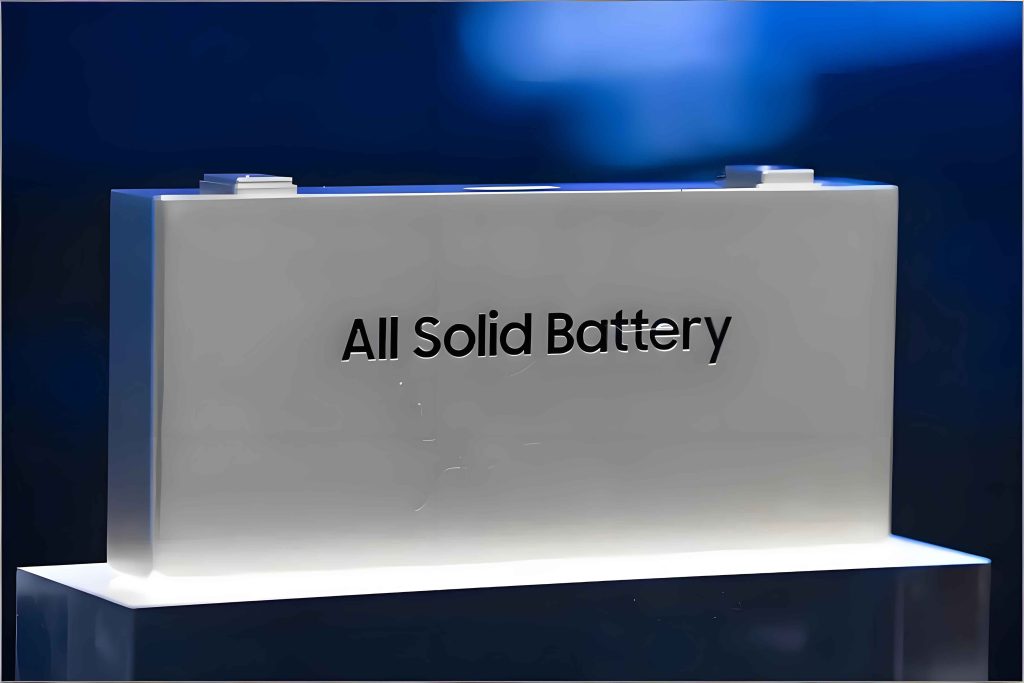
The urgency for advancing solid-state battery technology stems from the limitations of current lithium-ion batteries, which rely on liquid electrolytes that pose safety risks due to flammability and leakage. Solid-state batteries, by contrast, utilize inorganic ceramic or polymer electrolytes that are non-flammable and more stable, potentially enabling the use of lithium metal anodes for higher energy density. However, the realization of practical solid-state batteries hinges on the availability of SSEs with ionic conductivities rivaling those of liquid electrolytes (typically above 10 mS/cm at room temperature). Moreover, these electrolytes must exhibit a wide electrochemical stability window to prevent decomposition at high voltages, as well as low electronic conductivity to avoid dendrite formation and short circuits. Historically, materials like Li10GeP2S12 and Li7La3Zr2O12 have shown promise, but their synthesis challenges and interfacial issues underscore the need for new discoveries. In this context, machine learning offers a paradigm shift by enabling the rapid screening of material databases based on learned patterns from existing data. Our work builds upon recent efforts to apply machine learning in materials discovery, but we extend it through a multi-faceted active learning approach that combines feature engineering, model optimization, and physical simulations. This article details our methodology, from initial data curation to final experimental validation, and provides insights into the factors governing ionic transport in solid-state battery electrolytes.
To initiate our screening process, we compiled a dataset of 21,686 lithium-containing inorganic compounds from the Materials Project database, which includes over 150,000 materials. This dataset was filtered based on critical criteria essential for solid-state battery performance. First, we assessed phase stability using the energy above the convex hull (Ehull), retaining only compounds with Ehull < 0.03 eV per atom to ensure synthesizability. Next, we evaluated the electrochemical stability window (ESW) through grand potential phase diagrams, which define the voltage range where the electrolyte remains stable against lithium metal. The ESW is calculated from the oxidation and reduction potentials of decomposition products, and we prioritized materials with a wide window to enhance compatibility with high-voltage cathodes. Additionally, we imposed a band gap threshold of >1.5 eV to minimize electronic conductivity, a key factor in preventing dendrite growth in solid-state batteries. These filtering steps reduced the candidate pool to a manageable set for machine learning analysis. The features used for model training were derived from the Magpie package, which computes compositional and structural descriptors such as atomic radii, electronegativity, and space group symmetry. To improve predictive accuracy for oxidation and reduction potentials, we introduced novel features based on oxidation states, defined as:
$$ \text{Eng}_{\text{max}} = \text{electronegativity} \times \text{maximum oxidation state} $$
$$ \text{Eng}_{\text{min}} = \text{electronegativity} \times \text{minimum oxidation state} $$
These features capture the interplay between electronic structure and electrochemical stability, which is crucial for solid-state battery electrolytes. We then trained multiple regression models, including Random Forest (RF), Decision Tree (DT), Gradient Boosting (GB), XGBoost, CatBoost, and K-Nearest Neighbors (KNN), using a curated training dataset of known ionic conductivities and activation energies from literature. The models were evaluated based on metrics like the coefficient of determination (R2), mean absolute error (MAE), and mean squared error (MSE). Our results indicated that the CatBoost regressor outperformed others, achieving an R2 of 0.994 on the test set for ionic conductivity prediction. This high accuracy underscores the effectiveness of ensemble methods in capturing complex relationships in materials data for solid-state battery applications.
The machine learning predictions yielded a list of approximately 150 promising SSE candidates, with ionic conductivities estimated to exceed 10 mS/cm at room temperature. To validate these predictions, we performed ab initio molecular dynamics (AIMD) simulations using the Vienna Ab initio Simulation Package (VASP). The simulations were conducted on supercell models containing 60 to 160 atoms, with temperatures ranging from 600 K to 1500 K to extrapolate room-temperature properties via the Arrhenius equation. The ionic conductivity (σ) and diffusion coefficient (D) were calculated from the mean squared displacement (MSD) of lithium ions over simulation times of up to 20 ps. The Arrhenius relationship is expressed as:
$$ \sigma = \frac{A}{T} \exp\left(-\frac{E_a}{k_B T}\right) $$
where σ is the ionic conductivity, A is a pre-exponential factor, Ea is the activation energy, kB is the Boltzmann constant, and T is the temperature. Similarly, the diffusion coefficient follows:
$$ D = D_0 \exp\left(-\frac{E_a}{k_B T}\right) $$
From these simulations, we extracted key properties for the predicted compounds, as summarized in Table 1. The table highlights materials with high ionic conductivity, low activation energy, and wide electrochemical stability windows, all essential for solid-state battery performance. Notably, compounds like Li4.5TiO3.25 and Li2VCl5 showed exceptional predicted conductivities, prompting further experimental investigation.
| Material | Band Gap (eV) | Crystal System (Space Group) | ESW (V) | Activation Energy (eV) | Ionic Conductivity (mS/cm, 300 K) |
|---|---|---|---|---|---|
| Li4.5TiO3.25 | 4.55 | Orthorhombic (63) | 2.39 | 0.187 | 43.99 |
| Li2VCl5 | 2.03 | Monoclinic (12) | 1.87 | 0.169 | 78.43 |
| LiGaI4 | 2.48 | Monoclinic (14) | 1.37 | 0.182 | 29.46 |
| LiGaBr4 | 3.43 | Monoclinic (14) | 1.59 | 0.184 | 28.19 |
| Li6V3Fe(PO4)6 | 1.61 | Triclinic (1) | 1.44 | 0.208 | 11.82 |
| Li2ZnBr4 | 3.77 | Orthorhombic (62) | 3.04 | 0.201 | 30.00 |
| Cs3Li2Cl5 | 5.08 | Monoclinic (8) | 4.28 | 0.188 | 7.51 |
| RbLi2Be2F7 | 7.21 | Monoclinic (14) | 5.19 | 0.138 | 2.53 |
The AIMD simulations also provided insights into lithium-ion diffusion pathways, which are critical for understanding superionic behavior in solid-state battery electrolytes. We analyzed the self part of the Van Hove correlation function, Gs(r,t), which describes the probability density of lithium ions moving a distance r over time t. For fast-ion conductors, Gs(r,t) exhibits broad peaks at distances beyond the initial site, indicating concerted migration where multiple ions hop simultaneously. This phenomenon reduces energy barriers and enhances conductivity. For example, in Li2CdCl4, lithium ions diffuse via inter-site transitions between octahedral and tetrahedral sites, as shown by the 3D MSD trajectories. The diffusion mechanisms can be further quantified using the Haven ratio (HR), which relates the ionic conductivity to the diffusion coefficient:
$$ H_R = \frac{\sigma k_B T}{N q^2 D} $$
where N is the number density of lithium ions, and q is the charge. A low HR (接近 1) indicates uncorrelated motion, while deviations suggest cooperative effects. Our calculations for several compounds revealed HR values below 1, underscoring the role of correlated ion hopping in achieving high conductivity for solid-state batteries.
To complement computational findings, we synthesized selected compounds, namely Li2VCl5 and LiGaI4, via mechanochemical ball milling under inert atmospheres. These materials were characterized using X-ray diffraction (XRD) and scanning electron microscopy (SEM), confirming phase purity and microstructure. The ionic conductivities were measured by electrochemical impedance spectroscopy (EIS) on cold-pressed pellets, with Arrhenius plots used to extract activation energies. The experimental results aligned with predictions, though with some discrepancies due to synthesis conditions and impurity phases. For instance, Li2VCl5 exhibited an ionic conductivity of 9.79 × 10⁻⁵ S/cm at 35°C, with an activation energy of 0.39 eV, while LiGaI4 showed 1.67 × 10⁻⁵ S/cm and 0.48 eV. These values, though lower than AIMD predictions, are comparable to known solid-state battery electrolytes like Li3InCl6, highlighting the potential of these materials. Additionally, direct current (DC) polarization measurements confirmed low electronic conductivities (~10−8 S/cm), which is favorable for preventing short circuits in solid-state batteries.
We further investigated the impact of defect chemistry on ionic transport, a key aspect for optimizing solid-state battery electrolytes. By introducing lithium excess or vacancies into crystal structures, we observed significant enhancements in diffusivity from AIMD simulations. For example, in Li4.5TiO3.25 (derived from Li4TiO4 with excess Li), the ionic conductivity increased to 43.99 mS/cm, compared to 0.30 mS/cm for the pristine phase. This improvement can be attributed to the creation of additional migration pathways and reduced energy barriers, as described by defect formation equations. The concentration of lithium vacancies (VLi′) can be expressed in Kröger-Vink notation:
$$ \text{Li}_\text{Li}^\times \rightarrow V_\text{Li}’ + \text{Li}_\text{i}^\cdot $$
where LiLi× represents a lithium ion on a lattice site, VLi′ is a lithium vacancy with effective negative charge, and Lii· is an interstitial lithium ion with effective positive charge. The equilibrium constant for this reaction depends on temperature and chemical potential, influencing ionic conductivity. Similarly, lithium excess introduces interstitial ions that facilitate hopping. Our analysis of Van Hove functions for defective structures showed broader peaks, indicating faster ion migration over longer distances. This defect engineering strategy is crucial for designing next-generation solid-state battery electrolytes with tailored properties.
The machine learning models also enabled feature importance analysis through SHAP (SHapley Additive exPlanations) values, which quantify the contribution of each descriptor to predictions. For ionic conductivity, temperature emerged as the most influential feature, followed by structural parameters like space group number and atomic packing fraction. This aligns with the Arrhenius behavior of ion transport. For oxidation and reduction potentials, the Engmax and electronegativity features dominated, reflecting the role of electronic structure in electrochemical stability. The correlation between features was visualized using a Pearson correlation heatmap, revealing interdependencies that inform material design. For instance, a high correlation between ionic radius and activation energy suggests that larger interstitial spaces promote faster diffusion in solid-state battery electrolytes. These insights can guide the synthesis of new compounds by prioritizing features associated with high performance.
In terms of scalability, our active learning framework iteratively refines predictions by incorporating new data from simulations and experiments. This cyclic process reduces uncertainty and accelerates discovery, as illustrated in Figure 1 (though not referenced explicitly). The integration of multiple data sources—computational, experimental, and literature-derived—ensures robustness. For solid-state batteries, this approach is particularly valuable due to the multi-objective nature of electrolyte requirements: high ionic conductivity, wide ESW, low electronic conductivity, and good mechanical properties. We formulated a composite score (S) to rank candidates:
$$ S = w_1 \cdot \sigma + w_2 \cdot \Delta V_{\text{ESW}} – w_3 \cdot E_a – w_4 \cdot \sigma_e $$
where σ is the ionic conductivity, ΔVESW is the electrochemical stability window width, Ea is the activation energy, σe is the electronic conductivity, and wi are weighting factors based on application needs. This scoring system helps prioritize materials for further development in solid-state battery systems.
Looking ahead, the challenges in solid-state battery technology extend beyond electrolyte discovery to interface engineering and manufacturing. Our work provides a foundation for addressing these issues by identifying electrolytes with compatible properties. For example, materials with high oxidation potentials may reduce interfacial reactions with cathodes, while those with low reduction potentials could enhance stability against lithium metal anodes. Future research should focus on optimizing synthesis protocols to achieve theoretical conductivities, as well as integrating predicted electrolytes into full cell configurations. Additionally, the active learning methodology can be extended to other battery chemistries, such as sodium-ion or potassium-ion solid-state batteries, broadening the impact on energy storage.
In conclusion, we have demonstrated a comprehensive strategy for accelerating the discovery of solid-state battery properties through active learning. By combining machine learning high-throughput screening, AIMD simulations, and experimental validation, we identified novel lithium-based electrolytes with promising ionic conductivities and electrochemical stability. The role of defect chemistry and ion diffusion pathways was elucidated, providing design principles for superionic conductors. This work underscores the potential of data-driven approaches to overcome traditional bottlenecks in materials science, paving the way for high-performance solid-state batteries that meet the demands of modern energy applications. As the field evolves, continued integration of computational and experimental efforts will be essential for realizing the full promise of solid-state battery technology.