
We are thrilled to announce the commencement of road testing for a revolutionary solid-state battery system, a milestone that marks a significant leap in electric vehicle technology. Our collaborative effort brings together expertise from automotive engineering and Formula 1 to push the boundaries of energy storage. This initiative underscores our commitment to innovation and sustainability, as we embark on a path to redefine electric mobility with advanced solid-state battery solutions.
The solid-state battery represents a transformative technology in the EV landscape. Unlike conventional lithium-ion batteries that use liquid electrolytes, solid-state batteries employ solid electrolytes, enhancing safety and enabling the use of novel anode materials like lithium metal. This shift not only improves energy density but also addresses critical challenges such as thermal stability and longevity. The core advantage lies in the inherent properties of solid electrolytes, which reduce risks of leakage and combustion, making solid-state battery systems inherently safer. Moreover, the integration of lithium metal anodes allows for higher energy storage capacity, paving the way for extended driving ranges and reduced battery mass. In our journey, we have focused on harnessing these benefits to create a viable solid-state battery for mass production.
To understand the technical superiority, let’s delve into key metrics. Energy density is a crucial parameter, defined as the energy stored per unit mass. For solid-state batteries, this can be expressed mathematically as:
$$ \rho_E = \frac{E}{m} $$
where \(\rho_E\) is the energy density in watt-hours per kilogram (Wh/kg), \(E\) is the total energy stored in watt-hours (Wh), and \(m\) is the mass in kilograms (kg). Our solid-state battery technology aims to achieve values exceeding 450 Wh/kg, a substantial improvement over traditional lithium-ion batteries, which typically range from 150 to 250 Wh/kg. This enhancement directly translates to longer ranges without increasing battery size or weight. Additionally, volumetric energy density, or energy per unit volume, is another vital factor, given by:
$$ \rho_V = \frac{E}{V} $$
where \(\rho_V\) is in Wh/L and \(V\) is the volume in liters. Solid-state batteries often exhibit better volumetric efficiency due to compact solid electrolyte layers. The following table summarizes the comparative advantages:
| Parameter | Traditional Li-ion Battery | Solid-State Battery |
|---|---|---|
| Electrolyte Type | Liquid | Solid |
| Typical Energy Density (Wh/kg) | 150-250 | 300-450+ |
| Safety Profile | Moderate (risk of leakage, thermal runaway) | High (reduced flammability) |
| Anode Material | Graphite | Lithium Metal |
| Cycle Life | 500-1000 cycles | Potential for 1000+ cycles |
| Operating Temperature Range | Limited | Wider (improved stability) |
Our development process began with intensive laboratory testing, where we evaluated various solid-state battery prototypes under controlled conditions. We utilized advanced test benches to simulate real-world scenarios, assessing parameters like charge-discharge rates, thermal behavior, and mechanical integrity. The solid-state battery cells, based on a proprietary solid electrolyte platform, demonstrated exceptional performance in these early stages. After successful bench tests, we integrated the solid-state battery into a modified electric vehicle platform, specifically an EQS model, by the end of 2024. This integration required careful adaptation of the vehicle’s architecture to accommodate the unique characteristics of the solid-state battery, including its cooling and management systems.
The heart of our innovation lies in the design of the solid-state battery pack. We introduced a patented floating battery carrier that addresses the volume changes inherent in solid-state batteries during operation. When charging, the internal materials expand, and during discharge, they contract. This volume variation, denoted as \(\Delta V\), can impact battery performance and longevity if not managed properly. To mitigate this, we equipped the solid-state battery with pneumatic actuators that dynamically interact with the cell’s volume changes. These actuators apply controlled pressure to support the cells, optimizing contact and reducing stress. The relationship can be described as:
$$ \Delta V = V_{\text{max}} – V_{\text{min}} $$
where \(V_{\text{max}}\) and \(V_{\text{min}}\) are the volumes at full charge and discharge, respectively. By integrating actuators, we ensure that the solid-state battery maintains structural integrity over cycles, enhancing reliability. This design not only solves volume change issues but also contributes to weight reduction, as it allows for a passive cooling system. Passive cooling eliminates the need for heavy liquid cooling components, further improving energy efficiency. The table below outlines the key design features of our solid-state battery system:
| Design Feature | Description | Benefit |
|---|---|---|
| Floating Battery Carrier | Patented structure that accommodates cell expansion/contraction | Reduces mechanical stress, extends lifespan |
| Pneumatic Actuators | Devices that apply adaptive pressure to cells | Optimizes performance during volume changes |
| Passive Cooling System | Relies on natural heat dissipation without active components | Lowers weight, increases energy efficiency |
| Lithium Metal Anode | Uses pure lithium for higher energy capacity | Boosts energy density and range |
| Solid Electrolyte | Ceramic or polymer-based electrolyte layer | Enhances safety and thermal stability |
Road testing commenced in early 2025, following initial laboratory vehicle tests. The prototype vehicle, equipped with the solid-state battery, has undergone extensive evaluations to assess its on-road performance. Key metrics include range, acceleration, charging speed, and durability under various conditions. Preliminary data indicates that the solid-state battery enables a remarkable increase in range. Compared to a standard EQS battery with similar mass and dimensions, our solid-state battery offers up to 25% more range. For instance, the current EQS model with a 118 kWh battery achieves over 800 km, while our solid-state battery prototype targets exceeding 1000 km. This improvement stems from the higher energy density and efficient design. The range enhancement can be quantified using the formula:
$$ R = \frac{E_{\text{battery}}}{C_{\text{vehicle}}} $$
where \(R\) is the range in kilometers, \(E_{\text{battery}}\) is the battery energy in kWh, and \(C_{\text{vehicle}}\) is the vehicle’s energy consumption in kWh/km. With the solid-state battery’s higher \(E_{\text{battery}}\) due to increased energy density, and reduced \(C_{\text{vehicle}}\) from weight savings, \(R\) increases significantly. Below is a performance comparison table:
| Vehicle Configuration | Battery Type | Energy Capacity (kWh) | Estimated Range (km) | Energy Density (Wh/kg) |
|---|---|---|---|---|
| Standard EQS | Traditional Li-ion | 118 | 800+ | ~200 |
| Prototype with Solid-State Battery | Solid-State | Similar volume, higher density | 1000+ | ~450 |
The integration of solid-state battery technology also impacts charging dynamics. Solid electrolytes can enable faster charging rates due to improved ion conductivity at higher voltages. We are exploring charging protocols that leverage this, potentially reducing charging times by up to 50% compared to conventional batteries. The charging efficiency \(\eta_c\) can be modeled as:
$$ \eta_c = \frac{E_{\text{stored}}}{E_{\text{input}}} \times 100\% $$
where \(E_{\text{stored}}\) is the energy stored in the solid-state battery and \(E_{\text{input}}\) is the energy supplied during charging. Early tests show \(\eta_c\) values above 95%, indicating minimal energy loss. This efficiency, combined with the safety benefits, makes solid-state battery systems ideal for widespread EV adoption.
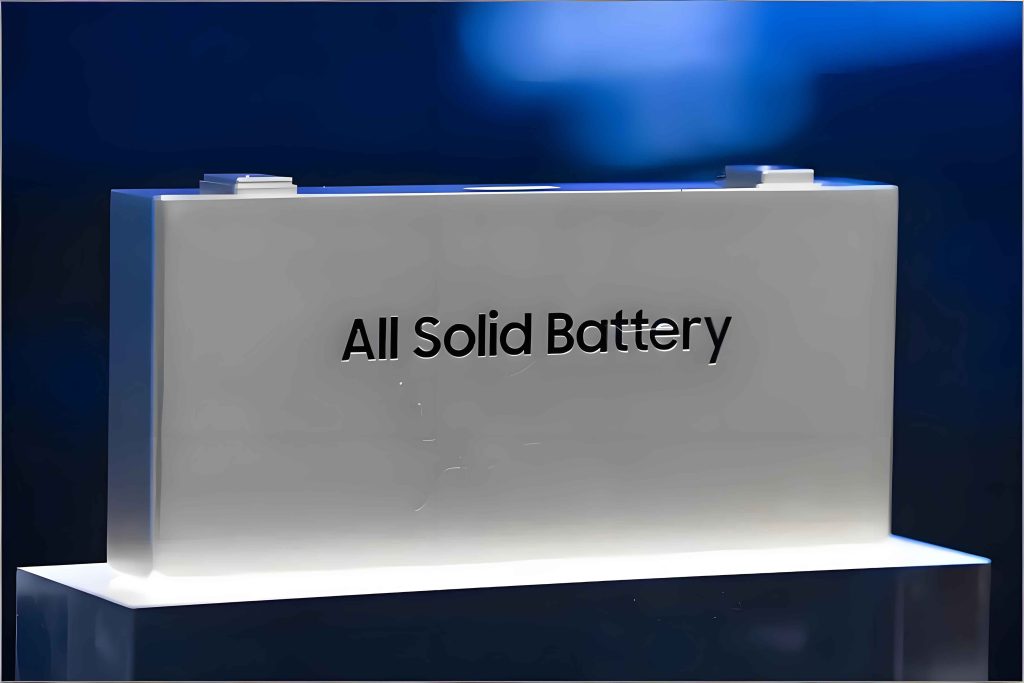
Looking ahead, our road testing program will continue for several months, involving rigorous assessments in diverse environments. We plan to conduct laboratory tests to analyze long-term cycle life, thermal performance, and scalability. The solid-state battery will be subjected to stress tests, including extreme temperatures and rapid charge-discharge cycles, to validate its robustness. Additionally, we will gather real-world data on driver experience, energy management, and integration with vehicle systems. This comprehensive approach ensures that the solid-state battery meets the demands of mass production.
The collaboration between automotive and motorsport engineers has been instrumental in accelerating development. Insights from Formula 1, where efficiency and reliability are paramount, have been translated into our solid-state battery design. For example, lightweight materials and advanced thermal management techniques from racing have been adapted to enhance the solid-state battery’s performance. This synergy exemplifies how cross-domain expertise can drive innovation in sustainable technology.
From a broader perspective, the adoption of solid-state battery technology signals a paradigm shift in the automotive industry. As we move towards electrification, the need for safer, higher-energy batteries becomes critical. Our solid-state battery initiative not only addresses these needs but also sets new benchmarks for competitors. The potential applications extend beyond passenger cars to commercial vehicles, aerospace, and energy storage systems, where the advantages of solid-state batteries can be leveraged for greater impact.
To further illustrate the technical progression, we can outline the development timeline in a table:
| Phase | Timeline | Key Activities | Outcomes |
|---|---|---|---|
| Research and Collaboration | 2021 onwards | Partnership formed; initial solid-state battery cell development | Prototype solid-state battery cells delivered |
| Laboratory Testing | 2023-2024 | Bench tests on solid-state battery cells; safety and performance evaluations | Validation of energy density and safety features |
| Vehicle Integration | Late 2024 | Solid-state battery pack integrated into EQS platform; modifications made | Functional prototype vehicle ready for testing |
| Road Testing | Early 2025 onwards | On-road performance assessments; data collection on range and durability | Preliminary data showing range improvements; ongoing optimizations |
| Future Scaling | Beyond 2025 | Mass production planning; cost reduction strategies | Goal to commercialize solid-state battery technology |
In terms of economic and environmental impact, solid-state batteries offer significant benefits. The higher energy density reduces the amount of raw material needed per kWh, lowering costs over time. Additionally, the improved safety reduces risks and insurance liabilities. From a sustainability angle, solid-state batteries have a lower environmental footprint due to longer lifespans and potential for recycling. We estimate that widespread use of solid-state battery systems could cut greenhouse gas emissions by up to 30% per vehicle over its lifecycle, compared to traditional batteries.
Our commitment to innovation is reflected in the continuous refinement of the solid-state battery. We are exploring next-generation solid electrolytes that further enhance conductivity and stability. Mathematical modeling plays a key role in this, with equations like the Nernst-Planck equation describing ion transport in solids:
$$ J_i = -D_i \nabla c_i + z_i \mu_i F c_i \nabla \phi $$
where \(J_i\) is the flux of ion \(i\), \(D_i\) is the diffusion coefficient, \(c_i\) is the concentration, \(z_i\) is the charge number, \(\mu_i\) is the mobility, \(F\) is Faraday’s constant, and \(\phi\) is the electric potential. By optimizing these parameters, we aim to push the solid-state battery’s performance limits.
In conclusion, the road testing of our solid-state battery marks a historic achievement in electric mobility. This solid-state battery technology has moved from laboratory concepts to real-world applications, demonstrating tangible advantages in range, safety, and efficiency. As we proceed with extensive testing, we are confident that solid-state batteries will play a pivotal role in the future of transportation. Our collaborative effort underscores the power of integrating diverse engineering disciplines to solve complex challenges. The journey ahead involves scaling production, reducing costs, and ensuring that solid-state battery systems become accessible to consumers worldwide. With each test mile, we gather invaluable insights that bring us closer to a sustainable electric future powered by advanced solid-state battery solutions.