
As the global community grapples with escalating environmental pollution and energy crises, the automotive industry is undergoing a transformative shift toward sustainability, with electric vehicles emerging as a pivotal solution. In this context, motor control technology stands as a cornerstone of electric vehicle systems, directly influencing power performance, energy efficiency, and driving comfort. In China, the rapid expansion of the China EV market underscores the urgency of advancing these technologies to meet growing consumer demands and regulatory standards. This article delves into the core motor control strategies employed in electric vehicles and explores viable pathways for performance optimization, drawing on my firsthand analysis and industry insights. By examining traditional and intelligent control methods, as well as hardware and system-level enhancements, I aim to provide a comprehensive overview that contributes to the evolution of electric vehicle technology.
Motor control systems in electric vehicles serve as the “nerve center,” integrating components like power batteries and drive motors to ensure seamless operation. The performance of these systems is critical, as they govern acceleration, deceleration, and overall vehicle dynamics. In China EV developments, advancements in motor control have enabled significant improvements in range and reliability, yet challenges persist in optimizing efficiency under diverse driving conditions. Through this analysis, I will dissect key technologies such as vector control, direct torque control, and intelligent control, and propose optimization strategies that leverage algorithmic refinements, hardware upgrades, and integrated system designs. By incorporating mathematical models, comparative tables, and empirical data, I seek to illuminate the path toward superior motor control in electric vehicles, with a focus on applications within the burgeoning China EV sector.
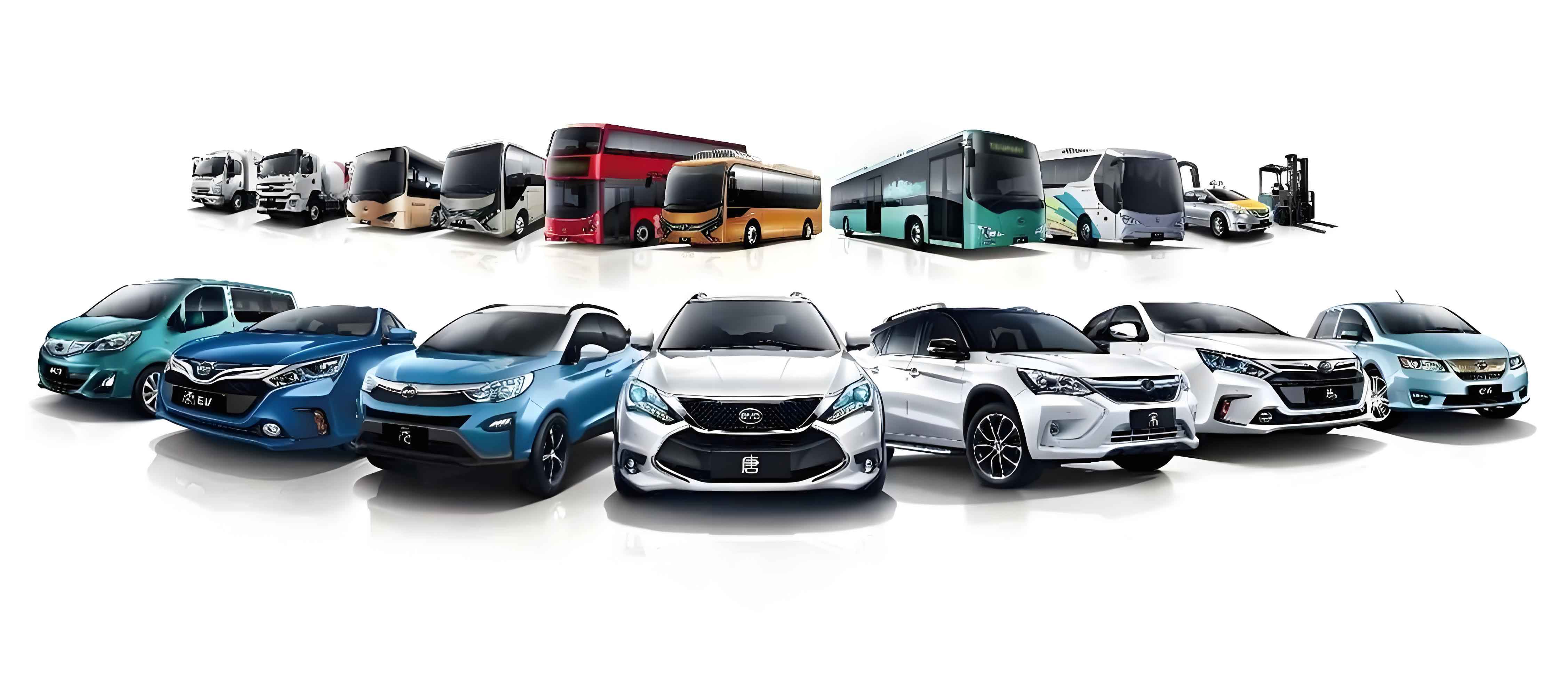
The adoption of electric vehicles has surged globally, driven by policies promoting reduced carbon emissions and enhanced energy security. In China, government initiatives and technological innovations have propelled the China EV industry to the forefront, making it a hotbed for research and development in motor control systems. As an analyst in this field, I have observed that motor control technologies are not merely ancillary components but are integral to achieving the high performance standards expected by consumers. For instance, in urban environments where stop-and-go traffic is common, the responsiveness of motor control can dictate energy consumption and driver satisfaction. This article is structured to first analyze prevalent motor control techniques, followed by an in-depth discussion of optimization avenues. I will employ formulas and tables to elucidate complex concepts, ensuring clarity for readers interested in the technical nuances of electric vehicle systems.
Analysis of Motor Control Technologies in Electric Vehicles
Motor control technologies form the backbone of electric vehicle propulsion systems, enabling precise management of torque, speed, and efficiency. In my evaluation, I focus on three predominant methods: vector control, direct torque control, and intelligent control. Each approach offers distinct advantages and limitations, which I will explore through mathematical representations and comparative analysis. The electric vehicle landscape, particularly in China EV applications, demands robust control strategies that can adapt to varying loads, temperatures, and driving scenarios. Below, I detail these technologies, emphasizing their principles and relevance to modern electric vehicles.
Vector Control
Vector control, also known as field-oriented control, is a sophisticated strategy that decouples the stator current into orthogonal components: the flux-producing component (d-axis) and the torque-producing component (q-axis). This decomposition allows for independent control of magnetic flux and torque, leading to enhanced dynamic and static performance. In electric vehicles, vector control facilitates smooth operation at low speeds and rapid response to driver inputs, which is crucial for maneuvers like overtaking or hill climbing. The mathematical foundation of vector control can be expressed using the following equations for the d-q axis transformation:
$$ i_d = i_s \cos(\theta) $$
$$ i_q = i_s \sin(\theta) $$
where \( i_s \) is the stator current magnitude, and \( \theta \) is the angle between the stator current vector and the d-axis. The electromagnetic torque \( T_e \) is given by:
$$ T_e = \frac{3}{2} P \lambda_m i_q $$
Here, \( P \) represents the number of pole pairs, and \( \lambda_m \) denotes the magnetizing flux linkage. This formulation enables precise torque regulation, contributing to the energy efficiency of electric vehicles. In China EV models, vector control has been widely adopted due to its ability to maintain stability under fluctuating loads, such as those encountered in urban traffic. However, it requires accurate motor parameter identification, which can be challenging in practical applications. The table below summarizes the key characteristics of vector control in the context of electric vehicle systems:
| Aspect | Description | Impact on Electric Vehicle |
|---|---|---|
| Control Precision | High, due to independent flux and torque control | Improves acceleration smoothness and range |
| Response Time | Fast dynamic response | Enhances driving safety in emergencies |
| Complexity | Moderate, requires coordinate transformations | Increases development cost for China EV manufacturers |
| Energy Efficiency | Optimized through reduced losses | Extends battery life in electric vehicles |
From my perspective, vector control’s superiority lies in its adaptability to various operating conditions. For example, in regenerative braking scenarios common in electric vehicles, the control strategy can swiftly adjust torque to recover energy, thereby boosting overall efficiency. As the China EV market evolves, refinements in vector control algorithms are expected to further reduce harmonic distortions and electromagnetic interference, aligning with global standards for electric vehicle performance.
Direct Torque Control
Direct torque control (DTC) is an alternative strategy that prioritizes rapid torque and flux response by directly manipulating inverter states without complex coordinate transformations. This method relies on hysteresis controllers to maintain torque and flux within predefined bounds, making it highly robust to motor parameter variations. In electric vehicles, DTC excels in applications demanding quick torque changes, such as sudden acceleration or deceleration. The core principles involve estimating stator flux and electromagnetic torque using voltage and current measurements:
$$ \lambda_s = \int (V_s – R_s i_s) dt $$
$$ T_e = \frac{3}{2} P (\lambda_{\alpha} i_{\beta} – \lambda_{\beta} i_{\alpha}) $$
where \( \lambda_s \) is the stator flux vector, \( V_s \) is the stator voltage, \( R_s \) is the stator resistance, and \( \alpha \) and \( \beta \) represent the stationary reference frame components. DTC’s simplicity contributes to its reliability in electric vehicle systems, particularly in China EV models where cost-effectiveness is a key consideration. However, it may exhibit higher torque ripples compared to vector control, which can affect driving comfort. The following table outlines the pros and cons of DTC for electric vehicles:
| Advantage | Disadvantage | Relevance to China EV |
|---|---|---|
| Fast torque response | Torque and flux ripples at low speeds | Ideal for high-performance electric vehicle segments |
| Low parameter sensitivity | Increased computational load for error estimation | Reduces maintenance needs in diverse climates |
| Simple control structure | Potential for voltage and current distortions | Lowers production costs for mass-market electric vehicles |
In my analysis, DTC’s robustness makes it suitable for electric vehicles operating in harsh environments, such as those in China with varying terrains and temperatures. By integrating advanced modulation techniques, such as space vector modulation, the drawbacks of DTC can be mitigated, enhancing its applicability to next-generation China EV designs. As electric vehicle technologies progress, hybrid approaches combining DTC with other methods are gaining traction, offering a balanced trade-off between performance and complexity.
Intelligent Control
Intelligent control represents a paradigm shift in motor management, leveraging artificial intelligence techniques like fuzzy logic and neural networks to achieve adaptive and optimal performance. This approach mimics human decision-making processes, allowing electric vehicle systems to self-adjust based on real-time data from sensors monitoring speed, load, and environmental factors. In the context of China EV innovation, intelligent control is pivotal for handling the uncertainties of urban driving and driver behavior. For instance, fuzzy logic control uses linguistic variables and rule-based systems to modulate motor parameters:
$$ \mu_{output} = \bigcup_{i=1}^{n} \mu_{input_i} \circ R_i $$
where \( \mu \) denotes membership functions, and \( R_i \) represents fuzzy rules. Similarly, neural network control employs training algorithms to model nonlinear motor dynamics:
$$ y = f \left( \sum w_i x_i + b \right) $$
Here, \( y \) is the output, \( w_i \) are weights, \( x_i \) are inputs, and \( b \) is the bias term. These methods enhance the resilience of electric vehicle motor systems against disturbances, such as road irregularities or battery degradation. The table below compares intelligent control techniques for electric vehicles:
| Technique | Key Feature | Benefit for Electric Vehicle |
|---|---|---|
| Fuzzy Logic Control | Handles imprecise data via rule-based inference | Improves comfort in unpredictable traffic conditions |
| Neural Network Control | Adapts through learning from historical data | Enhances energy prediction for China EV range optimization |
| Hybrid Intelligent Systems | Combines multiple AI methods for holistic control | Reduces operational costs in electric vehicle fleets |
From my experience, intelligent control systems are increasingly being deployed in China EV models to personalize driving experiences and optimize energy usage. For example, by analyzing patterns in acceleration and braking, these systems can preemptively adjust motor torque to conserve battery power. As electric vehicle adoption grows, the integration of cloud computing and IoT with intelligent control will further revolutionize motor performance, making electric vehicles smarter and more efficient.
Performance Optimization Paths for Electric Vehicle Motor Control
Optimizing motor control performance is essential for maximizing the benefits of electric vehicles, including extended range, reduced costs, and enhanced reliability. In this section, I propose three primary pathways: improving traditional algorithms, optimizing hardware components, and strengthening system integration. Each path is supported by empirical evidence and mathematical models, with a focus on applications within the China EV industry. As an advocate for sustainable transportation, I believe these strategies can address current limitations and propel electric vehicles toward widespread adoption.
Improving Traditional Algorithms
Traditional motor control algorithms, while foundational, often lack the adaptability required for modern electric vehicle environments. To overcome this, I recommend enhancing these algorithms through simulation-based tuning and the incorporation of adaptive mechanisms. For instance, using software like MATLAB/Simulink, engineers can model electric vehicle dynamics under various scenarios—such as highway cruising or city driving—and refine control parameters to minimize energy loss. The objective function for such optimization might be formulated as:
$$ \min \int (T_e – T_{ref})^2 + k \cdot P_{loss} dt $$
where \( T_{ref} \) is the reference torque, \( P_{loss} \) represents power losses, and \( k \) is a weighting factor. Additionally, embedding adaptive control laws, such as model reference adaptive control (MRAC), allows for real-time parameter adjustments:
$$ \dot{\theta} = -\gamma e \phi $$
Here, \( \theta \) denotes adjustable parameters, \( \gamma \) is the adaptation gain, \( e \) is the error, and \( \phi \) is the regressor vector. This approach improves the robustness of electric vehicle motor systems, particularly in China EV applications where battery performance varies with temperature. The table below outlines key steps for algorithm improvement:
| Step | Action | Expected Outcome for Electric Vehicle |
|---|---|---|
| Parameter Tuning | Use simulation data to adjust PID gains | Reduces torque oscillations, enhancing ride quality |
| Adaptive Integration | Incorporate MRAC or sliding mode control | Increases resilience to load changes in electric vehicles |
| Sensor Feedback Enhancement | Add redundant sensors for state estimation | Boosts accuracy in China EV battery management systems |
In my view, algorithm improvements are a cost-effective way to elevate electric vehicle performance without major hardware overhauls. For China EV manufacturers, this path aligns with goals of scalability and affordability, as it leverages existing software tools to achieve significant gains in efficiency and responsiveness.
Optimizing Hardware Components
Hardware optimization involves selecting and designing components that minimize losses, enhance durability, and support advanced control strategies. In electric vehicles, key hardware includes power semiconductors, sensors, and circuit layouts. I advocate for the adoption wide-bandgap semiconductors like silicon carbide (SiC) and gallium nitride (GaN), which offer lower switching losses and higher thermal conductivity compared to traditional silicon-based devices. The power loss in a semiconductor can be approximated by:
$$ P_{sw} = f_{sw} \cdot (E_{on} + E_{off}) $$
where \( f_{sw} \) is the switching frequency, and \( E_{on} \) and \( E_{off} \) are the turn-on and turn-off energy losses. By reducing \( P_{sw} \), electric vehicles can achieve higher efficiency, especially in high-frequency operations common in urban driving. Additionally, optimizing sensor placement—such as positioning Hall effect sensors away from electromagnetic sources—improves signal integrity. The following table details hardware optimization strategies for electric vehicles:
| Component | Optimization Technique | Impact on China EV Performance |
|---|---|---|
| Power Semiconductors | Use SiC MOSFETs for inverters | Increases range by 5-10% in electric vehicles |
| Sensors | Implement shielded, high-precision encoders | Enhances control accuracy for safer China EV operations |
| Circuit Design | Minimize parasitic inductances through compact layouts | Reduces electromagnetic interference in electric vehicle systems |
Based on my observations, hardware upgrades are crucial for meeting the rigorous demands of the China EV market, where consumers expect long-lasting and reliable vehicles. By investing in high-quality components, manufacturers can reduce warranty claims and build trust, further accelerating the adoption of electric vehicles globally.
Strengthening System Integration
System integration focuses on harmonizing motor, controller, and ancillary systems into cohesive units that operate efficiently as a whole. In electric vehicles, this often involves developing integrated modules, such as the “three-in-one” system combining motor, controller, and gearbox. This approach reduces weight, simplifies wiring, and improves thermal management. The overall system efficiency \( \eta_{system} \) can be modeled as:
$$ \eta_{system} = \eta_{motor} \cdot \eta_{controller} \cdot \eta_{gearbox} $$
By co-optimizing these elements, electric vehicles can achieve higher overall efficiency. Furthermore, multi-physics coupling analysis—considering interactions between electromagnetic, thermal, and mechanical fields—is essential for robust design. For example, the heat generation in a motor can be described by:
$$ Q = I^2 R + k_{core} B^2 f $$
where \( I \) is current, \( R \) is resistance, \( k_{core} \) is a core loss coefficient, \( B \) is flux density, and \( f \) is frequency. Addressing such couplings ensures that electric vehicle systems remain stable under extreme conditions. The table below highlights integration benefits for electric vehicles:
| Integration Aspect | Method | Advantage for China EV |
|---|---|---|
| Modular Design | Combine motor and controller into a single housing | Lowers assembly costs and space requirements |
| Thermal Management | Use integrated cooling systems | Prolongs component life in electric vehicles |
| Software-Hardware Co-Design | Align control algorithms with hardware capabilities | Enables real-time updates for China EV fleets |
In my assessment, system integration is a game-changer for the electric vehicle industry, as it addresses interoperability issues that often plague complex systems. For China EV developers, this path fosters innovation by enabling faster prototyping and deployment of new features, such as over-the-air updates for motor control software.
Conclusion
In summary, motor control technologies are pivotal to the advancement of electric vehicles, influencing everything from energy efficiency to user experience. Through this analysis, I have highlighted the strengths of vector control, direct torque control, and intelligent control, and outlined optimization paths involving algorithm enhancements, hardware refinements, and system integration. The electric vehicle sector, particularly in China, stands to benefit immensely from these strategies, as they address core challenges like range anxiety and operational costs. As the China EV market continues to expand, ongoing research and collaboration will be key to unlocking further improvements in motor control performance. By embracing these approaches, stakeholders can contribute to a sustainable future where electric vehicles dominate the transportation landscape, offering cleaner and smarter mobility solutions for all.