
As a researcher and practitioner in automotive acoustics, I have dedicated considerable effort to understanding the noise profiles of modern electric cars. With the rapid adoption of electric cars globally, their market share now often surpasses that of internal combustion engine vehicles. This shift has brought the driving experience of electric cars into sharp focus, particularly regarding noise, vibration, and harshness (NVH) characteristics. Unlike traditional vehicles, electric cars present unique acoustic challenges, primarily due to the absence of engine masking noise, which can unmask previously less noticeable sounds and lead to issues like low-frequency “ear pressure” phenomena. This article, from my first-person perspective, delves into the comprehensive analysis of noise sources in electric cars and explores various mitigation strategies to enhance passenger comfort. I will employ detailed explanations, tables, and mathematical formulations to provide a thorough overview, aiming to cover the subject in depth to meet the extensive scope required.
The noise in electric cars is a multifaceted issue, stemming from several distinct sources. In my experience, the primary contributors include the electric motor and battery systems, tire-road interaction, aerodynamic and body-induced noises, low-frequency resonance phenomena, and ancillary systems. Each source has its own frequency range and transmission paths, making the acoustic environment of an electric car uniquely complex. The quest for quieter electric cars is not merely about comfort; it is also tied to perceived quality and environmental integration, as electric cars often operate in urban settings where noise pollution is a concern. I will now systematically break down these sources, drawing on both theoretical principles and practical observations from the field.
First and foremost, the electric motor is a core component of any electric car and a significant noise generator. Electric motors in electric cars typically operate at high rotational speeds, ranging from 15,000 to 20,000 rpm, producing mechanical vibrations and electromagnetic noise. The frequency spectrum of motor noise can extend up to 5,000 Hz, which is higher than the dominant frequencies of internal combustion engines. This high-frequency content can be more perceptible and annoying if not properly controlled. The noise arises from forces such as unbalanced magnetic pull, cogging torque, and switching harmonics from the power electronics. Mathematically, the fundamental electromagnetic force frequency $$f_{em}$$ can be expressed as:
$$f_{em} = \frac{n \times N}{60}$$
where \(n\) is the motor speed in rpm and \(N\) is the number of poles. For instance, a motor with 4 poles running at 18,000 rpm would produce a fundamental force frequency of $$f_{em} = \frac{18000 \times 4}{60} = 1200 \, \text{Hz}$$. Higher harmonics can easily reach into the kHz range. Additionally, battery packs in electric cars, especially their cooling systems (fans or pumps), can contribute to overall noise, particularly during high-demand driving or fast charging. The vibration from battery modules, if not isolated effectively, can transmit structure-borne noise into the cabin.
Secondly, tire and road noise becomes more prominent in electric cars. Due to the lightweight design philosophy often adopted for electric cars to maximize range, sound insulation in the body structure may be compromised compared to heavier conventional vehicles. Consequently, noise from tire-road interaction is more readily transmitted into the interior. This noise is influenced by tire tread pattern, rubber compound, inflation pressure, and road surface texture. At high speeds, it can become the dominant noise source. The sound pressure level from tire noise generally increases with vehicle speed, and its frequency content is broadband, typically spanning from 200 Hz to 2,000 Hz. A simplified model for tire noise generation considers the impact of tread blocks striking the road surface, which can be approximated by a series of impulsive forces. The sound power $$W$$ radiated by a tire can be related to parameters such as rolling speed $$v$$ and contact patch properties:
$$W \propto v^{\alpha}$$
where \(\alpha\) is an exponent often between 5 and 6 for air-pumping mechanisms. This underscores why tire noise grows rapidly with speed in electric cars.
Thirdly, body and aerodynamic noise are critical, especially at higher velocities. Electric cars often feature sleek designs for reduced drag, but improper sealing around doors, windows, and mirrors can lead to wind noise. This noise is primarily caused by turbulent airflow separation and vortex shedding around protrusions. The Strouhal number $$St$$ is a dimensionless parameter relevant to vortex shedding:
$$St = \frac{f \cdot L}{U}$$
where \(f\) is the shedding frequency, \(L\) is a characteristic length (e.g., mirror width), and \(U\) is the flow velocity. When shedding frequencies coincide with structural natural frequencies, resonance can amplify noise. Moreover, the use of lightweight materials like aluminum or carbon fiber in electric cars may reduce mass but can also lower sound transmission loss, making the cabin more susceptible to external noise. Body panels may vibrate due to aerodynamic pressures, contributing to structure-borne noise.
A particularly bothersome issue in electric cars is low-frequency resonance, often described as “ear pressure” or “booming.” This phenomenon typically occurs in the 20–60 Hz range and is exacerbated by the lack of engine masking noise. In many electric cars, lightweight tailgates or liftgates are designed with reduced mass and stiffness, sometimes using perforated inner panels. The natural frequency of such panels can fall around 30–40 Hz. Simultaneously, the acoustic cavity inside the car—the passenger compartment—has its own resonant modes (e.g., the first longitudinal mode) in a similar frequency band. When these structural and acoustic frequencies align, strong coupling leads to pronounced low-frequency pressure fluctuations that cause discomfort. The condition for resonance can be expressed as:
$$f_{\text{structure}} \approx f_{\text{cavity}}$$
where \(f_{\text{structure}}\) is a structural natural frequency and \(f_{\text{cavity}}\) is an acoustic cavity resonance frequency. For a simplified rectangular cabin, the fundamental acoustic mode frequency is given by:
$$f_{\text{cavity}} = \frac{c}{2L}$$
with \(c\) being the speed of sound (≈340 m/s in air) and \(L\) the cabin length. For a cabin length of 2.5 meters, $$f_{\text{cavity}} \approx 68 \, \text{Hz}$$, which can interact with structural modes near that value.
Lastly, other noise sources in electric cars include the air conditioning system—which often runs more frequently for battery thermal management—gearbox or reducer vibrations, and various interior rattles. These may not be primary but can affect overall acoustic comfort, especially in quiet electric cars where background noise is low.
To summarize the key noise sources, I present the following table:
| Noise Source | Typical Frequency Range | Main Causes | Impact on Electric Cars |
|---|---|---|---|
| Electric Motor | 100–5000 Hz | Electromagnetic forces, mechanical unbalance | High-frequency whine, prominent during acceleration |
| Battery & Cooling | 200–2000 Hz | Fan noise, pump vibration | Adds broadband noise, especially under load |
| Tire-Road | 200–2000 Hz | Tread impact, air pumping, road texture | Dominant at high speeds, affected by lightweight design |
| Aerodynamic | 500–5000 Hz | Wind turbulence, sealing leaks | Increases with speed, can be a major source |
| Low-Frequency Resonance | 20–60 Hz | Structural-acoustic coupling | Causes ear pressure, reduced comfort |
| Ancillary Systems | Variable | AC compressor, gear mesh, interior fittings | Adds to overall noise floor |
Having identified the sources, I now turn to noise reduction methods. The approach to quieting an electric car must be holistic, combining source control, path interruption, and receiver-side solutions. From my engineering standpoint, I categorize these methods into several key areas.
Source control is the most direct way to reduce noise in electric cars. For the electric motor, design optimizations such as improving rotor balance, using skewed magnets, and implementing precise manufacturing tolerances can minimize vibration. Additionally, enclosing the motor with acoustic covers or adding rubber isolators can decouple it from the vehicle structure. For battery noise, ensuring robust mounting with elastomeric dampers and optimizing cooling fan blade design for lower noise are effective. In terms of tire noise, selecting tires with low rolling resistance and optimized tread patterns—often marketed as “silent” or “comfort” tires—can make a significant difference. Some advanced electric cars even use foam-lined tires to dampen cavity resonance. Speaking of tire cavity noise, its frequency is given by:
$$f_{\text{cavity}} = \frac{v}{C}$$
where \(v\) is the speed of sound in the tire cavity and \(C\) is the circumferential length of the cavity. For standard air-filled tires, \(v \approx 340 \, \text{m/s}\). If the cavity circumference is 2 meters, the resonance frequency is around 170 Hz. However, inflating tires with helium, as suggested in some discussions, alters the equation because sound speed in helium is about 970 m/s. This raises the resonance frequency to:
$$f_{\text{cavity, He}} = \frac{970}{2} = 485 \, \text{Hz}$$
which moves the noise into a higher frequency band where absorption materials are more effective. This is an innovative approach, though practical considerations like gas permeability and cost must be weighed.
Active noise control (ANC) technology is a powerful tool for electric cars. ANC systems use microphones to capture unwanted noise inside the cabin, then generate anti-noise signals through speakers to cancel it out. This is particularly effective for periodic noises like motor whine. The principle relies on destructive interference: if the original noise wave is \(p(t)\) and the anti-noise wave is \(-p(t)\), their sum ideally cancels. In practice, adaptive digital filters are used to tailor the anti-noise in real-time. The effectiveness can be quantified by the reduction in sound pressure level (SPL). For a sinusoidal noise at frequency \(f\), the cancellation requires precise phase matching. Many modern electric cars incorporate ANC to enhance tranquility, especially in premium segments.
Passive noise control measures remain essential. These include extensive use of sound-absorbing and damping materials throughout the vehicle. For example, applying multi-layer barriers—such as mass-loaded vinyl, foam, and fiber insulation—in doors, floor pans, wheel arches, and the trunk can block airborne and structure-borne noise. Acoustic glass for windows and improved sealing around openings mitigate wind noise. A well-insulated electric car can achieve notably low interior noise levels. The transmission loss (TL) of a partition is key; for a single-leaf panel, it can be estimated by:
$$\text{TL} = 20 \log_{10}(f \cdot m) – 47 \, \text{dB}$$
where \(f\) is frequency and \(m\) is surface density. Increasing \(m\) or adding damping improves TL. Thus, strategic addition of mass, albeit contrary to lightweight goals, might be necessary in critical areas for acoustic comfort in electric cars.
Structural vibration and acoustic optimization address issues like low-frequency resonance. For the tailgate resonance problem, one can modify the stiffness or mass distribution to shift natural frequencies away from cavity modes. Constrained layer damping treatments on panels can reduce vibration amplitudes. Additionally, optimizing the suspension system to decouple road vibrations from the body is crucial. The transfer function from road input to cabin noise can be analyzed using modal analysis. If the suspension’s rigid-body modes are tuned to avoid coupling with acoustic modes, road noise intrusion can be minimized. For cavity resonance, Helmholtz resonators or active bass traps can be installed to absorb specific low-frequency peaks. The resonance frequency of a Helmholtz resonator is:
$$f_{\text{res}} = \frac{c}{2\pi} \sqrt{\frac{A}{V \cdot L}}$$
where \(A\) is neck area, \(V\) cavity volume, and \(L\) neck length. Such devices can be integrated into an electric car’s interior trim to target problematic frequencies.
User-end maintenance and adjustments also play a role. Regular checks of tire pressure and wear, ensuring door seals are intact, and replacing worn motor mounts can keep noise levels in check. Moreover, interior features like audio systems can mask residual noise, though this is not a true reduction method.
To compare the effectiveness of different noise reduction techniques for electric cars, I have compiled the following table:
| Method Category | Specific Techniques | Typical Noise Reduction (dB) | Cost & Complexity | Suitability for Electric Cars |
|---|---|---|---|---|
| Source Control | Motor balancing, quiet tires, optimized fans | 5–15 dB | Medium | High – addresses root causes |
| Active Noise Control | ANC with speakers and microphones | 10–20 dB at targeted frequencies | High | High – effective for tonal noises |
| Passive Insulation | Multilayer barriers, acoustic glass, seals | 10–30 dB overall | Low to Medium | Very High – widely applicable |
| Structural Damping | Constrained layer damping, resonator addition | 3–10 dB at resonances | Medium | High – for low-frequency issues |
| Maintenance | Tire care, seal checks, mount replacement | 2–5 dB | Low | Moderate – preventive measures |
Looking ahead, the noise control landscape for electric cars presents several challenges and opportunities. High-frequency noise from motors and power electronics remains a concern, as it can be perceptible even at low levels. Advanced materials like meta-materials or piezoelectric dampers, combined with AI-driven real-time ANC algorithms, could offer solutions. Infrastructure noise, such as from fast-charging stations with cooling fans, also needs attention; integrating noise-reducing enclosures or using liquid-cooled cables can help. Moreover, multidisciplinary collaboration is essential—acoustics, materials science, and data science must converge to optimize electric car NVH. For instance, variational mode decomposition (VMD) techniques can separate gearbox noise from background sounds for targeted treatment. Standardization and policy guidance will further shape the industry; establishing noise limits for electric cars and charging infrastructure can drive innovation.
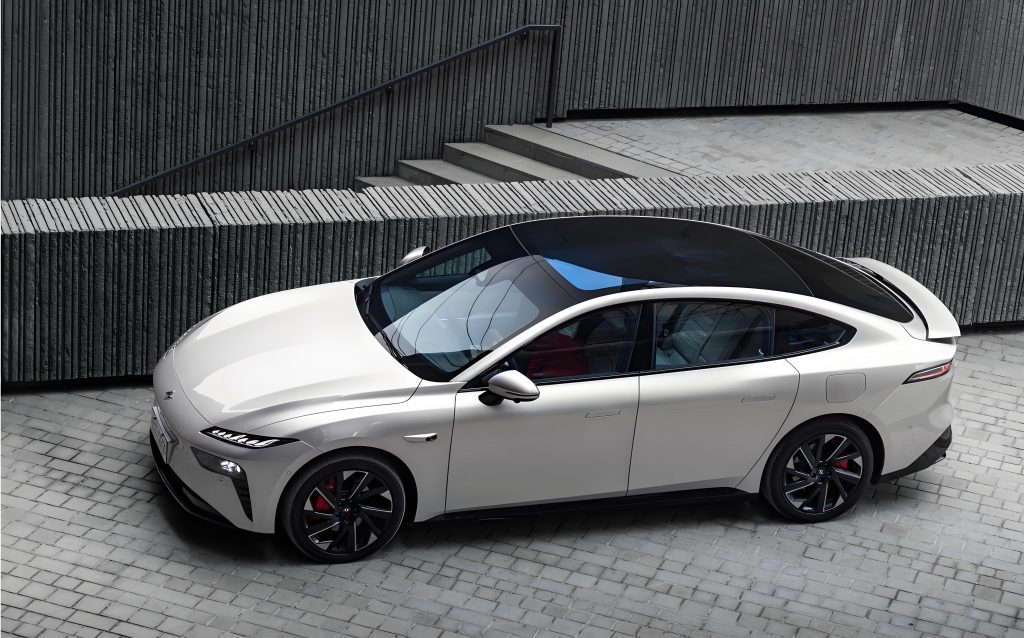
In conclusion, the pursuit of a quieter electric car is a complex but rewarding endeavor. From my perspective, the integration of source reduction, active and passive controls, and continuous innovation will define the next generation of electric cars. As electric cars become ubiquitous, their acoustic signature will significantly influence user satisfaction and environmental harmony. By addressing noise sources comprehensively and employing cutting-edge technologies, we can ensure that electric cars deliver not only zero emissions but also superior acoustic comfort, making every journey a peaceful experience. The evolution of electric car noise control is ongoing, and I am confident that future advancements will further elevate the serene driving experience that electric cars promise.
To reinforce the technical aspects, let me add a few more formulas and considerations. The overall sound pressure level inside an electric car cabin can be modeled as a sum of contributions from various sources. If each source \(i\) contributes a sound pressure \(p_i\), the total mean square pressure is:
$$\langle p_{\text{total}}^2 \rangle = \sum_i \langle p_i^2 \rangle$$
assuming incoherent sources. In decibels, the overall SPL is:
$$L_{\text{total}} = 10 \log_{10}\left( \sum_i 10^{L_i/10} \right)$$
where \(L_i\) are the individual SPLs. This additive nature underscores why multiple noise sources in electric cars must be addressed collectively. For active noise control, the optimal filter coefficients can be derived using the least mean squares (LMS) algorithm, updating weights \(w\) to minimize the error signal \(e(n)\):
$$w(n+1) = w(n) + \mu \cdot e(n) \cdot x(n)$$
where \(\mu\) is the step size and \(x(n)\) the reference signal. Such algorithms are embedded in ANC systems for electric cars.
Furthermore, the transmission of structure-borne noise in electric cars can be analyzed using mobility or impedance methods. The velocity response \(v\) at a point due to a force input \(F\) is given by:
$$v = Y \cdot F$$
where \(Y\) is the mobility. Isolators are designed to have high impedance at certain frequencies to block vibration. For example, a rubber mount’s stiffness \(k\) and damping \(c\) affect the transmissibility \(T\):
$$T = \frac{\sqrt{1 + (2\zeta r)^2}}{\sqrt{(1-r^2)^2 + (2\zeta r)^2}}$$
with \(r = \omega / \omega_n\), \(\omega_n = \sqrt{k/m}\), and \(\zeta = c / (2\sqrt{km})\). Optimizing these parameters is crucial for mounting electric motors and batteries in electric cars.
In summary, the acoustic design of electric cars is a rich field requiring deep engineering insight. As electric cars continue to evolve, so will the methods to hush them, ensuring that the silence of electric propulsion is matched by a serene cabin environment. I look forward to contributing to these advancements and witnessing the continued refinement of electric car noise control technologies.