
As I delve into the dynamics of China’s electric vehicle car industry, it is evident that the battery swap model has emerged as a pivotal solution to address critical challenges in energy replenishment. With the rapid proliferation of electric vehicle cars, the need for efficient and cost-effective charging infrastructure has become paramount. The battery swap approach, characterized by its ability to complete energy replenishment within three to five minutes and reduce upfront costs through battery separation, is transitioning from a debated technical route to a strategically supported paradigm. In this article, I will comprehensively analyze the industrial policy landscape for electric vehicle car battery swapping in China, tracing its evolution, examining current implementations, and projecting future trends. The focus will be on how policies have shaped the development of the electric vehicle car sector, with particular emphasis on the battery swap model as a key enabler for widespread adoption.
The growth of the electric vehicle car market in China has been staggering. By the end of 2024, the fleet of new energy vehicles, predominantly electric vehicle cars, had surpassed 31.4 million units. This surge has intensified the focus on complementing energy efficiency and cost, where the battery swap model offers a compelling alternative to conventional charging. Initially met with skepticism due to technical and economic hurdles, battery swapping for electric vehicle cars has gained momentum through targeted policy interventions. These policies have evolved from early explorations to large-scale pilots and, ultimately, to ecosystem-building initiatives. I will explore this journey in detail, highlighting the role of government directives in fostering innovation and deployment for electric vehicle cars.
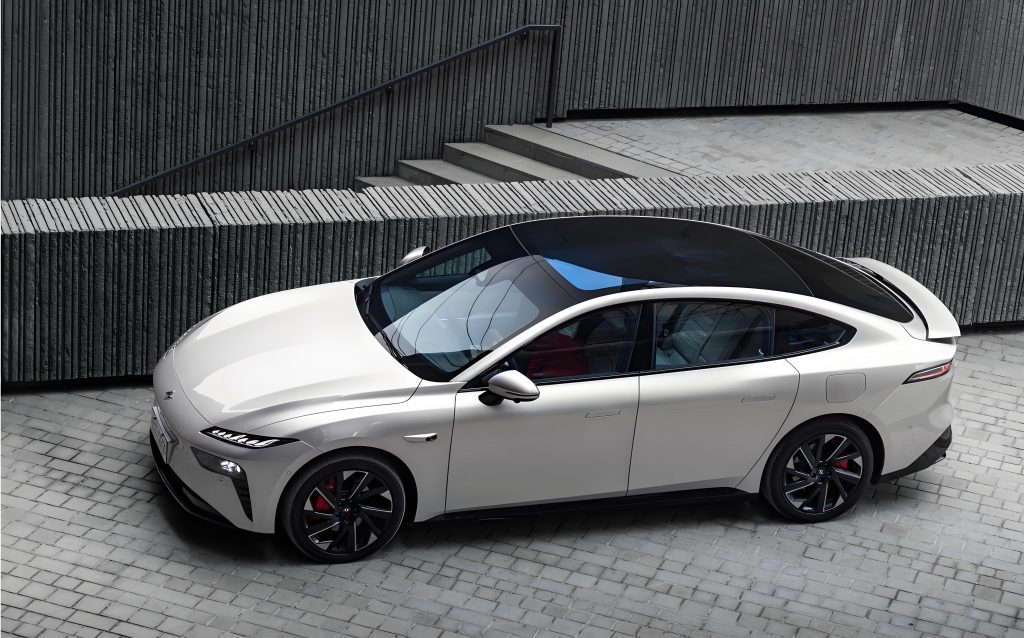
To understand the policy framework, it is essential to recognize the phased approach adopted by Chinese authorities. The industrial policy for electric vehicle car battery swapping can be segmented into distinct periods, each marked by specific goals and instruments. Below is a table summarizing these phases, which I have constructed based on an analysis of numerous policy documents and industry reports. This table encapsulates the strategic shifts that have propelled the electric vehicle car battery swap model forward.
| Phase | Time Frame | Key Policy Focus | Impact on Electric Vehicle Car Adoption |
|---|---|---|---|
| Exploration Period | Before 2020 | Encouraging technical exploration and initial trials; battery swap included in encouraged categories. | Limited application, primarily in niche segments like public transport; electric vehicle car sales driven more by charging infrastructure. |
| Pilot and Validation Period | 2021–2024 | Launch of city-level and public domain pilot programs; establishment of safety standards. | Rapid expansion of swap stations; increased confidence in electric vehicle car battery swap as a viable option. |
| Scale-up and Ecosystem Building | 2024 onwards | Nationwide promotion, including rural area initiatives; emphasis on standardization and energy integration. | Broader accessibility for electric vehicle car users; integration with smart grid and renewable energy systems. |
The policy content for electric vehicle car battery swapping is multifaceted, encompassing pilot projects, financial incentives, and industrial collaboration. One of the core strategies has been the layered advancement of pilot programs. These initiatives target different scenarios, from urban centers to public fleets and rural counties. For instance, the “百县千站万桩” (Hundred Counties, Thousand Stations, Ten Thousand Piles) program aims to address infrastructure gaps in rural areas, ensuring that electric vehicle car owners in these regions have access to reliable battery swap services. This is crucial for promoting the electric vehicle car market beyond metropolitan hubs.
Financial and tax policies have been instrumental in reducing barriers for electric vehicle car battery swap deployment. Central and local governments have introduced subsidies, rewards, and optimized electricity pricing mechanisms. To illustrate the financial incentives, consider the following formula that models the total cost savings for an electric vehicle car user adopting battery swap:
$$S_{user} = P_{vehicle} – (C_{battery} + \sum_{t=1}^{T} \frac{F_{swap}(t)}{(1 + r)^t})$$
Here, \(S_{user}\) represents the net savings for the electric vehicle car owner, \(P_{vehicle}\) is the purchase price without battery, \(C_{battery}\) is the cost of battery leasing, \(F_{swap}(t)\) denotes the swap fee at time \(t\), and \(r\) is the discount rate. This formula underscores how policy-driven cost reductions, such as battery separation, lower the upfront investment for electric vehicle cars, accelerating market penetration.
Moreover, the collaborative innovation across the electric vehicle car battery swap ecosystem cannot be overstated. Policies encourage vertical integration, such as combining refueling stations with swap facilities, and horizontal alliances among automakers. A notable example is the formation of battery swap alliances, where multiple electric vehicle car manufacturers cooperate to build shared networks. This synergy enhances the scalability and interoperability of swap stations, benefiting a wider range of electric vehicle car models. The table below outlines key collaborative mechanisms observed in the electric vehicle car battery swap sector.
| Collaboration Type | Description | Policy Support | Impact on Electric Vehicle Car Industry |
|---|---|---|---|
| Vertical Integration | Integration of swap stations with energy hubs (e.g., gas stations adding swap points). | Guidelines promoting comprehensive energy service stations. | Increased convenience for electric vehicle car users; optimized land use. |
| Horizontal Alliance | Automakers partnering to standardize and share swap infrastructure. | Encouragement of joint operations and platform sharing. | Reduced costs and enhanced network coverage for electric vehicle cars. |
| Cross-sector Synergy | Collaboration between energy companies, grid operators, and automakers. | Policies advocating vehicle-grid integration (V2G) and smart charging. | Improved grid stability and energy efficiency for electric vehicle car charging. |
Analyzing the policy objectives, I find that they are primarily geared towards overcoming energy replenishment bottlenecks, lowering acquisition costs, and fostering standardization. For electric vehicle cars, the battery swap model directly addresses “range anxiety” by offering swift battery exchanges, a critical factor for consumer acceptance. Policies explicitly target this by supporting research into high-power swap technologies and incentivizing the deployment of swap stations. The goal is to create a seamless energy network that supports the massive adoption of electric vehicle cars.
Standardization is another pivotal aim. The fragmentation in battery specifications and swap interfaces has historically hindered the growth of electric vehicle car battery swapping. In response, policies have prioritized the development of national standards. For example, the release of safety requirements and technical specifications for battery swap stations has provided a regulatory foundation. The progress in standardization can be quantified using an index of compatibility, which I express as:
$$C_{index} = \frac{N_{compatible}}{N_{total}} \times 100\%$$
Here, \(C_{index}\) is the compatibility index for electric vehicle car battery swap systems, \(N_{compatible}\) denotes the number of vehicle models compatible with a standardized swap interface, and \(N_{total}\) is the total number of electric vehicle car models in the market. As policies drive \(C_{index}\) higher, the efficiency and appeal of battery swap for electric vehicle cars increase correspondingly.
The evolution of electric vehicle car battery swap policies exhibits distinct characteristics. First, the stage-wise progression ensures that lessons from early pilots inform subsequent scaling. Second, there is a balance between standardization and market-driven innovation; policies set safety and interoperability benchmarks while allowing enterprises to compete and innovate in service delivery for electric vehicle cars. Third, central-local policy synergy enables tailored implementations. For instance, while national guidelines outline broad directions, local governments adapt them to regional needs, such as focusing on electric vehicle car taxi fleets in cities or agricultural vehicle swaps in rural areas.
Looking ahead, I anticipate several trends in the policy landscape for electric vehicle car battery swapping. Standardization will remain a core focus, with policies likely to mandate multi-brand compatibility for swap stations. This will break down barriers and create a unified ecosystem for all electric vehicle car users. Additionally, policies may incentivize the transformation of swap stations into energy nodes. With vehicle-to-grid (V2G) technology, these stations could store and redistribute electricity, enhancing grid resilience. The potential energy contribution of an electric vehicle car battery swap station can be modeled as:
$$E_{station} = \sum_{i=1}^{n} B_{i} \times \eta_{V2G} \times t_{dispatch}$$
Where \(E_{station}\) is the total energy dispatched by the station, \(B_{i}\) is the capacity of the i-th battery in storage, \(\eta_{V2G}\) is the V2G efficiency, and \(t_{dispatch}\) is the dispatch duration. Such integrations will elevate the role of swap stations beyond mere service points for electric vehicle cars.
Furthermore, urban-rural differentiation in policy is inevitable. Given the disparities in infrastructure and demand, policies for electric vehicle car battery swapping will likely be customized. Urban areas might see policies promoting high-density swap networks and integration with public transport, while rural policies could emphasize decentralized, solar-powered swap stations to overcome grid limitations. This tailored approach ensures that the benefits of electric vehicle cars reach all demographics.
To encapsulate the growth trajectory of swap stations for electric vehicle cars, consider the following formula for the number of stations over time:
$$N(t) = N_0 \times e^{kt} + \alpha P_{policy}(t)$$
In this equation, \(N(t)\) represents the number of battery swap stations at time \(t\), \(N_0\) is the initial count, \(k\) is the natural growth rate driven by market forces, and \(\alpha P_{policy}(t)\) captures the additive effect of policy interventions, with \(\alpha\) as a policy efficacy coefficient. This model highlights how proactive policies amplify the deployment of swap infrastructure for electric vehicle cars.
In conclusion, the industrial policy for electric vehicle car battery swapping in China has undergone a remarkable transformation. From tentative beginnings, it has matured into a structured framework that promotes innovation, collaboration, and scalability. The future will likely see even greater emphasis on standardization, energy integration, and equitable access. As policies continue to evolve, the battery swap model is poised to play a crucial role in the sustainable mobility ecosystem, making electric vehicle cars more accessible and practical for millions of users. The journey of electric vehicle car battery swap policy exemplifies how strategic governance can catalyze technological advancement and market growth in the pursuit of a greener transportation future.