
As the global community intensifies efforts to combat climate change and transition to sustainable energy systems, the adoption of battery electric cars has emerged as a critical pathway toward decarbonizing the transportation sector. In this study, I explore the evolving landscape of electric vehicle (EV) charging standards and infrastructure within the Association of Southeast Asian Nations (ASEAN), with a focus on the interplay between regional diversification and the global expansion of China’s new energy vehicle (NEV) industry. The proliferation of battery electric cars is heavily reliant on accessible, efficient, and interoperable charging networks, yet ASEAN exhibits a fragmented approach to charging standards, influenced by varied policy frameworks, market dynamics, and historical alliances. This fragmentation poses significant challenges for the seamless integration of battery electric cars, particularly those adhering to China’s GB/T standards, into ASEAN markets. Through a detailed examination of national practices, infrastructure gaps, and collaborative potentials, I aim to outline actionable strategies for harmonizing standards and co-developing charging ecosystems, thereby fostering regional green mobility and supporting the global rollout of battery electric cars.
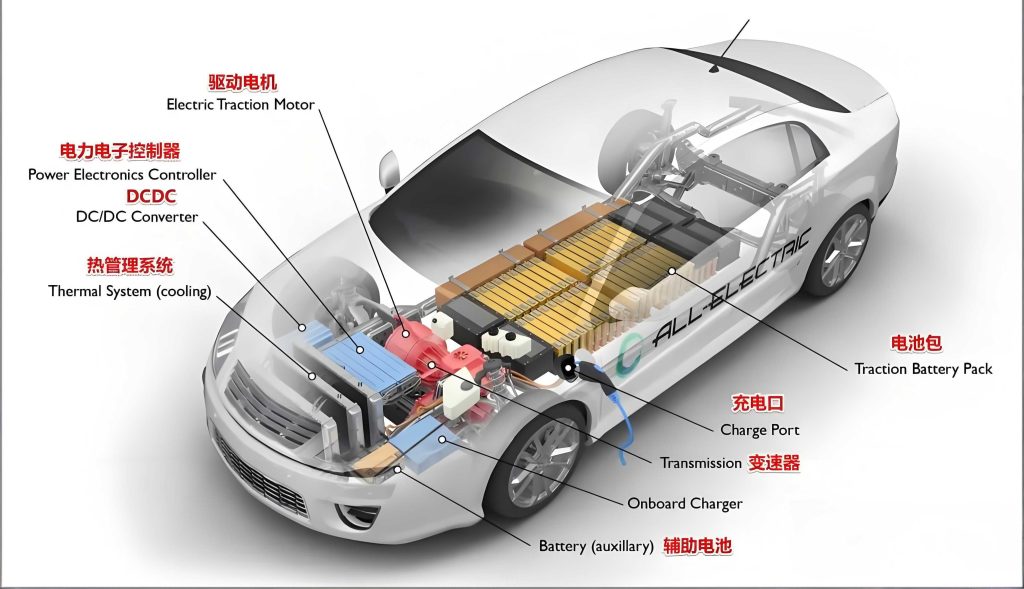
The global market for battery electric cars has transitioned from a nascent phase to one of rapid,规模化 growth. Projections indicate that worldwide sales of battery electric cars will exceed 20 million units by 2025, with a year-on-year increase of 35% observed in the first quarter of 2025 alone. China, as the largest market for battery electric cars, achieved production and sales volumes surpassing 12 million units in 2024, capturing over 40% of the global market share. The cumulative stock of battery electric cars in China has exceeded 30 million, with pure battery electric cars comprising more than 70% of this total. This dominance is underpinned by a robust industrial ecosystem encompassing battery technology, vehicle manufacturing, smart applications, and the world’s most extensive charging infrastructure network. By May 2025, China had deployed over 14.4 million charging points, validating the technical maturity, safety, and applicability of its charging standards. These standards, such as the GB/T 20234 series for connectors, GB/T 27930 series for communication protocols, and GB/T 18487 series for charging systems, have been updated to support high-power charging, with the 2023 editions enabling voltages up to 1,500 V and currents up to 800 A. The evolution of these standards is encapsulated in China’s comprehensive EV standard system, which integrates charging infrastructure as a core component. To illustrate the technical parameters, I present a comparison of mainstream global charging standards for battery electric cars, highlighting key differences in power capabilities and regional adoption.
| Charging Type | Technical Parameter | Chinese Standard (GB/T) | European Standard (CCS Combo 2) | Japanese Standard (CHAdeMO) | North American Standard (CCS Combo 1 / J1772) |
|---|---|---|---|---|---|
| DC Charging | Core Standard | GB/T 20234.3—2023, GB/T 27930.2—2024 | IEC 62196-3 Config. FF | CHAdeMO 3.0 | IEC 62196-3 Config. EE |
| Rated Voltage / Current | DC 1,500 V / 800 A | DC 1,000 V / 500 A | DC 1,000 V / 600 A | DC 1,000 V / 500 A | |
| Maximum Theoretical Power | 1,200 kW | 500 kW | 600 kW | 500 kW | |
| Communication Protocol | GB/T 27930 (CAN bus) | ISO 15118 (PLC) | CHAdeMO Protocol (CAN bus) | ISO 15118 (PLC) | |
| Primary Application Regions | China | EU, UK, Australia, parts of ASEAN | Japan, parts of ASEAN | USA, Canada | |
| AC Charging | Core Standard | GB/T 20234.2—2015 | IEC 62196-2 Type 2 (Mennekes) | Typically compatible with IEC standards | SAE J1772 (Type 1) |
| Interface Type | GB/T AC (IEC 62196-2 Type 4) | IEC Type 2 (Mennekes) | IEC Type 1 or Type 2 | Type 1 (J1772) | |
| Rated Voltage / Current | AC 250 V / 32 A (single-phase), AC 440 V / 63 A (three-phase) | AC 230 V / 32 A (single-phase), AC 400 V / 63 A (three-phase) | AC 230 V / 32 A (single-phase) | AC 120/240 V / 80 A (single-phase) | |
| Maximum Theoretical Power | 43 kW (three-phase) | 43 kW (three-phase) | 7.4 kW (single-phase) | 19.2 kW (single-phase) | |
| Primary Application Regions | China | EU, UK, parts of ASEAN | Japan, North America | USA, Canada, Japan |
The power output for DC charging can be expressed using the formula for electrical power: $$ P = V \times I $$ where \( P \) is power in kilowatts (kW), \( V \) is voltage in volts (V), and \( I \) is current in amperes (A). For instance, the Chinese GB/T standard supports a maximum power of: $$ P_{\text{max, GB/T}} = 1500 \, \text{V} \times 800 \, \text{A} = 1,200,000 \, \text{W} = 1,200 \, \text{kW} $$ This high-power capability facilitates rapid charging for battery electric cars, reducing downtime and enhancing user convenience. In contrast, the European CCS2 standard offers: $$ P_{\text{max, CCS2}} = 1000 \, \text{V} \times 500 \, \text{A} = 500,000 \, \text{W} = 500 \, \text{kW} $$ Such disparities underscore the technological advancements embedded in Chinese standards, which could benefit ASEAN regions seeking to deploy future-proof charging infrastructure for battery electric cars.
ASEAN represents a pivotal market for battery electric cars, driven by economic growth, urbanization, and governmental commitments to electrification. Countries like Thailand, Indonesia, and Singapore have implemented policies to promote battery electric cars, such as Thailand’s “30/30” target (30% EV production by 2030) and Indonesia’s leveraging of nickel resources for battery manufacturing. From 2020 to 2023, ASEAN’s NEV sales surged from under 10,000 units to 155,000 units, reflecting a compound annual growth rate of 169%. However, the region lacks a unified charging standard, resulting in a fragmented landscape that complicates the adoption of battery electric cars. Based on my analysis, I categorize ASEAN charging standard approaches into three representative models: policy-driven (Indonesia), market-driven (Thailand), and certification-focused (Singapore). Each model influences the accessibility and interoperability of charging networks for battery electric cars. The following table summarizes the current application status in key ASEAN nations.
| Country | Charging Standard Application Status |
|---|---|
| Indonesia | Mandatory regulations (e.g., Ministry of Energy and Mineral Resources Regulation No. 1/2023) require public DC chargers to adopt European (CCS2) or Japanese (CHAdeMO) standards; national standards (SNI) largely等同 adopt IEC standards, excluding Chinese GB/T. |
| Thailand | No mandatory regulations; market practice favors CCS2 and AC Type 2, with CHAdeMO declining; national standards (TIS 61851 series) align with IEC but are not enforced, creating a de facto CCS2 ecosystem. |
| Singapore | Stringent technical benchmarks (TR25:2022) mandate public charging stations to use CCS2 or CHAdeMO DC interfaces; all chargers require mandatory type approval from the Land Transport Authority (LTA) via certification. |
| Malaysia | Guidelines permit only European and Japanese standard interfaces for EV charging systems. |
| Philippines | Certification guidelines mandate European standard interfaces, with others allowed if compliant. |
| Vietnam | Framework regulations accept four DC charging interface schemes (Chinese, American, European, Japanese), offering more flexibility. |
This fragmentation directly impacts the deployment of battery electric cars in ASEAN. For example, in Indonesia, Chinese-brand battery electric cars, which hold over 90% market share in the NEV segment, cannot use public DC fast-charging networks due to standard incompatibility. This necessitates costly adaptations, such as vehicle modifications or private charging infrastructure, hindering the scalability of battery electric cars. The infrastructure gap further exacerbates these challenges. ASEAN’s charging infrastructure is in its infancy, characterized by insufficient total numbers, low proportions of fast chargers, and uneven distribution. The vehicle-to-charger ratio, a key metric for battery electric car adoption, can be calculated as: $$ \text{Vehicle-to-Charger Ratio} = \frac{N_{\text{vehicles}}}{N_{\text{chargers}}} $$ where \( N_{\text{vehicles}} \) is the number of battery electric cars and \( N_{\text{chargers}} \) is the number of charging points. In ASEAN, this ratio is significantly higher than in China, indicating a scarcity of chargers. For instance, Indonesia had only 3,738 charging points (public and private) as of March 2025, while Thailand hosted around 12,000 public chargers. Singapore, though dense with over 24,000 charging points, relies predominantly on slow AC chargers. The lack of high-power DC fast chargers, especially along highways and in rural areas, limits the practicality of battery electric cars for long-distance travel and commercial use. This infrastructure deficit, coupled with standard mismatches, creates operational hurdles for Chinese automakers expanding in ASEAN, who must invest in dual-standard solutions or localized adaptations for their battery electric cars.
Despite these challenges, I find strong feasibility for cooperation between China and ASEAN in harmonizing charging standards and co-developing infrastructure for battery electric cars. The feasibility spans technical, economic, and policy dimensions, each offering mutual benefits. Technically, China’s GB/T standards are mature and advanced, with recent updates supporting high-power charging up to 1,200 kW. The communication protocols, such as GB/T 27930 using CAN bus, provide robustness against interference compared to PLC-based systems in CCS2. This technical edge can help ASEAN countries deploy reliable and scalable charging networks for battery electric cars. The cost advantage is notable; Chinese DC fast-charging equipment is approximately 15% cheaper than European equivalents, reducing capital expenditure. Economically, China’s extensive NEV产业链 and manufacturing scale enable efficient infrastructure deployment. Chinese automakers, like BYD and SAIC-GM-Wuling, have established local production bases in ASEAN, creating synergies for charging infrastructure rollout. Joint projects could leverage China’s expertise in building large-scale charging networks, as evidenced by its 14.4 million charging points. Policy-wise, existing frameworks like the ASEAN-China Free Trade Area (ACFTA) and the Belt and Road Initiative provide platforms for dialogue and collaboration. By aligning charging infrastructure projects with ASEAN’s Master Plan on ASEAN Connectivity 2025, both sides can integrate funding from multilateral institutions like the Asian Infrastructure Investment Bank (AIIB). The feasibility can be quantified through a cost-benefit analysis. For example, the total cost of ownership (TCO) for deploying charging stations can be modeled as: $$ \text{TCO} = C_{\text{cap}} + \sum_{t=1}^{n} \frac{C_{\text{op}, t} + C_{\text{main}, t}}{(1 + r)^t} $$ where \( C_{\text{cap}} \) is capital cost, \( C_{\text{op}, t} \) is operational cost in year \( t \), \( C_{\text{main}, t} \) is maintenance cost, \( r \) is the discount rate, and \( n \) is the project lifespan. Chinese standards may lower \( C_{\text{cap}} \) due to cost-effective equipment, while technical reliability reduces \( C_{\text{main}, t} \), enhancing the TCO for ASEAN stakeholders focused on battery electric cars.
To materialize this cooperation, I propose a multi-tiered implementation framework centered on mechanism building, technical synergy, and corporate实践. First, establishing coordinated mechanisms and policy alignment is crucial. I recommend forming a “China-ASEAN NEV and Charging Infrastructure Cooperation Working Group” under existing platforms like ACFTA. This group would facilitate strategic dialogues on standard mutual recognition and infrastructure planning, addressing the fragmentation in battery electric car charging. Policies should encourage inclusive standard approaches, allowing multiple standards to coexist initially, with phased integration toward GB/T and IEC compatibility. Financial support should be mobilized by incorporating charging networks into Belt and Road projects, using funds from AIIB or the Silk Road Fund for cross-border charging corridors dedicated to battery electric cars. Second, deepening technical exchanges and joint R&D between standard organizations is essential. Regular workshops and training sessions can disseminate knowledge on GB/T standards, building trust in their application for battery electric cars. Collaborative pre-research on下一代 technologies, such as兆瓦级充电 (MCS) and vehicle-to-grid (V2G), can be pursued. For instance, MCS for heavy-duty battery electric cars could be explored using power scaling models: $$ P_{\text{MCS}} = V_{\text{high}} \times I_{\text{high}} $$ where \( V_{\text{high}} \) and \( I_{\text{high}} \) exceed 1,500 V and 800 A, respectively. Joint demonstrations in ASEAN can validate these technologies, positioning the region as a leader in advanced charging for battery electric cars. Third, guiding企业多维协同 and localization is key to market success. I suggest fostering industry alliances among Chinese charging operators, automakers, and power companies to invest in integrated EV industrial parks in ASEAN, combining charging services, battery recycling, and local production for battery electric cars. Business models like joint ventures or “technology + operation” service exports can enhance local engagement. Pilot projects should be launched in priority countries to demonstrate effectiveness. For example, a GB/T standard charging corridor in Indonesia or multi-standard ultra-fast charging stations along Thai tourist routes can showcase the viability of Chinese solutions for battery electric cars. These efforts should be underpinned by本地化运营, including workforce training and community engagement, to ensure sustainable adoption.
In conclusion, the alignment of charging standards and co-development of infrastructure between China and ASEAN present a significant opportunity to accelerate the adoption of battery electric cars in the region. My analysis reveals that standard diversification and infrastructure shortages are immediate challenges, but the technical, economic, and policy feasibilities for cooperation are robust. By implementing a coordinated approach involving governmental mechanisms, technical collaboration, and corporate initiatives, both sides can overcome barriers and build interoperable, efficient charging networks for battery electric cars. This collaboration will not only support China’s global NEV expansion but also propel ASEAN’s green transport transition, contributing to sustainable development goals. The future outlook envisions a smart, region-wide charging ecosystem that accommodates diverse standards while leveraging Chinese advancements, ultimately fostering a cleaner, more connected mobility landscape for battery electric cars across Southeast Asia.
To further quantify infrastructure needs, I introduce a formula for estimating the required number of chargers based on battery electric car penetration: $$ N_{\text{chargers, required}} = \frac{N_{\text{vehicles}} \times \alpha}{\beta} $$ where \( \alpha \) is the average daily charging frequency per battery electric car, and \( \beta \) is the utilization rate of chargers. For ASEAN, assuming \( N_{\text{vehicles}} = 500,000 \) battery electric cars by 2030, \( \alpha = 0.3 \) charges per day, and \( \beta = 0.6 \), the required chargers would be: $$ N_{\text{chargers, required}} = \frac{500,000 \times 0.3}{0.6} = 250,000 $$ This highlights the scale of investment needed, which can be mitigated through Sino-ASEAN cooperation. Additionally, the energy demand for charging battery electric cars can be expressed as: $$ E_{\text{daily}} = N_{\text{vehicles}} \times \text{SoC} \times C_{\text{battery}} $$ where \( E_{\text{daily}} \) is daily energy consumption in kWh, SoC is the average state of charge replenished, and \( C_{\text{battery}} \) is the average battery capacity in kWh. For a fleet of 500,000 battery electric cars with \( \text{SoC} = 0.5 \) and \( C_{\text{battery}} = 60 \) kWh, the daily energy demand is: $$ E_{\text{daily}} = 500,000 \times 0.5 \times 60 = 15,000,000 \, \text{kWh} $$ This underscores the importance of integrating charging infrastructure with renewable energy sources to ensure sustainability. Through continued dialogue and joint efforts, China and ASEAN can pave the way for a harmonized charging standard framework that supports the exponential growth of battery electric cars, driving regional prosperity and environmental stewardship.