
The global transportation landscape is undergoing a seismic shift, and at the heart of this transformation is the proliferation of the electric vehicle car. As a critical observer and analyst of this sector, I have witnessed firsthand how infrastructure dictates adoption. The narrative is no longer solely about the vehicles themselves but about the invisible grid that powers them. Today, I want to dissect a monumental achievement: the development of China’s electric vehicle charging infrastructure, a network that now stands as the largest and most dynamic in the world.
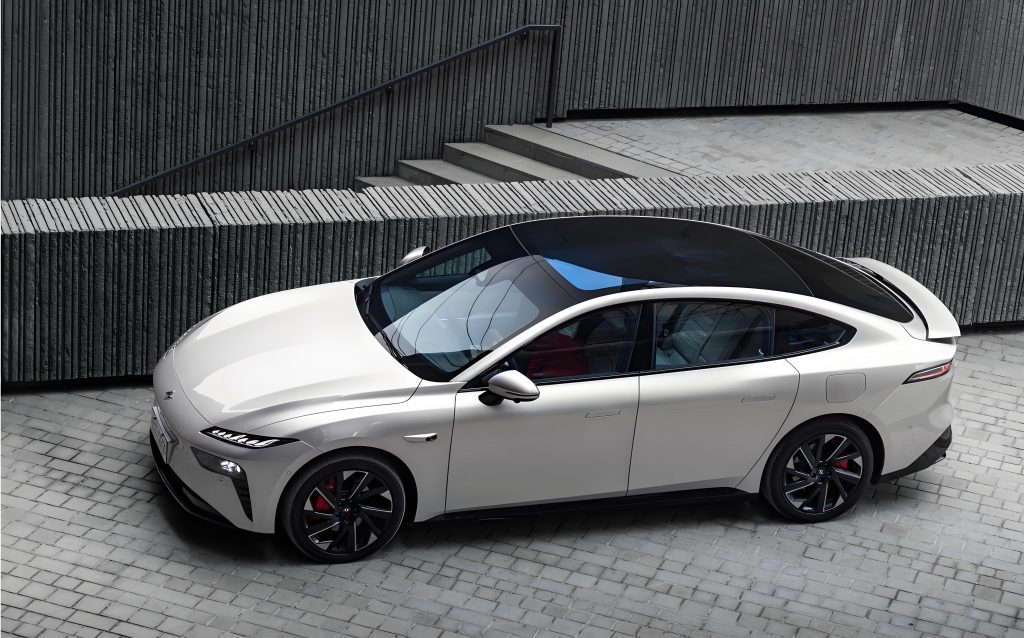
The scale is staggering. As of the end of the third quarter, the total number of charging points, or “charging guns,” in China has surpassed 18 million. This figure represents more than just hardware; it symbolizes a foundational commitment to supporting the millions of electric vehicle car owners across the nation. To put this into perspective, the current ratio stands at approximately one charging point for every 2.5 electric vehicles. This density is a crucial metric, directly combating the pervasive “range anxiety” that once plagued early adopters of the electric vehicle car.
Let’s break down this aggregate number to understand its composition, as the structure reveals the strategy behind the growth.
| Charging Infrastructure Category | Quantity (Millions) | Year-on-Year Growth | Key Power Metric |
|---|---|---|---|
| Public Charging Points | 4.476 | +40% | Total Rated Power: 199 GW |
| Private Charging Points | 13.587 | +60% | Reported Capacity: 120 GVA |
| Total Infrastructure | 18.063 | +54.5% | N/A |
The data highlights a fascinating dual-track development. The private charging network, growing at 60%, is the silent backbone. It represents the convenience factor for the electric vehicle car owner who can recharge at home, analogous to charging a smartphone overnight. The average power of public chargers, calculated from the total rated power, is a critical performance indicator:
$$
\text{Average Public Charger Power} = \frac{\text{Total Rated Power}}{\text{Number of Public Chargers}} = \frac{1.99 \times 10^9 \text{ kW}}{4.476 \times 10^6} \approx 44.36 \text{ kW}
$$
This ~44 kW average signifies a mature mix of infrastructure, incorporating a significant portion of DC fast chargers alongside widespread AC slow chargers. This blend is essential for serving different needs, from quick top-ups on highways to prolonged parking at shopping centers.
The Strategic Imperative: From Build-Out to Optimization
Building 18 million charging points is an engineering and logistical marvel, but the strategy does not stop at quantity. The recent “Three-Year Doubling” action plan for charging service capacity (2025-2027) outlines an ambitious, targeted roadmap. The core objective is to move beyond mere point counts to a holistic measure of service capability. The plan aims for 28 million charging points by end-2027, supporting over 80 million electric vehicle car units.
This leap forward can be modeled as a service capacity growth function. Let’s define key variables:
- $C_{2024}$: Current service capacity (a function of charger count, power, and network efficiency).
- $G$: The annual growth factor of the electric vehicle car fleet.
- $T$: The target multiplier for service capacity (a “doubling” implies strategic over-provisioning).
The required infrastructure investment $I(t)$ over time $t$ can be seen as a function aimed at closing the gap between demand growth and existing capacity:
$$
I(t) \propto \int \left( \frac{d(\text{EV Fleet})}{dt} \cdot \eta – C_{\text{existing}}(t) \right) dt
$$
where $\eta$ represents the average energy requirement per electric vehicle car. The action plan effectively sets $C_{2027} = T \times C_{2024}$, with $T$ significantly greater than 2 when considering the targeted public charging capacity exceeding 300 GW.
The economic implications are profound. The implementation of this plan is projected to drive over 200 billion yuan in manufacturing and construction investment. This investment cycle creates a powerful virtuous loop: infrastructure spending stimulates industrial growth, which lowers costs for electric vehicle car components, further accelerating adoption and necessitating more infrastructure. This relationship can be simplified as:
$$
\text{Adoption Rate}(t) = f(\text{Infrastructure Density}(t), \text{Vehicle Cost}(t))
$$
$$
\text{Infrastructure Investment}(t) = g(\text{Adoption Rate}(t), \text{Policy Target}(t))
$$
where $f$ and $g$ are positive correlation functions.
Beyond the Numbers: Geographic and Technological Evolution
A national aggregate, while impressive, masks important regional variations and technological trends. The next phase of growth will focus on geographic balance, ensuring that the benefits of the electric vehicle car revolution are not confined to first-tier cities. Furthermore, the technology within each charging point is rapidly evolving.
| Region Type | Current Point Density (Points per 100 km²) | 2027 Target Density | Expected Fast-Charger (>60kW) Penetration |
|---|---|---|---|
| Coastal Megacities | High (>500) | Ultra-High, focus on power upgrade | > 40% |
| Inland Provincial Capitals | Medium (100-500) | High | 30-40% |
| National Highway Corridors | Strategic Nodes | Comprehensive Coverage | > 80% |
| Rural & County Areas | Low (<100) | Medium, focused on public hubs | 20-30% |
The evolution of charging technology is central to improving the user experience for every electric vehicle car driver. Key trends include:
- Ultra-Fast Charging: The push towards 200-400 kW chargers will make recharging times comparable to refueling for a growing segment of the electric vehicle car market, fundamentally altering long-distance travel.
- Vehicle-to-Grid (V2G) Integration: The future electric vehicle car will be more than a consumer of electricity; it will be a mobile storage unit. The private charging pile network, with its reported 120 GVA capacity, represents a massive, distributed potential energy asset. The value of this aggregated capacity, $V_{agg}$, can be conceptualized as:
$$
V_{agg} = \sum_{i=1}^{N} (P_i \cdot t_i \cdot r_{grid})
$$
where $P_i$ is the power capacity of charger $i$, $t_i$ is its available grid-service time, and $r_{grid}$ is the value rate for grid services (frequency regulation, peak shaving). - Smart Charging & Grid Management: Artificial intelligence and IoT are enabling dynamic load management across charging networks. This prevents grid overload and optimizes for renewable energy consumption, making the entire electric vehicle car ecosystem greener.
The Road Ahead: Challenges and Global Implications
While the progress is extraordinary, the path forward is not without obstacles. The primary challenge shifts from building quantity to ensuring quality, reliability, and seamless interoperability. A driver of any electric vehicle car brand should be able to access any public charger with ease, through simplified payment and authentication systems. Furthermore, grid reinforcement must keep pace, especially in areas experiencing explosive growth in electric vehicle car density.
The global implications of China’s charging infrastructure build-out are significant. It provides a tangible, scalable model for other nations embarking on their own electrification journeys. The lessons learned—in terms of public-private partnership models, standard-setting, and phased rollout strategies—are invaluable. The sheer scale of manufacturing driven by this demand is also reducing global costs for charging equipment, benefiting the worldwide transition to the electric vehicle car.
In conclusion, the milestone of 18 million charging points is not an endpoint but a powerful launchpad. It is the physical manifestation of a national strategy that recognizes the electric vehicle car not as a niche product, but as the mainstream future of mobility. The synchronized push from both private and public sectors, backed by clear policy targets and significant investment, has created an ecosystem that is both expansive and deepening in sophistication. As the “Three-Year Doubling” action plan unfolds, the focus will increasingly be on intelligent power, ubiquitous access, and integration with the broader energy system. The story of the electric vehicle car in China is, fundamentally, a story of building the ground upon which it runs—and that ground is now more extensive and robust than anywhere else on Earth.