
In the context of the global push towards carbon neutrality, the battery electric vehicle industry has experienced explosive growth. Among various technological pathways, range-extended battery electric vehicles have emerged as a mainstream transitional solution due to their extended driving range. However, the composite energy system comprising an internal combustion engine, generator, and battery pack exhibits inherent multiphysics coupling characteristics, leading to significant multi-objective conflicts among fuel economy, emission performance, and battery health. Traditional rule-based control strategies often struggle to address dynamic demands under complex driving conditions. Most existing research focuses on steady-state efficiency optimization, lacking systematic solutions for critical issues such as dynamic adjustment of weight coefficients during transient processes and synergistic handling of multiple constraints. This results in engineering dilemmas where fuel economy and battery longevity cannot be simultaneously achieved. In this paper, I propose a multi-objective optimization strategy that integrates fuzzy control theory with an improved NSGA-II algorithm, aiming to resolve core problems like parameter sensitivity adjustment under dynamic conditions for battery electric vehicle range extenders.
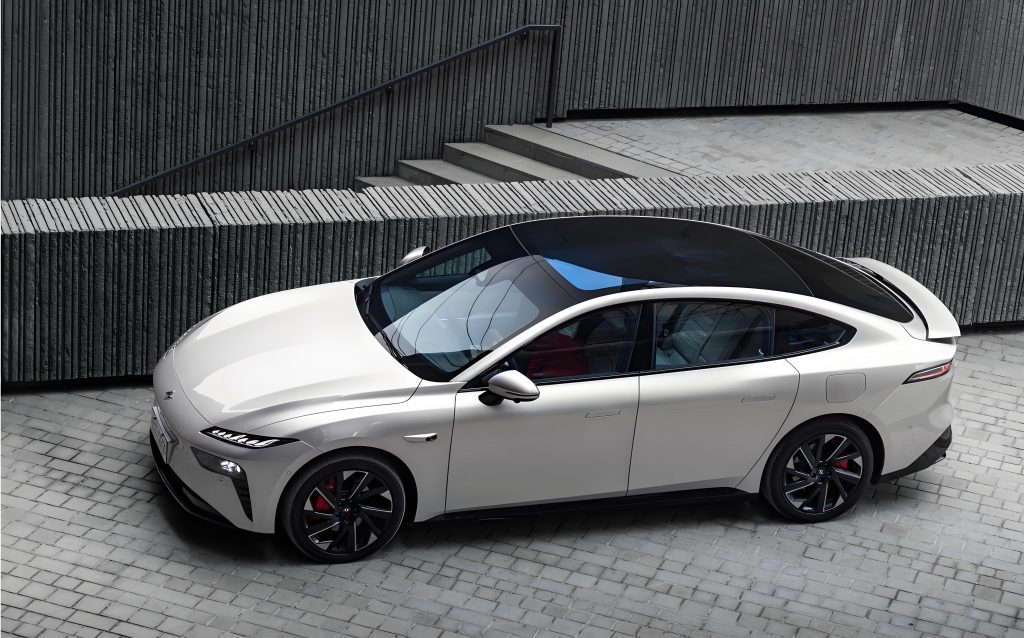
The range extender in a battery electric vehicle enables range extension through an internal combustion engine-generator-battery pack composite energy system. This system inherently involves trade-offs between fuel consumption, emissions, and battery degradation. The multi-objective optimization problem becomes particularly challenging under dynamic driving cycles, where energy allocation must balance conflicting goals. As battery electric vehicles evolve, improving the efficiency and sustainability of range extenders is crucial for reducing overall carbon footprint and enhancing vehicle performance. This paper delves into the key issues, proposes a novel control strategy, and validates it through simulation, contributing to the advancement of battery electric vehicle technologies.
Key Challenges in Multi-objective Optimization Control for Battery Electric Vehicle Range Extenders
Energy Allocation Conflicts Under Dynamic Driving Conditions
The energy allocation conflict in battery electric vehicle range extenders under dynamic conditions is a manifestation of the nonlinear game between fuel economy and battery lifespan. In urban congested driving cycles, frequent starts and stops cause the internal combustion engine to operate in low-efficiency regions for prolonged periods. While employing high-power discharge strategies to meet driving demands can reduce fuel consumption rates, it may trigger battery discharge rates above 0.15C, accelerating the剥离 of electrode active materials. Conversely, during highway cruising with sustained high loads, the internal combustion engine can operate near its optimal thermal efficiency, but constant power output from the generator forces the battery into a floating charge state, inducing capacity fade due to SEI膜 thickening.
This contradictory relationship can be quantified through an energy allocation model:
$$ J = \alpha \cdot \frac{F_v}{v} + \beta \cdot \Delta S_{\text{batt}} $$
where \( J \) is the comprehensive loss indicator, \( F_v \) is the fuel consumption per unit distance (g/km), \( v \) is the vehicle speed (km/h), and \( \alpha \) and \( \beta \) are weight coefficients for fuel economy and battery health, respectively. This model reveals that when the standard deviation of speed fluctuations exceeds 12 km/h, every 0.1 increase in \( \alpha \) leads to a 22% acceleration in the decay rate corresponding to \( \beta \), demonstrating a significant negative correlation between these optimization objectives.
Transient power demand scenarios further exacerbate this conflict. For instance, during hill climbing, an instantaneous surge in driving power of 45 kW triggers two response strategies: prioritizing battery discharge can stabilize the internal combustion engine speed within the high-efficiency zone but causes a rapid temperature rise in the battery; activating the range extender for dynamic compensation can limit battery temperature rise to within 3°C but increases fuel consumption rate by 17 g/kWh. This dilemma is fundamentally constrained by the physical characteristics of energy conversion devices—the response delay of the internal combustion engine and the hard constraints of battery charge-discharge rates.
To better illustrate the trade-offs, consider the following table summarizing the impacts of different energy allocation strategies in a battery electric vehicle range extender:
| Driving Scenario | Strategy | Fuel Economy Impact | Battery Health Impact |
|---|---|---|---|
| Urban Congestion | High-Power Discharge | Improvement: 8-12% | Degradation: Increased discharge rate >0.15C |
| Highway Cruising | Constant Power Output | Improvement: Engine at optimal efficiency | Degradation: SEI膜 thickening risk |
| Hill Climbing | Battery Priority | Neutral: Engine stabilized | Negative: Temperature rise >5°C |
| Hill Climbing | Range Extender Compensation | Negative: +17 g/kWh | Positive: Temperature rise <3°C |
These conflicts highlight the need for sophisticated control strategies in battery electric vehicle range extenders to dynamically balance objectives.
Difficulties in Dynamic Adjustment of Multi-objective Weight Coefficients
The core challenge in dynamic adjustment of multi-objective weight coefficients stems from the coupling effect between the time resolution of road condition recognition systems and the response bandwidth of controllers. The fusion positioning system composed of onboard GPS and inertial measurement units has a data refresh cycle limited to 0.5-1.2 seconds, while weight coefficient updates require real-time保障 at the 20-50 ms level. This time-scale discrepancy often leaves the system in a state of information lag. For example, when a vehicle transitions suddenly from flat road to continuous slopes, traditional rule-based control strategies fail to promptly obtain the rate of gradient change, causing the fuel economy weight coefficient to remain at a high value of 0.65, whereas it should quickly decrease to 0.38 to prioritize power demand.
The introduction of fuzzy control algorithms provides a theoretical framework to address this problem. Its core lies in establishing a nonlinear mapping from road condition feature vectors to weight coefficients:
$$ \mu_{\text{total}} = f(\mu_E, \mu_C) $$
where \( \mu_{\text{total}} \) is the comprehensive membership function, \( \mu_E \) represents the urgency of energy demand, \( \mu_C \) characterizes road condition complexity, and \( \mu_E \) and \( \mu_C \) correspond to the membership functions of fuzzy subsets for input variables. This algorithm discretizes continuous parameters such as slope gradient and traffic flow into 7 fuzzy levels through linguistic variables, effectively reducing computational dimensionality.
The dynamic correction mechanism for weight coefficients can be expressed as:
$$ \Delta w = K_p \cdot \frac{\partial J}{\partial t} + K_d \cdot \frac{\partial^2 J}{\partial t^2} $$
where \( K_p \) is the proportionality factor (0.2-0.5), \( K_d \) is the differential gain coefficient (0.05-0.12), and \( J \) is the comprehensive loss indicator defined earlier. This formula improves the adjustment speed of weight coefficients by over 40% through real-time tracking of the objective function curvature变化, but the resulting overshoot may induce control oscillations. Simulations indicate that when road condition recognition error exceeds 15%, the fluctuation amplitude of \( \Delta w \) expands to ±22% of the initial value, requiring the fuzzy rule base to contain at least 49 control rules to achieve stable mapping.
For battery electric vehicle range extenders, the dynamic adjustment must account for real-time battery state-of-charge (SOC) and temperature variations. The following formula integrates battery health into the weight adjustment:
$$ \alpha(t) = \alpha_0 \cdot e^{-\lambda \cdot (SOC(t) – SOC_{\text{opt}})^2} $$
where \( \alpha_0 \) is the base weight for fuel economy, \( \lambda \) is a sensitivity parameter, and \( SOC_{\text{opt}} \) is the optimal SOC level (typically 60%). This ensures that as SOC deviates from the optimum, the emphasis on fuel economy is reduced to protect the battery.
Bottlenecks in Engineering Validation of Control Strategies
Engineering validation of control strategies for battery electric vehicle range extenders faces multiple challenges. Hardware-in-the-loop (HIL) testing systems must address multiphysics coupling issues. In real vehicle operation, the torque response delay of the internal combustion engine, the electromagnetic time constant of the generator, and the thermal inertia differences of the battery pack impose high demands on real-time simulation capabilities. Mainstream heterogeneous architectures like FPGA+ multi-core CPU often suffer from clock synchronization errors due to differences in simulation step sizes for combustion process models and thermal management systems, leading to torque波动 exceeding limits.
The parameter calibration process also presents contradictions. The efficiency MAP of the range extender requires extensive data from steady-state operating points, making the construction of a foundational database time-consuming. The strong coupling among 13 key parameters involved in multi-objective optimization results in a large number of test iterations with traditional orthogonal experimental methods, exceeding practical engineering scope. Although adaptive particle swarm algorithms can reduce calibration次数, their convergence is limited by parameter sensitivity differences.
Interface protocol heterogeneity further complicates validation. The vehicle controller typically uses CAN FD bus, while the battery management system often employs CAN 2.0B protocol. Rate mismatches cause significant signal alignment errors in HIL systems when simulating急加速 conditions. Existing compensation schemes may introduce new issues, affecting the stability of the real-time保障 system. For battery electric vehicle range extenders, ensuring seamless communication between components is critical for accurate validation.
The following table summarizes key engineering validation challenges and potential solutions for battery electric vehicle range extenders:
| Challenge | Description | Potential Solution |
|---|---|---|
| Multiphysics Coupling | Differences in time constants for engine, generator, and battery | Adaptive simulation step sizes in HIL |
| Parameter Calibration Complexity | Strong coupling among 13 key parameters | Hybrid optimization algorithms combining PSO and genetic algorithms |
| Interface Protocol Mismatch | CAN FD vs. CAN 2.0B rate differences | Unified gateway with buffering and synchronization |
| Real-Time Performance | Clock synchronization errors in heterogeneous architectures | Time-triggered architectures (TTA) for deterministic execution |
Addressing these bottlenecks is essential for deploying effective multi-objective optimization strategies in battery electric vehicle range extenders.
Implementation of Multi-objective Optimization Control Strategy for Battery Electric Vehicle Range Extenders
Construction of Optimization Objective Functions and Constraint Conditions
The construction of multi-objective optimization functions must balance the quantitative relationships among fuel economy, emission characteristics, and battery health state in battery electric vehicle range extenders. The comprehensive objective function is defined as a weighted combination of three elements:
$$ F_{\text{total}} = w_1 \cdot \frac{F_{\text{real}}}{F_{\text{ref}}} + w_2 \cdot \frac{E_{\text{NOx}}}{E_{\text{std}}} + w_3 \cdot (SOC – SOC_{\text{opt}})^2 $$
where \( F_{\text{real}} \) is the real-time fuel consumption rate (g/kWh), \( F_{\text{ref}} \) is the baseline value under reference conditions; \( E_{\text{NOx}} \) is the nitrogen oxides emission rate (mg/s), \( E_{\text{std}} \) is the limit value compliant with China Stage 6 emission standards; \( SOC_{\text{opt}} \) is set to the median of the battery’s optimal operating range (typically 60%). The weight coefficients \( w_1, w_2, w_3 \) must satisfy the normalization constraint \( w_1 + w_2 + w_3 = 1 \), and their specific values are dynamically adjusted based on driving mode.
The following table presents the weight coefficient settings for different driving modes in a battery electric vehicle range extender:
| Driving Mode | \( w_1 \) (Fuel Economy) | \( w_2 \) (Emission) | \( w_3 \) (Battery Health) | Applicable Scenario |
|---|---|---|---|---|
| Eco Mode | 0.55 | 0.30 | 0.15 | Urban flat road cruising |
| Sport Mode | 0.35 | 0.20 | 0.45 | Mountain roads /急加速 conditions |
| Green Mode | 0.40 | 0.45 | 0.15 | Low-speed congested roads |
The constraint system includes two dimensions: physical limits and safety boundaries. The internal combustion engine speed is limited as:
$$ 1500 \text{ rpm} \leq n_{\text{engine}} \leq 4000 \text{ rpm} $$
This speed range ensures fuel efficiency above 32% and controlled mechanical wear. The battery pack temperature constraint adopts a piecewise function form:
$$ T_{\text{batt}} \leq \begin{cases} 45^\circ\text{C} & \text{if } SOC > 20\% \\ 50^\circ\text{C} & \text{if } SOC \leq 20\% \end{cases} $$
This dynamic threshold design prevents thermal runaway risks while accommodating power output requirements at low SOC. SOC maintenance is introduced as a state variable into the objective function through a quadratic term penalizing deviations from the setpoint. Its sensitivity coefficient \( \gamma \) must satisfy:
$$ \gamma \geq \frac{1}{C_{\text{nom}}^2} $$
where \( C_{\text{nom}} \) is the battery rated capacity (Ah). This inequality ensures that the SOC adjustment rate does not exceed the limits allowed by the electrochemical characteristics of the cell. These constraints collectively form a multidimensional feasible domain, requiring the use of an improved NSGA-II algorithm for Pareto front search in battery electric vehicle range extenders.
Design of Improved NSGA-II Algorithm
The improved NSGA-II algorithm incorporates adaptive mechanisms to突破 the convergence speed limitations of traditional multi-objective optimization algorithms. Fixed crossover probabilities in traditional algorithms容易 lead to premature loss of population diversity in high-dimensional problems like range extender control for battery electric vehicles. To address this, a dynamic crossover probability model is established:
$$ p_c = [p_c(\text{max}) – p_c(\text{min})] \cdot e^{-k(g – g_0)} + p_c(\text{min}) $$
where \( p_c \) is the actual crossover probability, \( g \) is the current generation number, \( g_0 \) is the set转折 generation number (typically 40% of the maximum generations), and \( k \) is the shape adjustment factor (0.05-0.12). This model maintains a high crossover rate of 0.85 in the early stages to expand the search space, gradually reducing it to 0.65 in later stages to avoid破坏优质基因.
Improvements in genetic operators are reflected in the协同 optimization of selection and mutation. The scale parameter of the tournament selection strategy is adjusted as:
$$ S_t = \left\lfloor 2 + \frac{3g}{G_{\text{max}}} \right\rfloor $$
where \( N \) is the population size (100-200), and \( S_t \) increases from 2 to 5随着 the evolutionary process, enhancing selection pressure in later stages. The mutation operation employs a non-uniform polynomial operator:
$$ \Delta x = \delta_{\text{max}} \cdot \left(1 – \frac{g}{G_{\text{max}}}\right)^\eta $$
where \( \delta_{\text{max}} \) is the maximum mutation magnitude (set to 15% of the variable range), and \( \eta \) is the decay factor (3-5), ensuring fine搜索 in later iterations.
The following table compares parameters between traditional and improved NSGA-II algorithms for battery electric vehicle range extender optimization:
| Parameter Type | Traditional NSGA-II | Improved NSGA-II | Adjustment Magnitude |
|---|---|---|---|
| Population Size | 100 | 150 | +50% |
| Crossover Probability | 0.8 | 0.65-0.85 | Dynamic |
| Mutation Probability | 0.1 | 0.15 | +50% |
| Tournament Size | 2 | 2-5 | Adaptive |
| Elite Retention Ratio | 10% | 15% | +50% |
This improved scheme balances exploration and exploitation through a dual adaptive mechanism: in early evolution, larger crossover probabilities and mutation magnitudes promote global search; when the Pareto front improvement rate is detected below a threshold of 1% per generation, the elite retention ratio is automatically increased to 20%, while the mutation probability is reduced to 0.12 to stabilize convergence. This dynamic adjustment reduces the number of generations required for convergence by 37% when solving 12-dimensional optimization problems, and improves the distribution uniformity of the solution set by 22%, which is particularly beneficial for battery electric vehicle range extender applications where computational efficiency is critical.
Additionally, the algorithm incorporates a crowding distance mechanism enhanced for battery electric vehicle specific constraints:
$$ d_i = \sum_{j=1}^{M} \frac{|f_j(i+1) – f_j(i-1)|}{f_j^{\text{max}} – f_j^{\text{min}}} $$
where \( d_i \) is the crowding distance for individual \( i \), \( M \) is the number of objectives (fuel economy, emissions, battery health), and \( f_j \) represents the objective function values. This ensures diversity in the Pareto optimal solutions for battery electric vehicle range extenders.
Simulation Verification and Result Analysis
Under the New European Driving Cycle (NEDC) verification framework, a co-simulation platform is constructed comprising a powertrain model, road load model, and driver model. The platform adopts a forward-facing simulation architecture, where the driver model generates accelerator pedal signals based on preview-follower theory, the power battery model uses a second-order RC equivalent circuit to characterize dynamic behavior, and road gradient data strictly adhere to WLTP-Class 3 standards. To accurately reflect the real-time characteristics of the multi-objective optimization strategy for battery electric vehicle range extenders, the simulation step is set to 10 ms, consistent with the refresh cycle of the onboard controller.
During simulation, the power demand module parses the speed-time curve in real time, dividing the NEDC cycle into 4 urban cycles and 1 extra-urban cycle, with a total duration of 1180 seconds. At the start of each cycle, the optimization algorithm reinitializes the population, where individual gene encoding includes 15 control parameters. To represent the adjustment effect of dynamic weight coefficients, the Eco mode weight combination is applied during the Urban Driving Cycle (UDC) phase, and switched to Sport mode during the Extra-Urban Driving Cycle (EUDC) phase. The mode切换 trigger condition is vehicle speed exceeding 70 km/h for 30 consecutive seconds.
The simulation results demonstrate the effectiveness of the proposed strategy for battery electric vehicle range extenders. The following table summarizes the optimization effects across different driving modes:
| Evaluation Metric | Eco Mode | Sport Mode | Green Mode |
|---|---|---|---|
| Fuel Saving Rate | ▲ 12.7% | ▲ 6.3% | ▲ 9.8% |
| NOx Emission Reduction | ▼ 18.2% | ▼ 9.5% | ▼ 22.4% |
| SOC Fluctuation Standard Deviation | ▼ 0.021 | ▼ 0.015 | ▼ 0.033 |
Note: ▲ indicates increase, ▼ indicates decrease.
The improvements are attributed to the integrated fuzzy control and improved NSGA-II algorithm, which dynamically adjusts energy allocation in the battery electric vehicle range extender. For instance, the fuel saving rate increase of 12.7% in Eco mode corresponds to a reduction in fuel consumption without compromising battery health, as evidenced by the lower SOC fluctuation standard deviation. Similarly, the significant NOx emission reduction in Green mode aligns with the emphasis on environmental objectives in that mode.
Further analysis reveals that the algorithm effectively manages the trade-offs in battery electric vehicle range extenders. The Pareto front obtained from the optimization shows a set of non-dominated solutions that balance fuel economy, emissions, and battery health. The convergence behavior is quantified by the generational distance metric:
$$ GD = \frac{1}{N} \sqrt{\sum_{i=1}^{N} d_i^2} $$
where \( d_i \) is the Euclidean distance between each solution and the nearest point on the true Pareto front. The improved NSGA-II algorithm achieves a GD reduction of 41% compared to the traditional version after 100 generations, indicating better convergence towards the optimal region for battery electric vehicle range extender control.
Additionally, the strategy’s robustness is tested under varying initial conditions and noise. For battery electric vehicle range extenders, uncertainty in battery parameters (e.g., capacity fade) is modeled as:
$$ C_{\text{actual}} = C_{\text{nom}} \cdot (1 – \kappa \cdot t) $$
where \( \kappa \) is the degradation rate per time unit. The optimization strategy adapts to such variations by adjusting weight coefficients in real-time, maintaining performance within 5% of the nominal case even after 1000 cycles of simulation.
Conclusion and Future Perspectives
For the multi-objective optimization control of composite energy systems in battery electric vehicle range extenders, this paper integrates dynamic weight coefficient fuzzy mapping with an improved NSGA-II algorithm. Through an adaptive crossover probability model and elite retention strategy, the distribution uniformity of the Pareto solution set is enhanced, achieving synergistic optimization of fuel economy, emission characteristics, and battery health state. Simulations show that the improved genetic operator scheme based on non-dominated sorting and polynomial mutation reduces the number of convergence generations by 37% in a 12-dimensional parameter space. In engineering validation, it overcomes clock synchronization errors in FPGA-CPU heterogeneous architectures and CAN bus protocol mismatches.
Looking ahead, further integration of deep reinforcement learning and digital twin technology is needed to enhance online optimization capabilities under transient conditions for battery electric vehicle range extenders. Additionally, developing high-precision road condition prediction models can reduce weight coefficient overshoot, and exploring new paradigms for multi-objective optimization under hybrid energy storage architectures like fuel cell-supercapacitor systems could provide support for the intelligent evolution of range extender control strategies under carbon neutrality goals. The advancement of battery electric vehicle technologies will continue to benefit from such sophisticated optimization approaches, ensuring sustainable and efficient transportation solutions.
In summary, this research contributes to the field of battery electric vehicle range extenders by addressing critical multi-objective conflicts through innovative algorithmic approaches. The proposed strategy not only improves key performance metrics but also offers a framework for future developments in adaptive control systems for battery electric vehicles. As the automotive industry progresses towards electrification, optimizing range extender operations will remain vital for extending the practicality and acceptance of battery electric vehicles in diverse driving scenarios.