
The global transition towards electrified transportation is accelerating at an unprecedented pace. The proliferation of battery electric car fleets signifies a major step in reducing greenhouse gas emissions from the transport sector. However, this rapid growth brings forth a significant secondary challenge: managing the impending wave of end-of-life power batteries. Typically, the service life of a power battery in a battery electric car ranges from 5 to 10 years. Consequently, a massive volume of retired batteries is expected to enter the waste stream. Without a robust and effective system for their recycling and reutilization, this trend poses severe threats of resource depletion and environmental contamination. These retired batteries contain valuable and scarce metals such as lithium, cobalt, and nickel. Furthermore, improper handling can lead to the leakage of electrolytes and heavy metals, causing lasting damage to soil and water systems. Conversely, a retired battery, while no longer suitable for the demanding duty cycles of a battery electric car, often retains significant residual capacity for less strenuous applications. Therefore, advancing research into recycling and reutilization technologies is paramount. It is the cornerstone for achieving a circular economy within the electric vehicle (EV) industry, securing critical material supply chains, mitigating environmental hazards, and ensuring the long-term sustainability of the battery electric car revolution.
The imperative for developing a comprehensive lifecycle management strategy for battery electric car batteries stems from three core pillars: resource security, environmental protection, and economic development.
First, it enables critical resource circularity. The lithium-ion batteries powering modern battery electric car models are repositories of finite geological resources. Lithium, cobalt, and nickel reserves are not only limited but also geographically concentrated, creating supply chain vulnerabilities. The exponential demand from the booming battery electric car market intensifies this pressure. Discarding retired batteries equates to the permanent loss of these valuable materials. Advanced recycling technologies allow for the efficient extraction and purification of these metals, feeding them back into the manufacturing pipeline. This closed-loop approach reduces dependence on virgin mining, stabilizes raw material costs, and fortifies the resource foundation for the continuous production of new battery electric car units. The resource recovery potential can be conceptually modeled by the following equation for total recoverable mass $M_{rec}$ from a retired fleet:
$$
M_{rec} = \sum_{i=1}^{n} (m_{b,i} \cdot \eta_{col} \cdot \eta_{proc} \cdot C_{i})
$$
where $m_{b,i}$ is the mass of battery type $i$, $\eta_{col}$ is the collection efficiency rate, $\eta_{proc}$ is the processing recovery efficiency, and $C_{i}$ is the concentration of the target metal in battery type $i$.
Second, it is crucial for preventing environmental pollution. A battery electric car battery pack is a complex assembly containing hazardous substances. Electrolytes, often based on organic solvents and lithium salts like LiPF₆, are toxic and can contaminate ecosystems. Heavy metals such as cobalt and nickel are persistent environmental pollutants with bioaccumulation potential. Unregulated disposal or crude recycling by informal sectors dramatically increases the risk of these substances leaching into the environment. Formal, scientifically-sound recycling processes are designed to contain and neutralize these hazards, ensuring that the green credentials of the battery electric car are maintained throughout its entire lifecycle. An environmental risk index $E_{risk}$ for improper disposal can be considered as a function of contaminant mobility and toxicity:
$$
E_{risk} = \int (T_{c} \cdot M_{c} \cdot P_{c}) \, dc
$$
where $T_{c}$ is the toxicity factor, $M_{c}$ is the mobility factor, and $P_{c}$ is the potential quantity released for contaminant $c$.
Third, it fosters the growth of a new green industrial sector. The recycling and reutilization ecosystem encompasses technology R&D, specialized equipment manufacturing, logistics, and secondary market operations. This creates new economic opportunities and jobs, contributing to a just and sustainable industrial transition aligned with the growth of the battery electric car market.
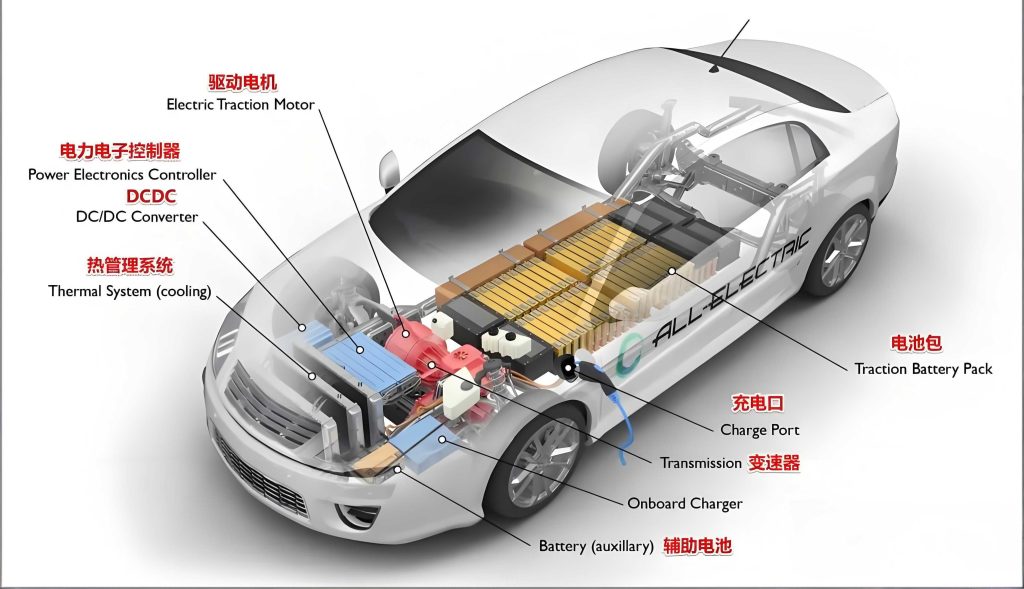
Despite its critical importance, the pathway to establishing an efficient and sustainable system for managing retired battery electric car batteries is fraught with systemic and technical challenges.
The collection and logistics infrastructure remains fragmented and underdeveloped in many regions. A lack of convenient, authorized collection points leads to low return rates, with many end-of-life batteries from a battery electric car being stockpiled, improperly discarded, or diverted into informal collection channels. This informal market often employs substandard, polluting methods to extract valuable components, undercutting compliant recyclers and creating environmental and safety blackspots. The absence of uniform standards for battery state-of-health assessment, transportation, and dismantling further complicates the picture, resulting in inconsistent operational practices and unpredictable material quality for downstream processors.
Technological bottlenecks persist across the value chain. Dismantling, often the first industrial step, remains labor-intensive and hazardous, especially with the trend towards cell-to-pack designs in modern battery electric car platforms that reduce modularity. In the material recovery phase, while hydrometallurgy offers high metal recovery rates, it involves complex chemical processes and generates wastewater that requires costly treatment. Pyrometallurgy is energy-intensive and results in lower recovery rates for certain metals like lithium. The table below summarizes the key challenges:
| Challenge Category | Specific Issues | Impact on battery electric car Ecosystem |
|---|---|---|
| Systemic | Fragmented collection network; Lack of standards; Informal market dominance. | Reduces feedstock for formal recycling, increases environmental liability, undermines consumer confidence. |
| Technical – Dismantling | Labor-intensive; Safety risks (electrical, chemical); Hard-to-dissemble pack designs. | Increases processing cost, creates occupational hazards, slows down recycling throughput. |
| Technical – Material Recovery | Trade-offs between recovery rate, energy use, and process complexity; Low lithium recovery in some methods. | Limits economic viability, affects overall sustainability balance of the battery electric car. |
| Reutilization Market | Limited viable applications for second-life batteries; Underdeveloped testing & certification protocols. | Fails to capture full value of retired assets, leads to premature recycling. |
The market for second-life applications, while promising, is still nascent. The primary pathway, cascaded use in energy storage systems or low-speed electric vehicles, faces hurdles related to performance prediction, cost-effective repackaging, and regulatory acceptance. Without diversified and scalable off-take markets for batteries retired from a battery electric car, the economic model for collection and refurbishment is weakened, potentially leading to stockpiling or direct downcycling.
To overcome these hurdles and build a circular economy for battery electric car batteries, significant focus is being placed on advancing a suite of key technologies. These span from initial handling to final material recovery.
Cascaded Use and Regeneration Technologies represent two complementary strategies. Cascaded use involves rigorously testing and sorting retired battery electric car batteries based on remaining capacity, internal resistance, and self-discharge rate. Modules or cells with sufficient health (e.g., >70% State of Health) are reassembled for less demanding applications. A critical technical aspect is cell balancing and integration into a new Battery Management System (BMS) tailored for the second-life duty cycle. For batteries unsuitable for reuse, regeneration technologies come into play. Hydrometallurgy dissolves battery materials in acid/alkaline solutions to leach metals, with high recovery yields represented by:
$$
\eta_{recovery, hydro} = \frac{M_{leached}}{M_{total}} \times 100\% \approx 98\% \text{ for Ni, Co}
$$
Pyrometallurgy uses high-temperature smelting to produce a metal alloy or matte. Emerging hybrid hydro-pyro processes and direct recycling methods aim to improve efficiency and reduce environmental footprint. The choice of pathway is often an economic optimization problem minimizing total cost $C_{total}$:
$$
\min C_{total} = C_{coll} + C_{trans} + C_{test} + C_{repack} \quad \text{(for Cascaded Use)}
$$
$$
\min C_{total} = C_{coll} + C_{trans} + C_{dism} + C_{proc} – R_{metal} \quad \text{(for Regeneration)}
$$
where $R_{metal}$ is the revenue from recovered materials.
Battery Dismantling and Pre-treatment Technologies are critical for safety and recovery efficiency. The process begins with deep discharge to a minimal State of Charge (SOC) to eliminate electrical hazards. Advanced methods use controlled pulsed discharge. Intelligent, semi-automated dismantling lines using computer vision and robotics are being developed to identify and disassemble pack structures, unscrew or cut connections, and extract modules. Pre-treatment of the extracted cells often involves mechanical crushing and shredding under inert atmospheres to prevent fires and recover a coarse mixture of materials called “black mass.” The efficiency of a dismantling line can be measured in throughput:
$$
\Theta_{line} = \frac{N_{packs}}}{T_{cycle}}
$$
where a higher $\Theta_{line}$ is achieved through automation and parallel processing.
Material Separation and Purification Technologies target the “black mass” from pre-treatment. The goal is to separate and purify the constituent cathode and anode materials. A multi-stage process is employed:
1. Physical Separation: Using sieves, magnetic separators, air classifiers, and shaking tables to separate plastic casings, aluminum/copper foils, and different density fractions.
2. Chemical Leaching (in Hydrometallurgy): The black mass is dissolved. For a typical NMC (Nickel Manganese Cobalt) cathode, leaching can be represented by reactions like:
$$
\text{2 LiNi}_{x}\text{Mn}_{y}\text{Co}_{z}\text{O}_{2} + \text{8 H}^+ \rightarrow \text{2 Li}^+ + \text{2 Ni}^{2+} + \text{2 Mn}^{2+} + \text{2 Co}^{2+} + 4 \text{H}_2\text{O} + \text{O}_2
$$
3. Solvent Extraction & Precipitation: Selective chemical processes isolate individual metal ions from the pregnant leach solution (PLS). For instance, cobalt can be selectively extracted using an organic extractant like Cyanex 272.
4. Electrowinning or Chemical Precipitation: The final step to produce high-purity metal salts or oxides, such as high-grade Li₂CO₃ or NiSO₄. The purity level $P_{final}$ is a key performance indicator:
$$
P_{final} = \left(1 – \frac{\sum M_{impurity}}{M_{product}}\right) \times 100\%
$$
Automated Intelligent Sorting Technology is emerging as a game-changer, particularly for pre-dismantled modules or cells intended for cascaded use. It combines advanced sensors (visual, spectral, electrical) with machine learning algorithms and robotic actuators. Systems can automatically scan, test, and sort thousands of batteries per day based on their real-time characteristics, dramatically increasing the efficiency and accuracy of the sorting process compared to manual methods. The decision algorithm for sorting a battery $i$ can be based on a multi-parameter health score $S_i$:
$$
S_i = w_1 \cdot \left(\frac{C_{measured,i}}{C_{rated,i}}\right) + w_2 \cdot \left(\frac{R_{fresh}}{R_{measured,i}}\right) + w_3 \cdot f(\Delta V_{cell,i})
$$
where $C$ is capacity, $R$ is internal resistance, $\Delta V$ is voltage deviation, and $w$ are weighting factors. Batteries are then routed to “reuse,” “recycle,” or “further testing” paths based on threshold values of $S_i$.
The following table provides a summary of key material recovery targets and technological approaches:
| Target Material | Primary Source in battery electric car Battery | Key Recovery Technologies | Industry Recovery Rate Target |
|---|---|---|---|
| Lithium (Li) | Cathode (e.g., NMC, LFP), Electrolyte (LiPF₆) | Precipitation as Li₂CO₃/Li₃PO₄; Solvent Extraction; Direct Recycling | >90% |
| Cobalt (Co) | Cathode (NMC, NCA) | Solvent Extraction; Pyrometallurgical alloying | >95% |
| Nickel (Ni) | Cathode (NMC, NCA) | Solvent Extraction; Electrowinning; Pyrometallurgy | >95% |
| Copper (Cu) | Anode Current Collector, Wiring | Physical Separation (Eddy Current); Electrowinning | >99% |
| Aluminum (Al) | Cathode Current Collector, Casing | Physical Separation (Eddy Current, Air Classification) | >95% |
| Graphite (C) | Anode Active Material | Flotation; Thermal Treatment; Purification | >90% (for downcycling) |
The integration of digital technologies is becoming pervasive. IoT sensors can track battery health throughout its life in a battery electric car, creating a digital passport that informs recyclers about its chemistry and state. AI and big data analytics optimize disassembly sequences and material recovery processes in real-time. Blockchain technology is explored for ensuring transparent and tamper-proof documentation of the battery’s journey from a battery electric car to its second life or material recovery, enhancing accountability across the chain.
The future trajectory of battery electric car battery recycling hinges on the synergistic advancement of technology, policy, and business models. Technologically, the focus will be on developing more efficient, low-cost, and environmentally benign processes. Direct recycling methods that regenerate cathode materials without breaking them down to elemental levels hold particular promise for reducing energy and chemical consumption. Policy and regulation must evolve to enforce extended producer responsibility (EPR), mandate design-for-recycling principles for new battery electric car models, and harmonize international standards for transportation and treatment. Economically, creating stable and scalable markets for second-life batteries is essential to improve the overall business case. As these elements converge, the vision of a truly circular and sustainable battery electric car ecosystem, where every retired battery is a resource and not waste, will move decisively from concept to reality. The table below outlines a comparative view of key technology parameters:
| Technology Focus Area | Current State Metrics | Near-future Development Goals | Key Enablers |
|---|---|---|---|
| Automated Sorting for Reuse | Sorting speed: 1-2 sec/cell; Accuracy: ~90-95%. | Speed: <0.5 sec/cell; Accuracy: >98%; Multi-parameter fusion (elec+spectral). | High-speed vision systems, Deep learning models, Robotic gripper versatility. |
| Black Mass Generation | Throughput: Tons/hour; Li loss in fines: ~5-10%. | Minimize Li cross-contamination; Achieve cleaner Al/Cu separation; Inert process at scale. | Cryogenic grinding, Advanced air classification, Process control automation. |
| Hydrometallurgical Li Recovery | Li recovery: 85-95%; Purity of Li₂CO₃: Battery grade. | Li recovery: >98%; Lower acid/water consumption; Integrate with cathode resynthesis. | Selective ion-exchange/sorption, Membrane technologies, Closed-loop reagent regeneration. |
| Direct Cathode Recycling | Lab/pilot scale for LFP; Limited for NMC. | Commercial scale for LFP; Pilot for NMC; Maintain crystal structure integrity. | Precise electrochemical relithiation, Contamination control, Cost-effective process design. |