
BEIJING, September 1, 2026 — China’s power battery recycling and utilization sector is moving toward a new legalized stage defined by administrative regulations, full-chain traceability and joint enforcement, as the country prepares for an accelerating wave of large-scale power battery retirement. The policy direction was set out at a high-level press conference in late August, when a senior industry official confirmed that dedicated administrative rules and cross-department enforcement actions are being prepared for the power battery recycling market.
On August 26, at the State Council Information Office press conference held under the series “Opening the 15th Five-Year Plan,” Xin Guobin, vice minister of the Ministry of Industry and Information Technology, responded to widespread public concern over the retirement of new energy vehicle power batteries. He stated that during the 15th Five-Year Plan period, the Ministry of Industry and Information Technology will research and draft administrative regulations related to power battery retirement, carry out special joint enforcement actions, and further standardize the recycling and utilization order.
The statement is significant for the entire power battery value chain. It indicates that, as the power battery retirement wave arrives faster than many market participants had expected, the power battery recycling market will move toward a legalized new stage characterized by “administrative regulations plus full-chain traceability plus joint enforcement.” For automakers, power battery manufacturers, recycling enterprises, after-sales networks and third-party utilization companies, the message is clear: the management of retired power batteries is shifting from policy framework building to rigid implementation and enforcement.
1. Accelerating retirement wave puts power battery recycling in the spotlight
Over the past decade and more, China’s new energy vehicle industry has completed a transition from policy-driven growth to market-driven expansion. During the 14th Five-Year Plan period, the scale of the country’s new energy vehicle industry rose from the million-unit level to the ten-million-unit level. Annual sales increased from 1.367 million vehicles to 16.49 million vehicles, while the share of new energy vehicles in total new car sales rose from 5.4 percent to 47.9 percent. The industrial system has become increasingly complete, and the output of new energy vehicles, power batteries and key materials accounts for more than 70 percent of the global total.
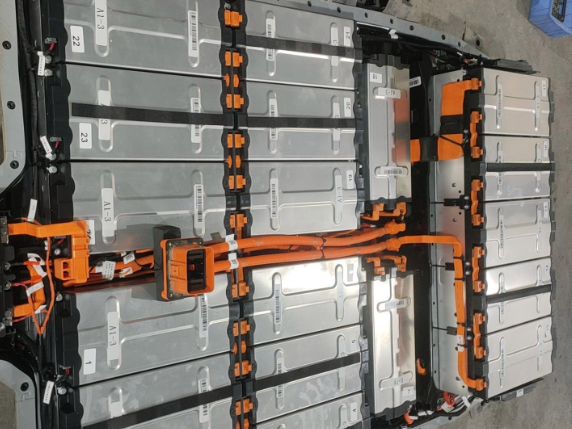
The retirement of power batteries follows a practical technological pattern: after 5 to 8 years, power battery capacity often declines to below 80 percent, at which point the battery enters the retirement stage. Power batteries installed in the first batch of vehicles sold between 2018 and 2020 are now concentrated in the process of exiting operational use. This transition is not a distant prospect; it is already reshaping the power battery recycling market and the broader power battery lifecycle management system.
Data already point to an inflection point. The “China Renewable Resources Recycling Industry Development Report (2026),” released by the China National Resources Recycling Association, shows that as new energy vehicle ownership continues to climb, early vehicles are accelerating into the scrappage period, and the power battery retirement wave is gradually arriving. According to the New Energy Vehicle Industry Development Plan (2021–2035), by the end of 2030 China’s electric vehicle ownership is expected to reach 80 million, and the volume of retired power batteries generated at that time is expected to exceed 1 million tonnes. In 2025, the comprehensive utilization volume of retired new energy vehicle power batteries in China already exceeded 400,000 tonnes, up 32.9 percent year on year, indicating broad market space for the power battery recycling and treatment industry.
| Indicator | Earlier level | Recent level or target |
|---|---|---|
| Annual sales of new energy vehicles | 1.367 million | 16.49 million |
| New energy vehicles’ share of new car sales | 5.4 percent | 47.9 percent |
| Share of global output of new energy vehicles, power batteries and key materials | Not applicable | More than 70 percent |
| Typical power battery retirement threshold | Capacity falls below 80 percent after 5 to 8 years | Retirement wave accelerating |
| China’s electric vehicle ownership by the end of 2030 | Not applicable | 80 million |
| Retired power battery generation by the end of 2030 | Not applicable | Expected to exceed 1 million tonnes |
| Comprehensive utilization of retired new energy vehicle power batteries in 2025 | Not applicable | More than 400,000 tonnes, up 32.9 percent year on year |
| Comprehensive utilization target for retired power batteries by 2030 | Not applicable | Strive for 1 million tonnes or more |
The regulatory signal released at the press conference marks an important change in the governance of the power battery lifecycle. The closed-loop management of new energy vehicles, from production and road use to final scrappage and power battery recycling, has moved from the stage of building a policy framework into a key period of rigid implementation. The power battery is no longer simply a component to be sold and serviced; it is an object of full-lifecycle supervision, traceability and resource responsibility.
2. Policy signal sets legalized direction for power battery recycling
Xin said that greater attention should be paid to the circular utilization of industrial resources. Classified measures will be used to promote the comprehensive utilization of renewable resources, bulk industrial solid waste and new types of solid waste. Regarding new energy vehicle power batteries, which have attracted widespread attention, the 15th Five-Year Plan period will see research and drafting of relevant administrative regulations, the launch of special joint enforcement actions, and further standardization of the recycling and utilization order in order to respond to the large-scale retirement wave.
The policy direction also includes a digital identity management system for power batteries. According to Xin, the system will help ensure that power batteries are “source traceable and destination checkable.” By 2030, the comprehensive utilization volume of retired power batteries will strive to reach 1 million tonnes or more. These elements together point to a more structured power battery governance model in which administrative regulations, traceability tools and enforcement cooperation reinforce one another.
For the power battery recycling industry, the significance of the policy signal is not limited to the introduction of future rules. It also clarifies expectations. Market participants have long called for a more predictable regulatory environment for retired power battery collection, storage, transportation, dismantling and resource utilization. The confirmation that administrative regulations and joint enforcement actions are being prepared gives the power battery recycling sector a clearer medium-term direction and reduces uncertainty over how regulators will treat non-compliant power battery flows.
The emphasis on full-chain traceability is particularly important for power battery management. A power battery passes through multiple stages: initial installation, use in a vehicle, after-sales replacement, possible echelon use, collection, transfer, dismantling and final material recovery. Without effective traceability, retired power batteries can enter informal channels, creating safety and environmental risks and undermining compliant power battery recycling enterprises. The proposed digital identity management system is intended to address this challenge by making power battery flows more visible and accountable.
Joint enforcement also signals that power battery recycling will not be managed by a single administrative tool. The power battery sector involves industry management, ecological environment protection, transport, market supervision, safety and other regulatory dimensions. A special joint enforcement action can therefore be expected to target illegal power battery dismantling, unlicensed collection and storage, improper transfers, environmental violations and other practices that disrupt the power battery recycling order. For compliant operators, stronger enforcement may raise short-term compliance costs but should improve the competitive environment over the medium and long term.
3. Interim measures establish full-chain rules for retired power battery management
The latest policy signal did not emerge in isolation. On January 16, 2026, the Ministry of Industry and Information Technology and other departments jointly issued the Interim Measures for the Management of Recycling and Comprehensive Utilization of Retired Power Batteries of New Energy Vehicles. The interim measures established a management approach covering all channels, all links and the full lifecycle, creating a more comprehensive regulatory framework for retired power battery recycling and comprehensive utilization.
The interim measures also abolished the ambiguous concept of “echelon utilization” and strictly prohibited retired power batteries from being directly supplied or repurposed to electric bicycles and other prohibited or restricted fields. This clarification is important for the power battery industry because it narrows the space for ambiguous business models and reinforces the central role of standardized recycling and resource utilization in the treatment of retired power batteries.
For the power battery recycling market, the interim measures represent a shift toward clearer boundaries. The “all channels, all links and full lifecycle” approach means that retired power battery management cannot rely on fragmented, informal arrangements. It requires coordination among automakers, power battery producers, after-sales service providers, collection and transfer operators, dismantling enterprises, comprehensive utilization companies and regulators. Each link in the power battery chain must be able to demonstrate compliance and traceability.
The prohibition on direct supply or repurposing of retired power batteries to electric bicycles and other prohibited or restricted fields also addresses a major safety concern. Power batteries that no longer meet vehicle requirements may still contain significant energy, and improper repurposing can create fire, electrical and environmental risks. By tightening the rules for retired power battery flows, regulators are seeking to prevent unsafe practices while supporting the development of a more professional and technology-driven power battery recycling system.
The combined effect of the interim measures and the new policy signal is to make the power battery recycling framework more operational. The interim measures provide management rules across channels and links, while the proposed administrative regulations and joint enforcement actions are expected to strengthen legal authority and implementation. For companies in the power battery sector, the direction is toward a compliance system in which power battery data, physical flows and environmental responsibilities are aligned.
4. Industry expectations converge on recycling and technology
Gao Chengyuan, deputy secretary-general of the Guangdong Provincial Social Policy Research Association, said the statement directly makes industry policy expectations completely clear. The continuous actions taken by relevant departments around full-chain standardization of retired batteries essentially complete an industry-wide cognitive unification through official policy expression. The core direction of comprehensive utilization of retired power batteries is recycling and regeneration, corresponding to the standardized technical route of dismantling, crushing, sorting and smelting.
From a short-term perspective, some market entities will need to make adaptive adjustments to their existing business layouts. Business models that depend on ambiguous definitions, informal channels or unclear end uses for retired power batteries will face greater pressure. From a medium- and long-term perspective, however, the change will push industry resources to accelerate toward the recycling and regeneration field, guiding the power battery recycling track from concept-driven development toward technology-driven development. This is a clear positive for the high-quality development of the industry.
The emphasis on recycling and regeneration also has implications for investment and capacity planning in the power battery recycling sector. Companies that focus on standardized dismantling, efficient sorting, material recovery and environmentally sound smelting are likely to benefit as the regulatory framework becomes more explicit. By contrast, power battery recycling operations that rely on manual experience, incomplete documentation or unclear downstream channels may find it increasingly difficult to meet regulatory standards and customer requirements.
Technology is central to this transition. Retired power batteries vary in chemistry, design, age, usage history and remaining health. Effective power battery recycling requires reliable testing, safe discharge and dismantling, and efficient recovery of valuable materials. The more the market moves toward formalization, the more important it becomes for power battery recycling enterprises to invest in technology, data management and process control. The policy direction therefore reinforces a broader shift in the power battery recycling industry from scale expansion toward quality and technical capability.
The convergence of industry expectations is also important for automakers and power battery manufacturers. They are increasingly expected to take responsibility for the power battery beyond the point of sale. This includes designing power batteries with recycling in mind, maintaining battery health data, supporting collection networks and working with qualified power battery recycling partners. The power battery is becoming a lifecycle asset rather than a one-time product.
5. Automakers and recyclers build closed-loop power battery networks
Under the continuous pressure of regulatory policy, building retired power battery recycling networks and improving resource utilization technologies have become the main competitive battlegrounds in the next stage of the power battery recycling track. Industrial collaboration is now moving forward at a rapid pace, with automakers, power battery companies and specialized recyclers forming closer partnerships across the power battery value chain.
Recently, BYD’s battery business segment signed a strategic cooperation framework agreement with China Resource Recycling Group Battery Co., Ltd. BMW China is building a power battery recycling system in China. In addition, Geely, XPeng, Li Auto and other mainstream domestic automakers have relied on national after-sales outlet networks to form deep ties with leading recycling enterprises such as GEM and Brunp Recycling, achieving full coverage of recycling networks. These moves show that power battery recycling is being integrated into corporate after-sales systems, supply chains and environmental responsibility strategies.
From the perspective of the industry as a whole, the previously dispersed and fragmented social collection model is being gradually replaced. A division-of-labor system is rapidly becoming the mainstream operating framework for China’s power battery recycling industry: automakers handle front-end collection, power battery enterprises provide technical support, and third-party leading enterprises undertake back-end resource utilization. This model allows each participant to focus on its strengths while improving the traceability and professionalism of power battery recycling.
The front-end role of automakers is critical because they have direct contact with vehicle owners, after-sales service networks and replacement channels. When a power battery is replaced or a vehicle reaches the end of its service life, the automaker’s network can serve as the first point of collection and documentation. This helps prevent retired power batteries from flowing into unregulated channels and supports the “source traceable and destination checkable” objective of the power battery digital identity management system.
Power battery manufacturers contribute technical knowledge about battery design, chemistry, safety and performance. Their involvement can improve the efficiency of testing, dismantling and material recovery. Third-party leading recyclers, meanwhile, bring specialized capacity in comprehensive utilization, including dismantling, crushing, sorting and smelting. This division of labor is particularly important for large-scale power battery retirement, because the volume and diversity of retired power batteries require industrial-scale processing and strict environmental controls.
The development of closed-loop power battery networks also supports the broader circular economy goals outlined by regulators. By linking vehicle sales, after-sales service, power battery replacement, collection and resource recovery, companies can create more reliable data and material flows. The power battery recycling network becomes part of the industrial ecosystem rather than an isolated waste-handling function.
6. Compliance and technology become core barriers in power battery recycling
Yuan Shuai, deputy director of the investment department of the China Urban Development Research Institute, said that for market entities in the power battery recycling track, the next stage of development is already very clear. The first prerequisite is to thoroughly abandon the old惯性 of profiting from information asymmetry and exploiting rule loopholes, and to embed quality and safety red lines throughout the entire corporate operation process. This observation captures the changing logic of the power battery recycling market: regulatory arbitrage is giving way to compliance capability.
In terms of technology investment, enterprises need to allocate more resources to core technology research and development for battery health monitoring and resource utilization. Traditional operating models that relied on manual experience and extensive dismantling can no longer adapt to current regulatory standards and market demand. More accurate battery remaining life detection technology, more efficient echelon product recombination and adaptation technology, and safer echelon battery packaging processes will become core barriers determining long-term market competitiveness.
Although the interim measures abolished the ambiguous concept of “echelon utilization,” the technical capabilities associated with battery health assessment and safe repurposing remain relevant to power battery management. Accurate detection of remaining life and health status is essential for determining whether a retired power battery should be dismantled for material recovery or handled through other compliant pathways. The difference between compliant and non-compliant operations often lies in the quality of testing, documentation and safety control.
For power battery recycling enterprises, technology investment is not limited to processing equipment. It also includes data systems that can track power battery history, record testing results, document transfer and storage conditions, and support environmental compliance. As the power battery digital identity management system develops, companies with stronger data capabilities are likely to be better positioned to demonstrate compliance and participate in formal recycling networks.
Quality and safety red lines are equally important. Power battery recycling involves risks related to fire, electric shock, chemical exposure and environmental pollution. Improper storage or dismantling can cause serious accidents. The policy emphasis on joint enforcement means that safety and environmental compliance will be scrutinized more closely across the power battery recycling chain. Companies that fail to invest in safe processes and proper facilities may face enforcement action and exclusion from formal channels.
The competitive landscape of the power battery recycling industry is therefore likely to become more technology-intensive and compliance-intensive. Scale alone will not be enough. The ability to handle diverse power battery types, recover materials efficiently, maintain traceability and meet environmental standards will determine which companies can participate in the next phase of power battery recycling growth.
7. Full-lifecycle oversight reshapes responsibilities and market opportunities
The move toward administrative regulations, full-chain traceability and joint enforcement reflects a broader shift in China’s power battery governance. The power battery is being treated as a product with a full lifecycle that extends from design and production to use, after-sales service, retirement, recycling and final material recovery. This approach assigns responsibilities across the value chain and creates new expectations for data sharing, collection network design and resource utilization.
For automakers, the power battery recycling obligation is becoming more closely connected to after-sales service and environmental responsibility. Vehicle manufacturers with nationwide service networks are in a strong position to collect retired power batteries and channel them into formal recycling systems. However, they also need to ensure that their collection processes, storage conditions and transfer records meet regulatory requirements. The power battery recycling network must be integrated into the broader vehicle lifecycle management system.
For power battery manufacturers, the policy direction encourages greater attention to recyclability, battery design and data availability. A power battery that is easier to dismantle, better documented and more consistently designed can improve the efficiency of recycling and resource recovery. Battery manufacturers also have a role in supporting health monitoring and remaining life assessment, which are important for determining the appropriate treatment pathway for retired power batteries.
For recycling enterprises, the formalization of the power battery recycling market creates both opportunities and challenges. The opportunity lies in the growing volume of retired power batteries and the policy push toward standardized comprehensive utilization. The challenge lies in meeting higher standards for environmental protection, safety, traceability and technical performance. Enterprises that invest early in compliant capacity and advanced technology may gain a stronger position as the market matures.
The market space for power battery recycling is substantial. The projected increase in retired power battery generation by the end of 2030, together with the target of achieving comprehensive utilization of 1 million tonnes or more by 2030, indicates a large and growing demand for professional power battery recycling services. At the same time, the power battery recycling industry will need to manage the transition from fragmented collection to organized, full-chain networks.
Joint enforcement is expected to play a key role in this transition. By coordinating across departments and targeting illegal power battery recycling activities, enforcement actions can reduce unfair competition from non-compliant operators and support the development of formal power battery recycling channels. The effectiveness of enforcement will depend on clear rules, reliable traceability data and cooperation among stakeholders across the power battery value chain.
8. Power battery recycling moves from policy framework to implementation
The August 26 statement and the earlier interim measures together mark a clear progression in China’s power battery recycling policy. The policy framework has been established, the key principles have been clarified, and the focus is now shifting toward implementation. Administrative regulations are expected to provide a stronger legal foundation, full-chain traceability will provide the information infrastructure, and joint enforcement will provide the implementation mechanism for the power battery recycling order.
For the power battery industry, this progression means that the rules of competition are changing. Companies can no longer rely on information asymmetry or ambiguous business models in the power battery recycling market. They must build compliance systems, invest in technology and participate in formal collection and utilization networks. The power battery recycling track is moving from concept-driven expansion toward technology-driven and compliance-driven development.
The role of the power battery digital identity management system will be central. A reliable digital identity for each power battery can support lifecycle records, improve collection efficiency, prevent illegal diversion and enable regulators to verify that retired power batteries reach qualified treatment facilities. The phrase “source traceable and destination checkable” captures the intended outcome: every power battery should have a clear history and a verifiable end-of-life pathway.
The 2030 target of striving for comprehensive utilization of 1 million tonnes or more of retired power batteries provides a medium-term benchmark for the industry. Achieving this target will require coordinated efforts across automakers, power battery manufacturers, recycling enterprises, logistics providers, after-sales networks and regulators. It will also require continued investment in dismantling, sorting, smelting and material recovery technologies, as well as stronger environmental and safety controls.
As the power battery retirement wave accelerates, the power battery recycling market is entering a new phase in which legal rules, traceability systems and enforcement capacity will shape the competitive landscape. The direction is clear: administrative regulations will define responsibilities, full-chain traceability will make power battery flows visible, and joint enforcement will reinforce compliance. For companies across the power battery value chain, the next stage will be defined by their ability to adapt to this legalized framework and to build reliable, technology-driven power battery recycling systems.
The transition will not be uniform. Some companies will need to adjust their business models, while others will find new opportunities in collection networks, testing, data management, safe dismantling and resource recovery. The overall effect, however, is likely to be a more organized power battery recycling market in which compliant operators can compete on technology, efficiency and environmental performance rather than on regulatory loopholes. The power battery is becoming a full-lifecycle responsibility, and the recycling order for retired power batteries is moving toward a more standardized and enforceable future.