
I approach the thermal behavior of a solid state battery as a coupled problem of materials science, lattice dynamics, electrochemistry, and system engineering. In my view, the most important question is not only whether a solid state battery can store more energy or charge faster, but whether it can move heat out of its interior before that heat changes its chemistry, mechanics, or safety envelope. The discovery that a key solid electrolyte material can remain unusually cool because of its intrinsic phonon behavior gives me a powerful new way to think about the solid state battery as a thermal system rather than only an electrochemical one.
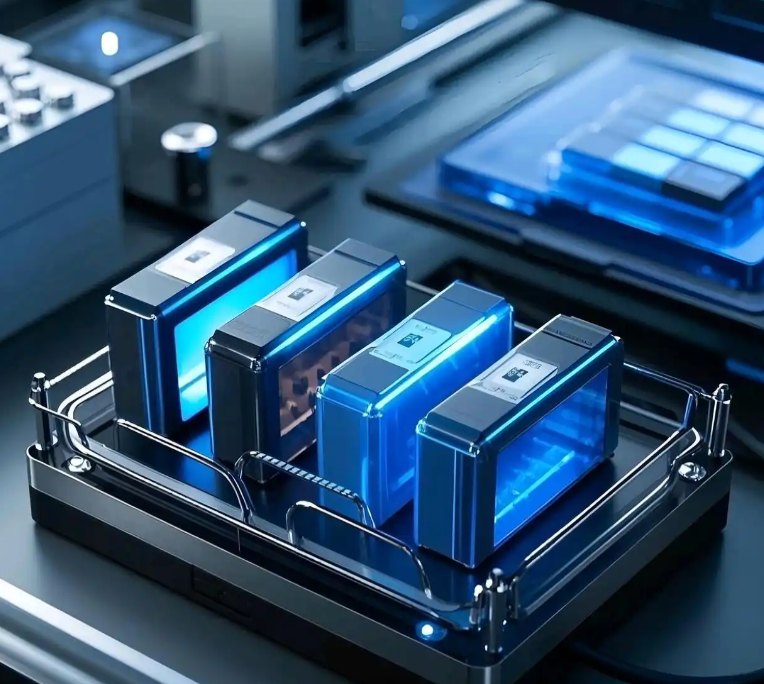
I begin with the observation that a solid state battery based on a ceramic electrolyte such as lithium lanthanum zirconium tantalum oxide, which I refer to as LLZTO, can keep a surprisingly low thermal conductivity. In my reading of the physics, this is not a minor side detail. It is a design variable that influences temperature gradients, interfacial stability, lithium plating, dendrite growth, cell lifetime, and the probability of thermal runaway. I therefore organize this article around one central idea: the low thermal conductivity of LLZTO arises from intrinsic phonon transport, especially from coupling between heat-carrying acoustic phonons and numerous optical phonon modes, and this understanding can be used to engineer a safer and more capable solid state battery.
Why I Treat a Solid State Battery as a Thermal Problem
In a conventional liquid-electrolyte cell, heat generation is often managed by the liquid electrolyte, separator, current collectors, and external cooling. In a solid state battery, the electrolyte is a solid ceramic or polymer-ceramic composite. That change alters thermal pathways dramatically. The solid state battery can have higher energy density and lower flammability, but it can also concentrate heat near interfaces because the electrolyte does not flow and cannot convect heat away. I see the solid state battery as a stack of thermal resistances, each with its own conductivity, heat capacity, and contact resistance.
For a solid state battery, the local energy balance I use is
$$
\rho c_p \frac{\partial T}{\partial t} = \nabla \cdot \left( \kappa \nabla T \right) + \dot{Q}_{\text{gen}}
$$
where \(\rho\) is density, \(c_p\) is specific heat capacity, \(T\) is temperature, \(t\) is time, \(\kappa\) is thermal conductivity, and \(\dot{Q}_{\text{gen}}\) is volumetric heat generation. In a solid state battery, \(\dot{Q}_{\text{gen}}\) includes irreversible Joule heating, interfacial polarization, entropy changes, and possible parasitic reactions. The term \(\nabla \cdot (\kappa \nabla T)\) is where the low thermal conductivity of LLZTO enters. If \(\kappa\) is small, then for a given heat generation rate the temperature gradient must be larger. That simple consequence is why I care about phonons.
Fourier’s law gives the local heat flux:
$$
\mathbf{q} = – \kappa \nabla T
$$
For a solid state battery, I often reduce a one-dimensional stack to an equivalent thermal resistance network. If layer \(i\) has thickness \(L_i\) and thermal conductivity \(\kappa_i\), its resistance is
$$
R_i = \frac{L_i}{\kappa_i}
$$
The total resistance of the solid state battery stack is then
$$
R_{\text{total}} = \sum_i \frac{L_i}{\kappa_i} + R_{\text{contact}}
$$
This formula reminds me that a low-\(\kappa\) electrolyte does not act alone. Interfaces and current collectors can dominate, but the electrolyte sets an internal bottleneck. I therefore study the solid state battery as a series-parallel system, not as a single material.
The Material Behavior That I Want to Explain
The key material in this discussion is a garnet-type ceramic solid electrolyte. It is considered a strong candidate for a solid state battery because it can conduct lithium ions while providing mechanical rigidity and a wide electrochemical stability window. In my analysis, the puzzle is that its thermal conductivity is extremely low. A reported value for LLZTO is about \(1.59 \ \mathrm{W\,m^{-1}\,K^{-1}}\), which is roughly two hundred fifty times lower than copper. Copper is not an electrolyte, but the comparison tells me that this ceramic does not behave like a simple dense oxide with strong heat conduction.
| Material or Component | Thermal Conductivity Range | Role in a Solid State Battery | My Interpretation |
|---|---|---|---|
| Copper current collector | About \(400 \ \mathrm{W\,m^{-1}\,K^{-1}}\) | Electronic conduction and heat spreading | Provides fast lateral heat removal but can create thermal gradients at tabs |
| Aluminum current collector | About \(200 \ \mathrm{W\,m^{-1}\,K^{-1}}\) | Lightweight current collection | Useful heat spreader, but stack design controls effectiveness |
| LLZTO solid electrolyte | About \(1.59 \ \mathrm{W\,m^{-1}\,K^{-1}}\) | Ion transport and mechanical separation | Intrinsic phonon scattering keeps heat local |
| Typical polymer separator or electrolyte | \(0.1\) to \(0.5 \ \mathrm{W\,m^{-1}\,K^{-1}}\) | Ion transport and insulation | Low conductivity can be beneficial for insulation but dangerous for local hotspots |
| Lithium metal anode | About \(85 \ \mathrm{W\,m^{-1}\,K^{-1}}\) | High-capacity anode | Metal spreads heat well, but interface resistance matters |
| Cathode composite | \(0.5\) to \(5 \ \mathrm{W\,m^{-1}\,K^{-1}}\) | Lithium host and electronic network | Composite microstructure and porosity dominate effective \(\kappa\) |
I do not interpret the low thermal conductivity of LLZTO as a simple defect or impurity effect. A single crystal can reveal intrinsic behavior, and the result indicates that low \(\kappa\) is a property of the material itself. In a solid state battery, intrinsic low \(\kappa\) means that even a perfect electrolyte will resist heat flow. That fact changes how I design cooling, stack pressure, current density, and cell geometry.
The Phonon Picture I Use for a Solid State Battery Electrolyte
In a crystalline solid, heat is carried mainly by phonons, which are quantized lattice vibrations. For a solid state battery electrolyte, the phonon spectrum determines how heat moves. I use the kinetic theory expression
$$
\kappa = \frac{1}{3} C_v v_g \ell
$$
where \(C_v\) is volumetric heat capacity, \(v_g\) is phonon group velocity, and \(\ell\) is phonon mean free path. A low \(\kappa\) can come from low \(C_v\), low \(v_g\), short \(\ell\), or a combination. In LLZTO, the evidence points to strong phonon scattering rather than a dramatic reduction in heat capacity or group velocity alone. The spectral version of the same idea is
$$
\kappa = \frac{1}{3} \sum_{\lambda} C_{\lambda} v_{\lambda} \ell_{\lambda}
$$
Here \(\lambda\) labels a phonon mode. In my work on a solid state battery, I care about which modes carry heat and which modes scatter. Acoustic phonons usually carry most of the heat in simple crystals because they have high group velocity and long mean free paths. Optical phonons often have lower group velocity and higher frequency, but they can scatter acoustic phonons if the interaction is strong. That is exactly the mechanism I find compelling in LLZTO.
The phonon Boltzmann transport equation is the formal starting point:
$$
\frac{\partial f_{\lambda}}{\partial t} + \mathbf{v}_{\lambda} \cdot \nabla f_{\lambda} = \left( \frac{\partial f_{\lambda}}{\partial t} \right)_{\text{scatt}}
$$
Under the relaxation-time approximation, I write
$$
\kappa = \frac{1}{3} \sum_{\lambda} C_{\lambda} v_{\lambda}^2 \tau_{\lambda}
$$
where \(\tau_{\lambda}\) is the mode-dependent relaxation time. The low thermal conductivity of LLZTO is then understood as a small effective \(\tau_{\lambda}\) for the heat-carrying modes. In a solid state battery, this means heat does not spread as quickly as one might expect from a dense ceramic.
Optical Phonons and Acoustic Phonons in a Solid State Battery Ceramic
I think of the lattice as a set of coupled oscillators. In LLZTO, there are many atoms per formula unit and a complex unit cell. That complexity produces many optical phonon branches. Optical modes involve relative motion of atoms within the unit cell. Acoustic modes involve in-phase motion of neighboring unit cells and are efficient heat carriers. When optical modes are numerous and their frequencies overlap with acoustic branches, the different vibrations can interact. The result is scattering that shortens the acoustic phonon mean free path.
| Phonon Type | Atomic Motion | Typical Role in Heat Transport | Behavior in LLZTO | Consequence for a Solid State Battery |
|---|---|---|---|---|
| Acoustic longitudinal | Atoms move along propagation direction | Major heat carrier | Strongly scattered by optical modes | Reduced heat spreading through electrolyte |
| Acoustic transverse | Atoms move perpendicular to propagation | Important heat carrier at low temperature | Scattered by anharmonicity and optical coupling | Anisotropic thermal paths may appear |
| Optical polar | Opposite ions move relative to each other | Usually low direct heat transport | Numerous modes create scattering channels | Heat stays localized near generation zones |
| Optical non-polar | Complex internal motion | Can hybridize with acoustic branches | Contributes to phonon bottleneck | Hotspots can persist at interfaces |
| Localized or resonant modes | Defect or dopant vibration | Can scatter heat carriers | Depends on composition and defects | Adds another tuning knob for thermal management |
In my interpretation, the phrase “optical phonon modes” is not just jargon. It explains why a solid state battery electrolyte can be a poor heat conductor even without porosity or grain boundaries. The intrinsic resistance comes from the lattice itself. That is important because it means that improving density or reducing defects may not dramatically raise \(\kappa\). Instead, one must change the phonon spectrum, the unit cell, the chemistry, or the microstructure.
Scattering Rules I Apply to a Solid State Battery
To predict \(\kappa\), I combine scattering rates using Matthiessen’s rule:
$$
\tau^{-1} = \tau_{\text{ph-ph}}^{-1} + \tau_{\text{def}}^{-1} + \tau_{\text{boundary}}^{-1} + \tau_{\text{interface}}^{-1}
$$
For a solid state battery, each term has a physical meaning. Phonon-phonon scattering includes normal and Umklapp processes. Defect scattering arises from vacancies, dopants, and mass contrast. Boundary scattering matters in thin films and nanocrystalline electrolytes. Interface scattering matters at electrolyte-cathode and electrolyte-anode contacts. In LLZTO, I expect the phonon-phonon term to be unusually strong because of the many optical branches.
| Scattering Mechanism | Physical Origin | Temperature Dependence I Expect | Design Impact for a Solid State Battery |
|---|---|---|---|
| Phonon-phonon Umklapp | Anharmonic lattice interactions | Increases with temperature | Limits high-temperature heat removal |
| Phonon-phonon normal | Momentum-conserving collisions | Redistributes phonon modes | Can indirectly reduce heat flux |
| Point defect | Mass and force-constant disorder | Weakly temperature dependent | Can be engineered to lower \(\kappa\) further |
| Boundary | Finite grain or film size | Strong at low temperature | Thin solid state battery layers may be hotter |
| Interface | Thermal boundary resistance | Depends on phonon mismatch | Dominates near electrode-electrolyte contacts |
| Optical-acoustic coupling | Branch hybridization and scattering | Strong when frequencies overlap | Central to low \(\kappa\) in LLZTO |
I also use the mode heat capacity expression:
$$
C_{\lambda} = k_B \left( \frac{\hbar \omega_{\lambda}}{k_B T} \right)^2 \frac{e^{\hbar \omega_{\lambda}/k_B T}}{\left(e^{\hbar \omega_{\lambda}/k_B T}-1\right)^2}
$$
This formula tells me that optical modes with high \(\omega_{\lambda}\) are not necessarily strong heat carriers, because their heat capacity can be small at moderate temperature. Their main effect is often to scatter acoustic modes. In a solid state battery, that means the electrolyte may not carry much heat directly through optical modes, but those modes can block the acoustic channels that would otherwise carry heat. This is a subtle but powerful distinction.
Thermal Transport Lengths in a Solid State Battery
I estimate the thermal diffusivity of a material using
$$
\alpha = \frac{\kappa}{\rho c_p}
$$
The thermal effusivity is
$$
e = \sqrt{\kappa \rho c_p}
$$
For a solid state battery, both matter. Diffusivity tells me how quickly a temperature pulse moves. Effusivity tells me how strongly a surface exchanges heat with its surroundings. A low-\(\kappa\) electrolyte can have low diffusivity, so heat generated at an interface may remain near that interface for longer. That can accelerate degradation. I therefore track both \(\alpha\) and \(e\) when I compare candidate solid electrolytes.
| Property | Symbol | Units | What It Tells Me in a Solid State Battery |
|---|---|---|---|
| Thermal conductivity | \(\kappa\) | \(\mathrm{W\,m^{-1}\,K^{-1}}\) | Steady-state heat flow capability |
| Thermal diffusivity | \(\alpha\) | \(\mathrm{m^2\,s^{-1}}\) | Transient heat spreading speed |
| Thermal effusivity | \(e\) | \(\mathrm{J\,m^{-2}\,K^{-1}\,s^{-1/2}}\) | Interfacial heat exchange and contact feel |
| Volumetric heat capacity | \(\rho c_p\) | \(\mathrm{J\,m^{-3}\,K^{-1}}\) | Thermal inertia of the solid state battery stack |
| Thermal resistance | \(R\) | \(\mathrm{m^2\,K\,W^{-1}}\) | Layer and interface bottleneck |
| Thermal boundary conductance | \(G\) | \(\mathrm{W\,m^{-2}\,K^{-1}}\) | Interface quality between electrolyte and electrodes |
How I Link Phonons to Solid State Battery Safety
Thermal runaway in a solid state battery is not identical to thermal runaway in a liquid-electrolyte battery, but it is still a risk. Heat generation can come from lithium plating, cathode decomposition, electrolyte reduction, contact loss, or local current crowding. If heat cannot spread, a small region can become hot enough to trigger further reactions. The low thermal conductivity of LLZTO can therefore be both a blessing and a curse. It can slow heat propagation to neighboring cells, but it can also trap heat at a hotspot.
I use a simplified runaway criterion:
$$
\frac{\partial \dot{Q}_{\text{gen}}}{\partial T} > \frac{\partial \dot{Q}_{\text{rem}}}{\partial T}
$$
where \(\dot{Q}_{\text{gen}}\) is heat generation and \(\dot{Q}_{\text{rem}}\) is heat removal. In a solid state battery, heat removal depends on \(\kappa\) of every layer in the stack. If the electrolyte has low \(\kappa\), the removal curve is flatter. That makes the inequality easier to satisfy at lower temperatures, which is undesirable. I therefore do not treat low \(\kappa\) as automatically good or bad. I treat it as a design lever that must be paired with heat spreading and thermal interface engineering.
For a simple slab with uniform volumetric heat generation \(q”’\) and one-dimensional conduction, the maximum temperature rise is approximately
$$
\Delta T_{\max} = \frac{q”’ L^2}{2 \kappa}
$$
In a solid state battery, \(L\) can be the thickness of a cathode composite, an electrolyte layer, or a cell stack. The formula shows that halving \(\kappa\) doubles \(\Delta T_{\max}\) for the same heat generation and thickness. That is why the discovery of intrinsic low \(\kappa\) in LLZTO has direct engineering consequences.
My Experimental and Computational Workflow
When I investigate a solid state battery material, I combine several methods. I use single-crystal growth or dense ceramic processing to separate intrinsic behavior from grain-boundary behavior. I use thermal conductivity measurements to obtain \(\kappa(T)\). I use neutron scattering or other phonon spectroscopy to map the phonon density of states and dispersion. I use molecular dynamics or lattice dynamics simulations to compute mode-resolved properties. I use finite-element models to scale from the material to the solid state battery cell.
| Method | What I Measure or Compute | Why I Use It for a Solid State Battery | Limitation I Keep in Mind |
|---|---|---|---|
| Single-crystal growth | Intrinsic crystal properties | Separates bulk phonon behavior from defects | Single crystals may not represent practical ceramics |
| Thermal conductivity measurement | \(\kappa(T)\) | Directly quantifies heat transport | Contact resistance can bias results |
| Neutron scattering | Phonon dispersion and density of states | Reveals optical and acoustic branches | Requires large samples and specialized facilities |
| Raman or infrared spectroscopy | Optical phonon frequencies | Identifies polar and non-polar modes | Selection rules limit observable modes |
| Molecular dynamics | Thermal conductivity and spectral heat flux | Connects atomic motion to \(\kappa\) | Force-field accuracy limits predictions |
| Lattice dynamics | Phonon frequencies and lifetimes | Explains scattering channels | Anharmonic effects require higher-order terms |
| Finite-element analysis | Temperature distribution in a cell | Translates material \(\kappa\) into solid state battery safety | Boundary conditions and heat generation are uncertain |
I pay special attention to the difference between intrinsic and extrinsic effects. If low \(\kappa\) were caused only by porosity or grain boundaries, then densification could raise it. But if low \(\kappa\) is intrinsic, then the solid state battery designer must accept it or change the composition. The evidence from single-crystal work points to intrinsic behavior, which makes the phonon explanation central.
What the Low Thermal Conductivity Means for a Solid State Battery
I now translate the physics into design rules. In a solid state battery, heat is generated throughout the cell, but especially at interfaces. If the electrolyte conducts heat poorly, then the current collectors, tabs, and external cooling must do more work. I therefore consider the following strategies:
| Design Strategy | Thermal Goal | Possible Benefit for a Solid State Battery | Risk or Trade-Off |
|---|---|---|---|
| Thin electrolyte layers | Reduce \(L\) in \(\Delta T = q”’ L^2 / 2\kappa\) | Lower temperature rise across electrolyte | Mechanical robustness and dendrite resistance may suffer |
| High-aspect-ratio heat spreaders | Increase lateral heat removal | Reduce hotspot temperature | Adds mass and volume |
| Thermal interface materials | Reduce contact resistance | Improves heat flow from stack to cooling plate | Must be chemically compatible and stable |
| Composite electrolytes | Tune effective \(\kappa\) and mechanical properties | Can create percolating thermal paths | May reduce ionic conductivity or stability |
| Microstructure alignment | Orient high-conductivity directions | Anisotropic heat spreading | Processing complexity |
| Current-density management | Reduce local \(\dot{Q}_{\text{gen}}\) | Prevents hotspot formation | May reduce fast-charge capability |
| Stack pressure control | Improve interfacial contact | Lowers interfacial thermal resistance | Can induce mechanical degradation |
I also use the concept of a thermal budget. For a solid state battery, the allowed temperature rise depends on the materials, the state of charge, the age of the cell, and the cooling system. A material with low \(\kappa\) forces a tighter thermal budget. That means the solid state battery must be designed with more heat-spreading area, lower current density, or more aggressive cooling. Alternatively, the electrolyte itself can be engineered to have higher \(\kappa\), but that may conflict with ionic conductivity and stability.
Interfaces Are Where the Solid State Battery Gets Complicated
In an ideal model, I would only need bulk \(\kappa\) values. In a real solid state battery, interfaces control much of the thermal behavior. The thermal boundary conductance \(G\) between the electrolyte and the electrode can be as important as the bulk conductivity of the electrolyte. I use the interface resistance
$$
R_{\text{int}} = \frac{1}{G}
$$
and include it in the stack resistance. If \(G\) is low, then even a high-\(\kappa\) electrode cannot easily pull heat from the electrolyte. For a solid state battery, this means that the interface chemistry, contact area, roughness, and stack pressure all matter. A phonon that reaches an interface may be reflected or transmitted depending on the vibrational spectra on both sides. This is another phonon problem, but now at the nanoscale.
I often compare two limiting cases. In the first, the interface is perfect and the heat flows easily. In the second, the interface is rough or chemically degraded and heat accumulates. The solid state battery may begin in the first case and evolve into the second after cycling. That aging effect is one reason I cannot treat thermal conductivity as a fixed number forever. It is a dynamic property of the solid state battery.
Temperature Dependence and Operating Windows
I expect \(\kappa\) to depend on temperature, and for a solid state battery this dependence affects cold-start and fast-charge behavior. At low temperature, phonon-phonon scattering may weaken, but boundary and defect scattering can dominate. At high temperature, Umklapp scattering increases and \(\kappa\) may decrease. In some materials, optical phonon coupling can produce a glass-like temperature dependence. I therefore use a general expression:
$$
\kappa(T) = \frac{1}{3} \int C(\omega,T) v(\omega) \ell(\omega,T) D(\omega) \, d\omega
$$
where \(D(\omega)\) is the phonon density of states. For a solid state battery, the practical question is whether \(\kappa(T)\) helps or hurts at the temperatures where the cell operates. If \(\kappa\) falls as temperature rises, then a hot solid state battery becomes even worse at removing heat. That can create a positive feedback loop.
| Temperature Regime | Phonon Behavior I Expect | Effect on Solid State Battery | Design Response |
|---|---|---|---|
| Low temperature | Boundary and defect scattering dominate | Heat spreading may be limited in thin layers | Use thicker heat spreaders and preheating |
| Room temperature | Mixed phonon-phonon and defect scattering | Typical operating condition | Optimize stack and interface conductance |
| Elevated temperature | Umklapp scattering increases | \(\kappa\) may fall, hotspots grow | Reduce current and improve cooling |
| Near runaway | Strong anharmonicity and reactions | Thermal feedback can accelerate degradation | Use thermal barriers, vents, and current interruption |
Ionic and Thermal Transport Are Coupled in a Solid State Battery
I do not study heat in isolation. In a solid state battery, ionic conductivity is thermally activated:
$$
\sigma = \sigma_0 \exp\left(-\frac{E_a}{k_B T}\right)
$$
This means that higher temperature can increase ionic conductivity and reduce polarization, but it also accelerates degradation and raises the risk of thermal runaway. The thermal conductivity of LLZTO affects how temperature is distributed. If heat cannot spread, some regions may become much hotter than the average cell temperature. Those regions will have higher ionic conductivity, which can concentrate current further. That is a coupled electro-thermal instability. I therefore use multiphysics models that solve charge transport, heat transport, and electrochemical reactions together.
The coupling can be expressed as
$$
\nabla \cdot \left( \sigma \nabla \phi \right) = S_{\phi}
$$
$$
\rho c_p \frac{\partial T}{\partial t} = \nabla \cdot \left( \kappa \nabla T \right) + \sigma |\nabla \phi|^2 + \dot{Q}_{\text{rev}} + \dot{Q}_{\text{side}}
$$
Here \(\phi\) is electric potential, \(S_{\phi}\) is source term for charge, and \(\sigma |\nabla \phi|^2\) is Joule heating. In a solid state battery, this system of equations shows why a low-\(\kappa\) electrolyte can produce a nonuniform temperature field, which in turn produces nonuniform current density.
Microstructure and Effective Thermal Conductivity
Although LLZTO single crystals show intrinsic low \(\kappa\), practical solid state battery electrolytes are polycrystalline or composite. Grain boundaries, pores, secondary phases, and dopants all modify the effective thermal conductivity. I use effective medium approximations such as
$$
\kappa_{\text{eff}} = \kappa_m \frac{1 + 2 f \beta}{1 – f \beta}
$$
where \(f\) is volume fraction of a second phase and \(\beta\) depends on the conductivity contrast. For a solid state battery, this formula helps me estimate how much a polymer binder, pore, or conductive additive changes heat flow. A small amount of a high-\(\kappa\) phase can create percolating paths if it forms a network. A small amount of a low-\(\kappa\) phase can block heat if it coats grain boundaries.
| Microstructural Feature | Likely Effect on \(\kappa_{\text{eff}}\) | Effect on Solid State Battery Performance | My Design Preference |
|---|---|---|---|
| Porosity | Lowers \(\kappa_{\text{eff}}\) | Increases local temperature and reduces mechanical strength | Minimize closed porosity |
| Grain boundaries | Can lower \(\kappa_{\text{eff}}\) if disordered | May block both heat and ions | Control grain size and chemistry |
| Second phase with high \(\kappa\) | May raise \(\kappa_{\text{eff}}\) if percolating | Can spread heat but may block ions | Use only if ionic network remains intact |
| Second phase with low \(\kappa\) | Lowers \(\kappa_{\text{eff}}\) | Can insulate hotspots but worsen gradients | Use as thermal barrier only with care |
| Textured grains | Creates anisotropic \(\kappa_{\text{eff}}\) | Directs heat along chosen axes | Promising for advanced solid state battery design |
Why I Am Optimistic About Phonon Engineering
The discovery that LLZTO keeps a low thermal conductivity because of optical phonon modes gives me a new set of levers. If I understand which optical modes couple to acoustic modes, I can potentially modify the lattice to increase or decrease \(\kappa\). For a solid state battery, both directions can be useful. Lower \(\kappa\) can provide thermal insulation between cells, reducing propagation of a thermal runaway. Higher \(\kappa\) can improve heat extraction from a cell, reducing peak temperature. The optimal choice depends on whether the thermal strategy is cell-level cooling or pack-level isolation.
I therefore think of phonon engineering as a dial, not a switch. I can change:
| Phonon Engineering Lever | Expected Change in \(\kappa\) | Possible Use in a Solid State Battery |
|---|---|---|
| Unit cell complexity | More optical branches, lower \(\kappa\) | Thermal barrier layers |
| Mass contrast | Stronger point-defect scattering, lower \(\kappa\) | Insulating separators |
| Grain orientation | Anisotropic \(\kappa\) | Directional heat spreaders |
| Interface bonding | Higher \(G\), better heat flow | Electrode-electrolyte contacts |
| Second-phase network | Higher effective \(\kappa\) | Composite electrolyte heat pathways |
| Defect concentration | Lower \(\kappa\) if disordered | Hotspot suppression |
Thermal Runaway Propagation in a Solid State Battery Pack
At the pack level, I consider two competing effects. A low-\(\kappa\) solid state battery cell can act as a thermal insulator, which may slow propagation from one cell to the next. However, the same low \(\kappa\) can trap heat inside the cell, increasing the severity of the initiating event. I therefore model propagation using a lumped thermal network:
$$
C_i \frac{dT_i}{dt} = \sum_j \frac{T_j – T_i}{R_{ij}} + \dot{Q}_i
$$
where \(C_i\) is the heat capacity of cell \(i\), \(R_{ij}\) is the thermal resistance between cells, and \(\dot{Q}_i\) is internal heat generation. For a solid state battery pack, \(R_{ij}\) depends on the electrolyte, cell casing, spacing, and cooling plate. I can use this model to decide whether to increase or decrease thermal coupling between cells. If the chemistry is intrinsically safer, some thermal isolation may be acceptable. If the chemistry can still enter runaway, then strong heat spreading is safer.
| Pack-Level Strategy | Thermal Effect | Benefit for a Solid State Battery | Trade-Off |
|---|---|---|---|
| Thermal isolation between cells | Increases \(R_{ij}\) | Slows propagation | Can worsen local hotspot |
| Thermal coupling through heat spreaders | Decreases \(R_{ij}\) | Reduces peak cell temperature | Can spread heat to healthy cells |
| Liquid cooling plates | Provides external heat sink | Stabilizes fast charging | Adds mass and complexity |
| Phase-change materials | Absorbs transient heat | Buffers short high-power events | Limited total heat capacity |
| Current derating | Reduces \(\dot{Q}_i\) | Prevents runaway initiation | Reduces performance |
My View on Measurement and Standardization
I want thermal conductivity data for a solid state battery to be reported with enough context to be useful. A single number at room temperature is not enough. I need temperature dependence, microstructure, density, impurity levels, crystallographic orientation, and interface conditions. I also need to know whether the measurement is through-plane or in-plane. For a solid state battery, through-plane \(\kappa\) controls heat flow from the electrode to the cooling plate, while in-plane \(\kappa\) controls lateral spreading. These can differ significantly in anisotropic or layered materials.
| Reporting Item | Why I Need It | Effect on Solid State Battery Interpretation |
|---|---|---|
| Temperature range | Phonon scattering changes with \(T\) | Determines operating window safety |
| Direction | Anisotropy can be large | Affects heat spreading vs. extraction |
| Density and porosity | Porosity lowers \(\kappa\) | Separates intrinsic from extrinsic effects |
| Grain size | Boundary scattering depends on size | Predicts thin-film and bulk behavior |
| Composition and dopants | Point defects scatter phonons | Explains sample-to-sample variation |
| Interface resistance | Contacts can dominate | Determines practical heat removal |
| Measurement method | Different methods probe different scales | Ensures comparability across studies |
Artificial Intelligence and the Next Stage of Solid State Battery Development
I expect artificial intelligence to accelerate solid state battery research in several ways. First, machine-learning interatomic potentials can simulate phonon transport in complex LLZTO-like structures with near-first-principles accuracy but much lower cost. Second, generative models can propose new compositions with tailored phonon spectra. Third, Bayesian optimization can guide experiments toward the best combination of ionic conductivity, thermal conductivity, mechanical strength, and electrochemical stability. Fourth, digital twins can integrate thermal models with cycling data to predict when a solid state battery will overheat.
| AI or Data Method | Input | Output | Use for Solid State Battery |
|---|---|---|---|
| Machine-learning interatomic potentials | Atomic structures and forces | Fast energy and force predictions | Simulate phonons in large supercells |
| Graph neural networks | Crystal graphs | Property predictions | Screen candidates for \(\kappa\) and ionic conductivity |
| Bayesian optimization | Experimental conditions | Next experiment recommendation | Balance thermal and electrochemical performance |
| Digital twin | Sensor and cycling data | Real-time temperature and degradation estimates | Predict thermal risk in an operating solid state battery |
| Generative design | Target specifications | New microstructures or compositions | Discover better solid state battery electrolytes |
In my plan, I would combine physics-based phonon models with data-driven surrogates. The physics gives interpretability. The data gives speed. For a solid state battery, that combination can reduce the time between a new material concept and a validated cell. I would use the surrogate model to explore thousands of compositions, then use detailed lattice dynamics to verify the most promising ones, and finally use finite-element models to test them in a solid state battery stack.
Design Equations I Keep at the Center
I summarize the most useful equations for my work on a solid state battery in the following table. These equations connect atomic vibrations to cell-level thermal behavior.
| Concept | Equation | What It Means for a Solid State Battery |
|---|---|---|
| Fourier heat conduction | \(\mathbf{q} = -\kappa \nabla T\) | Heat flux is proportional to thermal gradient |
| Energy balance | \(\rho c_p \partial_t T = \nabla \cdot (\kappa \nabla T) + \dot{Q}_{\text{gen}}\) | Temperature evolves from conduction and heat generation |
| Kinetic thermal conductivity | \(\kappa = \frac{1}{3} C_v v_g \ell\) | Low \(\kappa\) comes from heat capacity, velocity, or mean free path |
| Spectral thermal conductivity | \(\kappa = \frac{1}{3} \sum_{\lambda} C_{\lambda} v_{\lambda} \ell_{\lambda}\) | Different phonon modes contribute differently |
| Relaxation-time approximation | \(\kappa = \frac{1}{3} \sum_{\lambda} C_{\lambda} v_{\lambda}^2 \tau_{\lambda}\) | Scattering time controls heat transport |
| Matthiessen rule | \(\tau^{-1} = \sum_i \tau_i^{-1}\) | Multiple scattering mechanisms add in rate |
| Thermal diffusivity | \(\alpha = \kappa / (\rho c_p)\) | Transient heat spreading speed |
| Thermal effusivity | \(e = \sqrt{\kappa \rho c_p}\) | Interfacial heat exchange strength |
| Layer thermal resistance | \(R = L / \kappa\) | Thickness and conductivity set resistance |
| Interface conductance | \(G = 1 / R_{\text{int}}\) | Contact quality controls heat flow |
| Slab temperature rise | \(\Delta T_{\max} = q”’ L^2 / (2 \kappa)\) | Low \(\kappa\) increases internal temperature rise |
| Activated ionic conductivity | \(\sigma = \sigma_0 \exp(-E_a / k_B T)\) | Temperature affects ion transport and heating |
| Joule heating | \(\dot{Q}_{\text{Joule}} = \sigma |\nabla \phi|^2\) | Current density drives local heat |
| Runaway condition | \(\partial_T \dot{Q}_{\text{gen}} > \partial_T \dot{Q}_{\text{rem}}\) | Heat generation grows faster than heat removal |
Scenarios I Model for a Solid State Battery
I like to test a solid state battery under several scenarios. The first is steady-state operation at moderate current. The second is fast charging. The third is a short circuit or internal defect. The fourth is low-temperature operation. The fifth is aging, where interface resistance has increased. In each scenario, the low thermal conductivity of LLZTO plays a different role.
| Scenario | Dominant Heat Source | Role of Low \(\kappa\) in LLZTO | My Mitigation Strategy |
|---|---|---|---|
| Steady moderate current | Joule and polarization heat | Moderate temperature gradient | Optimize stack thickness and cooling |
| Fast charging | High current density and lithium plating | Hotspots near anode interface | Derate current, improve interface \(G\) |
| Internal short | Localized high current | Heat trapped near defect | Use heat spreaders and current interruption |
| Low temperature | High polarization resistance | Poor heat spreading in cold stack | Preheat and use external heating |
| Aged cell | Increased interface resistance | More heat at degraded contacts | Monitor impedance and thermal response |
What I Conclude About Optical Phonons and Heat
The central physical conclusion I draw is that the low thermal conductivity of LLZTO is not a mystery caused by bad samples. It is a natural consequence of a complex crystal structure with many optical phonon modes. These modes interact with acoustic phonons and reduce their mean free paths. Because acoustic phonons are the main heat carriers, the result is low \(\kappa\). For a solid state battery, this means that heat transport through the electrolyte is intrinsically limited. I cannot assume that a dense, high-quality ceramic will automatically conduct heat well. I must design the solid state battery around this reality.
I also conclude that the same phonon physics can be used constructively. By understanding which modes scatter heat, I can design thermal barriers, thermal spreaders, and composite electrolytes with tailored properties. I can choose whether to isolate a hot cell or spread heat to a cooling plate. I can use AI to search for compositions with optimal phonon spectra. I can use multiphysics models to connect atomic-scale vibrations to pack-level safety.
My Practical Recommendations for a Solid State Battery Program
I would structure a solid state battery development program around the following priorities:
| Priority | Action | Reason | Expected Outcome |
|---|---|---|---|
| 1 | Measure \(\kappa(T)\) for every electrolyte candidate | Thermal behavior is not optional | Accurate thermal models |
| 2 | Separate intrinsic and extrinsic contributions | Microstructure can mislead | Better material comparisons |
| 3 | Quantify interface thermal conductance | Interfaces often dominate | Improved heat extraction |
| 4 | Couple electrochemical and thermal models | Heat and current interact | Predictive safety analysis |
| 5 | Use phonon engineering for targeted \(\kappa\) | Low or high \(\kappa\) can both help | Design freedom |
| 6 | Integrate AI surrogates with physics models | Search space is vast | Faster discovery |
| 7 | Validate at cell and pack level | Material data alone is insufficient | Realistic solid state battery performance |
In my judgment, the solid state battery community has spent much effort on ionic conductivity, dendrite suppression, and electrochemical stability. Those are essential. But thermal transport deserves equal attention. A solid state battery that is safe at low current may fail at high current if heat cannot escape. A solid state battery that passes a single-cell test may still propagate heat in a pack if the thermal network is poorly designed. The phonon behavior of LLZTO teaches me that thermal conductivity is an intrinsic design parameter, not an afterthought.
Looking Forward to a Higher-Performance Solid State Battery
I see several research directions that follow directly from this understanding. First, I want to map the full phonon dispersion of LLZTO and related garnets to identify the exact optical modes that scatter acoustic phonons. Second, I want to compute mode-resolved lifetimes and compare them with experiment. Third, I want to explore doping and alloying to tune the phonon spectrum without harming ionic conductivity. Fourth, I want to design composite solid state battery electrolytes with percolating thermal networks but continuous ionic pathways. Fifth, I want to build digital twins that predict temperature distribution in a solid state battery under real driving or cycling profiles.
The equations and tables I have used here are not just academic. They are the tools I use to connect a vibration in a crystal to the safety of a solid state battery. When I write
$$
\kappa = \frac{1}{3} C_v v_g \ell
$$
I am saying that heat transport is limited by how phonons move and how often they collide. When I write
$$
\Delta T_{\max} = \frac{q”’ L^2}{2 \kappa}
$$
I am saying that a low \(\kappa\) translates into a higher internal temperature for a given heat generation. When I write
$$
\frac{\partial \dot{Q}_{\text{gen}}}{\partial T} > \frac{\partial \dot{Q}_{\text{rem}}}{\partial T}
$$
I am saying that a solid state battery can still enter thermal runaway if heat removal cannot keep up. These equations guide my design choices.
I am convinced that the future of the solid state battery depends on integrating phonon physics, interface science, electrochemistry, and artificial intelligence. The discovery that LLZTO remains cool because of intrinsic optical phonon scattering is a reminder that the smallest vibrations can control the largest system-level outcomes. By respecting that connection, I can help design a solid state battery that is not only more energetic and safer but also thermally intelligent.
Summary Table of Key Findings
| Finding | Physical Explanation | Implication for a Solid State Battery |
|---|---|---|
| LLZTO has low thermal conductivity | Intrinsic phonon scattering | Heat remains localized unless engineered otherwise |
| Optical phonon modes are numerous | Complex unit cell | They scatter acoustic heat carriers |
| Acoustic phonons carry most heat | High group velocity and long mean free path | Their scattering lowers \(\kappa\) |
| Low \(\kappa\) increases temperature gradients | Fourier law and energy balance | Hotspots can accelerate degradation |
| Interfaces add thermal resistance | Thermal boundary conductance | Heat extraction depends on contact quality |
| Thermal and ionic transport are coupled | Arrhenius conductivity and Joule heating | Current distribution can become unstable |
| Phonon engineering can tune \(\kappa\) | Defects, strain, composition, microstructure | Allows thermal barriers or heat spreaders |
| AI can accelerate discovery | Surrogate models and optimization | Faster design of better solid state battery materials |
I finish with a simple but demanding goal: I want every solid state battery to be designed with a thermal map as detailed as its electrochemical map. I want the phonon behavior of the electrolyte to be known, the interface conductance to be measured, and the cell-level temperature distribution to be predicted before cycling. If I can achieve that, then the solid state battery can move beyond promise and into reliable, high-performance application.