
In my assessment, the solid state battery is not merely another incremental improvement in energy storage. It is a platform technology that can reshape the economics of electric mobility, grid resilience, advanced manufacturing, and strategic resource utilization. I view the current period as a narrow but decisive window in which regions with strong mineral endowments, existing electrochemical supply chains, and coordinated innovation systems can convert geological advantage into industrial leadership. The solid state battery opportunity is especially important because it connects upstream resource extraction, midstream materials refinement, cell design, system integration, and downstream applications such as electric vehicles, stationary storage, low-altitude aviation, and consumer electronics.
When I examine the global market trajectory, I do not see a linear expansion. I see a compounding race. The solid state battery market is expected to cross a major threshold by the end of the decade, with scenario estimates placing the global market above two hundred billion units of currency and a five-year compound annual growth rate near sixty-eight percent. That growth rate implies not only demand for cells but also demand for solid electrolytes, lithium metal anodes, high-nickel and manganese-rich cathodes, interface engineering, dry electrode processing, advanced metrology, and recycling.
$$ S_t = S_0 (1+g)^t $$
In this expression, I treat \(S_t\) as the market size in a future year, \(S_0\) as the current base, \(g\) as the compound growth rate, and \(t\) as the number of years. If I use a stylized base and a high growth path, the result supports the view that the solid state battery is entering a scale-up window. The strategic question is not whether the solid state battery will grow. The strategic question is who will capture the value across the solid state battery value chain.
| Indicator | Base Assumption | Target Horizon | Strategic Meaning |
|---|---|---|---|
| Global solid state battery market | Early commercialization | Above 200 billion by 2030 | Large enough to support specialized clusters |
| Five-year compound growth rate | High-growth emerging sector | About 68 percent | Early movers can lock in learning curves |
| Primary initial demand | Electric vehicles | Storage, drones, tools, electronics | Diversification reduces market risk |
| Core technical promise | Higher energy density and safety | Solid electrolyte and lithium metal anode | Materials and interfaces become decisive |
| Main bottleneck | Solid-solid contact and dendrites | Cycle life and manufacturability | Pilot lines and standards are critical |
I argue that the solid state battery transition should be evaluated through four lenses. The first lens is policy coherence. The second lens is resource conversion. The third lens is industrial absorptive capacity. The fourth lens is innovation velocity. A region that succeeds in only one lens may host a project, but it will not build an ecosystem. A region that aligns all four lenses can turn the solid state battery into a durable export platform and a magnet for talent, capital, and equipment suppliers.
From my perspective, policy support for the solid state battery is already visible in national and provincial frameworks. The technology is treated as a priority research direction, and related materials are included in encouraged industrial catalogues. I see this as more than symbolic. When the solid state battery is placed inside industrial planning, land allocation, energy pricing, talent policy, and financial incentives can be coordinated. The policy mix matters because the solid state battery is capital-intensive, scientifically complex, and sensitive to scale. A fragmented approach will produce isolated pilot projects. An integrated approach can produce a pipeline from laboratory to fab to market.
I would emphasize that policy must avoid a common failure mode: subsidizing capacity before proving yield. The solid state battery is not a conventional lithium-ion line with a swapped electrolyte. It requires new process windows, new quality control, new dry-room or low-humidity conditions, new stacking and packaging methods, and new failure analysis. Therefore, I recommend that public support be tied to measurable technical milestones, not merely to announced capacity. The solid state battery should be governed through stage-gate funding.
| Policy Layer | Instrument | Expected Effect on Solid State Battery | My Priority |
|---|---|---|---|
| National research programs | Targeted grants and consortia | Advances solid electrolyte and interface science | High |
| Provincial industrial planning | Cluster designation and land use | Concentrates pilot lines and suppliers | High |
| Fiscal and tax measures | Credits, depreciation, tariff design | Improves project internal rate of return | Medium-high |
| Financial policy | Long-duration loans and guarantees | Reduces scale-up financing gaps | High |
| Standards and testing | Certification and safety codes | Builds bankability for solid state battery products | High |
| Talent policy | Graduate programs and mobility | Expands the solid state battery workforce | Medium-high |
Resource endowment is the second lens I use. I see a clear opportunity to convert manganese, phosphate, aluminum, fluorine, and associated lithium resources into solid state battery materials. The solid state battery supply chain will need manganese-rich cathodes, phosphate-based materials, aluminum current collectors and lightweight components, fluorine chemistry for electrolytes and binders, and lithium in multiple forms. A region with these resources can move from selling raw ore to selling precursor, cathode active material, electrolyte salt, solid electrolyte, and eventually cells.
In my analysis, the most valuable conversion is not simply mining more. The most valuable conversion is upgrading the material specification. The solid state battery demands low impurity levels, controlled particle size, consistent crystallinity, and stable surface chemistry. Therefore, resource advantage must be paired with refining capability and quality assurance. Without that pairing, the solid state battery supply chain will import critical intermediates and export low-value concentrates.
| Resource Base | Potential Solid State Battery Material | Value Upgrade Path | Key Constraint I Observe |
|---|---|---|---|
| Manganese | Manganese-rich cathode, spinel, precursor | Ore to high-purity manganese sulfate to cathode | Impurity control and battery-grade certification |
| Phosphate | Phosphate cathode, phosphorus chemicals | Phosphate rock to iron phosphate and LMFP | Consistency and wastewater management |
| Aluminum | Current collectors, lightweight housings | Alumina to foils and structural parts | Thin foil quality and surface treatment |
| Fluorine | Lithium salts, binders, electrolyte additives | Fluorspar to hydrofluoric acid to LiPF6 or LiFSI | Safety and environmental controls |
| Associated lithium | Lithium carbonate or hydroxide | Associated ore to battery-grade lithium | Scale, recovery rate, and permitting |
| Gallium and other by-products | Specialty alloys and semiconductors | By-product recovery to high-value materials | Techno-economic separation |
I also observe that the solid state battery will not be supplied by one material system alone. There will be competition among sulfide, oxide, polymer, halide, and composite electrolytes. Each system has a different resource profile. Sulfide electrolytes require sulfur, lithium, phosphorus, and sometimes germanium or silicon. Oxide electrolytes often require lanthanum, zirconium, titanium, or aluminum. Polymer systems rely on organic chemistry and lithium salts. Halide systems may require rare or expensive halides. Therefore, a resource-rich region should not bet on a single solid state battery chemistry. I recommend a portfolio strategy that links resource endowment to multiple electrolyte pathways.
The third lens is industrial absorptive capacity. I see existing cathode, precursor, and electrolyte capabilities as the foundation for the solid state battery. If a region already produces lithium iron phosphate, ternary cathode, and precursor materials at scale, it has the workforce, quality systems, logistics, and customer relationships needed for the solid state battery transition. The solid state battery is not built in an empty industrial park. It is built on top of existing electrochemical manufacturing competence.
| Existing Capability | Relevance to Solid State Battery | Readiness I Assess | Next Move |
|---|---|---|---|
| Large phosphate cathode capacity | LMFP and composite cathodes | Strong | Upgrade to solid state battery interfaces |
| Ternary cathode and precursor capacity | High-nickel and manganese-rich cathodes | Strong | Improve single-crystal and coating technology |
| Fluorochemical chain | Lithium salts and electrolyte additives | Moderate to strong | Develop sulfide-compatible salts |
| Industrial clusters | Supplier density and shared utilities | Moderate | Add pilot-scale solid state battery lines |
| Digital infrastructure | Process analytics and digital twins | Strong | Deploy AI for solid state battery yield |
| Recycling base | Closed-loop lithium, nickel, cobalt, manganese | Emerging | Design for solid state battery recovery |
In my view, the most important missing middle is cell manufacturing. Many regions have upstream materials but lack electrode fabrication, cell assembly, formation, testing, and battery management systems. The solid state battery value chain rewards integration because interface performance depends on how the cathode, anode, and electrolyte are processed together. A cathode supplier cannot optimize a solid state battery alone. A solid electrolyte producer cannot optimize a solid state battery alone. Therefore, I recommend co-location of materials, electrode, cell, and testing teams.
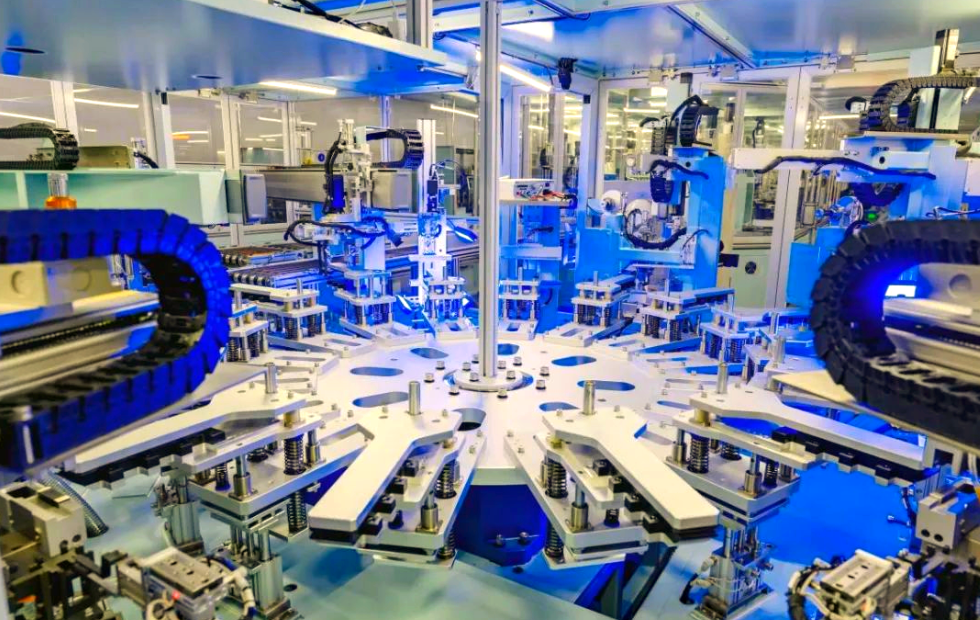
The fourth lens is innovation velocity. I see a growing innovation system around the solid state battery, but I also see gaps. Universities, research institutes, material companies, and cell developers need a shared roadmap. I would create a dedicated solid state battery innovation alliance with clear intellectual property rules, shared test protocols, and pilot-line access. The alliance should not be a ceremonial body. It should own milestones, publish benchmark data, and rotate engineers between laboratories and factories.
When I study the technical bottlenecks, I reduce them to a set of measurable problems. The first is solid-solid contact resistance. Unlike a liquid electrolyte, a solid electrolyte cannot easily wet every pore and particle. Contact loss increases impedance, creates current constriction, and accelerates degradation. The second is lithium dendrite formation. Lithium metal anodes can offer high capacity, but uneven plating can create short circuits. The third is chemo-mechanical degradation. Volume changes during cycling can crack interfaces and separate particles. The fourth is manufacturability. Thin solid electrolyte membranes, high-loading cathodes, and dry processing must be scaled without defects. The fifth is cost. The solid state battery must eventually compete with mature liquid lithium-ion systems.
$$ R_{contact} = \frac{\rho_e}{A} + \frac{\rho_i}{A} + \frac{1}{h A} $$
In this contact resistance expression, \(\rho_e\) and \(\rho_i\) represent electronic and ionic resistivity, \(A\) is contact area, and \(h\) is interfacial conductance. For a solid state battery, the term \(1/(hA)\) is often the limiting factor. My recommendation is to treat interface engineering as a first-class manufacturing variable, not as a laboratory afterthought.
$$ \sigma_{eff} = \sigma_0 \exp\left(-\frac{E_a}{k_B T}\right) $$
This Arrhenius relationship describes ionic conductivity. Here \(\sigma_{eff}\) is effective conductivity, \(\sigma_0\) is a pre-exponential factor, \(E_a\) is activation energy, \(k_B\) is the Boltzmann constant, and \(T\) is temperature. For the solid state battery, lower activation energy and thinner electrolytes are essential. However, thinning also increases the risk of dendrites and mechanical failure. This trade-off defines much of solid state battery engineering.
$$ L = \sqrt{D t} $$
I use the diffusion length equation to think about lithium transport. \(L\) is characteristic diffusion length, \(D\) is diffusivity, and \(t\) is time. In a solid state battery, poor diffusivity or long diffusion paths can limit rate capability. The design implication is that particle size, electrode thickness, and interface area must be co-optimized.
$$ j_{crit} = \frac{2 \sigma_{el} V_m}{F R_{int}} $$
This stylized critical current density relation highlights that higher electrolyte conductivity \(\sigma_{el}\), lower molar volume \(V_m\), and lower interfacial resistance \(R_{int}\) can delay dendrite onset. The solid state battery community often reports critical current density as a key benchmark. I would make it a mandatory metric for funded projects.
$$ C(t) = C_0 \left(1 – k t^{0.5}\right) $$
Capacity fade in an solid state battery can be approximated by a square-root-of-time model in some regimes. \(C(t)\) is capacity at time \(t\), \(C_0\) is initial capacity, and \(k\) is a degradation coefficient. The practical goal is to reduce \(k\) while maintaining high initial capacity. I see this as a combined materials and process challenge.
| Bottleneck | Physical Cause | Key Metric | My Proposed Action |
|---|---|---|---|
| Solid-solid contact resistance | Poor wetting and contact area loss | Interfacial resistance | In-situ sintering, compliant interlayers |
| Lithium dendrites | Uneven plating and stress concentration | Critical current density | Surface coatings, 3D hosts, pressure control |
| Chemo-mechanical cracking | Volume change during cycling | Capacity retention | Single-crystal cathodes, buffering layers |
| Electrolyte membrane defects | Thin film pinholes and grain boundaries | Yield and breakdown voltage | Roll-to-roll quality control |
| Slow rate capability | Limited ionic transport | Areal capacity at rate | Electrode architecture and diffusion design |
| High cost | Expensive materials and low yield | Cost per kilowatt-hour | Learning curve and scale |
I also evaluate the market context. The electric vehicle market is maturing, and growth is no longer guaranteed to absorb every new battery technology at a premium. In my view, the solid state battery must diversify beyond passenger cars. Stationary storage, drones, electric tools, robotics, medical devices, and premium consumer electronics can provide early markets where high energy density or safety justifies initial cost. These niches can fund learning before the solid state battery enters mass-market vehicles.
$$ Q = \frac{C_{actual}}{C_{installed}} \times 100\% $$
Capacity utilization \(Q\) matters because the solid state battery will initially have low yields. A region cannot rely on utilization alone to solve cost. It needs product-market fit in high-value niches. I would prioritize applications where the solid state battery solves a real pain point, such as thermal runaway safety, low-temperature performance, or volumetric energy density.
$$ LCOS = \frac{\sum_{t=0}^{n} \frac{C_t}{(1+r)^t}}{\sum_{t=0}^{n} \frac{E_t}{(1+r)^t}} $$
The levelized cost of storage, \(LCOS\), is a useful discipline for the solid state battery in grid applications. \(C_t\) is cost in year \(t\), \(E_t\) is energy discharged, and \(r\) is discount rate. If an solid state battery cannot compete on \(LCOS\), it may still win on safety or footprint, but policy support should recognize that trade-off.
| Application | Why Solid State Battery Fits | Early Adoption Probability | Barrier I See |
|---|---|---|---|
| Premium electric vehicles | Higher energy density and safety | Medium-high | Cost and cycle life |
| Electric aviation and drones | High gravimetric energy density | High | Power density and certification |
| Stationary storage | Safety and long calendar life | Medium | Levelized cost |
| Consumer electronics | Thin form factor and safety | Medium-high | Supply chain maturity |
| Electric tools | High power and durability | Medium | Cost sensitivity |
| Medical and defense | Reliability and safety | High | Qualification time |
My strategic recommendation is to build an solid state battery pathway around five pillars: materials, cells, innovation, policy, and markets. I would not treat these as sequential. I would run them in parallel with stage gates. The first pillar is materials. The second is cell manufacturing. The third is research and workforce. The fourth is finance and regulation. The fifth is domestic and international market development.
| Pillar | Objective | Lead Actions | Success Metric |
|---|---|---|---|
| Materials | Secure battery-grade inputs | Upgrade manganese, phosphate, fluorine, lithium | Local content in solid state battery cells |
| Cells | Build pilot and early gigafactories | Dry electrode, stacking, formation, testing | Yield and energy density |
| Innovation | Solve interface and dendrite problems | Alliance, shared pilot line, benchmark database | Critical current density and cycle life |
| Policy | Reduce risk and align incentives | Stage-gate grants, tax credits, standards | Private co-investment ratio |
| Markets | Create early demand | Storage, drones, tools, premium vehicles | Contracted offtake volume |
I would also design a spatial strategy. Instead of scattering projects, I would concentrate the solid state battery ecosystem into a core innovation and cell-manufacturing zone, supported by two materials belts. The core zone should host pilot lines, characterization laboratories, battery management system developers, and headquarters functions. One materials belt should focus on manganese-rich cathodes and precursors. Another should focus on phosphate materials, fluorine chemistry, and electrolytes. This structure lowers logistics costs, improves knowledge spillovers, and makes the region more visible to global customers.
| Functional Zone | Primary Activity | Key Outputs | Link to Solid State Battery |
|---|---|---|---|
| Core innovation and cell zone | Pilot lines, testing, system integration | Prototype cells and modules | Direct solid state battery manufacturing |
| Manganese materials belt | Manganese sulfate, precursor, cathode | Manganese-rich active materials | Cathode supply for solid state battery |
| Phosphate and electrolyte belt | Phosphate cathode, fluorine chemicals, salts | LMFP, LiFSI, sulfide precursors | Electrolyte and cathode supply |
| Recycling and circularity zone | Disassembly, hydrometallurgy, refining | Recovered lithium, nickel, cobalt, manganese | Closed-loop solid state battery materials |
| Application demonstration zone | Storage, drones, tools, vehicles | Field data and certification | Market pull for solid state battery |
Technology roadmapping is essential. I would define three phases. In the first phase, the focus should be on materials qualification and solid electrolyte synthesis. In the second phase, the focus should be on pilot cell manufacturing, interface engineering, and safety validation. In the third phase, the focus should be on scale-up, cost reduction, recycling, and international standards. Each phase should have quantitative exit criteria.
$$ TRL = f(R, D, M, Q, S) $$
I use a stylized technology readiness level function where \(R\) is research depth, \(D\) is design maturity, \(M\) is manufacturability, \(Q\) is quality, and \(S\) is supply chain readiness. For the solid state battery, a high score in research alone is insufficient. I want to see \(M\) and \(Q\) rise together with \(R\).
| Phase | Time Horizon | Primary Goal | Exit Criterion |
|---|---|---|---|
| Phase I: Materials and interfaces | Near term | Qualify solid electrolytes and cathodes | Reproducible ionic conductivity and low impurity |
| Phase II: Pilot cells | Medium term | Build and test solid state battery prototypes | Cycle life and safety targets met |
| Phase III: Scale-up | Long term | Reduce cost and increase volume | Cost per kilowatt-hour and yield targets met |
| Phase IV: Circular economy | Continuous | Recover critical materials | Recovery rate and secondary material share |
Financing the solid state battery is not trivial. The capital intensity is high, the technology risk is real, and the revenue timeline is uncertain. I would therefore blend public and private capital. Public funds should support pre-competitive research, shared facilities, and testing. Private capital should fund pilot lines and commercial scale, but with risk-sharing instruments such as guarantees, subordinate debt, and offtake-linked financing.
$$ NPV = \sum_{t=1}^{n} \frac{CF_t}{(1+r)^t} – I_0 $$
In my financial screening, I use net present value, \(NPV\), where \(CF_t\) is cash flow in year \(t\), \(r\) is discount rate, and \(I_0\) is initial investment. For an solid state battery project, the early years often have negative cash flow. This makes milestone-based disbursement and long-duration capital essential.
$$ IRR: \sum_{t=1}^{n} \frac{CF_t}{(1+IRR)^t} – I_0 = 0 $$
The internal rate of return, \(IRR\), must be compared with the cost of capital and the risk premium for an solid state battery venture. I would not approve public support for a project that cannot articulate a credible path to positive \(NPV\) after scale-up.
| Financing Instrument | Best Use | Risk Bearer | My Assessment |
|---|---|---|---|
| Research grants | University and institute work | Public | Essential for pre-competitive solid state battery science |
| Public-private consortium | Shared pilot line and standards | Shared | High value for ecosystem building |
| Subordinate debt | Pilot line construction | Public-private | Useful when private senior debt is constrained |
| Loan guarantees | Equipment purchase | Public | Can lower financing cost for solid state battery scale-up |
| Equity investment | High-growth cell developers | Private | Should be disciplined and milestone-linked |
| Offtake agreements | Early revenue certainty | Buyer and seller | Powerful signal for solid state battery bankability |
Workforce development deserves its own strategy. The solid state battery requires electrochemists, materials scientists, mechanical engineers, process engineers, data scientists, and quality specialists. I would create interdisciplinary graduate programs, technician certificates, and industrial residencies. The solid state battery factory of the future will be data-rich, so I would also train operators in statistical process control, machine learning, and digital twin methods.
$$ Y = \prod_{i=1}^{n} y_i $$
In a multi-step solid state battery process, overall yield \(Y\) is the product of step yields \(y_i\). This formula explains why pilot lines are so valuable. If each of twenty steps has ninety-five percent yield, overall yield is only about thirty-six percent. Improving each step and reducing the number of steps are both critical for the solid state battery.
Quality and safety standards will determine which solid state battery products reach global markets. I recommend early participation in standards development for solid electrolyte characterization, cell safety, cycling protocols, and recycling. Standards are not only technical documents. They are market access instruments. A region that helps write solid state battery standards can reduce certification costs for its own producers and shape the competitive landscape.
| Standard Area | Why It Matters for Solid State Battery | Desired Outcome |
|---|---|---|
| Electrolyte characterization | Comparable conductivity and stability data | Reliable supplier selection |
| Cell safety testing | Dendrite and thermal runaway risk | Consumer and insurer confidence |
| Cycle life protocols | Different chemistry and pressure effects | Fair comparison across solid state battery designs |
| Recycling and labeling | Material recovery and traceability | Circular solid state battery supply chain |
| Transport and storage | Lithium metal handling | Safe global trade |
I also want to stress the importance of digital infrastructure. The solid state battery is a complex system, and its failure modes are often subtle. Machine learning can help identify defects in electrode coatings, predict remaining useful life, optimize formation protocols, and correlate process parameters with cell performance. A digital twin of an solid state battery pilot line can shorten development cycles and reduce scrap.
$$ D_{twin} = \int_{0}^{T} \Phi(P, M, E, Q) \, dt $$
In my conceptual digital twin equation, \(D_{twin}\) integrates process data \(P\), material data \(M\), equipment data \(E\), and quality data \(Q\) over time \(T\). The solid state battery industry will reward organizations that can learn faster from every experiment and every production batch.
The circular economy is another pillar. The solid state battery will use lithium, nickel, cobalt, manganese, and other critical metals. Recycling reduces import dependence and improves life-cycle performance. I would design solid state battery products for disassembly and material recovery from the beginning. This includes standardized cell formats, low-temperature separation methods, and hydrometallurgical processes that recover lithium and transition metals with high yield.
$$ R_{rec} = \frac{m_{recovered}}{m_{input}} \times 100\% $$
Recovery rate \(R_{rec}\) is a key metric. For an solid state battery, recycling is complicated by solid electrolytes, composite electrodes, and lithium metal. I recommend dedicated research on sulfide, oxide, and polymer electrolyte recycling. The region that solves solid state battery recycling will have a strategic advantage in both cost and sustainability.
| Material | Recycling Challenge | Potential Process | My Priority |
|---|---|---|---|
| Lithium | High reactivity and low concentration | Hydrometallurgy, direct recovery | High |
| Nickel and cobalt | Mixed cathode chemistries | Solvent extraction, precipitation | High |
| Manganese | Low value but high volume | Selective leaching | Medium-high |
| Sulfur | Gas handling and odor | Closed-loop sulfide conversion | Medium |
| Lanthanum and zirconium | Small quantities and dispersion | Specialty separation | Medium |
| Graphite and silicon | Anode composite separation | Thermal and mechanical methods | Medium |
International and regional cooperation should not be an afterthought. The solid state battery supply chain is global. I recommend attracting foreign direct investment, forming joint development agreements, and participating in international research projects. At the same time, local firms should build their own intellectual property portfolios. Cooperation without absorptive capacity can lead to dependency. Cooperation with clear learning goals can lead to capability.
I would also create application sandboxes. An solid state battery sandbox would allow new cells to be tested in real operating environments under controlled safety conditions. Examples include microgrid storage, cold-climate drones, electric buses, and backup power for data centers. Field data from sandboxes can accelerate certification and attract customers.
| Sandbox | Host Application | Data Gained | Commercial Signal |
|---|---|---|---|
| Grid storage | Microgrid and peak shaving | Calendar life and efficiency | Utility offtake |
| Low-altitude aviation | Drones and air taxis | Power density and safety | Aviation certification |
| Cold-climate transport | Buses and logistics vehicles | Low-temperature performance | Fleet adoption |
| Data center backup | Uninterruptible power | Reliability and footprint | Premium pricing |
| Portable tools | Professional construction | Cycle life under high power | Brand partnership |
In my view, the greatest risk is not that the solid state battery will fail technically. The greatest risk is that a region will build capacity too early, choose the wrong chemistry, or fail to integrate the value chain. To manage this risk, I recommend a portfolio approach across electrolytes, a stage-gate investment process, and a strong focus on manufacturing yield. The solid state battery is a marathon with sprint windows. Discipline matters.
$$ Risk = P(failure) \times I(impact) $$
I use a simple risk score where \(P(failure)\) is probability and \(I(impact)\) is severity. For an solid state battery program, the highest risks are technical performance, manufacturing yield, raw material supply, and market adoption. Each risk should have a mitigation owner and a measurable trigger.
| Risk | Probability | Impact | Mitigation I Recommend |
|---|---|---|---|
| Solid electrolyte performance shortfall | Medium | High | Parallel chemistry portfolio |
| Manufacturing yield below target | High | High | Pilot line and statistical process control |
| Lithium supply disruption | Medium-high | High | Recycling, diversified sourcing, associated resources |
| Cost remains above market | High | High | Niche markets and learning curve support |
| Talent shortage | Medium | Medium-high | University programs and industrial residencies |
| Standards delay | Medium | Medium | Early participation in standards bodies |
I also believe that the solid state battery should be linked to broader industrial policy goals. It can support high-quality employment, regional innovation, clean energy, and export diversification. But those benefits are not automatic. They require deliberate linkages: local content requirements that are realistic, supplier development programs, and technology transfer mechanisms that build local capability.
My recommended governance model has three layers. The first layer is a strategic council that sets direction and resolves cross-agency conflicts. The second layer is a technical committee that reviews projects and maintains a solid state battery roadmap. The third layer is an implementation office that manages pilot lines, standards, and reporting. This model avoids both fragmented ministries and excessive centralization.
| Governance Layer | Membership | Responsibility | Output |
|---|---|---|---|
| Strategic council | Government, industry, finance, academia | Set vision and resource allocation | Solid state battery strategy |
| Technical committee | Scientists, engineers, quality experts | Evaluate projects and standards | Roadmap and milestone reviews |
| Implementation office | Program managers and analysts | Execute, monitor, and report | Pilot line and KPI dashboard |
I would measure success with a balanced scorecard. Technical metrics should include ionic conductivity, critical current density, cycle life, energy density, and safety. Industrial metrics should include yield, cost per kilowatt-hour, local content, and capacity utilization. Innovation metrics should include patents, publications, prototypes, and standards contributions. Market metrics should include offtake contracts, field deployments, and exports.
| KPI Category | Metric | Why It Matters for Solid State Battery | Target Direction |
|---|---|---|---|
| Technical | Ionic conductivity | Enables rate and low-temperature performance | Higher |
| Technical | Critical current density | Suppresses dendrites | Higher |
| Technical | Cycle life | Determines commercial viability | Higher |
| Industrial | Yield | Drives cost and quality | Higher |
| Industrial | Cost per kilowatt-hour | Determines market competitiveness | Lower |
| Innovation | Joint patents | Measures collaboration | Higher |
| Market | Offtake volume | Signals bankability | Higher |
| Circularity | Recovery rate | Reduces import dependence | Higher |
In my final assessment, the solid state battery pathway should be built on patience and urgency at the same time. Patience is required because the science and manufacturing challenges are deep. Urgency is required because the global market is compounding and standards are being set now. A resource-rich region with existing electrochemical industry can succeed if it focuses on materials upgrade, cell pilot lines, interface science, workforce, finance, and circularity.
I would not promise that the solid state battery will replace all liquid lithium-ion batteries overnight. I would instead argue that the solid state battery will first capture premium and safety-critical applications, then expand as cost falls. The regions that learn fastest in those early applications will be best positioned for the mass market.
$$ E_{density} = \frac{V \cdot Q}{m} $$
Energy density is a central figure of merit. \(V\) is voltage, \(Q\) is capacity, and \(m\) is mass. For the solid state battery, higher voltage and higher capacity must be achieved without sacrificing cycle life or safety. This is the core engineering trade-off I see across cathode, anode, and electrolyte development.
$$ P_{density} = \frac{E_{density}}{\Delta t} $$
Power density is energy density divided by discharge time \(\Delta t\). Some solid state battery designs excel at energy density but lag in power. I would therefore match chemistries to applications. A high-energy solid state battery may suit aviation, while a high-power solid state battery may suit tools and hybrid systems.
I also see a strong role for pilot-scale learning. Pilot lines are not miniature factories. They are instruments for discovering unknown unknowns. They reveal how moisture, pressure, temperature, particle size, and stacking pressure interact. They generate the data needed for digital twins. They train the workforce. They convince investors. For the solid state battery, a well-designed pilot line is worth more than a large announced capacity with no validated process.
Finally, I would integrate the solid state battery strategy with recycling, renewable energy, and advanced manufacturing. The solid state battery can be a flagship for a resource-based economy that moves up the value chain. It can turn minerals into materials, materials into cells, cells into systems, and systems into exportable solutions. That is the pathway I recommend: not a single project, but an ecosystem; not a resource boom, but an industrial capability; not a short-term subsidy race, but a long-term learning system.
In conclusion, I view the solid state battery as a rare opportunity to align resource endowment, industrial policy, scientific research, and market demand. The solid state battery will reward regions that invest in interfaces, manufacturing yield, standards, and circularity. It will punish those that rely only on raw materials or isolated pilot projects. My recommended path is clear: build a portfolio of materials, support a core cell-manufacturing cluster, fund pre-competitive research, create early markets, protect the environment, and measure progress with transparent metrics. If this path is executed with discipline, the solid state battery can become a foundation of long-term industrial competitiveness rather than a passing policy theme.