
Egypt has become one of Africa’s most closely watched automotive markets, and Chinese automakers are moving faster than ever to secure a long-term position there. With a large population, a strategic location linking Africa, the Middle East and Europe, and a recovering consumer market, the country is no longer simply an export destination. It is becoming a base for product launches, local assembly, supplier development and regional distribution.
The latest signal came with the Egyptian launch of the Avatr 07 REEV, a mid-size SUV and the range-extended electric vehicle version of the Avatr 07. Avatr introduced three trim levels, priced between EGP 2.29 million and EGP 2.79 million, equivalent to roughly RMB 307,000 to RMB 370,000. It is the brand’s first range-extended electric vehicle in Egypt and fills out a dual product strategy built around battery electric vehicles and range-extended electric vehicles.
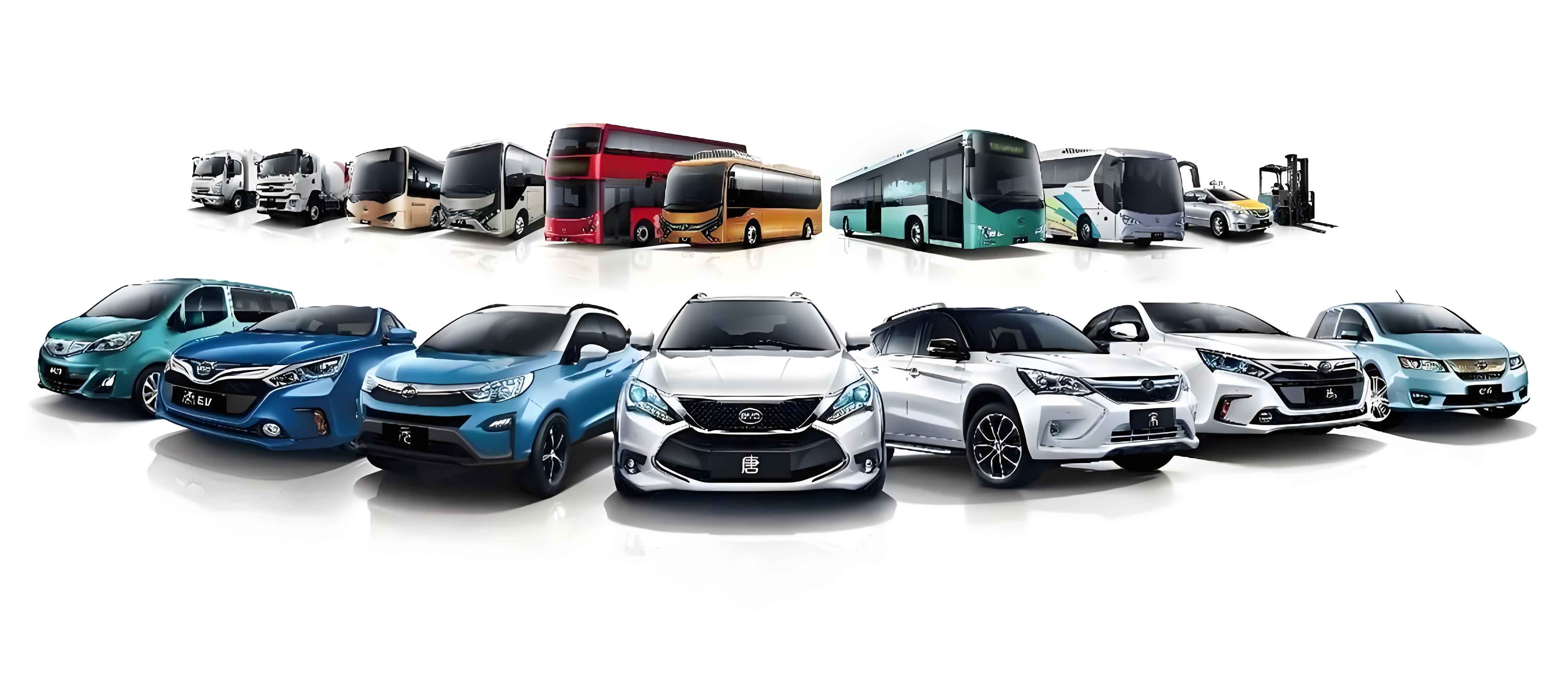
The launch is part of a broader wave. Chery, SAIC, Geely, BYD, GAC and other Chinese automakers have steadily increased their commitment to Egypt over the past two years. Their plans now combine full vehicle imports, brand building, dealer development, local assembly and, in several cases, export-oriented production. That combination is changing the structure of Egypt’s passenger vehicle market and making Chinese brands a leading force in the country’s automotive recovery.
1. A Rebounding Market Becomes a Strategic Battleground
Egypt is the third-largest automotive market in Africa. New vehicle sales reached a peak of 276,000 units in 2021 before three pressures—foreign exchange shortages, import restrictions and high inflation—weighed heavily on demand. Sales fell to 179,000 units in 2022, 86,000 units in 2023 and 97,000 units in 2024.
The macro-financing environment began to improve as financing from the International Monetary Fund, supporting funds from the European Union and Gulf capital gradually arrived. That helped set the stage for a strong rebound in 2025. According to the Automobile Market Information Council, or AMIC, Egypt’s new vehicle sales reached about 174,000 units in 2025, up 70% year on year. Passenger vehicle sales totaled 134,000 units, an increase of 64%.
For a long period, Japanese and Korean automakers dominated Egypt’s passenger vehicle market. That dominance is now being challenged. Chinese brands accounted for only about 10% of Egypt’s passenger vehicle market in 2020. By 2025, their share had climbed to 39%. Chinese brand vehicle sales reached 50,699 units in 2025, up 67% year on year, and their overall market share rose to 29%. In the passenger vehicle segment, their share reached 39%.
The momentum has continued into 2026. In the first half of the year, Chinese brands accounted for 42.7% of Egypt’s passenger vehicle market. Chery, MG, Changan, BAIC and Haval all ranked among the top ten brands by sales. The rise is not limited to a single price segment or a single powertrain. Chinese automakers are competing in conventional fuel vehicles, hybrid vehicles and the electric vehicle segment, while also preparing for deeper local production.
| Year | New Vehicle Sales | Passenger Vehicle Sales | Chinese Brand Share in Passenger Vehicle Market | Key Market Development |
|---|---|---|---|---|
| 2021 | 276,000 units | Not disclosed in the source data | About 10% in 2020 | Market peak before foreign exchange and import pressures intensified |
| 2022 | 179,000 units | Not disclosed in the source data | Not disclosed in the source data | Market begins to come under pressure |
| 2023 | 86,000 units | Not disclosed in the source data | Not disclosed in the source data | Import constraints and inflation hit demand |
| 2024 | 97,000 units | Not disclosed in the source data | Not disclosed in the source data | Market remains under pressure |
| 2025 | About 174,000 units, up 70% | 134,000 units, up 64% | 39% | Strong rebound; Chinese brand sales reach 50,699 units, up 67% |
| First half of 2026 | Not disclosed in the source data | Not disclosed in the source data | 42.7% | Chery, MG, Changan, BAIC and Haval enter the top ten brand ranking |
The speed of the shift is notable because Egypt’s automotive market has traditionally rewarded established global brands with long dealer networks and strong residual value perceptions. Chinese automakers have narrowed that advantage through competitive pricing, faster product refreshes, richer equipment levels and closer cooperation with local distributors. The result is a more fragmented and more competitive market in which Chinese brands are no longer marginal players.
2. A Product Offensive Across Fuel, Hybrid and Electric Vehicle Segments
Chinese brands have built their initial scale in Egypt on conventional fuel vehicles and hybrids. Models such as the MG ZS, Tiggo 4 Pro, Arrizo 5, Tiggo 7 and MG 5 are among the country’s top-selling models. These vehicles give Chinese automakers a broad customer base, familiar service requirements and a foundation for local assembly.
The electric vehicle segment, however, is emerging as the key variable for reshaping the competitive landscape. Egypt’s electric vehicle market remains relatively small, but sales are growing steadily. Charging infrastructure started late but is catching up quickly. Chinese automakers are positioning themselves early, using battery electric vehicles and range-extended electric vehicles to build technology credentials and to prepare for future demand.
Avatr’s Egyptian strategy illustrates the approach. In July 2025, the brand announced a partnership with Kasrawy Group, a leading luxury vehicle dealer in Egypt, marking its entry into Africa with Egypt as the first stop. At the end of November 2025, Avatr launched the Avatr 11 and Avatr 12 battery electric vehicles in Egypt. The Avatr 07 REEV now adds a range-extended electric vehicle option, creating a dual-line product portfolio.
BYD has taken a similar long-term view. In February 2026, BYD and Egypt’s Mansour Group formally entered the Egyptian market and established the country’s first BYD technology center in Sheikh Zayed. The first batch of models includes the Seagull, Song Plus EV and Song Plus DM-i. The partnership leverages Mansour Group’s established distribution network to roll out sales and service quickly.
These launches matter beyond individual brand ambitions. They show that Chinese automakers are not treating Egypt only as a market for low-cost fuel vehicles. They are introducing electric vehicle models, plug-in hybrid models and range-extended electric vehicles, often through high-profile local partners. That product breadth strengthens the case for local assembly and for deeper supplier localization.
| Brand | 2025 Performance | Ranking or Market Position |
|---|---|---|
| Chery | Sales up 35.4% | Third in the brand sales ranking |
| MG | Sales up 117.1% | Fourth, moving up two places |
| BAIC | Sales up 383% | Ninth |
| Chinese brands overall | 8 brands in the top 20 | Combined passenger vehicle market share of 39% in 2025 |
| Top models | MG ZS, Tiggo 4 Pro, Arrizo 5, Tiggo 7 and MG 5 | All ranked in the top ten by model sales |
The competitive pressure is now visible across the market. Ibrahim Labib, chief executive of Egypt’s compulsory motor insurance pool, said Chinese vehicles have triggered a “real structural change” in the local market and have become important competitors to traditional Japanese, Korean and European brands. That assessment reflects both the scale of Chinese brand sales and the breadth of their product ranges.
3. Industrial Policy Turns Localization Into a Strategic Priority
The rapid rise in market share is closely linked to a strategic shift from full vehicle exports to local production. That shift aligns with the Egyptian government’s drive to localize the automotive industry. In 2022, Egypt introduced a top-level automotive industry strategy and launched the National Automotive Industry Development Program, known as AIDP.
The policy uses a layered tariff structure to discourage imports of fully built vehicles and encourage local assembly. It also sets stepped local content requirements to build a domestic parts industry. The broader aim is to turn Egypt into an automotive manufacturing and export center serving the Middle East and Africa.
| Vehicle Category | Import Tariff |
|---|---|
| Battery electric vehicle | 0% |
| Fuel vehicle with engine displacement of 1.6 liters or less | 40% |
| Fuel vehicle with engine displacement from 1.6 liters to 2.0 liters, including 2.0 liters | 100% |
| Fuel vehicle with engine displacement above 2.0 liters | 135% |
| Completely knocked down assembly | 5% to 7% |
The tariff gap is substantial. A battery electric vehicle enters Egypt duty-free, while a fuel vehicle with an engine between 1.6 liters and 2.0 liters faces a 100% tariff and a model above 2.0 liters faces a 135% tariff. By contrast, completely knocked down, or CKD, assembly attracts a tariff of only 5% to 7%. For automakers planning to operate in Egypt over the long term, local assembly has become a practical necessity.
In 2026, Egypt introduced a revised and upgraded AIDP with more specific quantitative goals. By 2030, local value added is to rise to 60%, local parts content is to exceed 35%, and the program aims for annual whole vehicle capacity of 100,000 units. Under the policy, companies whose local parts localization rate exceeds 35% can receive EGP 5,000 per vehicle for every additional percentage point of localization.
Land incentives add another layer. New vehicle plants in priority areas can receive a 100% refund of land costs if they reach annual production of more than 100,000 conventional fuel vehicles or more than 10,000 electric vehicles. Existing plants that meet the criteria can receive a 50% refund. The government also plans an old vehicle replacement program covering taxis and private cars, with electrification as a central objective, to stimulate demand for new energy vehicles.
| Policy Metric | Target or Incentive |
|---|---|
| Local value added by 2030 | 60% |
| Local parts content by 2030 | More than 35% |
| AIDP annual whole vehicle capacity target | 100,000 units |
| Long-term national capacity target by 2030 | 500,000 units |
| Localization reward | EGP 5,000 per vehicle for each percentage point above a 35% localization rate |
| Land incentive for new plants in priority areas | 100% land cost refund for annual output above 100,000 fuel vehicles or above 10,000 electric vehicles |
| Land incentive for existing qualifying plants | 50% refund |
The policy framework is designed to move Egypt beyond simple assembly toward a modern system based on localized manufacturing and export orientation. Investment support is tied to three core indicators: localization rate, annual output and export scale. For Chinese automakers, that framework creates both an opportunity and a deadline. Brands that build local supply chains early can benefit from tariff advantages, incentives and stronger relationships with Egyptian partners. Brands that rely only on imports will face rising cost pressure and weaker long-term competitiveness.
4. Local Production Projects Begin to Form a Cluster
Under the policy guidance, CKD assembly has gradually become the mainstream model. Chinese automakers are entering local production through joint ventures, contract assembly agreements and dedicated plant investments. The result is an emerging industrial cluster that supports both domestic sales and regional exports.
Chery is one of the earliest and most deeply localized Chinese automakers in Egypt. It entered the market in 2004 through CKD assembly and now has multiple models assembled locally. In November 2024, Chery’s premium brand Exeed started local production in Egypt, extending Chery’s localization from mainstream models to the higher-end segment.
SAIC Motor has chosen a partnership with a leading local player. At the end of December 2024, SAIC signed a technical cooperation agreement with Mansour Group, Egypt’s largest vehicle sales company, for local production and assembly of MG brand models. Under the agreement, Mansour Group will produce the next-generation MG5 sedan at its new greenfield plant, with production later expanding to SUVs and new energy vehicles. The plant’s initial capacity is 50,000 units, with a second phase expansion to 100,000 units.
Geely’s project moved quickly. In January 2025, Geely began production at the BAMC plant in 6th of October City in Giza Governorate. The project marked Geely’s first CKD plant in the Middle East and Africa. Egyptian Prime Minister Mostafa Madbouly said at the event that the automotive industry is an important strategic sector for the global economy and that the Geely plant is an important step in strengthening Egypt’s industrial base, especially in automotive manufacturing.
In May 2025, Jetour signed an agreement with Kasrawy Group, a leading Egyptian vehicle distributor, to invest USD 123 million in a new vehicle assembly plant. The plant will mainly assemble models such as the Jetour T1 and T2. Products will not only supply the Egyptian market but also serve North African markets including Sudan and Libya.
Also in May 2025, GAC signed a cooperation agreement with Abdul Latif Jameel, a large vehicle distributor in the Middle East and North Africa, to advance a CKD localization project in Egypt. The project will build welding, assembly and vehicle inspection lines, with mass production expected in the second half of 2026 and annual output value expected to exceed USD 80 million. Before that agreement, GAC had already worked with Abdul Latif Jameel to import models including the Emzoom, Empow, Emkoo and GS4. GAC views Egypt as an important anchor for its Middle East and Africa strategy and plans to use the country as a regional hub to reach neighboring markets.
| Automaker or Brand | Local Partner or Site | Project Details |
|---|---|---|
| Chery and Exeed | CKD operations in Egypt | Chery entered through CKD assembly in 2004; Exeed began local production in November 2024 |
| SAIC and MG | Mansour Group | Technical cooperation signed in December 2024; greenfield plant to produce next-generation MG5, followed by SUVs and new energy vehicles; initial capacity of 50,000 units and second-phase capacity of 100,000 units |
| Geely | BAMC plant in 6th of October City, Giza Governorate | Production started in January 2025; first CKD plant in the Middle East and Africa |
| Jetour | Kasrawy Group | Agreement signed in May 2025; USD 123 million investment; assembly of T1 and T2 models; exports to Sudan and Libya planned |
| GAC | Abdul Latif Jameel | Agreement signed in May 2025; CKD project with welding, assembly and inspection lines; mass production expected in the second half of 2026; annual output value expected to exceed USD 80 million |
| BYD | Mansour Group | Market entry in February 2026; first BYD technology center in Sheikh Zayed; initial models include Seagull, Song Plus EV and Song Plus DM-i |
Taken together, these projects show that Chinese automakers are moving from one-off vehicle exports to a more durable operating model. Local assembly reduces tariff exposure, supports faster model introductions and creates a platform for supplier development. It also strengthens relationships with Egyptian partners and creates jobs, both of which matter in a policy environment that rewards long-term industrial commitment.
5. The Electric Vehicle Opportunity Remains Central to the Next Phase
The electric vehicle segment is still small in Egypt, but it is strategically important. The government’s tariff structure exempts battery electric vehicles from import duties, while the AIDP framework offers incentives for electric vehicle production. The old vehicle replacement plan, which includes electrification of taxis and private cars, could further support electric vehicle demand if implemented effectively.
Chinese automakers are already preparing for that possibility. Avatr’s two battery electric vehicle models and its new range-extended electric vehicle give the brand a presence in both the premium electric vehicle segment and the broader electrified segment. BYD’s initial lineup combines a battery electric vehicle with a plug-in hybrid model, allowing the brand to address different customer needs while charging infrastructure develops.
The electric vehicle market in Egypt still faces familiar constraints. Charging infrastructure started late, although it is improving quickly. Consumer awareness of electric vehicle ownership costs is growing but remains uneven. Importers and assemblers must also manage battery supply, after-sales training and service equipment. These challenges are significant, but they do not diminish the strategic value of early entry. Automakers that establish electric vehicle sales, service and charging partnerships now will be better positioned when demand accelerates.
For Chinese automakers, the electric vehicle segment also offers a way to move beyond price-based competition. A battery electric vehicle or range-extended electric vehicle can showcase technology, design and software features. That can help brands build a stronger image in a market where Japanese and Korean models have long dominated. The transition will not happen overnight, but the direction is clear: the electric vehicle is becoming a central element of the Chinese product offensive in Egypt.
6. Location and Trade Access Strengthen Egypt’s Regional Role
For Chinese automakers, Egypt’s value is not limited to its domestic market of 110 million people. The country sits at the junction of Asia, Africa and Europe and controls the Suez Canal. It also has preferential trade agreements with the European Union, the African Continental Free Trade Area and several Arab countries. Those agreements make Egypt a potentially attractive base for reaching the Middle East and North Africa.
Jetour’s plant plans already reflect that logic. The company intends to export from Egypt to Sudan and Libya, turning local assembly into a regional supply platform. GAC has similarly described Egypt as a strategic anchor for its Middle East and Africa strategy and as a hub for neighboring countries. As more Chinese automakers build local capacity, Egypt could become a link in a wider regional production and distribution network.
That regional role depends on reliable logistics, consistent quality and competitive local costs. It also depends on the development of a local supplier base. If Egypt can raise local content in components such as interiors, wiring, plastics, stamping and batteries, local assembly will become more cost-effective and more resilient. The AIDP’s localization targets are designed to encourage exactly that process.
7. Challenges Remain Despite the Strong Momentum
The growth story is compelling, but Chinese automakers still face important challenges in Egypt. The first is currency and foreign exchange risk. The Egyptian pound has depreciated sharply multiple times since 2022. Local production revenue is denominated in Egyptian pounds, while many components and inputs are imported or priced in foreign currency. Automakers must manage exchange-rate exposure and profit repatriation carefully.
The second challenge is the local supply chain. Egypt’s automotive supplier base remains underdeveloped, and core components are still highly dependent on imports. Most local production is still CKD assembly rather than full local manufacturing. Raising local content will require sustained investment in supplier development, quality control and workforce training. The AIDP incentives help, but they cannot replace the need for reliable industrial partners.
The third challenge is brand premium. Chinese brands have gained market share largely through competitive pricing and rich product offerings. Moving into higher-priced segments will require long-term investment in brand image, dealer experience, after-sales service and residual value. The launch of premium and near-premium models such as the Avatr 07 REEV shows ambition, but building lasting brand equity takes time.
There are also competitive and policy risks. Japanese, Korean and European automakers are not standing still. They have long-established dealer networks, customer relationships and service infrastructure. As Egypt’s market recovers, competition will intensify. Policy implementation will also matter. Tariff rules, localization measurements and incentive disbursement must be predictable if automakers are to commit to long-term investment.
8. Outlook: From Market Share Gains to Industrial Depth
The next phase of Chinese automaker expansion in Egypt will be judged less by import volumes and more by industrial depth. Local assembly, supplier localization, electric vehicle introduction and export capability will determine which brands build durable positions. The companies that combine competitive products with strong local partners and clear localization plans are likely to lead.
The market data already point in that direction. Chinese brands moved from about 10% of Egypt’s passenger vehicle market in 2020 to 39% in 2025 and 42.7% in the first half of 2026. Chinese brand sales reached 50,699 units in 2025, and eight Chinese brands ranked in the top 20. Chery, MG and BAIC posted strong growth, while models such as the MG ZS, Tiggo 4 Pro, Arrizo 5, Tiggo 7 and MG 5 became top-ten sellers.
Those gains are now being reinforced by local production. Chery’s long-standing CKD operations, SAIC’s greenfield plant with Mansour Group, Geely’s first CKD plant in the Middle East and Africa, Jetour’s export-oriented assembly project and GAC’s planned CKD lines all point to a deeper commitment. BYD’s entry with Mansour Group and its technology center in Sheikh Zayed add another important dimension, especially for electric vehicle development.
Egypt’s policy framework is likely to remain central to this process. The tariff gap between fully built vehicles and CKD kits, combined with AIDP localization targets and land incentives, makes local production the most viable long-term route. At the same time, the government’s ambition to reach 500,000 units of annual vehicle capacity by 2030 and to raise local value added to 60% shows that Egypt wants more than assembly. It wants a manufacturing ecosystem.
For Chinese automakers, that creates an opportunity to become part of Egypt’s industrial base rather than remaining external suppliers. The electric vehicle segment offers a particularly important opening. Battery electric vehicles and range-extended electric vehicles can help Chinese brands demonstrate technology and differentiate themselves in a market still dominated by conventional fuel vehicles. As charging infrastructure improves and old vehicle replacement programs take shape, the electric vehicle could become a more significant driver of demand.
The overall direction is clear. Egypt’s automotive market is recovering, Chinese brands are gaining share and local production is expanding. The competition is moving from vehicle imports to industrial capability. In that transition, the electric vehicle will not be the only measure of success, but it will be one of the most important. Chinese automakers that combine localized production, electric vehicle technology and strong after-sales networks are best placed to shape the next stage of Egypt’s automotive market.