
YIBIN, Sept. 3, 2026 — A power battery in Sichuan can now move through an unusually complete industrial journey, from lithium ore entering the city to a finished cell being installed in a vehicle, a ship, a storage system or an intelligent device, and eventually to retired batteries being collected, processed and returned to the value chain. That full-chain capability is becoming a defining feature of the province’s power battery sector as it shifts from scale expansion toward value creation and global competition.
The latest signal came on Sept. 2 in Yibin’s Sanjiang New Area, where a launch event for advanced battery safety innovation results updated the industrial coordinates of Yibin, known as China’s Power Battery Capital. Sichuan Saike Power Technology Co., Ltd. announced that its 400 Wh/kg high-safety battery had reached commercial application, while its sulfide all-solid-state battery had entered the engineering verification stage. The milestone came only nine months after the company’s solid-state battery project, Phase I, officially began production.
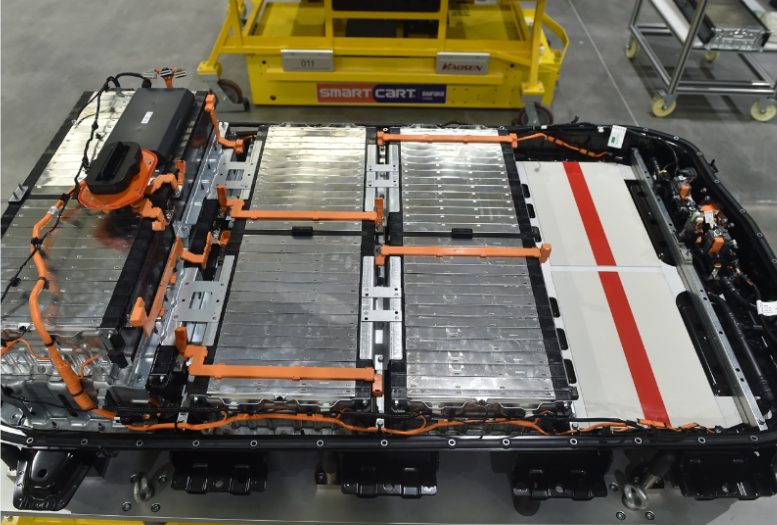
That pace reflects a broader evolution. Yibin and Sichuan are not only expanding output; they are updating the industrial image of the power battery sector, aiming to build a world-class power battery industry cluster and to accelerate both the speed and the span of their leadership. The province is connecting mining resources, key materials, cell manufacturing, equipment, applications, recycling and green standards into a single industrial narrative, with the power battery at its center.
| Indicator | Value cited |
|---|---|
| Commercialized high-safety power battery energy density | 400 Wh/kg |
| Time from solid-state battery project Phase I production to the latest commercialization milestone | 9 months |
| National and provincial high-level innovation platforms supporting the sector | 15 |
| Power battery and core supporting projects introduced in Yibin | More than 130 |
| Local efficient matching rate for power battery structural parts in Yibin | Above 90 percent |
| Growth of new energy heavy trucks in Yibin compared with 2022 | 16 times |
| Electric heavy truck share in Yibin | Above 31 percent, first in Sichuan |
| Bus electrification target in Yibin | 100 percent by 2027 |
| New energy ships launched in a single batch in Yibin | 4 |
| National-level zero-carbon parks in the first batch | 52 |
| Edition of the World Power Battery Conference | Fifth |
- A complete power battery chain takes shape from ore to rebirth
The industrial logic is straightforward but difficult to execute. A power battery depends on lithium resources, cathode and anode materials, separators, electrolytes, structural components, manufacturing equipment, quality control, application scenarios and end-of-life recycling. Sichuan is seeking to coordinate these links across different cities and resource regions so that the power battery sector can operate as an integrated ecosystem rather than a collection of isolated projects.
Yibin is the main production base for new energy vehicles and power batteries, including energy storage, in Sichuan. The city has introduced more than 130 power battery and core supporting projects, and more than 90 percent of power battery structural parts can now be efficiently matched locally. That local density reduces logistics time, improves supply-chain responsiveness and strengthens the ability of the power battery cluster to absorb new investment and new technology.
The wider ecological circle is also becoming clearer. Yibin and other main power battery production locations are deepening cooperation with Ganzi and Aba, which have lithium mining resource advantages, and with Suining, a key materials production location. This cooperation is intended to make the power battery value chain more resilient and more efficient. A power battery can begin with ore entering the city, move through material processing and cell manufacturing, and finally reach retired regeneration within Sichuan.
The province’s approach reflects a deliberate shift. The power battery industry is entering a phase in which technical iteration and market competition are intensifying. Sichuan’s leadership has proposed building the power battery industry into a stronger and more complete chain, with the aim of pushing the sector from a scale advantage toward a value advantage. The focus is not only on how many power batteries can be produced, but also on how much technological content, industrial coordination and application value each power battery can generate.
That shift is visible in Yibin’s industrial planning. The city is not treating the power battery as a single manufacturing item. It is treating the power battery as the core of a broader advanced manufacturing system that includes materials, equipment, vehicles, ships, energy storage, recycling and digital management. The result is a power battery cluster that is trying to compete on quality, safety, cost, green performance and innovation rather than on volume alone.
- Solid-state and sodium-ion technologies push the power battery sector into new tracks
Solid-state batteries are widely viewed as a high ground for the next generation of power battery technology. The player that achieves industrial application first can occupy a future technology position. Sichuan is relying on 15 national and provincial high-level innovation platforms to accelerate breakthroughs in key core technologies for the next generation of power battery products. The province has included solid-state batteries in its key cultivation of new tracks and is promoting companies such as Saike Power and Qingtao Energy toward large-scale industrialization.
In Yibin, the Saike Power all-solid-state battery pilot project is racing toward construction completion. It is described as the first intelligent pilot line for all-solid-state battery manufacturing in China, with a plan to complete construction by the end of the year and begin production in early next year. The purpose is to bridge the last mile from laboratory results to industrialization, a step that is often decisive for any new power battery technology.
The latest progress at Saike Power illustrates how quickly the power battery frontier is moving. The company’s 400 Wh/kg high-safety battery has reached commercial application, and its sulfide all-solid-state battery has entered engineering verification. Those developments came only nine months after the solid-state battery project Phase I began production. Such speed does not remove the technical challenges, but it shows that the power battery supply chain in Sichuan is gaining the ability to translate research into engineering and engineering into products.
Sichuan is also making a forward-looking layout in the sodium-ion battery track. This is intended to reserve diversified technical strength for the power battery industry. Different application scenarios require different combinations of cost, safety, energy density, cycle life and low-temperature performance. By supporting multiple routes, including solid-state and sodium-ion, the province is building a more flexible power battery technology portfolio rather than betting on a single solution.
Yibin’s solid-state battery effort is organized around multiple technical routes. Through the work station of Academician Ouyang Minggao, the team of Academician Chen Jun and the Intelligent Solid-State Battery Innovation Center, the city is pursuing sulfide, polymer and oxide routes in parallel. This parallel approach is important because the power battery industry is not expected to converge on one chemistry or one design overnight. The next stage of competition will depend on the ability to match technology with application, cost and manufacturing scale.
The connection between cell makers and vehicle companies is another part of the technology race. Saike Power and other core solid-state battery companies are cooperating with vehicle enterprises such as Chery Automobile to promote the industrialization of solid-state power batteries. Such cooperation helps align battery development with vehicle requirements, including safety, range, charging performance and durability. For the power battery sector, closer coordination between battery and vehicle platforms can shorten validation cycles and improve the commercial logic of new technology.
The technology agenda is therefore broader than a single product launch. It combines advanced materials, cell design, manufacturing equipment, testing and validation, vehicle integration and recycling. The power battery is becoming a system-level technology, and Sichuan is trying to build the institutional and industrial platforms needed to support that system-level competition.
- Ecosystem coordination links resources, materials and manufacturing
Technology alone does not create an industrial cluster. The power battery sector also requires close coordination among resource regions, material suppliers, component makers, equipment providers and final assembly locations. Sichuan’s emerging ecological circle is designed to reduce friction across those links and to keep more value within the province.
In Yibin, Dinghao New Materials recently started trial production at its super coating manufacturing base. The project fills a supporting gap in the coating material segment of Yibin’s power battery industry cluster. The company’s deputy general manager, Zhang Xin, said that products can be delivered to customers within two hours after leaving the production line. That short production radius was a major reason the company chose Yibin. For a power battery cluster, such proximity can reduce inventory pressure, improve response speed and lower logistics costs.
The local supporting network is not limited to one material segment. Yibin has accumulated more than 130 power battery and core supporting projects, and more than 90 percent of power battery structural parts are efficiently matched locally. This density gives the power battery cluster a stronger ability to scale, to absorb new suppliers and to respond to changes in customer demand. It also creates a platform for smaller specialized companies to grow alongside larger cell manufacturers.
The broader provincial map adds another layer. Ganzi and Aba are rich in lithium resources, while Suining is positioned as a key materials production location. Yibin serves as a major power battery production base. When these locations cooperate, the power battery chain can connect upstream resources, midstream materials and downstream manufacturing more effectively. The aim is not simply to move materials across the province, but to build a coordinated industrial system in which each location contributes according to its strengths.
This coordination is especially important as the power battery industry becomes more competitive. Resource security, material cost, manufacturing yield, product safety and recycling efficiency all affect the final competitiveness of a power battery. A cluster that can manage these variables across a connected ecosystem is better placed to withstand market cycles and to capture more value from each stage of the chain.
Yibin’s innovation infrastructure reinforces the same logic. The presence of the Ouyang Minggao work station, the Chen Jun team and the Intelligent Solid-State Battery Innovation Center gives the power battery cluster access to high-level research and talent. These platforms are not isolated laboratories. They are intended to connect with local companies, test new materials and designs, and shorten the path from research to commercial application.
The result is an ecosystem in which a power battery can be supported by local resources, local materials, local components, local manufacturing and local innovation platforms. That does not mean every input must come from Sichuan, but it does mean the province is building a more complete power battery value chain and a more integrated industrial culture. The phrase that a power battery can go from ore entering the city to retired regeneration within Sichuan captures the ambition of that system.
- Power battery applications expand from vehicles to ships, storage and intelligent equipment
The application side of the power battery story is expanding quickly. On the evening of Sept. 2, ahead of the 2026 World Power Battery Conference, a high-end dialogue on the Yangtze River brought together experts and executives from industry associations and leading companies to discuss new power battery technologies and new applications. The vessel carrying them was itself a product of power battery application expansion: a pure-electric cruise ship described as the first of its kind in southwest China.
The theme of this year’s World Power Battery Conference, “Electric Drive for All, Integration and Symbiosis,” reflects the widening reach of the power battery. The technology is moving into energy storage, transportation, low-altitude systems, intelligent equipment and other fields. Sichuan has treated application scenarios as an important starting point for power battery development from the beginning, and Yibin offers a concrete window into that strategy.
On land, Yibin is implementing the “Electric Yibin” initiative and systematically building ten demonstration application scenarios. The city has developed a heavy truck battery swap system that is described as nationally leading. Compared with 2022, the number of new energy heavy trucks in Yibin has grown 16 times, and the electric heavy truck share has exceeded 31 percent, ranking first in Sichuan. The city also plans to achieve 100 percent bus electrification by 2027. These application scenarios create stable demand for power batteries and help the local cluster test products under real operating conditions.
The power battery is also moving onto water. Yibin has established the Sichuan Green Intelligent Ship Research and Development Center, bringing together top research forces to tackle key challenges. In November last year, four new energy ships were launched in a single batch, covering four core scenarios: freight, cultural tourism, law enforcement and ferry services. With green ships as a carrier, Yibin is building a full industrial chain that includes research and development, design, manufacturing, operation and maintenance, power battery recycling and supporting facilities.
On land and in factories, the power battery is entering intelligent equipment. The Galaxy General humanoid robot production and manufacturing base has landed in Yibin, and the first batch of Yibin-made robots recently rolled off the line. The Liandong U Valley Yibin Intelligent Manufacturing Center has formed an industrial ecosystem that combines complete machines with supporting components, enabling the scale application of power batteries in the intelligent equipment field. These new scenarios are becoming a blue ocean for cross-sector integration of the power battery industry.
The significance goes beyond diversification. Application scenarios are becoming a key variable that determines the energy level and competitive position of the power battery industry. A battery chemistry that works well for a passenger car may not be optimal for a heavy truck, a cruise ship, a storage station or a robot. By opening multiple scenarios, Yibin and Sichuan are creating demand signals that can guide power battery research, product development and supply-chain investment.
This scenario-driven approach also helps the power battery sector connect with other industries. Vehicles, ships, energy storage, low-altitude equipment and intelligent manufacturing all have different requirements, but they share a need for safe, reliable and cost-effective power. When those needs are aggregated in one region, the power battery cluster can develop more targeted products and services. The result is a more resilient industrial ecosystem and a stronger basis for future growth.
- Recycling and green standards prepare the power battery chain for the next cycle
The retirement wave for power batteries is approaching, and the issue is moving from the margins to the center of industrial policy. To prepare for that wave, this year’s World Power Battery Conference has again set up a special meeting on power battery recycling. Unlike last year’s discussion on building a recycling and utilization system and industrial coordination, this year’s meeting will discuss the construction and standardized development of the power battery recycling and utilization system.
The difference of one word reflects a larger shift from whether a system exists to whether that system works well. Sichuan appears to have caught the timing. Last year, the province issued interim measures for the management of the recycling and utilization of retired power batteries from new energy vehicles, completing the top-level design for standardized recycling and utilization activities nationwide ahead of other regions. The province also launched the construction of a provincial-level power battery recycling and utilization regional center.
The regional center is intended to use its resource integration capacity to achieve a full-life-cycle closed loop for retired power batteries, from retirement to rebirth. That closed loop is essential for the long-term credibility of the power battery industry. If retired power batteries are not collected, transported, dismantled and processed in a safe and standardized way, the environmental benefits of electrification can be undermined. A well-designed recycling system also recovers valuable materials and reduces pressure on primary resources.
Green trade rules are another challenge for the power battery industry as it enters a new cycle. Carbon tariffs and other overseas green trade barriers are becoming more relevant for exporters. Sichuan is responding with zero-carbon park construction. Last year, 52 parks were selected for the first batch of national-level zero-carbon park construction list, and the Eastern Industrial Park of Yibin Lingang Economic and Technological Development Zone was among them. The world’s first battery zero-carbon factory is located there.
At this year’s World Power Battery Conference, Sichuan will work with western provinces and regions including Chongqing, Yunnan, Guizhou, Guangxi and Xinjiang to explore green and low-carbon development demonstrations for export-oriented parks. The goal is to form a replicable and promotable national-level zero-carbon park development model. For the power battery sector, such efforts matter because overseas customers and regulators are increasingly asking for verifiable carbon performance across the supply chain.
A zero-carbon park approach can connect electricity supply, manufacturing processes, logistics, waste management and carbon accounting. When applied to the power battery industry, it can help companies reduce the carbon footprint of cells, modules and packs, and improve their ability to meet green procurement requirements. It can also strengthen the position of Sichuan’s power battery cluster in global markets where carbon performance is becoming part of competitive advantage.
The recycling and green-standard agenda shows that the power battery industry is no longer only about producing more cells. It is about managing the entire life cycle, from raw material extraction to end-of-life recovery. Sichuan is trying to build institutions and infrastructure that can support that life-cycle approach. If successful, the province can offer a model for how a power battery cluster can combine industrial growth with environmental responsibility and trade compliance.
- The next five years will test whether the power battery cluster can define the agenda
The World Power Battery Conference is about to hold its fifth edition. Industry participants note that over the past five years the conference has largely witnessed and reflected industry trends. In the next five years, the conference will need to more actively define and lead the direction of the industry. That shift from observation to agenda-setting mirrors the challenge facing Sichuan’s power battery sector itself.
Scale alone will not be enough. The province is pursuing a world-class power battery industry cluster, which requires strength in core technology, supply-chain coordination, application scenarios, recycling systems and green standards. The power battery industry is entering a period in which competition will be shaped by solid-state and sodium-ion progress, by the ability to integrate batteries with vehicles and ships, by the intelligence of manufacturing, and by the credibility of carbon and recycling claims.
Sichuan’s current position is built on several foundations. Yibin has a dense power battery manufacturing base with more than 130 power battery and core supporting projects. The local supply chain can match more than 90 percent of power battery structural parts efficiently. The province has 15 national and provincial high-level innovation platforms supporting next-generation power battery technology. It is also connecting lithium resource regions such as Ganzi and Aba with key materials locations such as Suining and manufacturing hubs such as Yibin.
The application side is equally important. Yibin’s electric heavy trucks have grown 16 times compared with 2022, electric heavy truck share has exceeded 31 percent and ranks first in Sichuan, and bus electrification is targeted for 100 percent by 2027. The city has launched four new energy ships in a single batch and is building a full chain for green ships. It is also extending the power battery into humanoid robots and intelligent manufacturing. These scenarios give the power battery industry room to test, learn and scale.
The institutional side is advancing as well. Sichuan has issued interim measures for retired power battery recycling, launched a provincial-level recycling regional center and is pursuing zero-carbon parks. These steps are intended to make the power battery chain more sustainable and more internationally competitive. They also respond to the reality that the next phase of power battery competition will be shaped by rules, standards and traceability as much as by factory capacity.
For Sichuan, the task is to keep moving from scale to value. That means converting industrial density into innovation output, converting application scenarios into product leadership, and converting recycling and green standards into market access. The power battery is no longer just a product category. It is a platform technology that connects resources, manufacturing, transport, energy and digital systems.
A power battery that starts as ore and ends as a regenerated material can tell the story of an entire industrial system. In Sichuan, that story is being written across mines, material plants, cell factories, vehicle and ship applications, recycling centers and zero-carbon parks. The province’s power battery sector is accelerating, but the more important question is whether it can keep leading as the technology and the rules of competition change. The coming years will show whether Sichuan’s power battery cluster can move from speed to stamina, from scale to value and from participation to agenda-setting.