
I look at the emerging solid state cell industry from the perspective of a resource-rich region that already has strong energy-material foundations, a growing manufacturing base, and a clear national policy tailwind. In my assessment, the next five to ten years will determine whether this region can convert mineral wealth into advanced manufacturing value, or whether it will remain an upstream supplier to other innovation hubs. The opportunity is large, but the window is narrow. A solid state cell is not merely an incremental improvement over a liquid-electrolyte lithium-ion battery. It is a different architecture: a solid electrolyte replaces the flammable liquid, a lithium-metal anode can raise energy density, and the cell-level design can simplify thermal management and safety systems. For that reason, I treat the solid state cell as a platform technology that can reshape materials demand, equipment requirements, cell design, pack integration, and recycling.
I begin with the central market logic. Global demand for higher energy density, faster charging, better safety, and longer life is pushing the solid state cell from laboratory promise toward pilot production. The market is not yet mature, but the direction is clear. I estimate that the addressable market for solid state cell products and materials will expand rapidly once pilot lines demonstrate acceptable yield, cycle life, and cost. The growth rate is high enough that small delays in industrialization can translate into large losses in market share. I therefore view the current period as a critical window for regions with mineral resources, chemical industries, and battery-material clusters.
The mathematical basis for market expansion is straightforward. If I let \(S_0\) be the initial market size, \(g\) the annual growth rate, and \(t\) the number of years, then the future market size is:
$$S_t = S_0 (1+g)^t$$
When growth is expressed as a compound annual growth rate over multiple years, I use:
$$CAGR = \left(\frac{S_t}{S_0}\right)^{1/t} – 1$$
If the solid state cell market grows at a high compound rate, even a modest initial base becomes significant within a decade. That is why I do not treat the industry as a niche research topic. I treat it as a strategic manufacturing race.
| Market Driver | What I Observe | Implication for a Solid State Cell Strategy |
|---|---|---|
| Energy density pressure | Electric vehicles and premium electronics demand more range and thinner designs. | Prioritize lithium-metal-compatible solid electrolytes and high-capacity cathodes. |
| Safety regulation | Thermal runaway remains a major concern in liquid-electrolyte systems. | Use solid state cell architecture as a safety differentiator. |
| Charging speed | Consumers expect faster charging without excessive degradation. | Develop interface engineering and dendrite suppression. |
| Diversified applications | Energy storage, low-altitude mobility, drones, and tools need specialized cells. | Do not rely only on electric vehicles; build multi-scenario demand. |
| Policy support | National and regional plans identify advanced batteries as strategic. | Align local projects with national funding and standards. |
| Supply-chain localization | Critical minerals and electrolytes are concentrated geographically. | Use local resources where possible and diversify imports where necessary. |
I also note that policy support is not a substitute for technical performance. A solid state cell must meet strict targets in ionic conductivity, interfacial stability, cycle life, and manufacturing yield. I therefore evaluate the opportunity through three lenses: resource endowment, industrial capability, and innovation capacity. A region may have minerals, but if it lacks pilot lines, characterization tools, and customer qualification, it will not capture the highest value. Conversely, a region with strong research but no materials supply will struggle to scale. The winning approach combines both.
I see several policy layers reinforcing one another. At the national level, advanced batteries are treated as a priority. At the regional level, plans connect mineral extraction, chemical processing, battery materials, and recycling. At the project level, pilot lines and industrial parks are being prepared. I would not describe these efforts as sufficient by themselves. I would describe them as a necessary platform. The next step is to convert platform building into product-level competitiveness.
From my first-person perspective, the most important strategic question is this: how can a resource-rich region move from selling raw minerals to selling qualified solid state cell materials, components, and eventually cells? The answer requires a staged pathway. In the first stage, I would strengthen cathode, electrolyte, and precursor materials. In the second stage, I would build pilot-scale solid state cell lines and characterization platforms. In the third stage, I would attract or create cell manufacturers and system integrators. In the fourth stage, I would expand into recycling, standards, and global partnerships. Each stage has different capital intensity, technical risk, and talent requirements.
The resource base is a strong starting point. I identify manganese, phosphate, aluminum, fluorine, and associated lithium and gallium resources as strategically relevant. Manganese is important for manganese-based cathodes and can support high-voltage, low-cost chemistries. Phosphate is central to lithium iron phosphate and lithium manganese iron phosphate. Aluminum supports lightweight current collectors, housings, and certain cathode chemistries. Fluorine is essential for lithium salts such as lithium hexafluorophosphate and for several electrolyte systems. Associated lithium in fluorite resources can reduce, though not eliminate, dependence on imported lithium. Gallium is relevant for advanced semiconductors and specialty materials, not directly for the solid state cell core, but it adds to the broader advanced-materials ecosystem. I therefore treat the resource base as a portfolio, not a single commodity.
| Resource or Material | Strategic Relevance to Solid State Cell | My Priority |
|---|---|---|
| Manganese | Manganese-based cathodes, stabilization, low-cost chemistry. | Build a manganese-based cathode and precursor cluster. |
| Phosphate | LFP and LMFP cathodes, chemical intermediates. | Link phosphate chemical capacity to battery-grade materials. |
| Aluminum | Current collectors, lightweight components, casing. | Develop battery-grade foils and structural parts. |
| Fluorine | Lithium salts, binders, electrolyte additives. | Upgrade fluorine chemical chains toward battery-grade purity. |
| Associated lithium | Potential local lithium supply for solid state cell electrolytes and anodes. | Accelerate resource evaluation and scalable extraction. |
| Gallium | Advanced electronics and specialty alloys. | Treat as a broader advanced-materials asset, not a core battery input. |
| Recycled metals | Recovered lithium, cobalt, nickel, manganese. | Integrate urban mining with primary resource development. |
I want to be precise about the resource advantage. Minerals alone do not create a solid state cell industry. The value comes from purification, precursor synthesis, cathode calcination, electrolyte formulation, interface engineering, cell assembly, testing, and qualification. Each step has its own quality specification. For example, battery-grade manganese sulfate must meet strict limits on iron, sodium, calcium, and other impurities. Battery-grade lithium salts must have very low moisture and metal content. If a region can master these specifications, it can capture more value. If it cannot, it will export low-purity intermediates and import high-purity materials.
I use a simple value-capture model to guide my thinking:
$$V_{captured} = \sum_{i=1}^{n} \left( Q_i \cdot P_i \cdot M_i \right) – C_{qualification} – C_{logistics}$$
Here \(Q_i\) is the qualified output of product \(i\), \(P_i\) is the price premium, and \(M_i\) is the margin multiplier from integration. The term \(C_{qualification}\) is often underestimated. Qualification for a solid state cell supply chain can take years. I therefore recommend that resource-rich regions invest early in metrology, testing, and customer validation, not only in mining and chemical plants.
The existing industrial base is also important. I observe that the region already has cathode material capacity, precursor capability, and electrolyte chemical chains. This matters because a solid state cell does not appear from nowhere. It builds on existing battery-material expertise. A region that already produces lithium iron phosphate, ternary cathodes, and precursors can pivot toward solid state cell materials more easily than a region starting from scratch. The presence of industrial clusters also lowers logistics costs, improves knowledge spillovers, and makes it easier to attract specialized suppliers.
| Industrial Layer | Current Strength I Identify | Gap I Need to Close for Solid State Cell |
|---|---|---|
| Cathode materials | Large phosphate and ternary capacity, precursor expertise. | Higher nickel, manganese-rich, and solid-state-compatible coatings. |
| Electrolyte chemicals | Fluorine chemical chains and lithium salt experience. | Sulfide, oxide, and halide solid electrolyte production. |
| Anode materials | Graphite and silicon-carbon development potential. | Lithium-metal anode handling and protective layers. |
| Separators and foils | Some coating and foil capability. | Solid electrolyte membranes and ultra-thin lithium foils. |
| Cell manufacturing | Mostly upstream and material-focused. | Pilot and mass-production lines for solid state cell assembly. |
| Battery management | Limited system-level integration. | Advanced sensing, thermal control, and state estimation. |
| Recycling | Emerging capacity. | Closed-loop recovery of lithium, manganese, cobalt, nickel. |
I do not assume that upstream strength automatically leads to cell leadership. In my view, the region should first become indispensable in materials, then move into selected cell formats where it can co-develop with customers. This is a more realistic path than attempting to build a complete solid state cell gigafactory immediately. The capital requirements are enormous, the process know-how is concentrated, and the qualification cycle is long. A staged approach reduces risk.
The innovation system needs to be more than a list of institutions. I look for four capabilities: synthesis, characterization, prototyping, and scale-up. Synthesis means making solid electrolytes and advanced cathodes with controlled composition and particle size. Characterization means measuring ionic conductivity, interfacial resistance, mechanical properties, and degradation. Prototyping means building coin cells, pouch cells, and small modules. Scale-up means transferring lab processes to pilot lines with acceptable yield. If any of these four is missing, the innovation chain breaks.
| Innovation Capability | Key Question I Ask | Metric I Would Track |
|---|---|---|
| Synthesis | Can we produce solid electrolyte powder with consistent purity? | Particle size distribution, impurity ppm, phase purity. |
| Characterization | Can we separate bulk, grain-boundary, and interfacial resistance? | Impedance spectra, activation energy, critical current density. |
| Prototyping | Can we assemble repeatable solid state cell prototypes? | Yield, capacity, Coulombic efficiency, cycle life. |
| Scale-up | Can the process run at pilot scale with low defect rates? | Line yield, throughput, cost per kWh, scrap rate. |
| Digitalization | Can data improve process control and lifetime prediction? | Model accuracy, anomaly detection, Bayesian optimization gains. |
I strongly support the use of digital tools in this effort. A solid state cell is sensitive to many variables: pressure, temperature, particle size, moisture, interface roughness, and stacking alignment. Data-driven process optimization can reduce trial-and-error. If I have a process model \(y = f(x_1, x_2, …, x_n)\), I can use Bayesian optimization to find the operating window that maximizes performance:
$$x^* = \arg\max_{x \in X} \; \mathbb{E}[f(x)]$$
I can also use machine learning to predict cycle life from early cycling data. A common empirical capacity fade model is:
$$Q(n) = Q_0 \exp(-\lambda n)$$
where \(Q(n)\) is capacity after \(n\) cycles, \(Q_0\) is initial capacity, and \(\lambda\) is a degradation rate constant. If I can estimate \(\lambda\) from early data, I can shorten qualification time. That is valuable because time-to-market is a competitive weapon in the solid state cell industry.
Despite the promise, I must confront the bottlenecks. The first bottleneck is technical. A solid state cell often suffers from poor solid-solid contact. The electrolyte and electrode particles do not wet each other like a liquid. This creates high interfacial resistance and uneven current distribution. I express total resistance as a sum:
$$R_{total} = R_{bulk} + R_{gb} + R_{contact} + R_{film}$$
where \(R_{bulk}\) is bulk electrolyte resistance, \(R_{gb}\) is grain-boundary resistance, \(R_{contact}\) is solid-solid contact resistance, and \(R_{film}\) is interphase film resistance. Reducing each term requires different strategies. Bulk resistance can be lowered by optimizing composition and sintering. Grain-boundary resistance can be reduced by doping or hot pressing. Contact resistance can be lowered by stack pressure, soft interlayers, or in-situ curing. Film resistance can be managed by protective coatings and stable interphases.
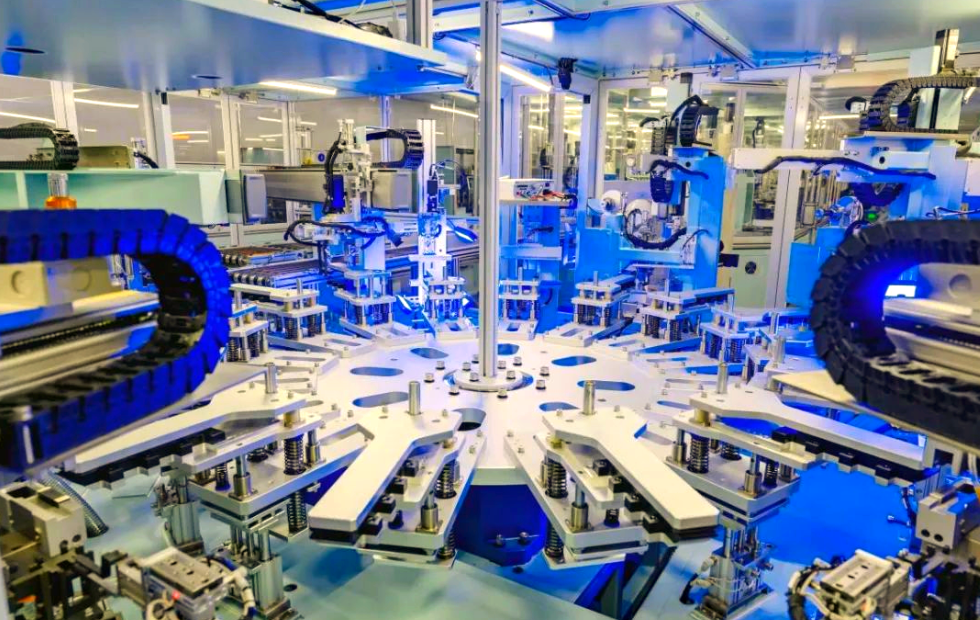
The second technical bottleneck is cycle life. Laboratory solid state cell prototypes often fail to reach the cycle life of mature liquid-electrolyte cells. The gap is not only chemical; it is mechanical. Volume changes during cycling can crack the electrolyte, delaminate interfaces, and lose contact. I use a damage accumulation model to think about this:
$$D = \int_0^N \frac{\Delta \varepsilon(n)}{\varepsilon_f} \, dn$$
where \(D\) is accumulated damage, \(\Delta \varepsilon(n)\) is strain range at cycle \(n\), and \(\varepsilon_f\) is failure strain. When \(D\) approaches 1, mechanical failure becomes likely. This tells me that solid state cell development must include mechanical engineering, not only electrochemistry.
The third technical bottleneck is lithium dendrite formation. When lithium metal is plated during fast charging, dendrites can grow through grain boundaries or defects in the solid electrolyte. This can cause short circuits. The critical current density depends on electrolyte conductivity, interfacial resistance, and pressure:
$$i_{crit} \propto \frac{\sigma_{el} \Delta \Phi}{L_{eff}}$$
where \(\sigma_{el}\) is ionic conductivity, \(\Delta \Phi\) is potential difference, and \(L_{eff}\) is effective transport length. I interpret this to mean that higher conductivity, lower interfacial resistance, and better mechanical suppression are all needed. No single material solves the problem.
The fourth bottleneck is scale-up and cost. A solid state cell may perform well in a coin cell but fail in a large pouch cell because pressure distribution is uneven, stacking is difficult, and defects multiply. I use a yield-adjusted cost formula:
$$C_{cell} = \frac{C_{materials} + C_{process} + C_{equipment}}{Y_{line}} + C_{quality}$$
where \(Y_{line}\) is line yield. If yield is low, cost explodes even when material prices are moderate. This is why pilot lines must focus on yield from the beginning, not only on performance.
| Bottleneck | Physical or Economic Root Cause | My Proposed Response |
|---|---|---|
| High interfacial resistance | Poor solid-solid contact, rough surfaces, rigid interfaces. | Coatings, soft interlayers, stack pressure control, in-situ sintering. |
| Short cycle life | Mechanical degradation, volume changes, unstable interphases. | Mechanical modeling, compliant electrolytes, protective layers. |
| Lithium dendrites | Local current density, defects, grain boundaries. | Dense electrolytes, high critical current density, pressure management. |
| Low yield | Moisture sensitivity, particle agglomeration, alignment errors. | Dry-room production, automated stacking, statistical process control. |
| High cost | Expensive raw materials, low throughput, low yield. | Material substitution, scale-up, recycling, localization. |
| Qualification time | Long testing cycles and customer validation. | Accelerated testing, digital twins, standardized test protocols. |
The market bottleneck is equally important. I observe that electric vehicle growth is shifting from rapid expansion to a more competitive存量-like phase in some markets. Demand growth still exists, but it is no longer enough to absorb every new battery technology automatically. A solid state cell must compete on cost, performance, and supply reliability. If the industry relies only on electric vehicles, it may face slower adoption than expected. I therefore recommend diversified applications: grid storage, low-altitude aircraft, drones, robotics, power tools, premium consumer electronics, medical devices, and specialized industrial equipment.
| Application Scenario | Why a Solid State Cell Fits | Performance Priority |
|---|---|---|
| Electric vehicles | Higher energy density and safety. | Energy density, fast charge, cycle life, cost. |
| Grid storage | Safety and long life are critical. | Cycle life, cost per kWh, thermal stability. |
| Low-altitude mobility | Weight reduction and high power. | Specific energy, power density, safety. |
| Drones | Endurance and payload constraints. | Specific energy, low temperature performance. |
| Consumer electronics | Thin form factor and safety. | Volumetric energy density, fast charge. |
| Power tools | High power and ruggedness. | Power density, cycle life, cost. |
| Medical devices | Reliability and safety. | Long shelf life, stable output, miniaturization. |
The resource bottleneck also requires attention. Even if a region has manganese, phosphate, and aluminum, it may lack sufficient lithium, cobalt, nickel, zirconium, and lanthanum. Import dependence for lithium, cobalt, and nickel is a strategic risk. I would not try to solve every resource gap locally. Instead, I would combine local resource development with international partnerships, recycling, and material substitution. For example, manganese-rich cathodes reduce nickel and cobalt demand. Sodium-ion or other chemistries may serve some applications, but for high-energy solid state cell products, lithium remains central. I therefore recommend a dual strategy: develop local lithium where feasible and secure diversified lithium supply through long-term contracts and recycling.
I use a supply-risk index to prioritize actions:
$$SR_j = w_1 \cdot I_j + w_2 \cdot C_j + w_3 \cdot S_j + w_4 \cdot R_j$$
where \(I_j\) is import dependence, \(C_j\) is concentration of supply, \(S_j\) is substitutability, and \(R_j\) is recycling potential. A higher \(SR_j\) means greater strategic risk. I would apply this index to lithium, cobalt, nickel, zirconium, lanthanum, and other critical inputs. The result would guide which materials need substitution, which need recycling, and which need international partnerships.
| Critical Input | Risk I See | Mitigation I Recommend |
|---|---|---|
| Lithium | High import dependence; local supply uncertain. | Develop associated resources, secure contracts, expand recycling. |
| Cobalt | Very high import dependence; ethical and price risks. | Reduce cobalt content, qualify manganese-rich cathodes, recycle. |
| Nickel | High import dependence; price volatility. | Balance high-nickel and manganese-rich portfolios. |
| Zirconium | Limited global reserves and supply concentration. | Research oxide electrolytes with lower zirconium content. |
| Lanthanum | Rare-earth supply concentration. | Explore alternative garnet compositions and recycling. |
| Fluorine | Local strength but environmental controls needed. | Upgrade to battery-grade purity with green processes. |
| Manganese | Local advantage but export-oriented. | Move from ore to high-purity manganese sulfate and cathode materials. |
The industrial layout bottleneck is also visible. I see a concentration in upstream materials and a weakness in midstream cell manufacturing, battery management, and system integration. This creates a “smile curve” problem: the region may capture low value in materials while others capture high value in cells, packs, software, and brands. I would correct this by building pilot cell lines, attracting system integrators, and creating application engineering teams that work directly with customers. The goal is not to duplicate every global leader. The goal is to build distinctive capabilities in selected solid state cell formats and materials.
| Value-Chain Segment | Current Position I Assess | Target Position | Action |
|---|---|---|---|
| Mining and refining | Strong resource base. | High-purity, battery-grade output. | Invest in purification and quality control. |
| Precursors and cathodes | Existing capacity and know-how. | Differentiated manganese-rich and phosphate cathodes. | Co-develop with cell makers. |
| Solid electrolytes | Early-stage chemical capability. | Pilot and mass production of selected electrolytes. | Build dry-room pilot lines. |
| Anodes | Limited lithium-metal capability. | Protected lithium-metal and silicon-carbon anodes. | Partner on foil handling and coatings. |
| Cell manufacturing | Weak midstream presence. | Pilot and niche production lines. | Attract lead customers and equipment suppliers. |
| Battery management | Emerging. | Advanced sensing and control software. | Build software and electronics talent. |
| Recycling | Early capacity. | Closed-loop critical-metal recovery. | Integrate with material plants. |
My recommended strategy has five pillars. First, I would build a materials core cluster around manganese-based cathodes, phosphate materials, and solid electrolytes. Second, I would create a technology attack program focused on interfaces, dendrites, and scale-up. Third, I would optimize the spatial layout around existing industrial strengths. Fourth, I would strengthen policy, finance, talent, and recycling. Fifth, I would integrate into national and global standards and partnerships.
For the first pillar, I would prioritize a manganese-based cathode and precursor cluster. Manganese is abundant locally, and manganese-based chemistries can reduce reliance on cobalt and nickel. I would support pilot production of lithium manganese iron phosphate and manganese-rich layered oxides. I would also link phosphate chemical capacity to battery-grade iron phosphate and lithium manganese iron phosphate. For solid electrolytes, I would focus on sulfide and oxide systems where local fluorine and chemical expertise can add value. I would not spread resources across every possible electrolyte. I would select two or three promising systems and drive them toward pilot scale.
| Materials Pillar | Specific Target | Why I Choose It | Key Metric |
|---|---|---|---|
| Manganese-based cathode | LMFP and manganese-rich layered oxides. | Local manganese advantage, lower cobalt and nickel demand. | Specific capacity, voltage retention, cost per kWh. |
| Phosphate cathode | High-performance LFP and LMFP. | Existing phosphate chemical base and market demand. | Energy density, low-temperature performance. |
| Sulfide solid electrolyte | Lithium argyrodite and related compositions. | High ionic conductivity and scalable synthesis potential. | Ionic conductivity, moisture stability, cost. |
| Oxide solid electrolyte | Garnet and perovskite-type materials. | Chemical stability and safety. | Interfacial resistance, sintering temperature. |
| Halide solid electrolyte | Chloride and bromide systems. | Good compatibility with high-voltage cathodes. | Oxidative stability, processability. |
| Lithium-metal anode | Thin foils and protective layers. | Needed for high energy density solid state cell. | Thickness, cycling efficiency, dendrite resistance. |
For the second pillar, I would launch a focused technology attack program. The program should not be a collection of unrelated grants. It should be mission-oriented, with clear milestones and industrial partners. I would organize it around five missions: solid electrolyte synthesis, interface engineering, lithium dendrite suppression, scalable manufacturing, and digital quality control. Each mission should have a technical baseline, a target, and a timeline. For example, a solid electrolyte mission might target ionic conductivity above a threshold, moisture tolerance, and cost below a threshold. An interface mission might target interfacial resistance reduction and cycle-life improvement.
| Mission | Technical Baseline I Assume | Target I Would Set | Verification Method |
|---|---|---|---|
| Solid electrolyte synthesis | Lab-scale powder with variable purity. | Pilot-scale production with consistent phase purity. | XRD, ICP, particle size analysis. |
| Interface engineering | High solid-solid resistance. | Lower resistance and stable cycling. | EIS, symmetric cell testing. |
| Dendrite suppression | Low critical current density. | Higher critical current density under pressure. | Galvanostatic cycling, microscopy. |
| Scalable manufacturing | Manual or semi-automatic assembly. | Automated pilot line with acceptable yield. | Yield statistics, throughput, cost model. |
| Digital quality control | Reactive testing and inspection. | Predictive process control. | Model accuracy, scrap reduction. |
For the third pillar, I would optimize the industrial layout. I would not force every activity into one location. Instead, I would create a core innovation and cell-manufacturing zone, a manganese-based materials belt, and a phosphate and electrolyte materials belt. This “one core, two belts” logic reflects existing strengths and reduces logistics costs. The core zone should host pilot cell lines, characterization centers, battery management software teams, and headquarters of the solid state cell innovation alliance. The manganese belt should focus on mining, refining, precursor synthesis, and cathode production. The phosphate and electrolyte belt should focus on phosphate chemicals, lithium salts, solid electrolyte synthesis, and recycling.
| Layout Element | Primary Function | Why It Matters for Solid State Cell |
|---|---|---|
| Core innovation zone | Pilot cell lines, testing, system integration, software. | Centralizes talent and accelerates learning. |
| Manganese materials belt | Manganese refining, precursors, manganese-based cathodes. | Leverages local resource advantage. |
| Phosphate and electrolyte belt | Phosphate chemicals, lithium salts, solid electrolytes. | Builds on chemical process capability. |
| Recycling corridor | Battery collection, dismantling, metal recovery. | Closes the loop and reduces import dependence. |
| Application demonstration zone | Storage, drones, tools, specialty vehicles. | Creates early demand and field data. |
For the fourth pillar, I would strengthen the enabling environment. This includes policy, finance, talent, standards, and recycling. Policy should be stable and predictable. I would use a mix of grants for early-stage research, low-interest loans for pilot lines, tax incentives for qualified production, and public procurement for demonstration projects. Finance should include not only traditional banks but also venture capital, industrial funds, and green bonds. Talent is often the binding constraint. I would create specialized programs in solid state cell chemistry, ceramic processing, dry-room manufacturing, battery management, and recycling. I would also attract experienced engineers from leading battery regions.
| Enabling Area | Instrument I Would Use | Expected Outcome |
|---|---|---|
| Research funding | Competitive grants with industrial co-funding. | Higher technical readiness levels. |
| Pilot-line finance | Low-interest loans and equipment subsidies. | Faster scale-up and yield learning. |
| Tax policy | Tax credits for qualified solid state cell materials. | Lower production cost and investment risk. |
| Public procurement | Demonstration projects in storage and mobility. | Early demand and real-world validation. |
| Talent programs | Graduate specialties, fellowships, international recruitment. | Stronger human capital base. |
| Standards | Participation in national and international committees. | Greater influence and market access. |
| Recycling | Extended producer responsibility and recovery targets. | Closed-loop supply of critical metals. |
For the fifth pillar, I would pursue regional and international cooperation. No region can master the entire solid state cell value chain alone. I would build partnerships with leading research centers, equipment makers, and cell manufacturers in other regions. I would also participate in standard-setting for solid state cell terminology, testing, safety, and recycling. Standards are not just technical documents; they shape market access and cost. A region that contributes to standards can reduce compliance risk and influence product design.
| Cooperation Area | Partner Type | What I Would Seek |
|---|---|---|
| Technology co-development | Universities and national labs. | Joint projects on interfaces and electrolytes. |
| Equipment and process | Specialized machinery suppliers. | Pilot-line design and dry-room expertise. |
| Cell manufacturing | Established battery makers. | Joint ventures and licensing. |
| Standards | Standards bodies and industry associations. | Participation in test method development. |
| Recycling | Recycling technology firms. | Closed-loop recovery and secondary materials. |
| Market access | Automotive, storage, and electronics customers. | Design-in opportunities and long-term contracts. |
I also want to quantify the roadmap. A solid state cell industry cannot be built in one year. I would use a phased roadmap with clear exits. Phase 1, years one to two, focuses on resource evaluation, material qualification, and pilot-line design. Phase 2, years three to five, focuses on pilot production, customer sampling, and yield improvement. Phase 3, years six to eight, focuses on niche commercial production and application demonstration. Phase 4, years nine to twelve, focuses on scale-up, recycling integration, and international expansion. Each phase should have go/no-go criteria.
| Phase | Time Horizon | Primary Goals | Exit Criteria |
|---|---|---|---|
| Phase 1 | 1-2 years | Resource assessment, material R&D, pilot design. | Qualified material samples; pilot-line blueprint. |
| Phase 2 | 3-5 years | Pilot production, cell prototyping, customer sampling. | Repeatable cells; acceptable cycle life; yield target. |
| Phase 3 | 6-8 years | Niche commercial production, application demonstrations. | Field validation; positive unit economics. |
| Phase 4 | 9-12 years | Scale-up, recycling, global partnerships. | Cost parity in selected segments; closed-loop supply. |
I would track a balanced scorecard. Technical metrics alone are insufficient. I would also track economic, environmental, and supply-chain metrics. For a solid state cell program, the scorecard might include ionic conductivity, critical current density, cycle life, energy density, cost per kWh, yield, local content, recycling rate, and talent growth. I would review the scorecard quarterly and adjust resource allocation.
| Scorecard Category | Metric | Why I Track It |
|---|---|---|
| Technical | Ionic conductivity, interfacial resistance, critical current density. | Determines fundamental feasibility. |
| Performance | Energy density, power density, cycle life, fast-charge capability. | Determines customer adoption. |
| Manufacturing | Yield, throughput, scrap rate, cycle time. | Determines cost and scalability. |
| Economic | Cost per kWh, capex intensity, payback period. | Determines investment attractiveness. |
| Supply chain | Local content, import dependence, supplier count. | Determines resilience. |
| Environmental | Energy use, water use, recycling rate, emissions. | Determines sustainability and social license. |
| Human capital | Number of specialists, retention rate, training hours. | Determines long-term capability. |
I want to emphasize that a solid state cell strategy should not ignore existing liquid-electrolyte industries. The transition will be gradual. Liquid-electrolyte lithium-ion batteries will continue to improve and dominate many markets for years. A region should therefore upgrade its existing battery materials while investing in solid state cell options. This dual-track approach reduces the risk of stranded assets and keeps cash flow during the transition. I would use existing cathode and electrolyte plants to fund and inform the solid state cell transition.
I also see recycling as a strategic pillar, not an afterthought. A solid state cell contains valuable metals and critical materials. If recycling is integrated early, it can reduce import dependence and lower lifecycle emissions. I would design products for recyclability, use standardized labeling, and develop recovery processes for lithium, manganese, cobalt, nickel, and rare-earth elements. The recycling rate \(R\) can be modeled as:
$$R = \frac{M_{recovered}}{M_{input}} \times 100\%$$
I would target higher recovery rates for critical materials and lower energy consumption per recovered kilogram. Recycling also creates jobs and local value. It is not just an environmental obligation.
| Recycling Action | Benefit I Expect | Implementation Note |
|---|---|---|
| Design for disassembly | Lower dismantling cost. | Standardize cell formats and fasteners. |
| Early collection systems | Higher return rate. | Use producer responsibility and deposit schemes. |
| Hydrometallurgical recovery | High-purity lithium, nickel, cobalt, manganese. | Control wastewater and chemical use. |
| Direct recycling | Lower energy and preserved cathode structure. | Develop sorting and relithiation methods. |
| Closed-loop partnerships | Stable secondary supply. | Link recyclers with cathode and cell makers. |
In my first-person assessment, the greatest risk is not technical failure alone. The greatest risk is fragmented effort. If research institutions, material producers, equipment makers, cell manufacturers, and government agencies pursue disconnected projects, the region will miss the window. I therefore recommend a coordinating body with authority to align funding, infrastructure, standards, and talent. This body should be industry-led but government-supported. It should have a clear mandate: move solid state cell technologies from laboratory to pilot to commercial production.
| Risk | Likelihood I Assign | Impact | Mitigation |
|---|---|---|---|
| Fragmented research | High | High | Mission-oriented programs and shared roadmaps. |
| Low pilot yield | High | High | Statistical process control and dry-room investment. |
| Critical material shortage | Medium to high | High | Substitution, recycling, diversified contracts. |
| Slow customer qualification | High | Medium to high | Early sampling and accelerated testing. |
| Talent shortage | High | Medium to high | Specialized education and international recruitment. |
| Policy discontinuity | Medium | High | Long-term framework and cross-party support. |
| Intellectual property disputes | Medium | Medium | Clear contracts and joint IP management. |
| Environmental compliance | Medium | Medium to high | Green process design and transparent reporting. |
I would also connect the solid state cell strategy to broader industrial policy. Advanced batteries are linked to renewable energy, electric mobility, digital manufacturing, and national security. A solid state cell cluster can support many industries: mining equipment, chemical engineering, precision machinery, sensors, power electronics, software, and recycling. I therefore see it as a “platform cluster” that can upgrade the entire regional innovation system.
Let me summarize my recommended actions in a compact matrix.
| Pillar | Immediate Action | Medium-Term Action | Long-Term Vision |
|---|---|---|---|
| Materials | Qualify manganese, phosphate, and fluorine resources. | Build pilot lines for cathodes and solid electrolytes. | Become a global supplier of solid state cell materials. |
| Technology | Launch interface and dendrite projects. | Demonstrate repeatable solid state cell prototypes. | Achieve leadership in selected solid state cell chemistries. |
| Manufacturing | Design pilot line and dry-room facilities. | Improve yield and reduce cost. | Operate niche and mass production lines. |
| Layout | Define core zone and materials belts. | Connect suppliers and customers. | Form a self-reinforcing industrial ecosystem. |
| Policy | Coordinate funding and standards. | Use procurement and tax incentives. | Maintain stable long-term support. |
| Recycling | Map battery flows and recovery capacity. | Commission recovery lines. | Close the loop for critical metals. |
| Talent | Create specialized courses and fellowships. | Recruit experienced engineers. | Build a deep talent pool. |
| Cooperation | Join standards and research networks. | Form joint ventures and licensing deals. | Integrate into global solid state cell value chains. |
I would also use a set of formulas to evaluate project selection. For a proposed solid state cell project, I would calculate net present value:
$$NPV = \sum_{t=0}^{T} \frac{CF_t}{(1+r)^t} – I_0$$
where \(CF_t\) is cash flow in year \(t\), \(r\) is discount rate, and \(I_0\) is initial investment. I would also calculate the levelized cost of storage or production:
$$LCO = \frac{\sum_{t=0}^{T} \frac{C_t}{(1+r)^t}}{\sum_{t=0}^{T} \frac{E_t}{(1+r)^t}}$$
where \(C_t\) is cost and \(E_t\) is energy or output. These financial metrics should be combined with technical readiness levels and strategic fit. A project with good NPV but low strategic fit may not deserve public support. A project with high strategic fit but poor economics needs a clear path to cost reduction.
| Project Selection Criterion | Weight I Would Assign | Evidence Needed |
|---|---|---|
| Technical feasibility | High | Lab data, repeatability, third-party validation. |
| Market demand | High | Customer letters, offtake interest, application tests. |
| Cost trajectory | High | Bottom-up cost model, yield assumptions. |
| Supply-chain resilience | Medium to high | Supplier mapping, local content, recycling plan. |
| Environmental performance | Medium | Lifecycle assessment, emissions, water use. |
| Talent availability | Medium | Team composition, training plan. |
| Strategic fit | High | Alignment with industrial and innovation goals. |
In my view, the solid state cell opportunity is real but conditional. It is real because the technical advantages are significant: higher energy density, improved safety, and the potential for faster charging. It is conditional because the challenges are also significant: interface resistance, dendrite growth, cycle life, manufacturing yield, and critical material supply. A region that treats the solid state cell as a slogan will fail. A region that treats it as an engineering and industrial program can succeed.
I would measure success not by the number of announcements, but by the number of qualified products, the yield of pilot lines, the cycle life of cells, the cost per kWh, and the share of local content. I would also measure the strength of the innovation ecosystem: how many researchers work on solid state cell interfaces, how many suppliers are qualified, how many standards are contributed, and how many recycling loops are closed.
My final recommendation is a sequenced, focused, and collaborative path. I would start with materials where the region has natural advantages. I would invest in solid electrolytes and interfaces where the technical bottlenecks are most severe. I would build pilot lines to learn by doing. I would use digital tools to accelerate learning. I would integrate recycling from the beginning. I would attract and train talent. I would cooperate with national and global partners. And I would maintain stable policy support over a ten-to-twelve-year horizon.
A solid state cell industry cannot be created overnight, but it can be built deliberately. The region that moves first with a coherent strategy will shape supply chains, standards, and customer relationships. The region that waits will import cells and export raw materials. I favor the first path. I favor building a solid state cell ecosystem that converts mineral endowment into advanced manufacturing capability, skilled jobs, and long-term economic resilience. In my assessment, the window is open now. The task is to act with technical discipline, industrial focus, and strategic patience.