
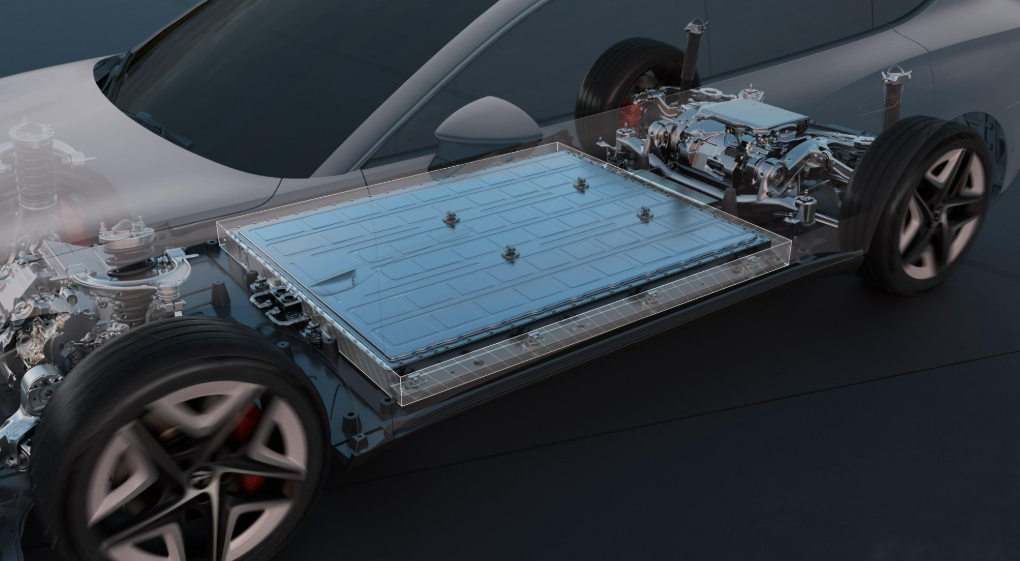
YIBIN, Sept. 5, 2026 — The acceleration of the global energy electrification transition is pushing the power battery industry into a new stage of development. The power battery is no longer defined only as a supporting component for new energy vehicles. It is increasingly regarded as a foundational element of new power systems and as an engine for low-carbon upgrading across a wide range of industries. The sector has moved beyond a period of rapid, scale-driven expansion, and its industrial logic is continuing to evolve.
The 2026 World Power Battery Conference was held in Yibin, Sichuan, from Sept. 3 to 4 under the theme “Electricity Drives All Things, Integration and Symbiosis.” The 2026 Power Battery Application Ecosystem Exhibition was held alongside the conference, with a total exhibition area of more than 50,000 square meters. More than 200 enterprises from Spain, the United States, France, Germany and other countries participated in the exhibition, underscoring the international character of the power battery industry and the breadth of its application ecosystem.
After years of rapid iteration, China has built the world’s largest and most complete power battery industrial system. The country has cultivated a group of leading enterprises with strong competitiveness, and its key core technologies are among the world’s most advanced. Production and sales volumes have ranked first globally for many consecutive years, and power battery products have been exported to major new energy vehicle markets around the world. Against the backdrop of China’s development of an ecosystem in which the power battery industry drives the integrated growth of new energy, new materials and other emerging industries, the 2026 World Power Battery Conference outlined a clear path for industrial upgrading from multiple dimensions. The diversification of application scenarios, the industrialization of innovative technologies, global collaboration and the development of industrial clusters have emerged as key themes for the next stage of power battery growth.
- Multi-scenario demand expands the value boundary of the power battery industry
In recent years, the power battery has been shedding its single label as an automotive supporting component. Low-altitude economy applications, embodied intelligent robots, new energy storage and electric ships have been elevated to important positions in the industry’s development agenda. At this year’s World Power Battery Conference, multiple independent exhibition areas displayed power battery product solutions and implementation cases outside the vehicle sector, drawing greater attention to the diversification of power battery applications.
The shift is significant because it changes the demand structure of the power battery industry. In the past, the growth of the power battery market was closely tied to the sales rhythm of new energy vehicles. As the new energy vehicle market gradually enters a stage of stock competition, non-vehicle scenarios such as low-altitude economy, energy storage, embodied intelligence and special equipment are becoming a second growth curve for the power battery industry. The growth logic of the power battery sector is moving from “following vehicle sales” toward “powering all things.”
The essence of “powering all things” is the migration and replication of the power battery technology system into more real-economy scenarios beyond automobiles. This migration is not a simple transfer of products. It requires the power battery industry to adapt battery chemistry, system design, safety management, thermal management, cycle life and service models to the specific requirements of each application. The diversification of power battery applications is therefore both a market opportunity and a technological and engineering challenge.
Zhang Jinhua, chairman of the China Society of Automotive Engineers, said that the expansion of the application ecosystem is an important breakthrough in the value boundary of the power battery industry. The industrial attribute of the power battery will upgrade from an automotive supporting component to a cross-scenario general energy unit. This assessment highlights the strategic direction of the power battery industry: the sector is no longer only a supplier to the automotive industry, but is becoming a general-purpose energy technology platform serving multiple economic sectors.
For the power battery industry, this transition has several implications. First, the addressable market of the power battery expands beyond passenger and commercial vehicles. Second, the technical requirements for the power battery become more differentiated, creating room for multiple battery chemistries and system architectures. Third, the power battery industry must build closer links with downstream application industries, including aviation, robotics, energy storage, shipping and specialty equipment. These links will shape the next phase of power battery product planning and capacity deployment.
- Low-altitude aviation and embodied intelligence demonstrate the practical reach of power battery innovation
At the exhibition, a manned autonomous aerial vehicle displayed by Minshan Xinghe (Yibin) General Aviation Service Co., Ltd. attracted many domestic and international visitors. The aircraft has a body length of 6.05 meters and uses pure electric power. It has a maximum range of 30 kilometers and a maximum endurance of 24 minutes. The aircraft uses a semi-solid-state battery and is controlled by ground staff. It can carry passengers for low-altitude flight. Current annual output is several hundred units, and the aircraft has been applied in cultural tourism sightseeing scenarios at home and abroad.
This example shows how the power battery is enabling new forms of transportation beyond road vehicles. Low-altitude aviation requires the power battery to deliver high energy density, high safety and reliable performance under complex operating conditions. The use of a semi-solid-state battery in a manned autonomous aerial vehicle also illustrates how next-generation power battery technologies are being tested and commercialized in niche applications before broader scale-up.
In the UBTECH exhibition area, a humanoid robot model Cruzr Y1 moved continuously through the display area, carrying boxes, stacking goods and performing other tasks quickly and accurately. The industrial humanoid robot uses a lithium iron phosphate power battery, and a single battery provides about four hours of endurance. It focuses on four rigid-demand scenarios: handling, depalletizing and stacking, loading and unloading, and sorting. It can achieve automatic charging and battery swapping. The robot has already been applied in garment, footwear and headwear enterprises in eastern and southern coastal regions.
The use of a lithium iron phosphate power battery in an industrial humanoid robot demonstrates the adaptability of established power battery chemistries to new application scenarios. The power battery for embodied intelligence must combine safety, cycle life, cost efficiency and stable output with the ability to support continuous operation in industrial environments. The ability to automatically charge and swap batteries also shows how power battery system design is being integrated into the overall operational model of robotic equipment.
These examples reflect a broader trend: the power battery industry is no longer developing products only for vehicle platforms. It is increasingly co-designing power battery solutions with equipment makers in low-altitude aviation, robotics, energy storage and other fields. This co-design process is likely to accelerate the formation of differentiated power battery product lines and to create new service models around charging, swapping, maintenance and recycling.
Application scenario Exhibit or example Power battery technology Reported deployment signal Low-altitude aviation Manned autonomous aerial vehicle displayed by Minshan Xinghe (Yibin) General Aviation Service Co., Ltd. Semi-solid-state power battery Body length of 6.05 meters, maximum range of 30 kilometers, maximum endurance of 24 minutes, annual output of several hundred units, and application in cultural tourism sightseeing at home and abroad Embodied intelligence Cruzr Y1 industrial humanoid robot from UBTECH Lithium iron phosphate power battery About four hours of endurance per battery, focus on handling, depalletizing and stacking, loading and unloading, and sorting, with automatic charging and battery swapping and application in garment, footwear and headwear enterprises in eastern and southern coastal regions New energy storage CATL’s Tianheng sodium-ion energy storage solution Sodium-ion power battery and storage battery technology First batch delivery in the China market in September, year-end target shipment of 1 GWh, and suitability for AI data center scenarios - Next-generation power battery industrialization follows a layered and differentiated path
The 2026 World Power Battery Conference devoted multiple agenda items to engineering, mass production and commercialization. The proportion of practical sessions such as roundtable debates, technology roadshows and results announcements increased noticeably. The goal was to move technologies from the laboratory to production lines and into real application scenarios. Among these discussions, the industrialization progress of sodium batteries and solid-state batteries received particular attention. Industry participants generally believe that the layered adaptation of multiple technology routes will help next-generation batteries reach the market. Sodium-ion batteries and hybrid solid-liquid batteries are expected to achieve mass production, while the industrialization of all-solid-state batteries will still take time.
As a global power battery leader, CATL presented its Tianheng sodium-ion energy storage solution at the conference, attracting many visitors. According to the company’s staff, CATL will deliver the first batch of sodium-ion energy storage solutions in the China market in September, with a year-end shipment target of 1 GWh. Sodium-ion technology features an ultra-wide temperature range, ultra-long life and more stable energy storage returns. The related energy storage products are suitable for scenarios such as AI data centers.
The emergence of sodium-ion power battery and storage battery products is important for the power battery industry because it broadens the raw-material and technology base of the sector. Sodium-ion technology is not a simple replacement for lithium-ion technology. It is a complementary route that can serve specific applications where temperature range, cycle life, safety and cost stability are important. For the power battery industry, the development of sodium-ion products can reduce dependence on a single resource pathway and provide more options for different application scenarios.
Envision Energy has laid out multiple technology directions, including solid-state batteries, sodium batteries and large cylindrical batteries. These directions are currently in the testing and validation stage. Tian Qingjun, senior vice president of the company, believes that sodium batteries and lithium batteries will develop in a coordinated manner in the future, with unique advantages in new energy storage, special scenarios and fields with high safety requirements.
Tian Qingjun said that the development rhythm of sodium batteries is closely related to lithium battery prices. If lithium carbonate returns to a level of tens of thousands of yuan per ton, sodium batteries will find it difficult to replace lithium batteries and will only develop in special application scenarios and niche segments. If lithium carbonate breaks through 200,000 yuan per ton or continues to rise, the application space for sodium batteries will open up. The current cost of sodium batteries is mainly high in the processing of positive and negative electrodes. Because the scale is too small, once the market scale reaches a critical point, costs will fall quickly. After costs fall below those of lithium batteries, the application scenarios for sodium batteries will open quickly.
This assessment points to the economic logic of next-generation power battery industrialization. The competitiveness of sodium-ion power battery technology depends not only on technical performance but also on the price of lithium carbonate, the scale of the supply chain and the maturity of processing equipment. The power battery industry is therefore likely to see a period in which lithium-ion, sodium-ion and hybrid solid-liquid technologies coexist and compete in different segments. The layered adaptation of multiple routes will allow the power battery industry to serve different application needs rather than relying on a single technology pathway.
- Solid-state power battery expectations become more rational as hybrid routes approach commercialization
Market expectations for solid-state batteries, which previously triggered a capital boom, are gradually becoming more rational. Although industrial chain companies have made varying degrees of progress in solid-state battery technology routes and product layouts, battery companies generally agree that large-scale application of all-solid-state batteries around 2030 will be “very difficult.” This view does not reduce the strategic importance of solid-state power battery research, but it clarifies the timeline for commercialization and the need for staged technology routes.
Zhang Jinhua believes that in the next three years, hybrid solid-liquid batteries will be the first to enter the commercialization window, mainly installed in mid-to-high-end vehicle models. All-solid-state batteries will gradually break through performance limits and achieve an energy density of more than 500Wh/kg. They are expected to enter a large-scale application window in 2035.
The staged outlook has important implications for the power battery industry. Hybrid solid-liquid batteries can serve as a bridge between conventional lithium-ion power battery technology and all-solid-state technology. They can provide performance improvements while making use of existing manufacturing experience and supply chain capabilities. For automakers, hybrid solid-liquid power battery solutions may offer a practical path to higher performance in mid-to-high-end models before all-solid-state technology reaches mature mass production.
At the same time, the long timeline for all-solid-state batteries means that the power battery industry must continue to invest in multiple technology routes. The development of all-solid-state power battery technology requires progress in materials, interfaces, manufacturing processes, equipment and quality control. The gap between laboratory performance and large-scale production remains a key challenge. The power battery industry’s ability to industrialize solid-state technology will depend on coordinated progress across the entire supply chain, not only on breakthroughs in battery chemistry.
Technology route Signals from the conference Commercialization outlook Sodium-ion power battery and storage battery CATL’s Tianheng sodium-ion energy storage solution is scheduled for first batch delivery in the China market in September, with a year-end target of 1 GWh. Sodium-ion technology features an ultra-wide temperature range, ultra-long life and more stable energy storage returns, and is suitable for AI data centers. Mass production is viewed as achievable. Cost competitiveness depends on scale and on lithium carbonate prices. Sodium-ion and lithium-ion technologies are expected to develop in coordination. Hybrid solid-liquid battery Industry participants expect hybrid solid-liquid batteries to be the first to enter the commercialization window in the next three years, mainly for mid-to-high-end vehicle models. Near-term commercialization window. Hybrid solid-liquid power battery technology can serve as a bridge between conventional lithium-ion and all-solid-state routes. All-solid-state battery Battery companies generally believe that large-scale application around 2030 will be very difficult. All-solid-state batteries are expected to exceed 500Wh/kg and enter a large-scale application window in 2035. Longer timeline. Performance upside is significant, but manufacturing, scale-up and supply chain maturity remain challenges. - Globalization and supply chain security become central to power battery industry strategy
With continuous technology iteration and capacity expansion, China’s power battery industry continues to consolidate its leading position in the global market. In the first seven months of the year, the industry maintained a good growth momentum. Cumulative sales reached 790.4 GWh, up 37.1 percent year on year, while cumulative exports reached 146.7 GWh, up 52.1 percent year on year. In the global market, China accounted for 64.8 percent of total global power battery installed capacity in 2025, and six of the top ten companies by installed capacity were Chinese enterprises.
The scale leadership of the power battery industry is supported by a complete domestic industrial chain and cluster advantages. At the same time, it means that the industry is deeply bound to the global market. International industrial cooperation, supply chain security and compliance for overseas expansion are becoming increasingly important. For the power battery industry, globalization is no longer only about exporting products. It involves local production, resource cooperation, recycling networks and compliance systems in overseas markets.
Chinese companies are advancing global collaboration through localized capacity deployment, diversified resource cooperation and overseas recycling closed-loop construction, thereby strengthening the foundation of supply chain security. CATL, for example, has built an integrated base in Indonesia covering nickel ore, materials and battery recycling. It has also laid out factories in Europe to support localized production close to mainstream overseas automakers. Gotion High-tech has established factories in Germany, Vietnam and other locations and is actively building an effective supply chain system. Huayou Cobalt has laid out overseas deep-processing projects for lithium and cobalt resources and uses localized processing to hedge against risks brought by changes in resource export policies. At the same time, upstream resource companies are broadening lithium resource acquisition channels through long-term agreements, joint development and other models, reducing the impact of supply fluctuations in a single region.
These moves reflect a broader shift in the power battery industry’s globalization model. The industry is moving from product export toward a more integrated model that combines local manufacturing, local resource processing, local recycling and local compliance. This model can help power battery companies reduce logistics costs, respond more quickly to customer needs and improve supply chain resilience. It also requires companies to manage complex regulatory, environmental and social responsibilities in different markets.
Zhang Xiang, a visiting professor at Huanghe Science and Technology College, said that domestic power battery industrial chain companies investing in overseas factories need to pay close attention to multiple potential risks, including compliance certification, policy contracts and localized operations. Enterprises should solidly advance carbon emission accounting and full-chain carbon footprint management, complete relevant certification materials and benchmark against the regulations and standards of export target markets.
For the power battery industry, compliance is not a secondary issue. It is part of market access and long-term competitiveness. Carbon footprint management, traceability, recycling and local content requirements are increasingly linked to the ability of power battery companies to participate in global supply chains. Companies that build robust compliance systems early will be better positioned to serve international customers and to participate in global power battery value chains.
- Industrial clusters strengthen the domestic foundation for power battery innovation
Strengthening domestic industrial clusters while deepening global collaboration has become a key path for the high-quality development of China’s power battery industry. Yibin, as a representative power battery industrial cluster, has built a full industrial chain layout from upstream raw materials to downstream recycling and regeneration. This layout effectively reduces industrial collaboration costs and accelerates the industrialization of new technologies.
The cluster model matters for the power battery industry because it brings together material suppliers, battery manufacturers, equipment makers, research institutions and recycling companies in a concentrated geographic area. This concentration can shorten product development cycles, improve supply chain coordination and support the rapid scaling of new power battery technologies. For next-generation power battery routes such as sodium-ion and solid-state batteries, cluster-based collaboration can help solve engineering problems more quickly and reduce the time required for pilot testing and mass production.
Relying on China’s complete cluster advantages, combined with global capacity, resource and recycling layouts, the domestic power battery industry is continuing to strengthen its supply chain security barriers and steadily moving toward the high end of the global industrial value chain. The power battery industry’s future competitiveness will depend not only on cell performance and cost but also on the ability to organize complex supply networks, meet regulatory requirements and provide reliable services across multiple application scenarios.
The development of the power battery industry is also closely connected to the broader energy transition. As power battery applications expand into energy storage, low-altitude aviation, robotics and electric ships, the industry’s role in the energy system will become more diverse. The power battery will increasingly function as a flexible energy unit that supports the integration of renewable energy, the stability of power systems and the electrification of new economic activities.
- Outlook: a new cycle defined by application depth, technology layering and global coordination
The 2026 World Power Battery Conference presented a clear picture of an industry entering a new cycle. The power battery industry is moving away from a single-market dependence on new energy vehicles and toward a multi-scenario application ecosystem. It is moving from a single technology route toward a layered technology portfolio that includes lithium-ion, sodium-ion, hybrid solid-liquid and all-solid-state power battery technologies. It is moving from product export toward global coordination that includes local manufacturing, resource cooperation, recycling and compliance.
These shifts do not mean that the power battery industry will become less focused. On the contrary, they require greater focus on application-specific requirements, manufacturing quality, cost control and supply chain resilience. The power battery industry must continue to improve energy density, safety, cycle life and temperature adaptability while reducing costs and environmental impacts. It must also build closer relationships with downstream industries to ensure that power battery products are designed for real operating conditions.
In the coming years, the power battery industry is likely to see continued investment in sodium-ion and solid-state technologies, expanded use of power battery products in energy storage and non-vehicle applications, and deeper globalization of manufacturing and recycling. The pace of these developments will vary by technology route and application segment. Sodium-ion power battery technology is expected to advance in storage and special scenarios, hybrid solid-liquid power battery technology is expected to enter commercialization in mid-to-high-end vehicles, and all-solid-state power battery technology will continue to require long-term research and industrial validation.
The power battery industry’s new cycle will be shaped by the ability of companies to balance multiple objectives: serving diverse application scenarios, advancing next-generation technology, securing global supply chains and meeting compliance requirements. The companies and regions that can coordinate these objectives will be best positioned to capture value in the evolving power battery market. The power battery industry is no longer only a manufacturing story. It is becoming a story of cross-industry integration, energy system transformation and global industrial collaboration.
As the power battery industry enters this new cycle, the central question is not whether demand will grow, but how the industry will organize itself to serve a wider range of applications with safer, more efficient and more sustainable power battery solutions. The answers will emerge through engineering practice, commercial deployment and international cooperation. The 2026 World Power Battery Conference provided a comprehensive view of the direction, and the next phase of the power battery industry will be defined by how quickly and effectively the industry turns that direction into large-scale, reliable and globally coordinated implementation.