
YIBIN, Sichuan, Aug. 31, 2026—Yibin is accelerating the linked development of its power battery industry and its new energy vehicle industry, with the power battery sector serving as a pillar of industrial growth and the new energy vehicle cluster taking initial shape. The city’s power battery above-scale industrial total output value has exceeded RMB 100 billion for 3 consecutive years and has remained stable while continuing to rise, according to official information on the city’s industrial development.
The expansion is not confined to manufacturing scale. As a city known as “China’s Power Battery Capital,” Yibin is pursuing a strategy of promoting production through application and integrating production with use. It is continuously expanding diversified application scenarios for the power battery, allowing the industrial ecosystem to generate a widening multiplier effect and accelerating the construction of a “power battery+” industrial ecosystem that is open, integrated, and collaborative.
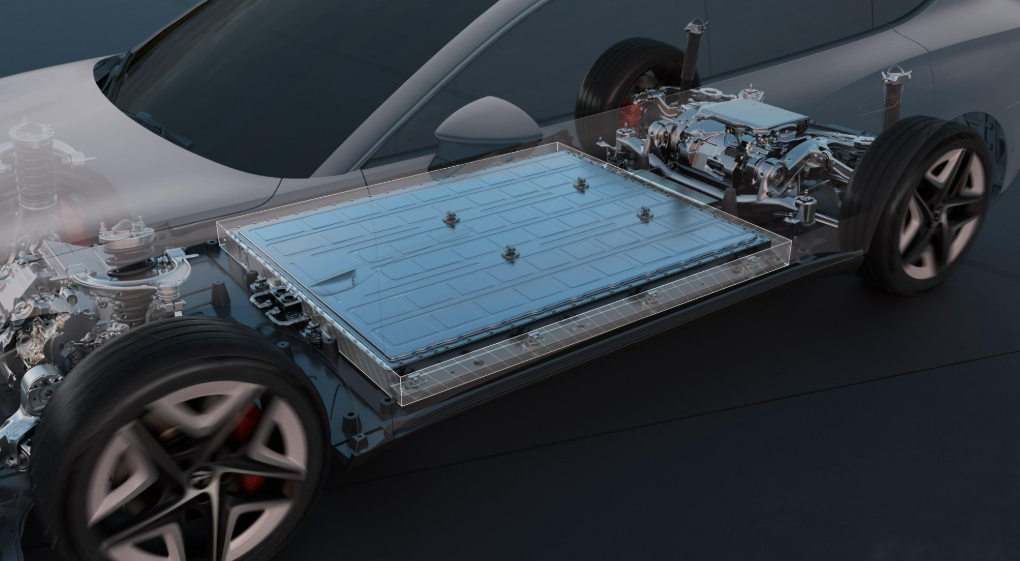
The power battery has become more than a component for electric vehicles. It is increasingly viewed as a foundational technology for energy storage, transportation, low-altitude operations, intelligent equipment, and other fields. In Yibin, this shift is being translated into concrete projects, vessels, vehicles, storage stations, and intelligent application scenarios, with the power battery at the center of a broader industrial transition.
1. Power Battery Scale and the New Energy Vehicle Cluster
Yibin’s industrial foundation in the power battery sector is already substantial. The city’s power battery above-scale industrial total output value has remained above RMB 100 billion for 3 consecutive years, a sign that the sector has moved from rapid initial expansion into a more stable phase of growth. At the same time, the new energy vehicle industry cluster has begun to take shape, supported by a growing local supply chain and by the integration of vehicle production with power battery supply.
According to Yibin’s economic cooperation and emerging industry authorities, the city signed more than 30 automotive industry projects in 2025 alone. Among them, 20 were supporting enterprises for Kaiyi Auto, reflecting the city’s effort to strengthen local supporting capacity and shorten supply chains around vehicle manufacturing.
The Yibin Automotive Parts Industrial Park, which covers 5 square kilometers, provides a physical platform for this cluster development. Phases I, II, and III have been completed and are operating at full production, while Phase IV is under accelerated construction. The park is part of a broader effort to connect power battery production, vehicle manufacturing, and component supply within a relatively concentrated industrial space.
For Yibin, the power battery industry and the new energy vehicle industry are not separate tracks. They are increasingly linked through local procurement, joint development, and shared application scenarios. This linkage supports the city’s aim of building a power battery industrial ecosystem that can respond to demand not only from passenger vehicles but also from commercial transport, shipping, energy storage, and intelligent equipment.
2. Global Power Battery Demand and the Scenario Shift
The global context reinforces the importance of application scenarios. According to media reports, global registrations of electric vehicles—including hybrid, plug-in hybrid, and battery-electric vehicles—carried a total power battery installation volume of 1,187 GWh in 2025, up 31.7% year on year. This continued a period of relatively high growth in recent years and underlined the scale of demand for power battery products.
At the same time, the global development trend shows that the power battery is moving beyond its original role as a single supporting component for new energy vehicles. It is accelerating its penetration into energy storage, transportation, low-altitude applications, intelligent equipment, and other fields. In this environment, application scenarios have become a key variable determining the level of industrial development and the competitive position of a city or region.
Yibin’s approach reflects this understanding. The city is not treating the power battery only as an export product or a vehicle component. It is using local scenarios to create demand, test products, improve systems, and attract supply chain partners. In this sense, the expansion of power battery applications is also a form of industrial policy, one that connects production capacity with real-world use.
| Power Battery and Application Indicator | Latest Figure | Context |
|---|---|---|
| Power battery above-scale industrial total output value in Yibin | Above RMB 100 billion for 3 consecutive years | Stable with continued growth |
| Automotive industry projects signed in Yibin in 2025 | More than 30 | Including 20 Kaiyi Auto supporting enterprises |
| Global electric vehicle power battery installations in 2025 | 1,187 GWh | Up 31.7% year on year; includes hybrid, plug-in hybrid, and battery-electric vehicles |
| New-type energy storage projects in Yibin | 19 projects; 926 MWh | Among the largest in Sichuan |
| Heavy-truck battery swap stations in Yibin | 19 stations | Cumulative 165,000 battery swaps |
| New energy heavy trucks in Yibin | 3,101 units | 16 times the 2022 level; second in Sichuan |
| Heavy-truck electrification rate in Yibin | 31.49% | First in Sichuan; Sanjiang New Area reaches 50% |
| Green ships built or under construction in Yibin | 15 ships | Full-chain development underway |
| Low-altitude normalized operations in the first half of 2026 | More than 2,500 hours | Covering 5 major fields |
| Embodied intelligence application scenarios released in Yibin | 270 scenarios | 28 key projects landed |
The table illustrates how the power battery is being deployed across multiple dimensions in Yibin. The city’s power battery strategy is not limited to increasing cell production; it extends to storage systems, heavy-truck swapping networks, electric ships, low-altitude operations, and intelligent equipment. Each of these applications creates additional demand for power battery products and related services.
3. Early Power Battery Scenario Moves: Electrifying the Yangtze and Storage
Yibin’s effort to expand power battery application scenarios dates back several years. In 2023, at the opening meeting of the World Power Battery Conference held in Yibin, the Changjiang Waterway Administration of the Ministry of Transport, together with Sichuan, Yunnan, Guizhou, Chongqing, Hubei, Hunan, Jiangxi, Henan, Anhui, Jiangsu, Zhejiang, Shandong, and Shanghai—13 provincial-level regions in total—jointly released the “Electrify the Yangtze” initiative. The initiative was a forward-looking expansion of power battery application scenarios and reflected a shared intent to protect the river while advancing green shipping.
In the same year, Yibin’s first pure electric ferry and Sichuan’s first pure electric official vessel set sail. These early vessels marked the beginning of a broader green shipping effort. Since then, Yibin’s green ship fleet has continued to grow. The Yibin-built 5,000-tonne “electric plus methanol” cargo ship—the first of its kind in China—the largest electric tourist ship in Sichuan, and Sichuan’s first electric maritime patrol boat have successively been launched and put into use. These projects have helped Yibin lead a new round of green shipping transformation in the upper reaches of the Yangtze River through innovative practice.
The significance of these vessels goes beyond individual demonstrations. They create demand for power battery systems adapted to marine environments, charging and swapping infrastructure, battery safety management, and lifecycle services. They also connect the power battery industry with ship design, manufacturing, operation, maintenance, and battery recycling. For Yibin, green shipping is therefore not simply a transport initiative; it is an extension of the power battery value chain into a new domain.
New-type energy storage is another major direction. It is an important support for building a new power system and a cornerstone for achieving the national “dual carbon” goals. In January 2024, the first projects in the Yibin Energy Storage Industrial Park began construction. This was a major move by Yibin to seize opportunities based on local conditions, develop the new energy industry, and expand power battery application scenarios.
The city’s energy storage efforts are not isolated from its power battery base. They draw on the same industrial capabilities, supply chain relationships, and technical expertise that support power battery production. By linking power battery manufacturing with energy storage deployment, Yibin is seeking to create a more resilient industrial system, one that can serve both vehicle and non-vehicle markets.
In 2025, at the World Power Battery Conference, Zhang Jinhua, member of the Standing Committee of the China Association for Science and Technology and chairman of the China Society of Automotive Engineers, released the 2030 power battery development trend outlook. The outlook noted that as the electrification of ships, heavy trucks, the low-altitude economy, and other diversified scenarios accelerates, the application boundary of the power battery will continue to expand. By 2030, the power battery market is expected to shift from being dominated by the automotive sector to a diversified new pattern of “transportation + industry + special + energy storage.”
This new pattern is now taking shape at an accelerated pace. Yibin is advancing on the new track and continues to write new chapters of practice. The city’s earlier moves in green shipping and energy storage have provided a foundation for a more systematic expansion of power battery applications across multiple sectors.
4. 5 Substantive Breakthroughs in Power Battery Application
At a press conference for the 2026 World Power Battery Conference held recently, information showed that Yibin has made the promotion of diversified power battery application scenario expansion an important lever for cultivating new quality productive forces and strengthening industrial clusters. The city has focused on 5 areas and achieved substantive breakthroughs.
-
Storage scale strengthens the energy foundation. Yibin is coordinating grid-side and user-side layouts. Independent storage demonstration projects by Datang, Huadian, and other partners have been put into operation and are supplying power. The city has built 19 new-type energy storage projects with a total installed capacity of 926 MWh, placing it among the top in Sichuan. Industrial and commercial storage scenarios are also extending continuously to industrial parks and data centers.
These projects show how the power battery can support the power system beyond vehicle traction. By combining grid-side and user-side storage, Yibin is creating a more flexible demand structure for power battery and energy storage products. The extension of storage scenarios to parks and data centers also brings the power battery into closer contact with industrial users and digital infrastructure.
-
Heavy-truck electrification sets a green transport benchmark. Yibin has built 19 heavy-truck battery swap stations and has completed a cumulative total of 165,000 battery swaps. The city’s new energy heavy-truck fleet has reached 3,101 units, 16 times the level in 2022 and the second largest in Sichuan. Its heavy-truck electrification rate stands at 31.49%, the highest in Sichuan, while the electrification rate in Sanjiang New Area has reached 50%. Yibin Port has achieved full electrification of port transport.
Recently, a heavy truck entered the No. 3 heavy-truck battery swap station at the energy port in the eastern industrial park of Yibin Sanjiang New Area. In about 5 minutes, the vehicle completed its battery swap. The driver noted that using electricity is much cheaper than using fuel, and that battery swapping is convenient and quick. The example reflects the practical logic behind heavy-truck electrification: lower operating costs, convenient energy replenishment, and a growing network of swap stations.
For the power battery industry, heavy trucks represent a demanding application. They require high-capacity batteries, robust swap systems, and reliable operational management. Yibin’s progress in this area strengthens the link between power battery production and commercial transport, while also creating a visible green transport benchmark for the region.
-
Green ships seize the opportunity in Yangtze shipping. Yibin has established the Sichuan Green Intelligent Ship Research and Development Center, bringing together 9 top scientific research forces for collaborative research. The city has built or is building 15 green ships. It is constructing a full chain covering research and development, design, manufacturing, operation and maintenance, battery recycling, and supporting facilities, forming a first-mover advantage in the upper reaches of the Yangtze River.
The green ship effort connects the power battery with a new mode of inland waterway transport. It requires the adaptation of power battery systems to vessel operation, the development of shore-side charging and swapping facilities, and the establishment of safety and maintenance standards. By building a full industrial chain, Yibin is seeking to turn its early vessel demonstrations into a sustainable power battery application cluster.
-
The low-altitude economy expands three-dimensional application space. Yibin is focusing on 5 major fields, including low-altitude cultural tourism, logistics, and emergency response. In the first half of 2026, normalized operations accumulated more than 2,500 hours. New business formats such as drone light shows, low-altitude delivery in scenic areas, ecological patrols, and emergency delivery are accelerating their deployment.
The low-altitude economy creates a different set of requirements for the power battery. It demands lightweight design, high energy density, safety, and reliability under varied operating conditions. By promoting low-altitude applications, Yibin is extending the power battery from ground transport and stationary storage into aerial operations, adding another dimension to the city’s power battery application portfolio.
-
Embodied intelligence activates the terminal ecosystem. Yibin has released 270 application scenarios and has used these scenarios to attract and land 28 key projects. Intelligent patrol and unmanned sanitation scenarios have already been put into operation, and the power battery has achieved large-scale application in the intelligent equipment field.
Embodied intelligence represents a new frontier for power battery applications. Intelligent equipment requires compact, reliable, and efficient power sources that can support mobility, sensing, and continuous operation. By opening application scenarios and attracting projects, Yibin is building a terminal ecosystem around the power battery, one that connects intelligent equipment manufacturers with power battery suppliers and application operators.
These 5 areas demonstrate that Yibin’s power battery strategy is moving from a single-product focus to a multi-scenario system. The city is using storage to strengthen the energy foundation, heavy trucks to build green transport, green ships to seize the opportunity in Yangtze shipping, low-altitude operations to expand three-dimensional space, and embodied intelligence to activate the terminal ecosystem. Each area creates demand for power battery products and supports the broader industrial cluster.
5. New Energy Storage as a Second Growth Curve for the Power Battery Industry
Looking ahead, Yibin is focusing on how scenario innovation can feed back into cluster development. New energy storage has become one of the city’s important levers for cultivating a second growth curve. The city is adhering to an industrial direction of “lithium battery storage as the leading route, with sodium-ion, vanadium flow, and other multiple technologies coordinated,” and is working to build an industrial pattern of multiple tracks advancing together with support from multiple pathways.
- Leading enterprises continue to play a guiding role. Yibin will continue to plan and build the energy storage industrial park at a high standard, promote the continued capacity expansion of projects in Yibin by CRRC, China Energy Engineering, and other partners, and accelerate the Pengcheng Infinite energy-storage cell project. The aim is to fully release the leading role of major enterprises in the power battery and energy storage ecosystem.
- Building the circle and strengthening the chain. Yibin will fully leverage its advantages in talent, energy, and location. Relying on chain leader enterprises, the city will precisely attract upstream and downstream supply chain enterprises, including AC-side integrated machines and storage cabinets, to locate nearby for supporting production and cluster development. This will accelerate the formation of a “1+N” chain-based cluster effect.
- A diversified technology route. Focusing on the unique advantages of sodium-ion and vanadium flow technologies in long-duration storage, Yibin will adopt a strategy of “forward-looking layout and steady progress.” It will actively introduce leading enterprises in these fields and accelerate the construction of projects including Tongxing Environmental Protection and Xingchen New Energy. The goal is to build a new energy storage ecosystem with lithium battery storage as the foundation and sodium-ion and vanadium flow storage developing in coordination.
These measures show that Yibin is not treating energy storage as a secondary market for the power battery industry. Instead, it is positioning energy storage as an integral part of the power battery value chain, one that can absorb manufacturing capacity, drive technological diversification, and create long-term demand. The combination of lithium battery storage, sodium-ion, and vanadium flow technologies is intended to cover different application needs, including long-duration storage and diverse grid requirements.
The energy storage industrial park and the related supply chain efforts also reinforce the city’s broader power battery cluster. By attracting AC-side integrated machines, storage cabinets, and other upstream and downstream enterprises, Yibin aims to build a more complete local supply system. This local system can then serve both energy storage projects and other power battery applications, creating economies of scale and scope.
6. Power Battery Scenario Innovation and High-Quality Development
Yibin has emphasized that it will continue to deepen the virtuous cycle of “scenario empowers industry, industry supports scenario.” At the press conference for the 2026 World Power Battery Conference, a Yibin municipal leader introduced that the city will continue to expand the scale of energy storage, upgrade the green transport system, strengthen the green ship industry, expand low-altitude economy scenarios across the region, and iterate and upgrade intelligent application scenarios. The goal is to build a high-quality development pattern for the power battery industry featuring upstream and downstream coordination and multi-scenario integration.
This approach reflects a broader understanding of how the power battery industry is changing. In the early stage of industrial development, scale and cost were the dominant factors. As the industry matures, application scenarios become increasingly important. They determine where power battery products are used, how they are integrated into systems, what standards are required, and how value is captured across the supply chain.
Yibin’s practice shows that a power battery cluster can be strengthened by linking it to local demand. Green shipping creates demand for marine power battery systems. Heavy-truck electrification creates demand for high-capacity batteries and swap stations. Energy storage creates demand for stationary power battery systems and grid integration. Low-altitude operations create demand for lightweight and high-energy-density power battery solutions. Embodied intelligence creates demand for compact and reliable power sources in intelligent equipment.
These applications do not replace the automotive market. Rather, they broaden the foundation of the power battery industry. They allow power battery manufacturers and suppliers to diversify their customer base, test technologies in different operating environments, and build experience that can be transferred across sectors. For Yibin, this diversification supports the city’s transition from a production base to a comprehensive power battery application and innovation ecosystem.
The city’s industrial parks, research centers, demonstration projects, and application scenarios are all part of this transition. The Yibin Automotive Parts Industrial Park supports the vehicle and component cluster. The Yibin Energy Storage Industrial Park supports the storage supply chain. The Sichuan Green Intelligent Ship Research and Development Center supports green shipping. The heavy-truck swap network supports commercial transport. The low-altitude and embodied intelligence scenarios support new terminal markets. Together, these elements form a multi-layered power battery ecosystem.
Yibin’s power battery development also has implications for regional cooperation. The “Electrify the Yangtze” initiative, jointly released by 13 provincial-level regions, shows how power battery applications can support broader environmental and transport goals. Green shipping along the Yangtze River requires coordination across ship design, port infrastructure, power battery supply, and operational standards. Yibin’s early moves in this area have given it a first-mover advantage in the upper reaches of the river.
In the energy storage sector, the city’s projects are contributing to power supply and environmental improvement. The Datang 100 MW/200 MWh electrochemical energy storage station in Xuzhou District, which uses CATL lithium iron phosphate batteries, was commissioned at the end of 2024. As one of Sichuan’s first batch of new-type energy storage demonstration projects, it discharges about 40 million kWh per year, saves about 20,000 tonnes of standard coal annually, and reduces carbon dioxide emissions by about 50,000 tonnes per year. These contributions support both power supply and ecological improvement.
Such projects illustrate how the power battery can create value beyond vehicle propulsion. They provide grid flexibility, support renewable energy integration, and reduce emissions. For Yibin, they also create local demand for power battery and energy storage products, helping to stabilize the industrial chain and attract further investment.
The city’s next steps are therefore focused on scaling, integration, and diversification. Scaling means expanding energy storage capacity and the heavy-truck swap network. Integration means connecting power battery production with vehicle manufacturing, shipping, storage, low-altitude operations, and intelligent equipment. Diversification means supporting multiple technology routes, including lithium battery storage, sodium-ion, and vanadium flow, while expanding application scenarios across transport, industry, special applications, and energy storage.
Yibin’s power battery practice is also a case study in how local governments can use application scenarios to support industrial clusters. By opening scenarios, the city creates opportunities for enterprises to demonstrate products and services. By building infrastructure, such as battery swap stations and storage projects, it reduces the barriers to adoption. By attracting supply chain enterprises, it strengthens local supporting capacity. By connecting research institutions and enterprises, it supports innovation and standards development.
These efforts are aligned with the global trend toward diversified power battery applications. The 2025 global power battery installation volume of 1,187 GWh, up 31.7% year on year, shows that the automotive market remains a major driver. At the same time, the expansion of power battery applications into storage, shipping, heavy trucks, low-altitude operations, and intelligent equipment shows that the industry’s future growth will be broader and more varied.
For Yibin, the goal is not only to produce power battery products but also to build a complete ecosystem around them. That ecosystem includes raw materials and components, cell manufacturing, battery systems, application integration, operation and maintenance, battery recycling, and supporting services. The city’s efforts in green shipping, energy storage, heavy trucks, low-altitude operations, and embodied intelligence are all part of this ecosystem-building process.
As the power battery industry moves toward a new pattern of “transportation + industry + special + energy storage,” Yibin is positioning itself at the intersection of these domains. The city’s existing industrial base, its application scenarios, and its supply chain development efforts provide a foundation for continued growth. The next phase will depend on how effectively the city can scale its scenarios, integrate its supply chain, and maintain technological diversity.
Yibin’s practice suggests that the power battery industry is entering a stage in which application scenarios are not secondary considerations but central drivers of industrial competitiveness. By treating scenarios as a key variable, the city is working to create a virtuous cycle in which new applications generate demand, demand supports industrial scale, industrial scale enables innovation, and innovation opens new applications. This cycle is at the heart of Yibin’s effort to build a high-quality development pattern for the power battery industry.
The city’s experience also shows that power battery development can be connected to broader goals such as green transport, cleaner energy, and environmental protection. Electric ships on the Yangtze, battery-swap heavy trucks on regional roads, storage stations supporting the power grid, low-altitude operations for logistics and emergency response, and intelligent equipment for urban services all demonstrate how the power battery can be embedded in everyday infrastructure.
With its power battery industrial base, its expanding new energy vehicle cluster, and its growing portfolio of application scenarios, Yibin is advancing a model in which the power battery industry and the local economy reinforce each other. The city is continuing to expand storage scale, upgrade green transport, strengthen green ships, develop low-altitude applications, and iterate intelligent scenarios. These efforts are intended to build a power battery industry ecosystem that is coordinated across upstream and downstream links and integrated across multiple scenarios.
For the global power battery industry, Yibin’s practice offers a local example of how application scenarios can be used to support industrial development. The city is not waiting for demand to emerge entirely on its own; it is creating demand through infrastructure, demonstration projects, and policy coordination. At the same time, it is attracting enterprises to build a local supply chain and supporting multiple technology routes. This combination of demand creation and supply chain development is central to Yibin’s “power battery+” strategy.
As the city continues to implement its plans, the power battery will remain at the center of its industrial agenda. The expansion of power battery applications in Yibin is expected to support the city’s industrial growth, contribute to green transport and energy transition, and provide new opportunities for enterprises across the supply chain. The city’s experience will be watched as an example of how a power battery production base can evolve into a multi-scenario application ecosystem.