
I have approached the solid state battery not as a distant laboratory curiosity but as a practical answer to problems I encounter whenever I think about high energy density, fast charging, and safety. My perspective is shaped by work around fluorine chemical production, where hydrogen fluoride and chlorine gas demand disciplined personal protective equipment and where every material choice has occupational health consequences. In that environment, I learned that a solid state battery is not only an electrochemical device but also a materials-safety system. When I examine a solid state battery, I examine the same principles that govern industrial protection: identify the hazard, create barriers, monitor degradation, and design for the worst credible event. This is why I see the solid state battery as a convergence of electrochemistry, interface science, process safety, and responsible manufacturing.
For many years, the dominant lithium-ion battery has relied on a liquid electrolyte that wets every pore of a composite electrode. That liquid enables fast ion transport and intimate contact, but it also creates flammable vapor, parasitic reactions, and a continuous path for thermal runaway. A solid state battery replaces that liquid with a solid electrolyte, and in doing so it promises higher energy density, better abuse tolerance, and the possibility of lithium metal or alloy anodes. Yet the same replacement creates a new set of problems: solid-solid contact is imperfect, interfaces degrade, dendrites can still form, and mechanical stress can fracture the electrolyte. I have come to believe that the future of the solid state battery depends less on a single breakthrough material and more on a coordinated architecture that solves electron transport, ion diffusion, interface stability, and mechanical accommodation at the same time.
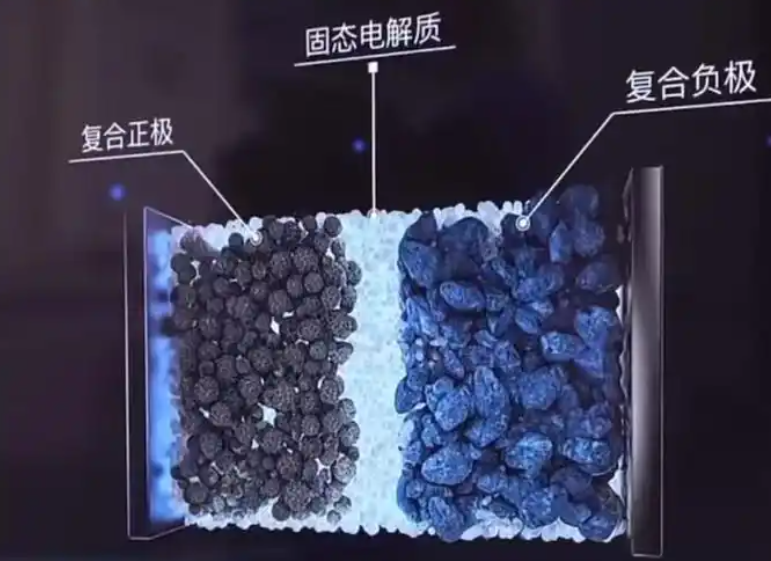
My Frame of Reference
I often start with a simple question: what would I want a solid state battery to do if I had to deploy it in a high-consequence environment? I would want it to charge quickly without lithium plating, to survive thousands of cycles without losing contact, to resist internal short circuits, and to fail in a predictable rather than violent manner. In a fluorine chemical plant, I have seen how personal protective equipment is selected according to a hazard matrix: face shields for corrosive splashes, supplied-air respirators for toxic gas, chemical-resistant suits for hydrogen fluoride, and flame-resistant clothing for thermal events. A solid state battery needs an analogous hazard matrix, because every layer, every interface, and every operating condition can become a source of failure.
When I translate that mindset to a solid state battery, I identify four coupled domains. The first is electronic transport: electrons must reach every active particle without excessive resistance. The second is ionic transport: lithium ions must move through the solid electrolyte and across interfaces at rates that match the applied current. The third is mechanical integrity: volume changes and stack pressure must not destroy contact. The fourth is chemical stability: the electrolyte, anode, and cathode must not react in ways that consume lithium or increase impedance. In my experience, a solid state battery fails when any one of these domains is optimized at the expense of the others.
Why the Solid State Battery Needs a New Anode Logic
The anode is the component that most clearly reveals the tension inside a solid state battery. Graphite is stable and mature, but its capacity is limited and its potential is close to that of lithium metal. Silicon offers a much higher capacity, but it expands dramatically during lithiation. Lithium metal offers the highest possible capacity and the lowest potential, but it tends to plate irregularly and react with many solid electrolytes. An alloy anode sits between these extremes: it can store more lithium than graphite, it can be processed as a composite, and it can be designed to avoid the worst volume changes. I have found that the most promising route is not to choose one material but to build a multiphase alloy in which each phase performs a specific function.
In a conventional liquid-electrolyte cell, the anode is often a composite of active material, conductive carbon, and binder. In a solid state battery, the anode must also maintain contact with a solid electrolyte. That contact is mechanical, not wetting. If the anode particles shift or the electrolyte fractures, the effective contact area drops and the local current density rises. The rise in current density accelerates plating, which increases stress, which causes more fracture. I have watched this feedback loop in my own mental models, and it is the reason I pay close attention to any design that claims to solve rate capability without addressing mechanical stability.
The Coupled Failure Problem
To understand why a solid state battery is so difficult, I break the problem into four coupled failure modes. The first is slow electron transport. If the anode contains insulating phases or if the conductive network is discontinuous, electrons cannot reach the reaction sites quickly enough. The second is restricted lithium-ion diffusion. If the solid electrolyte has low ionic conductivity or if the interfacial resistance is high, lithium accumulates at the interface. The third is solid-solid interface degradation. Even if the initial contact is good, cycling can create voids, cracks, and interphase layers that increase resistance. The fourth is dendrite growth. Unlike the popular narrative that solid electrolytes eliminate dendrites, many solid electrolytes still allow lithium to penetrate along grain boundaries, pores, or cracks.
These four modes are not independent. A high current density increases the overpotential, which increases the driving force for dendrite growth. Dendrite growth creates fresh surface area, which reacts with the electrolyte, which consumes lithium and increases resistance. Increased resistance requires a higher overpotential to maintain the same current, which further accelerates degradation. I have come to see the solid state battery as a system that must be designed around this feedback loop rather than around a single material property.
| Coupled Failure Mode | Physical Origin | Observable Symptom | Design Response |
|---|---|---|---|
| Electron transport limitation | Discontinuous conductive network, insulating phases | High ohmic resistance, poor rate capability | Continuous metal or alloy phase, conductive additives |
| Ion diffusion limitation | Low ionic conductivity, long diffusion path | Concentration polarization, lithium accumulation | Thin electrolyte, high-conductivity phases, short diffusion paths |
| Interface degradation | Voids, cracks, interphase growth | Increasing charge-transfer resistance | Chemically stable phases, compliant contact, stack pressure control |
| Dendrite growth | Local current concentration, defects, grain boundaries | Soft short, capacity fade, thermal event | Uniform current distribution, dense electrolyte, alloy buffer layers |
The Electron-Ion Conductive Network Strategy
The design strategy I find most compelling is an electron-ion conductive network, which I will refer to as EICN. The idea is to create a composite anode in which one phase conducts electrons, another phase conducts lithium ions, and a third phase stores lithium while accommodating volume change. In a solid state battery, this type of network is valuable because it separates the functions that are often forced onto a single material. A single-phase anode must be electronically conductive, ionically conductive, mechanically robust, and chemically stable. That combination is rare. A multiphase network allows each phase to do what it does best.
I think of the EICN as a highway system inside the anode. The electron-conducting phase provides the highways for electrons. The ion-conducting phase provides the ramps and local roads for lithium ions. The lithium-storage phase provides the warehouses where lithium is stored reversibly. If any part of the network is missing, the whole system slows down. If the highways are present but the ramps are absent, electrons arrive but ions cannot follow. If the warehouses are present but the roads are absent, lithium cannot be delivered or removed efficiently. This analogy helps me evaluate new anode concepts: I ask whether the design provides all three functions simultaneously.
| Network Function | Required Property | Typical Material Role | Failure If Missing |
|---|---|---|---|
| Electron conduction | High electronic conductivity, continuous pathway | Metallic or alloy phase, conductive carbon | High impedance, poor rate performance |
| Lithium-ion conduction | Fast lithium diffusion, low migration barrier | Lithiophilic alloy phase, solid electrolyte | Concentration polarization, lithium plating |
| Reversible lithium storage | High capacity, stable lithiation/delithiation | Silicon-rich region, alloy phase | Low capacity, poor energy density |
| Mechanical buffering | Compliance, porosity control, stress relaxation | Multiphase alloy, buffer matrix | Cracking, contact loss, capacity fade |
The Quaternary Alloy Anode
The specific architecture I have studied in detail is a quaternary lithium-aluminum-silicon-zinc alloy anode, which I will call ASZ@Li. It contains multiple phases, including LiAl, LiZn, and LiSi. Each phase contributes a distinct function. The LiAl phase forms a continuous electron-conducting network. The LiZn phase promotes fast and uniform lithium-ion transport. The silicon-rich regions store lithium reversibly and buffer volume changes. Together, these phases create an EICN that supports electron conduction, ion transport, and structural stability in a single composite anode.
What I appreciate about this design is that it does not rely on a single heroic material. Instead, it uses phase engineering to distribute the workload. The LiAl phase is metallic and provides a percolating electronic path. The LiZn phase is lithiophilic and helps lithium move into and out of the anode. The silicon-rich regions provide high capacity, but they are embedded in a matrix that can accommodate their expansion. In a solid state battery, this kind of distributed functionality is essential because the anode must maintain contact with a rigid electrolyte while still allowing lithium to move.
| Phase | Primary Role | Transport Property | Mechanical Role | Contribution to Solid State Battery |
|---|---|---|---|---|
| LiAl | Electron conduction | High electronic conductivity | Rigid framework | Continuous electron path, lower ohmic resistance |
| LiZn | Lithium-ion transport | Fast lithium diffusion, lithiophilic | Compliant interface | Uniform lithium flux, reduced local plating |
| LiSi | Lithium storage | High capacity for lithium | Volume buffer | Higher energy density, reversible capacity |
| Multiphase matrix | Structural integration | Mixed conduction | Stress accommodation | Stable interface, longer cycle life |
Quantitative Framework
I cannot evaluate a solid state battery without equations. The first quantity I examine is ionic conductivity, because it sets the baseline for rate capability. For a solid electrolyte pellet or composite film, I write:
$$\sigma = \frac{L}{R_b A}$$
Here, sigma is the ionic conductivity, L is the thickness, R_b is the bulk resistance, and A is the cross-sectional area. If I want a solid state battery to charge quickly, I need a high sigma and a thin electrolyte, but I also need the interfacial resistance to be low. The total resistance is not just the bulk resistance; it is the sum of bulk, grain boundary, and interfacial contributions.
Diffusion is the next constraint. The characteristic diffusion time scales with the square of the diffusion length:
$$t_d = \frac{L^2}{D}$$
This equation tells me why nanostructuring and short diffusion paths matter in a solid state battery. If the diffusion length is long, the diffusion time becomes large and the anode cannot respond to a high current. If the diffusion coefficient is low, the same problem appears. The EICN strategy addresses this by providing fast paths for lithium ions and by keeping the diffusion length short within each active region.
Fick’s second law describes how concentration evolves in a diffusion-limited system:
$$\frac{\partial c}{\partial t} = D \frac{\partial^2 c}{\partial x^2}$$
In a solid state battery, this equation reminds me that concentration gradients are unavoidable during fast charging. The goal is not to eliminate gradients but to manage them so that the local concentration does not reach the point of lithium plating or mechanical failure.
The Butler-Volmer equation relates current density to overpotential at an interface:
$$j = j_0 \left[ \exp\left(\frac{\alpha_a F \eta}{RT}\right) – \exp\left(-\frac{\alpha_c F \eta}{RT}\right) \right]$$
Here, j is the current density, j_0 is the exchange current density, alpha_a and alpha_c are transfer coefficients, F is Faraday’s constant, eta is the overpotential, R is the gas constant, and T is temperature. In a solid state battery, the exchange current density depends on the contact area between the anode and the solid electrolyte. If the contact area is small, j_0 is small, and a larger overpotential is required to drive the same current. That larger overpotential increases the risk of dendrite growth and interfacial degradation.
I decompose the total overpotential into ohmic, charge-transfer, and diffusion contributions:
$$\eta_{total} = \eta_{ohm} + \eta_{ct} + \eta_{diff}$$
This decomposition is useful because it tells me where to focus. If eta_ohm dominates, I need better electronic or ionic conductivity. If eta_ct dominates, I need better interfacial contact or faster kinetics. If eta_diff dominates, I need shorter diffusion paths or higher diffusion coefficients. The EICN design targets all three by combining a conductive network, a lithiophilic phase, and a high-capacity storage phase.
Energy density is the metric that drives much of the interest in a solid state battery:
$$E = \frac{V Q}{m}$$
Here, E is specific energy, V is average voltage, Q is capacity, and m is mass. A solid state battery can increase E by using a lithium metal or alloy anode with high capacity and by reducing inactive materials. The ASZ@Li anode contributes to this goal because it stores more lithium than graphite while avoiding some of the mechanical penalties of pure silicon or pure lithium metal.
Power density is equally important for fast charging:
$$P = V I$$
If I want a solid state battery to charge in minutes rather than hours, I need high power density, which means low resistance and fast kinetics. The EICN strategy improves power density by creating continuous electron and ion pathways.
Capacity retention is the metric I use to judge cycle life:
$$R_c = \frac{Q_n}{Q_1} \times 100\%$$
Here, R_c is capacity retention, Q_n is the capacity at cycle n, and Q_1 is the initial capacity. In the data I have studied, the ASZ@Li anode enables a solid state battery to retain 80 percent of its capacity after 2050 cycles at 20C and after 1460 cycles at 50C. Those numbers matter because they show that fast charging does not have to come at the cost of cycle life.
Coulombic efficiency is another critical parameter:
$$CE = \frac{Q_{dis}}{Q_{chg}} \times 100\%$$
A high Coulombic efficiency means that most of the lithium plated or inserted during charge is removed during discharge. In a solid state battery, a low Coulombic efficiency often indicates parasitic reactions, dead lithium, or irreversible interfacial growth. The ASZ@Li design aims to keep CE high by maintaining a stable interface and by distributing lithium flux uniformly.
The temperature dependence of ionic conductivity follows an Arrhenius relationship:
$$\sigma T = A \exp\left(-\frac{E_a}{k_B T}\right)$$
Here, E_a is the activation energy, k_B is Boltzmann’s constant, and A is a pre-exponential factor. A lower activation energy means that the solid state battery can operate at lower temperatures without a large penalty. At 55 °C, the ASZ@Li anode shows excellent rate performance, but I also want to know how it behaves at 25 °C and below. That is a question for future testing.
Sand’s time is a useful concept for understanding dendrite growth:
$$t_s = \frac{\pi D}{4} \left( \frac{e C_0}{J} \right)^2$$
In this expression, t_s is the time before dendrite growth becomes significant, D is the diffusion coefficient, C_0 is the initial concentration, and J is the current density. A larger D and a smaller J extend Sand’s time. In a solid state battery, the effective diffusion coefficient at the interface is often much lower than in the bulk, so dendrite growth can occur even at moderate current densities. The EICN design increases the effective diffusion coefficient by providing fast ion paths and by reducing local current concentration.
The lithium transference number is important for understanding ion transport in a solid state battery:
$$t_+ = \frac{I_s (\Delta V – I_0 R_0)}{I_0 (\Delta V – I_s R_s)}$$
Here, t_+ is the transference number, I_s is the steady-state current, I_0 is the initial current, Delta V is the applied voltage, R_0 is the initial resistance, and R_s is the steady-state resistance. A higher t_+ means that a larger fraction of the current is carried by lithium ions, which reduces concentration polarization. The LiZn phase in the ASZ@Li anode is designed to promote uniform lithium-ion transport and increase the effective t_+.
The critical current density for dendrite formation can be approximated by considering the local electric field and the mechanical properties of the solid electrolyte:
$$J_{cc} = \frac{2 \sigma_{SE} \Delta \phi}{L}$$
In this simplified expression, J_cc is the critical current density, sigma_SE is the ionic conductivity of the solid electrolyte, Delta phi is the applied potential, and L is the thickness. A solid state battery with a thin, highly conductive electrolyte can sustain a higher J_cc, but only if the interface remains stable. This is why I do not treat conductivity alone as a sufficient metric.
Thermodynamic stability is governed by the Gibbs free energy change:
$$\Delta G = -nFE$$
If Delta G is negative, a reaction is favorable. In a solid state battery, I want the anode-electrolyte interface to have a very small driving force for decomposition. The ASZ@Li anode is reported to have excellent chemical and electrochemical stability against sulfide solid electrolytes, which means that the driving force for parasitic reactions is low. That stability is especially valuable because it reduces or eliminates the need for an artificial solid-electrolyte interphase, or SEI, layer.
The Nernst equation relates cell potential to concentration:
$$E = E^\circ – \frac{RT}{nF} \ln Q$$
Here, E is the cell potential, E^\circ is the standard potential, R is the gas constant, T is temperature, n is the number of electrons transferred, F is Faraday’s constant, and Q is the reaction quotient. In a solid state battery, concentration gradients at the interface can shift the local potential and contribute to overpotential. The EICN design helps minimize those gradients by keeping ion transport fast and uniform.
Electrochemical impedance spectroscopy is one of my favorite diagnostic tools because it separates processes by time scale. A simplified impedance model can be written as:
$$Z = R_s + \frac{R_{ct}}{1 + (j \omega R_{ct} C_{dl})^\alpha}$$
Here, Z is impedance, R_s is series resistance, R_ct is charge-transfer resistance, j is the imaginary unit, omega is angular frequency, C_dl is double-layer capacitance, and alpha is a dispersion exponent. By fitting impedance spectra, I can track how the solid state battery evolves during cycling. An increase in R_ct often signals interface degradation, while an increase in R_s can indicate electrolyte decomposition or contact loss.
Mechanical stress is a major factor in a solid state battery. The volume change during lithiation and delithiation can be expressed as:
$$\Delta V = \frac{V_{Li} – V_0}{V_0} \times 100\%$$
Here, Delta V is the volume change, V_Li is the volume after lithiation, and V_0 is the initial volume. Silicon undergoes a very large volume change, which is why it is often embedded in a matrix. The ASZ@Li anode uses LiAl and LiZn phases to buffer the expansion of silicon-rich regions, reducing the risk of cracking and contact loss.
The stress generated by constrained volume change can be approximated by:
$$\sigma = E \epsilon$$
Here, sigma is stress, E is Young’s modulus, and epsilon is strain. If the strain is large and the modulus is high, the stress can exceed the fracture toughness of the solid electrolyte. In a solid state battery, this is a recipe for crack formation and dendrite penetration. A compliant multiphase anode can reduce the strain transferred to the electrolyte.
| Equation | Quantity | What It Tells Me About a Solid State Battery |
|---|---|---|
| sigma = L / (R_b A) | Ionic conductivity | Baseline for rate capability and internal resistance |
| t_d = L^2 / D | Diffusion time | How quickly lithium can respond to current changes |
| j = j_0 [exp(…) – exp(…)] | Butler-Volmer kinetics | Interfacial charge-transfer rate and overpotential |
| eta_total = eta_ohm + eta_ct + eta_diff | Overpotential decomposition | Which loss process dominates |
| E = V Q / m | Specific energy | Energy density potential of the solid state battery |
| R_c = Q_n / Q_1 | Capacity retention | Cycle-life durability |
| t_s = (pi D / 4)(e C_0 / J)^2 | Sand’s time | Dendrite growth resistance |
| Delta G = -n F E | Gibbs free energy | Thermodynamic stability of interfaces |
Reported Performance and What It Means to Me
When I look at the performance of the ASZ@Li anode in a solid state battery, I focus on the combination of rate, capacity, and cycle life. At 55 °C, the anode demonstrates excellent rate performance and cycling stability. When paired with a Ni90 cathode, the solid state battery completes a full charge and discharge in only 72 seconds at 50C while maintaining a reversible capacity of 105.6 mAh g^-1. That is a remarkable result because it shows that a solid state battery can support ultrafast charging without immediately sacrificing capacity.
Cycle life is equally impressive. At 20C, the solid state battery retains 80 percent of its capacity after 2050 cycles. At 50C, it retains 80 percent after 1460 cycles. I interpret these numbers as evidence that the EICN design is not just a rate enhancer but also a stability enhancer. If the anode were simply a high-capacity material without a stable network, I would expect rapid fade under high-rate cycling. The fact that the solid state battery maintains 80 percent retention after thousands of cycles suggests that the multiphase architecture is effectively managing both transport and mechanics.
| Parameter | Value | Condition | My Interpretation |
|---|---|---|---|
| Full charge-discharge time | 72 s | 50C, 55 °C | Ultrafast charging capability |
| Reversible capacity | 105.6 mAh g^-1 | 50C, with Ni90 cathode | High capacity retained at high rate |
| Capacity retention at 20C | 80% after 2050 cycles | 20C | Long cycle life under fast cycling |
| Capacity retention at 50C | 80% after 1460 cycles | 50C | Stability even under extreme rate |
| Operating temperature | 55 °C | Testing condition | High-temperature performance demonstrated |
Mechanism: Why Aluminum, Zinc, and Silicon Work Together
I have already described the roles of aluminum, zinc, and silicon, but the mechanism deserves a closer look. Aluminum is introduced to improve the electronic conductivity of the anode. In a solid state battery, electronic conductivity is often the forgotten constraint because so much attention is paid to ionic conductivity. If electrons cannot move quickly, the anode will polarize even if the solid electrolyte is excellent. The LiAl phase creates a continuous metallic network that reduces ohmic resistance and helps distribute current uniformly.
Zinc enhances the lithiophilicity of the anode and lowers the lithium-ion migration barrier. In my view, this is the most subtle part of the design. A lithiophilic surface or phase has a favorable interaction with lithium, which promotes uniform nucleation and reduces the local current density at the interface. A lower migration barrier means that lithium ions can move more easily through the anode, which reduces concentration polarization. In a solid state battery, where interfacial resistance is often the limiting factor, the LiZn phase acts as a bridge between the solid electrolyte and the storage phase.
Silicon is the high-capacity component. It stores lithium reversibly and provides the energy density advantage. However, silicon also undergoes a large volume change. The surrounding LiAl and LiZn phases act as a mechanical buffer. They accommodate the expansion and contraction of the silicon-rich regions, preventing the entire anode from fracturing. This is a classic example of phase engineering: each phase performs a function that would be difficult for a single material to perform simultaneously.
The result is a solid state battery anode that combines electronic conductivity, ionic conductivity, high capacity, and mechanical stability. I see this as a model for future solid state battery development. Rather than searching for a single miracle material, I would design a multiphase system in which each phase is optimized for a specific transport or mechanical function.
| Element or Phase | Primary Benefit | Secondary Benefit | Potential Risk | Mitigation in ASZ@Li |
|---|---|---|---|---|
| Aluminum | Electronic conduction | Rigid framework | Brittle intermetallic | Multiphase matrix, small domains |
| Zinc | Lithiophilic transport | Lower migration barrier | Possible alloy segregation | Uniform phase distribution |
| Silicon | High lithium storage | High capacity | Large volume change | Buffer phases, composite structure |
| Multiphase alloy | Integrated function | Stable interface | Processing complexity | Controlled synthesis, quality control |
Interface Stability with Sulfide Solid Electrolytes
Sulfide solid electrolytes are attractive for a solid state battery because they can have high ionic conductivity and good deformability. However, they are also chemically reactive with many anode materials. Lithium metal can reduce sulfides, and the resulting interphase can increase resistance or consume lithium. The ASZ@Li anode is reported to have excellent chemical and electrochemical stability against sulfide solid electrolytes, which means that it can maintain a stable interface without an artificial SEI layer.
I consider this a major advantage. Artificial SEI layers add cost, complexity, and additional interfaces that can fail. If the anode is intrinsically stable, the solid state battery becomes simpler and more robust. The absence of an artificial SEI does not mean that no interphase forms; it means that the native interphase is thin, stable, and ionically conductive. In my experience, the best interface is often the one that forms naturally and then stops growing.
The EICN design also helps stabilize the interface mechanically. If the anode can accommodate volume changes without cracking, the contact area with the solid electrolyte remains more constant. A constant contact area means a more uniform current distribution, which reduces the driving force for dendrite growth and interfacial decomposition. This is another example of how transport and mechanics are coupled in a solid state battery.
| Interface Issue | Consequence in a Solid State Battery | ASZ@Li Response |
|---|---|---|
| Chemical reduction of electrolyte | Interphase growth, lithium consumption | Stable native interphase, no artificial SEI needed |
| Electrochemical decomposition | Increased resistance, capacity fade | Low driving force for parasitic reactions |
| Mechanical contact loss | Hot spots, dendrite growth | Multiphase buffer, compliant contact |
| Nonuniform lithium flux | Local plating, short circuit risk | LiZn phase promotes uniform transport |
The Solid State Battery and Safety: Lessons from the Fluorine Chemical Industry
My interest in the solid state battery is inseparable from my experience with industrial safety. In the fluorine chemical industry, hydrogen fluoride and chlorine gas are handled with multiple layers of protection. Personal protective equipment is the last line of defense, but it is never the only line. Engineering controls, administrative controls, monitoring, and emergency response all work together. I apply the same layered logic to the solid state battery. A solid state battery is often described as safer because it replaces flammable liquid electrolyte with a solid. That is true, but it is not the whole story. A solid state battery still stores a large amount of energy, still contains reactive materials, and can still fail if it is abused or defective.
When I evaluate the safety of a solid state battery, I ask questions that resemble a process hazard analysis. What happens if the cell is overcharged? What happens if the electrolyte fractures? What happens if the anode and cathode make direct contact? What happens if the cell is exposed to fire? What happens if the battery is crushed or penetrated? The answers depend on the chemistry, the architecture, and the quality of manufacturing. A solid state battery with a sulfide electrolyte can release toxic gases if it decomposes in the presence of moisture. A solid state battery with a lithium metal anode can still experience thermal runaway if internal short circuits occur. A solid state battery with a high-nickel cathode can release oxygen at high temperatures.
This is where personal protective equipment remains relevant. In a manufacturing environment for solid state battery materials, workers may be exposed to fine powders, reactive lithium compounds, sulfide electrolytes, and organic solvents. Personal protective equipment such as gloves, respirators, eye protection, and flame-resistant clothing is essential. But I have learned that personal protective equipment is most effective when it is selected according to a hazard assessment, not according to habit. The same principle applies to the solid state battery itself: protection should be designed into the cell, not added as an afterthought.
| Hazard Domain | Fluorine Chemical Industry Analogy | Solid State Battery Consideration | Protective Measure |
|---|---|---|---|
| Toxic exposure | Hydrogen fluoride, chlorine gas | Sulfide electrolyte decomposition products | Containment, ventilation, personal protective equipment |
| Corrosive contact | Acids and bases | Reactive lithium compounds, electrolyte powders | Chemical-resistant gloves, eye protection, training |
| Thermal event | Exothermic reactions, fire | Thermal runaway, cathode oxygen release | Thermal barriers, cell design, fire suppression |
| Mechanical damage | Pressure equipment, rotating machinery | Crush, penetration, stack pressure | Structural design, impact testing, quality control |
| Electrical hazard | High-voltage equipment | High-voltage pack, short circuit | Insulation, fusing, isolation, personal protective equipment |
I also see a direct materials connection between the fluorine chemical industry and the solid state battery. Fluorinated compounds are used in binders, electrolytes, and surface coatings for advanced batteries. Fluorine chemistry can improve oxidative stability and interfacial properties. At the same time, the handling of fluorinated materials requires strict controls because of their persistence and potential toxicity. In my view, the solid state battery industry should learn from the fluorine chemical industry’s experience with hazardous materials management. The goal is not to avoid fluorine chemistry but to use it responsibly.
Comparison with Conventional Anode Technologies
To appreciate the ASZ@Li anode, I compare it with graphite, silicon-based composites, and lithium metal. Graphite is the incumbent. It is stable, inexpensive, and well understood. However, its theoretical capacity is limited, and its rate capability is moderate. Silicon-based composites offer higher capacity, but they suffer from volume expansion and require careful electrode engineering. Lithium metal offers the highest capacity and the lowest potential, but it is highly reactive and prone to dendrite growth. The ASZ@Li alloy anode attempts to combine the best features of these approaches while avoiding their worst failure modes.
| Anode Type | Typical Capacity | Rate Capability | Volume Change | Interface Stability | Use in a Solid State Battery |
|---|---|---|---|---|---|
| Graphite | Moderate | Moderate | Low | Good | Mature but energy density limited |
| Silicon composite | High | Moderate to high | High | Moderate | Promising but mechanically challenging |
| Lithium metal | Very high | High | Infinite plating/stripping | Poor with many electrolytes | High energy but dendrite risk |
| ASZ@Li alloy | High | Very high | Buffered | Excellent with sulfide electrolyte | Balanced performance for solid state battery |
I do not claim that ASZ@Li is the final answer for every solid state battery. Different applications require different trade-offs. A grid storage solid state battery may prioritize cost and cycle life over extreme fast charging. An electric vehicle solid state battery may prioritize energy density and safety. A consumer electronics solid state battery may prioritize volumetric energy density and form factor. The EICN concept, however, is broadly applicable. It provides a design language for thinking about how to combine phases and functions in a solid state battery anode.
Characterization, Diagnostics, and Quality Control
I cannot optimize a solid state battery without good characterization. My typical toolkit includes X-ray diffraction for phase identification, scanning electron microscopy for morphology, transmission electron microscopy for interfacial structure, X-ray photoelectron spectroscopy for surface chemistry, and electrochemical impedance spectroscopy for resistance analysis. I also use galvanostatic cycling, rate tests, and differential capacity analysis to understand how the solid state battery ages.
For the ASZ@Li anode, phase distribution is especially important. If the LiAl, LiZn, and LiSi phases are not uniformly distributed, the EICN will be incomplete. Some regions may be electron-rich but ion-poor, while others may be ion-rich but electron-poor. Quality control therefore requires not only compositional analysis but also spatial mapping of conductivity, diffusion, and mechanical properties. In my experience, a solid state battery can fail because of microscopic inhomogeneity that is invisible in average measurements.
| Technique | Information Obtained | Relevance to Solid State Battery |
|---|---|---|
| X-ray diffraction | Phase identification, lattice parameters | Confirms LiAl, LiZn, LiSi phases |
| Scanning electron microscopy | Morphology, particle size, porosity | Evaluates network continuity and contact |
| Transmission electron microscopy | Atomic-scale interface structure | Reveals interphase thickness and defects |
| X-ray photoelectron spectroscopy | Surface chemistry, oxidation states | Detects parasitic reactions and SEI growth |
| Electrochemical impedance spectroscopy | Resistance, capacitance, time constants | Tracks interface and bulk degradation |
| Galvanostatic cycling | Capacity, efficiency, rate performance | Quantifies solid state battery performance |
Modeling, Simulation, and Digital Twins
I use modeling to connect microscopic mechanisms to macroscopic performance. A physics-based model of a solid state battery can couple electron transport, ion transport, electrochemical reactions, and mechanical deformation. The governing equations include conservation of charge, conservation of mass, and conservation of momentum. For ion transport, I use the Nernst-Planck equation:
$$\frac{\partial c}{\partial t} = \nabla \cdot \left( D \nabla c + \frac{z F D c}{RT} \nabla \phi \right)$$
Here, c is concentration, D is the diffusion coefficient, z is the charge number, F is Faraday’s constant, R is the gas constant, T is temperature, and phi is the electric potential. This equation captures both diffusion and migration. In a solid state battery, the electric potential distribution is strongly affected by interfacial resistance and space-charge layers.
For mechanical deformation, I use a linear elastic or viscoelastic model, depending on the material. The stress-strain relationship can be written as:
$$\sigma_{ij} = C_{ijkl} \epsilon_{kl}$$
Here, sigma_ij is the stress tensor, C_ijkl is the stiffness tensor, and epsilon_kl is the strain tensor. In a solid state battery, mechanical stress can alter ionic conductivity, reaction kinetics, and contact area. A digital twin that couples electrochemistry and mechanics can help predict where failure will occur.
I am particularly interested in using machine learning to accelerate the discovery of new solid state battery materials. By combining density functional theory calculations, molecular dynamics simulations, and experimental data, it is possible to screen candidate alloy phases for electronic conductivity, lithium diffusivity, and stability. The EICN concept provides a set of descriptors: electronic conductivity, ionic conductivity, lithium storage capacity, volume change, and interfacial stability. These descriptors can be used to train models that predict the performance of new multiphase anodes for a solid state battery.
| Modeling Approach | Length Scale | Time Scale | Output | Use in Solid State Battery |
|---|---|---|---|---|
| Density functional theory | Atomic | Picoseconds | Energy, migration barrier | Screens phase stability and diffusion |
| Molecular dynamics | Nanometer | Nanoseconds | Diffusion coefficient, structure | Studies interfacial transport |
| Continuum modeling | Micrometer to millimeter | Seconds to hours | Concentration, potential, stress | Predicts cell-level performance |
| Machine learning | Multi-scale | Variable | Property prediction | Accelerates material discovery |
Manufacturing Scale-Up and Cost
A solid state battery is not a laboratory curiosity if it cannot be manufactured at scale. I think about scale-up from the beginning. The ASZ@Li anode requires controlled alloying, uniform phase distribution, and compatible processing with the solid electrolyte. If the anode is produced by mechanical milling, the particle size and phase purity must be controlled. If it is produced by melt spinning or rapid solidification, the cooling rate must be optimized. If it is produced by electrodeposition or physical vapor deposition, the throughput and cost must be considered.
The solid electrolyte also imposes manufacturing constraints. Sulfide electrolytes are moisture-sensitive, so dry-room processing is required. Oxide electrolytes often require high-temperature sintering, which can cause interdiffusion and reactivity. Polymer electrolytes offer easier processing but may have lower ionic conductivity. In my view, the success of the solid state battery will depend on choosing the right combination of anode, electrolyte, and process for each application.
| Manufacturing Step | Key Challenge | Possible Solution | Impact on Solid State Battery |
|---|---|---|---|
| Alloy synthesis | Phase uniformity | Controlled milling, rapid solidification | Ensures complete EICN |
| Electrode casting | Contact with solid electrolyte | Composite design, pressure control | Reduces interfacial resistance |
| Electrolyte densification | Grain boundaries, porosity | Sintering, hot pressing, additives | Suppresses dendrite growth |
| Cell stacking | Uniform stack pressure | Mechanical fixtures, compliant layers | Maintains contact during cycling |
| Formation and testing | Detecting defects | Inline impedance, voltage monitoring | Improves safety and yield |
Cost is another factor I cannot ignore. Lithium metal anodes are expensive to produce and handle. Sulfide electrolytes require expensive raw materials and dry-room processing. High-nickel cathodes contain cobalt and nickel, which are costly and have supply-chain risks. The ASZ@Li anode uses aluminum, silicon, and zinc, which are relatively abundant and inexpensive. If the synthesis can be scaled, the material cost may be competitive. However, the processing cost may still be significant because of the need for controlled atmospheres and precise phase engineering.
Lifecycle, Recycling, and Environmental Responsibility
I believe that a solid state battery must be evaluated over its entire lifecycle. The extraction of lithium, nickel, cobalt, and other materials has environmental and social impacts. The production of sulfide electrolytes can generate hazardous waste. The recycling of solid state batteries is more complex than the recycling of liquid-electrolyte batteries because the components are often sintered or bonded together. In my view, design for recycling should be a requirement, not an afterthought.
For the ASZ@Li anode, recycling may be simpler than for some other advanced anodes because the metals are conventional and can be separated by hydrometallurgical or pyrometallurgical processes. However, the presence of lithium and reactive phases requires careful handling. I would like to see a solid state battery designed with reversible interconnects, soluble binders, and clearly labeled materials so that disassembly and separation are practical.
| Lifecycle Stage | Environmental Consideration | Opportunity for Solid State Battery |
|---|---|---|
| Raw material extraction | Energy use, land impact, social risk | Use abundant elements such as aluminum, silicon, zinc |
| Materials processing | Hazardous waste, energy intensity | Develop low-temperature, low-waste synthesis |
| Cell manufacturing | Dry-room energy, solvent emissions | Optimize process, recover solvents |
| Use phase | Efficiency, lifetime, safety | Long cycle life reduces replacement frequency |
| End of life | Recycling complexity, landfill risk | Design for disassembly and material recovery |
Roadmap and Metrics
If I were to set a roadmap for the solid state battery, I would divide it into three horizons. In the near term, I would focus on proving the EICN concept at pilot scale, establishing reproducible synthesis, and demonstrating safety under abuse conditions. In the medium term, I would focus on scaling manufacturing, reducing cost, and validating performance in large-format cells. In the long term, I would focus on integrating the solid state battery into complete systems with advanced thermal management, battery management, and recycling.
| Horizon | Primary Goal | Key Metrics | Risk to Manage |
|---|---|---|---|
| Near term | Prove EICN at pilot scale | Rate, capacity retention, Coulombic efficiency | Phase uniformity, interface stability |
| Medium term | Scale manufacturing and reduce cost | Yield, cost per kWh, energy density | Dry-room processing, supply chain |
| Long term | Integrate into systems and recycle | System safety, lifecycle impact, recyclability | Regulation, infrastructure, public acceptance |
I also need clear metrics. For a solid state battery, I would track areal capacity, volumetric energy density, gravimetric energy density, power density, cycle life, Coulombic efficiency, temperature range, safety under abuse, and cost. These metrics must be measured under standardized conditions so that comparisons are meaningful. I have seen too many claims that cannot be reproduced because the testing conditions are not reported in detail. Standardization is essential for the solid state battery to move from the laboratory to the market.
| Metric | Why It Matters | Target Direction |
|---|---|---|
| Areal capacity | Determines practical current density | Higher, with stable cycling |
| Volumetric energy density | Critical for portable electronics and vehicles | Higher, with reduced inactive materials |
| Gravimetric energy density | Critical for transportation | Higher, with lightweight design |
| Power density | Enables fast charging | Higher, with low resistance |
| Cycle life | Determines lifetime and cost | Longer, with high retention |
| Coulombic efficiency | Indicates parasitic reactions | Closer to 100 percent |
| Safety | Protects users and workers | No thermal runaway under abuse |
| Cost | Determines commercial viability | Lower, with scalable materials |
Failure Modes and Mitigation
I have already discussed several failure modes, but I want to summarize them in a way that can guide design. The most common failure modes in a solid state battery are contact loss, dendrite penetration, interphase growth, particle fracture, and thermal runaway. Each failure mode has a signature and a mitigation strategy. Contact loss can be detected by an increase in ohmic resistance. Dendrite penetration can be detected by voltage fluctuations or soft shorts. Interphase growth can be detected by an increase in charge-transfer resistance. Particle fracture can be detected by capacity fade and impedance rise. Thermal runaway can be detected by temperature and voltage sensors.
| Failure Mode | Signature | Root Cause | Mitigation |
|---|---|---|---|
| Contact loss | Increasing ohmic resistance | Volume change, stack pressure loss | Compliant matrix, pressure control |
| Dendrite penetration | Soft short, voltage noise | Local current concentration, defects | Uniform flux, dense electrolyte |
| Interphase growth | Increasing charge-transfer resistance | Parasitic reactions | Stable interface, protective coating |
| Particle fracture | Capacity fade, impedance rise | Mechanical stress | Buffer phases, nanostructuring |
| Thermal runaway | Temperature rise, venting | Internal short, exothermic reactions | Thermal barriers, safe chemistry |
My Conclusions
I have come to see the solid state battery as one of the most important engineering challenges of this decade. It promises higher energy density, faster charging, and improved safety, but it also demands a level of integration that is unprecedented in battery design. The electron-ion conductive network strategy, exemplified by the quaternary alloy anode, shows that progress is possible when electron transport, ion transport, lithium storage, and mechanical buffering are addressed together. The reported performance of a solid state battery with this anode, including 72-second charge-discharge at 50C, 105.6 mAh g^-1 reversible capacity, and 80 percent capacity retention after thousands of cycles, gives me confidence that the solid state battery is moving from concept to reality.
At the same time, I remain disciplined about safety. My experience with personal protective equipment in the fluorine chemical industry taught me that protection is a system, not a single item. A solid state battery must be designed with the same layered philosophy: safe materials, robust interfaces, fault-tolerant architecture, monitoring, and emergency response. The solid state battery will not be adopted because it is perfect; it will be adopted because it is better than the alternatives in a way that is measurable, reproducible, and safe.
I will continue to follow the development of the solid state battery with both optimism and rigor. I will look for data that separate hope from reality. I will ask whether the electron and ion pathways are continuous, whether the interfaces are stable, whether the mechanics are accommodated, and whether the manufacturing process is scalable. If those questions can be answered, the solid state battery will become more than a promising concept. It will become the foundation of a new generation of energy storage.