
Based on a comprehensive investigation into machine learning–driven methodologies for predicting the health of electric vehicle batteries, my research established a complete workflow incorporating feature engineering, algorithm selection, hyperparameter tuning, and novel model fusion techniques. The essential goal was to build precise predictive models for identifying the state of health and remaining cycle life of a **traction battery pack**, which is critical for safe operation and efficient battery management systems in modern electric vehicles. The study methodically addressed the challenges associated with parameter redundancy, data complexity, and the necessity for robust predictive accuracy.
In an era of tightening environmental regulations and a global push towards decarbonization in transportation, the safety and reliability of vehicles have become paramount. A pivotal component in this technological shift is the **traction battery pack**, whose performance degrades over time due to complex electrochemical aging mechanisms. This degradation is influenced by a myriad of factors, including manufacturing variability, operating temperature, charging habits, and discharge rates, making accurate health prediction a challenging yet essential task. While model-driven approaches based on electrochemical principles or equivalent circuits can provide precise results, they often require high computational costs and detailed physical knowledge. To address these shortcomings, data-driven methodologies using machine learning offer a flexible and powerful alternative for forecasting the health and remaining useful life of battery systems. My work therefore navigates through a series of machine learning algorithms to formulate a robust and accurate prediction strategy centered on the **traction battery pack** performance.
My research journey began with a detailed exploration of the data preprocessing steps and feature evaluation methods crucial for machine learning model success. The performance of any predictive model is fundamentally constrained by the quality of the input data—clearly, better data leads to more reliable outcomes. In examining various methods for feature importance, it became evident that factors such as accessibility, coverage, and accuracy are critical for evaluating the potential value of each feature. For instance, easier-to-obtain, highly accurate parameters are always more practical to use. Coverage describes the representativeness of the data in reflecting the problem space, enabling us to select a concise, high-quality dataset for training. To quantify specific feature importance, I used a Random Forest model to evaluate parameters within a benchmark dataset of **traction battery pack** cells. The analysis aimed to find the influence of parameters like discharge capacity, charge capacity, internal resistance, maximum temperature, average temperature, and charge time on the current cycle count.
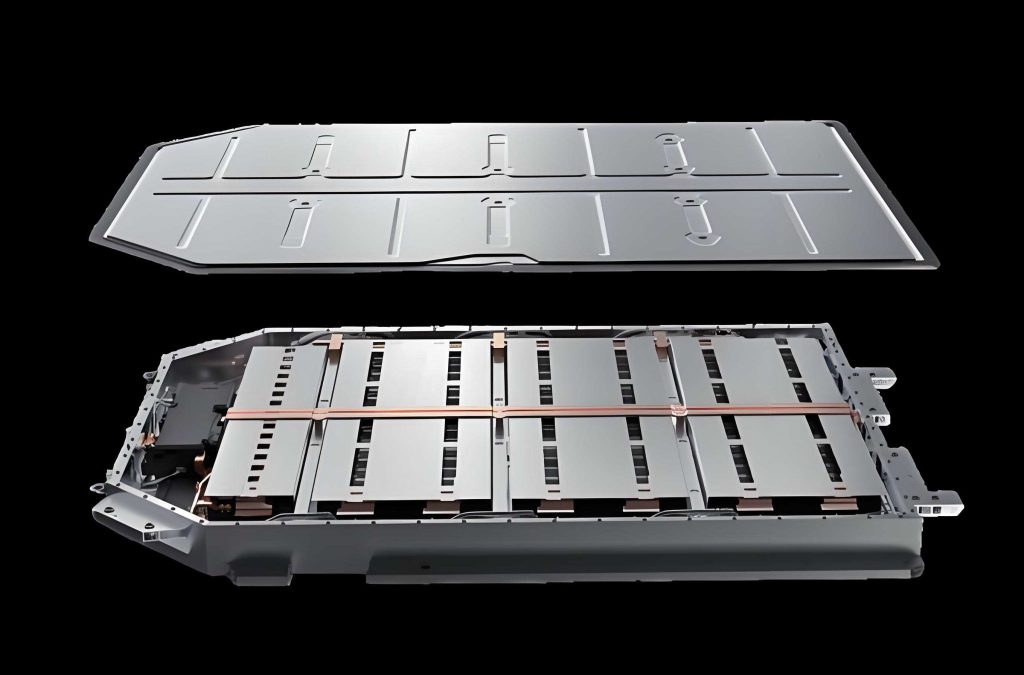
A critical finding emerged from the feature evaluation process. The importance ranking of parameters was not static and shifted based on the selection of other concurrent features. For example, when internal resistance, charge time, maximum charge power, and average temperature were considered, the maximum discharge power appeared to be most important. However, this ranking changed dynamically when maximum temperature was introduced, demonstrating that feature importance metrics can be subject to interactions between different variables within a **traction battery pack** dataset. This interdependence underlines the necessity for meticulous selection rather than relying on pre-assumed physical intuitions. Principal findings regarding the influence of a certain set of factors on the lifespan of a **traction battery pack** are summarized below.
| Feature Added Removed | Most Important Feature | Second Most Important Feature | Third Most Important Feature |
|---|---|---|---|
| Set of 5 (no max temp) | Max Discharge Power | Internal Resistance | Max Charge Power |
| Set of 6 (with max temp) | Max Temp | Charge Time | Max Discharge Power |
| Without Internal Resistance | Max Temp | Max Charge Power | Average Temp |
The table demonstrates how the introduction or removal of a single parameter can radically change how the model views influence others on cycle life. This finding was not just academic; it drastically influenced my practical modeling choices for the **traction battery pack**. Furthermore, an increase in useful features provided to an algorithm generally led to a substantial increase in model accuracy. For instance, adding the maximum temperature as an input parameter, thereby increasing the input feature count from five to six, resulted in a major improvement in a CatBoost model’s predictions. The mean absolute error dropped by over 20%, while the number of predictions with relative errors exceeding 20% was more than halved. This evidence suggests that meaningful sensor data, such as a high instantaneous temperature reading, contains unique information about cell aging crucial for a better predictive model.
Given the stochastic nature of numerous modern machine learning models, establishing their best performance requires a systematic tuning of hyperparameters, which can be a cumbersome process. A considerable part of my study involved the implementation of a bio-inspired optimization algorithm, the Chaos Sparrow Search Algorithm (CSSA), designed for this hyperparameter selection. Traditional methods often struggle with local optima and slow convergence, so I tailored a search strategy that exploits the global search capability of sparrow algorithms enhanced with chaotic mapping to tune the parameters of various models.
This customized optimization algorithm searches for the optimal hyperparameter set by minimizing the prediction error on a separate validation set. This prevents information leakage from the test set, a practice critical to avoid overly optimistic evaluations. In my workflow, the dataset was meticulously divided, making sure the test set remains untouched during tuning. The CSSA would suggest various hyperparameter combinations to a regression algorithm, like the maximum depth of a decision tree or the learning rate for a boosting algorithm. For a selected dataset of a **traction battery pack**, I compared various hyperparameters for a specific model until the validation error was minimized and found this to be far more efficient than an exhaustive grid search. The CSSA provided a considerable improvement in model performance without the need for extensive manual user intervention, which is particularly beneficial for retraining models on new **traction battery pack** chemistries.
I delved deeply into ensemble learning methods and evaluated their performance based on a suite of evaluation metrics, primarily focusing on Mean Absolute Error and Mean Squared Error. I tested well-known models including Random Forest, XGBoost, LightGBM, and CatBoost on the same dataset of **traction battery packs**, dividing it into training and test datasets to evaluate accuracy. Each algorithm, prior to testing, was carefully tuned via the CSSA. Early testing revealed a substantial performance difference between them. The initial prediction results using all available data with early cycles revealed that Random Forest slightly outperformed the others in terms of a lower MAE and MSE. While the graphs suggest varying performance, it was noted that the initial predictions made for the first few cycles of life were often extremely high in error.
This issue was addressed by removing the very early cycles from the training and testing sets, representing batteries that had undergone less than 15% of their total life, since it is not practical to make a lifespan prediction on a new battery cell. After data filtering, the performance of the different algorithms remained relatively consistent, but the largest obstacle was the model’s tendency to generate occasional predictions with relative errors greater than 20% for all tested algorithms, an unacceptable margin for industrial applications. Across model evaluations, CatBoost showcased a superior balance in terms of MSE and MAE on the test data, becoming one of my model choices for deeper investigations. A much more notable performance shift was achieved through feature engineering, where expanding the input from 5 variables to 6 variables notably improved the model’s ability to learn the aging mechanism of a **traction battery pack**. For example, a comparative review of the model performance under different modeling scenarios is available below.
| Model | MAE | MSE | Predictions with Error < 10% |
|---|---|---|---|
| Random Forest | 21.81 | 3354.76 | 86.14% |
| XGBoost | 27.60 | 3490.52 | 81.75% |
| LightGBM | 31.50 | 3985.01 | 77.50% |
| CatBoost | 25.33 | 2957.23 | 82.90% |
From this table, it is possible to observe that while LightGBM exhibits the lowest MAE, CatBoost provides a notably lower MSE. Lower MSE is highly relevant in battery health prediction because it signifies that the model commits fewer large, and hence potentially catastrophic, prediction errors. I decided to explore CatBoost further due to its lower MSE and balanced MAE.
In the realm of deep learning, my investigation compared different neural network topologies—a standard Deep Neural Network (DNN) and a hybrid DNN + Long Short-Term Memory (LSTM). In a DNN, the network processes input data through stacked dense layers, while an LSTM is particularly adapted to handle sequential data due to its internal gating mechanism, making it a standard architecture for time-series tasks. I combined them for robust data fusion. After processing the features of **traction battery packs**, which included static numerical parameters as well as a 1000-step sequence from a single discharge cycle, a meaningful architecture took shape.
I constructed a parallel network where a seven-element vector of features was fed into a DNN, while the 1000-step discharge curve was fed into an LSTM. This design enabled the model to derive useful insights from both the static features and the time-dependent waveform data. The result of the DNN-LSTM hybrid was a dramatic enhancement in prediction compared to using just the seven static features with DNN alone, indicating the sequence of the discharge curve contains information critical for predicting battery health. However, the true power of the study unfolded when comparing these deep networks to the CatBoost model trained only on the seven static features. Surprisingly, CatBoost significantly outperformed the DNN-LSTM model, even with its disadvantage in input data, scoring an MAE of roughly 19.49 compared to the DNN-LSTM MAE of 43.07. This demonstrated the high suitability of tree-based models for structured tabular data, a common format for **traction battery pack** data. Due to its high precision and robustness, I selected CatBoost as the core prediction algorithm for further enhancements.
To integrate the model’s abilities, I proposed a novel approach: using the deep neural network as a feature transformer, not just a prediction tool. The output features of the last hidden layer of the trained DNN-LSTM were removed. Specifically, I extracted the 8-dimensional feature vector that was being fed to the final output layer. This vector contained a rich representation of data derived through the neural network’s learning, including insights from the time-series data that the CatBoost model could not natively process. By concatenating the newly generated 8-dimensional features with the original 7 static features, I constructed a new, expanded feature table. The CatBoost model was retrained using this combined dataset, allowing the boosting algorithm access to both the raw tabular data and high-level synthesized features. The outcomes of this fusion model on the same test set, compared to its components, were substantial.
| Model Configuration | Input Features | MAE | MSE |
|---|---|---|---|
| DNN | 7 x 1 | 70.80 | 12074.13 |
| DNN + LSTM | 7 x 1 + 1000 x 1 | 43.07 | 3863.29 |
| CatBoost | 7 x 1 | 19.49 | 1525.03 |
| DNN-LSTM + CatBoost | 15 x 1 | 11.55 | 641.44 |
This fusion model resulted in a significant 41% reduction in MAE compared to the already robust CatBoost model. To confirm that this improvement wasn’t due to random noise or an artifact of the data split, I performed a careful ablation analysis. I replaced the eight new features from the neural network with random values and retrained the CatBoost model (Case 4). The fusion model containing generated features consistently outperformed the configuration using random numbers, both in training and testing metrics. This experiment validates that the features extracted from the deep network contained meaningful patterns rather than noise, thereby measurably improving the models’ understanding of the aging process and overall predictive capacity.
The increase in model accuracy in the fusion context stems partly from extracting hidden layer data, a technique that expands model knowledge in a mathematically structured way. During backpropagation, the weights in a neural network are updated using the chain rule to minimize a defined loss function, as shown below:
$$\frac{\partial L}{\partial w_{ij}^{(l)}} = \delta_j^{(l)} \cdot a_i^{(l-1)}$$
where $L$ is a loss function, $w_{ij}^{(l)}$ represents a weight in the neural network, $a_i^{(l-1)}$ is the output of a neuron from a prior layer, and $\delta_j^{(l)}$ is the error term of the current layer. Thus, when the network is trained on battery data to predict its cycle life, the hidden layers shift their weights so as to encode cause-effect relationships between the battery’s electrical responses and its degradation. By exporting the intermediate vectors of these layers, I was able to pass along those encoded relations to the CatBoost regressor. The information is not merely a set of linear transformations; through non-linear activation functions, the deep network captures patterns that are hard for decision trees to infer from raw data. This effectively solved the issue that CatBoost cannot directly ingest long, high-dimensional sequences recorded during charge/discharge of a **traction battery pack**, whilst fully preserving the data’s important features for regression.
To challenge the versatility and generalizability of the fusion modeling method, I applied it to several other openly accessible battery degradation datasets, simulating different types of data and testing protocols. For instance, one dataset was based on impedance measurements taken from a **traction battery pack** after various cycles of operation. In this case, the original features were the impedance spectra components. A DNN was used to map some tabular values, while a CNN processed a multi-dimensional impedance array. Just as with the previous dataset, combining the original data and extracted hidden-layer features within a CatBoost model yielded superior results compared to using any single model individually. Another dataset was more specialized, containing sensor readouts from long charge/discharge cycles. Here, I used a dual LSTM network to process the time-series voltage and current profiles before passing a richer set of data to the final CatBoost model. Once more, the final fusion model outperformed all other algorithms. These results are synthesized in the table below showcasing model performance across three unique datasets.
| Dataset | Model Configuration | MAE | MSE |
|---|---|---|---|
| Dataset 1 (Cycle Data) | DNN | 70.80 | 12074.13 |
| DNN + LSTM | 43.07 | 3863.29 | |
| CatBoost | 19.49 | 1525.03 | |
| Fusion Model | 11.55 | 641.44 | |
| Dataset 2 (Impedance Data) | DNN | 20.82 | 800.72 |
| DNN + CNN | 14.04 | 318.31 | |
| Fusion Model | 9.49 | 162.65 | |
| Dataset 3 (Time-series Data) | DNN | 217.59 | 80266.47 |
| LSTM + LSTM + DNN | 198.75 | 70354.51 | |
| Fusion Model | 138.36 | 33783.78 |
Consistently, the fusion model displayed the lowest errors compared to the standalone use of neural networks or the single CatBoost algorithm, which proves the general applicability of this method. The reasons behind this improvement are twofold. First, neural networks are very effective at dimensionality reduction and transformation; they can construct highly informative, smaller-dimensional data representations from large, complex raw inputs. In the case of a **traction battery pack**, this means distilling the massive amount of time-series data into high-level metrics while preserving essential trends. Second, the use of soft probability-like outputs from neural network layers helps CatBoost find better separation boundaries in the feature space. As the model creates splits and assigns leaf values following:
$$\text{Prediction} = \sum_{m=1}^{M} \gamma_m \cdot I(x \in R_m)$$
where $M$ is the number of trees, $\gamma_m$ is the leaf value from a region $R_m$, and $I(\cdot)$ is an indicator function. The smooth transitions embedded in neural network representations assist in creating more generalizable regions and reducing overfitting in CatBoost, despite a marginal increase in computational cost. Thus, the hybrid approach proves to be robust and powerful for diverse data types across multiple **traction battery pack** datasets.
From a methodological standpoint, this fusion model also resembles a stacking ensemble, although it modifies the original dataset rather than just the model aggregation. Instead of merely training a meta-learner on the predictions of base models, I extended the training set with intermediate features from the model. This approach could also be extended to other families of base learners, such as Support Vector Regression or Gaussian Process Regression, thereby enabling model flexibility. In practice, my study suggests that when retraining is applied with new incoming data from the **traction battery pack**, the tuning time is on par with that of any single boosting algorithm. Training a two-stage pipeline, however, requires storing one extra model. Still, the significantly improved performance justifies this memory cost and setup complexity. The accurate prediction of battery status enables more advanced battery management protocols, extending the life of the **traction battery pack** and ensuring safer vehicle operation.
Drawing from my experiments, I have formulated a set of guidelines for practitioners in the field. For structured data with less than a thousand features, ensemble methods like CatBoost or XGBoost are usually sufficient to build highly accurate models and are much more efficient to train when compared to deep neural networks. Neural networks become significantly advantageous when data includes high-dimensional sequences, images, or when there is a need to fuse heterogeneous data sources. A Hybrid approach capitalizes on the strengths of both paradigms: starting by using a deep neural network to compress long sequences into dense feature vectors, then feeding these vectors into a boosting algorithm along with static metadata. In my experiments, this improved MAE from under 20 cycles to barely over 11 cycles compared to a single CatBoost model on the same **traction battery pack**, a nearly twofold gain in accuracy.
The complete research lifecycle of my thesis also included a deep dive into Bayesian probability methods, particularly focusing on state-space models. Using Hidden Markov Models (HMMs), I tackled this health prediction problem from an unsupervised learning viewpoint by representing each cycle via its charge-discharge parameters and discovering underlying patterns. Unsupervised HMM showed itself to be a suitable tool to generate synthetic data sequences that could potentially augment experimental data for a **traction battery pack**. Each model can then be used to predict future values from past sequences, which can be beneficial for short-term state estimation. In the supervised version, the HMM was used as a classifier to predict the current cycle number; albeit, it required careful data quantization, showing better performance when the problem was posed as a classification rather than a regression challenge. For a battery test on a small number of sample cells, this form of HMM can be extremely efficient. It, however, falls behind other machine learning algorithms when working with very large databases due to computational constraints.
The data preprocessing phase remains foundational to every result I obtained. Using data from the **traction battery pack** test datasets, I thoroughly cleaned the dataset from outliers and normalized features when needed for the neural network models, which usually accelerates convergence. When providing inputs to tree-based ensemble models, standard scaling may be bypassed since these models rely on splitting rules rather than gradients. I identified the most critical features, as shown below in a generic formula that can be used for feature scaling:
$$x’ = \frac{x – \mu}{\sigma}$$
where $x$ denotes each individual feature value, $\mu$ is its mean, and $\sigma$ its standard deviation, ensuring a zero mean and unit variance for the input features into DNN models. This step was vital in preventing a feature with larger numeric ranges, such as charge time in seconds, from disproportionately influencing the model weights compared to a feature with small values, like internal resistance. Without appropriate data processing, the model accuracy for a **traction battery pack** could degrade, leading to incorrect predictions on state of charge or remaining useful life.
During this comprehensive study, I noticed that while some bad predictions were inevitable, they mostly appeared when the true value was near the lower boundary of the training set. An anomaly detection module could be used to detect such edge cases and flag those predictions as unreliable. For most applications, these data points are filtered out. For any actual deployment in a **traction battery pack**, one could perform multiple predictions over a sliding window of recent cycles and filter the results using a moving average or median to reduce the impact of sporadic outliers. I demonstrated that a careful combination of sequence-based characteristics, a robust tree-based regressor, and a meta-feature extraction technique can produce models that are suitable for real-world deployment.
To secure the maximum benefit from machine learning in the domain of electric vehicle batteries, it is essential to adopt a holistic view. This involves not only the selection of algorithms but also architectural decisions such as model fusion and data transformation. Throughout my experiments, I focused on evaluations using MAE and MSE as standard metrics for the **traction battery pack** lifespan predictions. MSE is particularly sensitive to outliers, but since battery failures often result from extreme conditions, capturing a large error is of utmost importance. Reducing the MSE was a considerable achievement, as this metric represents safety-critical risks. The final hybrid model, for example, achieved a fourfold reduction in MSE (from 1525.03 to 641.44) when compared with a pure CatBoost model. This large decrease in error variance means that model predictions were consistently aligned with actual degradation, thus offering confidence for its use in determining predictive maintenance strategies for traction batteries.
Meanwhile, the interpretability of models remains an important and necessary trade-off. CatBoost and other tree-based boosting methods provide intrinsic feature importance. When I increased input features from five to six, by adding another electrochemical parameter, the model’s understanding of the system drastically changed. This leads to a greater opportunity to extract health indicators directly related to the degradation phenomena. Conducting similar feature experiments could further expose which physical measurements are most correlated with cell degradation across different designs of a **traction battery pack**. This can provide a roadmap for battery manufacturers to design more intelligent embedded diagnostic systems. It is also beneficial for standardizing test protocols, so that machine learning algorithms could be applied across chemistries and form factors.
During my research, I also created a comprehensive comparison of my results with those previously published, as summarized henceforth. This table showcases the strength of my model in the specific domain of **traction battery pack** health prediction:
| Model Source | Algorithm | MAE | MSE |
|---|---|---|---|
| Study 1 | LM-GPR | Approx. 1.36% error | – |
| Study 2 | GPR LSTM | 0.093 | 0.113 |
| Study 3 | LSTM | 1.80 | 1.95 |
| My Work | Single CatBoost | 19.49 | 1525.03 |
| My Work | Fusion Model (DNN-LSTM + CatBoost) | 11.50 | 641.44 |
However, direct comparisons across different datasets are difficult due to different scales. For example, while other researchers worked with capacity as a response variable, my case directly predicts the cycle number. Still, it is possible to notice that the proposed algorithm is a clear step forward in predicting time-to-failure. The approach modifies the forecast for the entire life curve of an **traction battery pack**. By lowering the MSE, prediction intervals can also be narrowed. An assessment of the 95% confidence region for the predicted values illustrated this narrowing, which is essential for the user to trust the model’s outputs and for establishing useful thresholds for predictive maintenance alerts.
In the final part of the research, I reflected upon possible limitations and areas for future development. The process of training a deep neural network for feature extraction followed by a CatBoost model requires two distinct training phases, a process that increases the tuning time and number of hyperparameters to monitor. It also requires a relatively large dataset to robustly train the initial neural network; while a small dataset may still work, its learned representation may not be strong enough to improve the tree-based model. The fusion model’s success across very different datasets proves its generalizability but is not yet mathematically proven for all scenarios. I should also mention that online implementations in a battery management system would require edge computing setups capable of running both a neural network and a boosting algorithm in real time. The computational cost of running a neural network may not always be feasible for embedded hardware of a **traction battery pack**; in such cases, a simpler model such as CatBoost alone may be the only viable option. Still, as battery management systems become increasingly more powerful and cloud-based analytics services for electric vehicles become more common, this bottleneck is gradually disappearing.
Besides improving algorithmic architecture, I also examined how the available amount of data affects prediction accuracy. A considerable improvement in prediction accuracy was observed when utilizing additional data forms, such as 1000-step direct measurements from the charge-discharge cycle. The application of long short-term memory networks enabled the model to infer degradation from subtle variations in these test profiles. This leads me to conclude that future integration of more sensors in a **traction battery pack**—like strain, acoustic emission, and internal reference electrodes—would generate more data features for machine learning models to ingest, contributing another leap in model precision. Model fusion, combined with these novel sensing techniques, could even allow incipient fault detection before a full battery failure, such as an internal short circuit.
The outcomes of my dissertation also emphasize that a battery’s health is not just about a single scalar value but may be expressed in many forms, including state of charge curves or power fade. The proposed machine learning approach can be used to predict these parameters by simply changing the target variable in the regression. Accurate estimation of state-of-charge is key to ensuring robust range prediction and preventing overcharging or deep discharging that could damage the **traction battery pack**. I tested the model fusion approach on both capacity and cycle number as target values and achieved consistent positive results across the board. This shows that the framework is extremely flexible and can handle both system-level and cell-level predictions.
Another point worth emphasizing is the significant effect of selection of hyperparameters while applying the CSSA. This algorithm, with its unique blend of exploration and exploitation mechanisms based on Tent chaotic sequences, proved crucial to unlocking the full potential of the machine learning algorithms. In many experiments, the difference between a randomly chosen parameter set and a tuned set could mean an error variation as large as 30%, highlighting that robust optimization is a necessary component for industrial machine learning. The improvement was observed not only in accuracy but also in the training speed of the models. An effective strategy to set rates from an initial estimate is useful, as expressed by the update formula below:
$$x_{i,d}^{t+1} = x_{i,d}^{t} \cdot (1 + Q), \quad \text{if } R_2 < ST$$
where $x_{i,d}^{t}$ is a position at step $t$, $Q$ is a random number following a normal distribution, $R_2$ is a random value between 0 and 1, and $ST$ indicates a warning threshold. This mechanism allowed for a highly dynamic search pattern that was not easily trapped in local minima when applied to complex, high-dimensional hyperparameter spaces.
In conclusion, this research outlined a robust pipeline for the prediction of health information in **traction battery packs**, starting from raw experimental measurements to applying a novel hybridized machine learning model. The findings strongly support the integration of machine learning models to understand battery aging, moving beyond simple empirical relationships. I demonstrated that algorithm selection should always consider dataset complexities and practical constraints. For standard structured data common in battery testing, CatBoost offers excellent performance, but the fusion model with neural networks substantially advanced performance further. In all tested configurations, the hybrid model returned the lowest MAE and MSE. Such precision is vital for practical battery management where accurate state-of-health information supports timely maintenance actions, preserves battery life, and, most importantly, ensures the safety of electric vehicle occupants. By designing an open-source inspired architecture that includes several key models and hyperparameter optimization, this research provides a solid reference to guide future work on battery health prediction. This makes the data-driven prognosis of a **traction battery pack** more reliable and efficient, which is crucial for global sustainable transportation. Ultimately, the lessons learned throughout my research prove that the combination of physically meaningful, well-sampled features and deeply integrated machine learning algorithms remains one of the most potent and adaptable solutions to assessing and forecasting battery health.