
A newly built power battery production line inside the Seres super factory in Chongqing has become a visible marker of how Sichuan and Chongqing are combining research, manufacturing, logistics and market resources across the power battery and new energy vehicle supply chains. Finished power battery packs roll off the line, are lifted onto pallets, crossed over a 50-meter bridge and delivered directly to the final assembly workshop. The short transfer distance is simple to describe, but it represents a far more complex achievement in industrial organization, factory renovation, equipment commissioning and cross-regional coordination.
Behind the line is Wen Peng, an operations manager with CATL, and a team that turned an existing vehicle manufacturing plant into a power battery plant-in-plant in only three months. The project brought CATL and Seres together in a model that had no precedent and no ready-made plan. It also placed the power battery line at the center of a broader effort to strengthen the Sichuan-Chongqing power battery industrial chain, support high-end electric vehicle production and accelerate the growth of energy electronics.
-
A Power Battery Plant-in-Plant Turns Distance into Speed
The plant-in-plant model places a power battery production line directly inside a vehicle factory. The logic is straightforward: a power battery pack should be produced close to the point where it is installed, reducing handling, waiting and coordination costs. In this case, the power battery packs produced in the embedded line are sent across a 50-meter bridge to the final assembly workshop. The line and the vehicle assembly operation are separated by a short physical distance but connected by a tightly coordinated production rhythm.
For CATL, the project was its first cooperation with a vehicle manufacturer under this plant-in-plant model. There was no earlier template to follow and no existing solution that could simply be copied. The power battery line had to fit into a factory originally designed for vehicle manufacturing, while meeting strict requirements for exhaust, dehumidification, explosion prevention and fire protection. The available space needed comprehensive renovation, and the project schedule allowed little room for repeated trial and error.
The power battery line therefore became more than an equipment installation task. It required a combined effort in factory layout, airflow design, safety systems, utility pipelines, equipment debugging and production readiness. Each part of the power battery process had to be matched with the vehicle factory’s existing structure and with the final assembly workshop’s timing. The result is a power battery line that supports vehicle output from inside the vehicle plant, turning a long supply chain link into a short internal transfer.
The significance of the model lies in the way it changes the relationship between power battery production and vehicle assembly. A power battery pack is a large, high-value and safety-critical component. Its production, storage and transport require careful planning. By placing the power battery line inside the vehicle factory, the project reduces the boundary between component manufacturing and vehicle assembly. The power battery pack moves from the line to the vehicle in a short, controlled flow, and the vehicle factory gains a more integrated power battery supply.
The model also shows that regional industrial coordination is not only about building new factories. It can also involve redesigning existing spaces and reorganizing production steps. The power battery plant-in-plant is a practical example of how existing vehicle manufacturing assets can be combined with advanced power battery production. It supports the broader goal of building a more responsive and more closely connected power battery supply chain in the Sichuan-Chongqing region.
-
A Three-Month Race to Rebuild an Existing Vehicle Workshop
In February 2025, Wen Peng received the assignment. The task was to support the CATL-Seres power battery plant-in-plant project and to help build a power battery line inside the vehicle factory. He was considered a suitable choice because of his previous experience in Sichuan. At Sichuan Times New Energy Technology Co., Ltd. in Yibin, he had led the construction of a battery module factory. Eighteen production lines there had reached full capacity, and some of the products had already been supplied to Seres. His understanding of the process and familiarity with the customer made him a natural fit for the new project.
The reality on the ground was demanding. The existing factory was built for vehicle manufacturing, not for power battery production. Power battery manufacturing has strict requirements for exhaust, dehumidification, explosion prevention and fire protection. The existing space needed almost comprehensive renovation. At the same time, the project schedule was only three months. The team could not afford to proceed slowly or rely on repeated trial and error.
Wen Peng brought his practical experience from the Yibin factory construction to Chongqing. A team of more than 200 people worked in two shifts. The workshop stayed lit through the night. Factory renovation, pipeline installation and equipment debugging moved forward in parallel. He spent most of his time on site, staying close to the work face and responding to problems as they emerged. The power battery line had to be built not only quickly but also safely and reliably.
The effort reached an important milestone by mid-June, when factory renovation and equipment debugging were completed. On June 30, the CTP intelligent production line was built and put into operation as scheduled. A leading power battery plant-in-plant had been created in three months. The schedule was met, but the achievement was not merely about speed. It demonstrated how a team could combine power battery know-how, vehicle factory conditions and cross-regional experience to deliver a complex project under pressure.
The three-month race also illustrates the wider pace of power battery development in the region. The power battery industry is moving quickly, and vehicle manufacturers need power battery supply that can keep up with model launches, production plans and quality requirements. The plant-in-plant model shortens the physical distance between the power battery line and the vehicle assembly line, but it also demands tighter planning, faster decision-making and closer cooperation between the power battery producer and the vehicle manufacturer.
The project team’s experience shows that speed and quality do not have to be opposites when the work is organized around clear responsibilities and practical experience. The power battery line was not simply installed; it was adapted to the vehicle factory, and the vehicle factory was adapted to the power battery process. The result is a production system in which the power battery pack and the vehicle move through a more integrated flow.
-
From Yibin Experience to Chongqing Execution
The Chongqing project did not start from zero. Wen Peng’s earlier work in Yibin provided a foundation. At the Yibin battery module factory, he had led a team that built and operated 18 production lines. Those lines reached full capacity, and some of their products were already supplied to Seres. The experience gave him a detailed understanding of power battery module production, line commissioning, quality control and customer requirements.
When the assignment in Chongqing arrived, that Yibin experience became a practical toolkit. The team could draw on established approaches to factory construction, equipment installation and production ramp-up. At the same time, the Chongqing project presented a different challenge. It was not a standalone power battery factory but a power battery line embedded in a vehicle factory. The existing building, the vehicle production rhythm and the final assembly requirements all shaped how the power battery line had to be designed and operated.
The transfer from Yibin to Chongqing also reflects a wider pattern of regional cooperation. Sichuan has built strengths in power battery research, development and production. Chongqing has strong vehicle manufacturing and assembly capabilities. When a power battery line is placed inside a vehicle factory in Chongqing, the two sides are not simply trading components. They are combining production experience, process knowledge, customer understanding and manufacturing capacity across the region.
Wen Peng’s role as an operations manager illustrates the kind of cross-regional talent flow that supports power battery cooperation. His work in Yibin gave him experience with power battery production. His work in Chongqing required him to apply that experience to a new model and a new setting. The power battery plant-in-plant became a test of whether experience from one part of the region could be adapted to another part of the region, and whether the resulting model could support higher levels of industrial integration.
The project also shows that regional cooperation in the power battery sector depends on people as much as on equipment. Production lines can be installed, but they must be operated by teams that understand the process, the safety requirements and the customer’s needs. The movement of experienced personnel from Yibin to Chongqing helped shorten the learning curve and supported the rapid commissioning of the power battery line. The model therefore combines physical investment with organizational learning and cross-regional coordination.
-
A Power Battery Line Built for High-End Vehicle Models
Once the power battery line was built, the project entered a new stage. The line is dedicated to producing 75 kWh and 100 kWh power battery packs for Seres M8 and M9 high-end models. These power battery packs must meet demanding requirements for performance and safety. The line therefore cannot be judged only by output. It must also be judged by consistency, reliability and the ability to maintain quality across every power battery pack it produces.
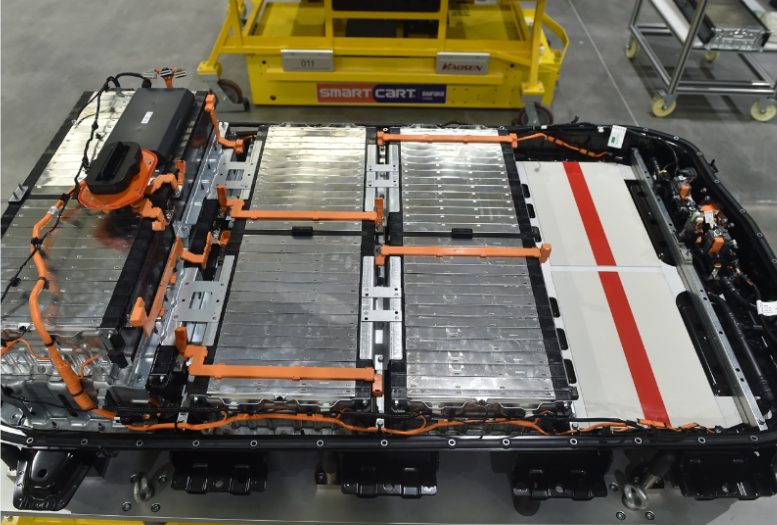
The production line is a CTP intelligent line. Its task is to turn cells and other components into power battery packs that can be installed directly into high-end vehicles. The power battery pack is a central component of an electric vehicle, and its quality affects vehicle range, safety, durability and customer experience. For high-end models, the expectations are even higher. The power battery line must therefore combine automation, process control and careful inspection.
The plant-in-plant arrangement adds another layer of coordination. The power battery line must produce at a rhythm that matches the vehicle factory’s final assembly schedule. A finished power battery pack is lifted onto a pallet, moved across the 50-meter bridge and delivered to final assembly. The short transfer distance reduces the need for long storage and complex logistics, but it also means that the power battery line and the vehicle line must operate in close synchronization. Any interruption in one part of the flow can affect the other.
The high-end vehicle models also place pressure on the power battery line’s quality systems. Every power battery pack must be produced to the same standard, and every process must be traceable and controllable. The line’s intelligent systems support this by collecting and using production data, but the ultimate responsibility remains with the team that operates the line. The project therefore combines advanced equipment with disciplined execution and close attention to detail.
The power battery line’s product range is focused, but its significance is broader. It shows how a power battery producer and a vehicle manufacturer can work together to create a dedicated supply link for high-end models. The power battery pack is not a generic component that can be treated separately from the vehicle. It is part of the vehicle’s performance and safety system. By building the power battery line inside the vehicle factory, the project brings the power battery producer closer to the vehicle manufacturer’s quality requirements and production rhythm.
-
The BMS as the Brain of the Power Battery
A power battery pack is not only a collection of cells. It is a managed system that must operate within a safe and efficient temperature range. Wen Peng has used a simple comparison: a power battery is like a person, and its temperature must be comfortable for it to work well. The self-developed BMS thermal management system acts as the brain of the power battery, monitoring the voltage, internal resistance and temperature of each cell around the clock.
The system does not wait for an overheating alarm before taking action. It uses information such as vehicle speed, environment and charging intensity to preheat or precool the power battery in advance. The goal is to keep the power battery within its best working range. This proactive approach helps support performance, safety and service life. It also shows how power battery management has moved beyond simple monitoring toward predictive and adaptive control.
If a cell shows abnormal heat, the safety system responds. A water-cooled base plate at the bottom of the power battery pack takes over, and coolant circulation rapidly carries heat away. The power battery pack also uses aerogel and mica paper in the gaps between cells. If a single cell loses control, the insulating materials are designed to contain the fire and prevent danger from spreading. These layers of protection are part of the power battery’s safety architecture.
The BMS thermal management system is therefore central to the power battery’s overall performance. It continuously collects data, makes judgments and adjusts the power battery’s thermal state. The system supports the power battery’s ability to operate in different conditions and helps protect it from excessive heat. In high-end vehicle models, where performance and safety expectations are high, the BMS becomes an even more important part of the power battery system.
The power battery line’s quality depends not only on the cells but also on the management system that controls them. The BMS, the cooling system and the insulating materials work together as an integrated safety and performance package. The power battery pack that leaves the line is therefore a complex product that combines electrochemical cells, electronic control, thermal management and passive safety. The plant-in-plant model brings this complex power battery product closer to the vehicle assembly line, where its performance and safety can be matched more closely with the vehicle’s requirements.
-
Safety Layers Behind Every Power Battery Pack
Power battery safety is a system-level issue. It begins with cell selection and production quality, and it continues through pack design, thermal management, structural protection and vehicle integration. The power battery line in Chongqing reflects this system-level approach. The line is designed to produce power battery packs that meet strict safety requirements, and the pack design includes multiple layers of protection.
The water-cooled base plate and coolant circulation provide active thermal control. The aerogel and mica paper provide passive insulation and fire containment. The BMS provides continuous monitoring and predictive adjustment. Together, these measures create a safety architecture that addresses different risk scenarios. The power battery pack is not protected by a single measure but by a combination of monitoring, cooling, insulation and containment.
The factory environment also plays a role in power battery safety. Power battery production requires strict control of exhaust, humidity, explosion risk and fire protection. The existing vehicle workshop had to be comprehensively renovated to meet these requirements. The renovation was not a secondary detail; it was a fundamental condition for safe power battery production. The three-month schedule had to accommodate these safety requirements while still delivering the line on time.
The power battery plant-in-plant model therefore brings safety considerations closer to the vehicle factory. The power battery line and the vehicle assembly line share a physical site, and their safety systems must be coordinated. The short transfer distance reduces some logistics risks, but it also requires clear boundaries and coordinated emergency procedures. The project’s success depends on maintaining safety across both the power battery production process and the vehicle assembly process.
For the power battery industry, safety is not a static achievement. It requires continuous attention, data monitoring and process improvement. The power battery line’s BMS and safety materials are part of that effort, but they must be supported by disciplined production management. The Chongqing project demonstrates that power battery safety must be built into the factory, the line, the pack design and the operating team. The power battery pack is only as safe as the system that produces and manages it.
-
Regional Complementarity: Sichuan Production and Chongqing Assembly
The power battery plant-in-plant is a small but visible part of a larger regional division of labor. Sichuan focuses on power battery research, development and production. Chongqing focuses on vehicle assembly and manufacturing. The two sides are increasingly connected through nearby parts supply and shared markets. The power battery produced in Sichuan and the vehicle assembled in Chongqing are no longer separate industrial stories. They are parts of the same regional supply chain.
This complementarity is reflected in the movement of people, products and knowledge. Wen Peng’s transfer from Yibin to Chongqing is one example. The supply of products from the Yibin battery module factory to Seres is another. The power battery plant-in-plant in Chongqing takes the cooperation further by placing power battery production inside the vehicle factory. The model reduces the distance between power battery production and vehicle assembly, and it deepens the relationship between the power battery producer and the vehicle manufacturer.
The regional division of labor does not mean that each side works in isolation. It means that each side contributes its strengths to a shared industrial system. Sichuan’s power battery research and production capabilities support the supply of advanced power battery products. Chongqing’s vehicle manufacturing and assembly capabilities provide a large and demanding market for those products. The two sides can share market opportunities and jointly improve the competitiveness of the regional power battery and new energy vehicle industry.
The power battery plant-in-plant also shows how regional cooperation can move beyond simple component supply. The power battery line is not just a supplier located in another city. It is embedded in the vehicle factory and integrated with the vehicle assembly process. This deeper integration requires trust, coordination and a shared understanding of quality and timing. It also creates a stronger basis for long-term cooperation in the power battery sector.
The Sichuan-Chongqing region is working to build a trillion-level intelligent connected new energy vehicle industry. The power battery is a core component of that industry. By combining Sichuan’s power battery production with Chongqing’s vehicle assembly, the region can create a more complete and more competitive industrial chain. The power battery plant-in-plant is one practical step in that direction, and it provides a reference for future cooperation between power battery producers and vehicle manufacturers.
-
Power Battery Growth Lifts Energy Electronics
The growth of the power battery industry has effects that extend beyond the battery itself. As power battery packs become larger and more advanced, they drive demand for BMS, sensors, power semiconductors and other energy electronics. These components are essential for power battery management, thermal control, safety and vehicle integration. The power battery therefore acts as a growth engine for a wider set of electronic industries.
The available data show that in 2025, power and energy storage battery output in Sichuan and Chongqing accounted for 22 percent of the national total. Chongqing’s battery industry output value increased by 34.2 percent year on year. These figures indicate that the power battery and energy storage battery sector is expanding quickly in the region. The growth is not only a matter of volume. It also creates opportunities for higher-value components and systems.
The BMS is one example. A power battery pack requires continuous monitoring of voltage, internal resistance and temperature. It also requires predictive thermal management and safety response. These functions depend on sensors, electronic control units, software and power semiconductors. As power battery systems become more sophisticated, the demand for advanced energy electronics grows. The power battery industry therefore supports the development of a broader energy electronics ecosystem.
Chongqing’s battery industry growth is connected to this wider ecosystem. The power battery plant-in-plant requires BMS, sensors and power electronics that can meet the vehicle manufacturer’s requirements. The presence of vehicle manufacturing in Chongqing provides a nearby market for these components. At the same time, Sichuan’s power battery research and production capabilities support the development of new power battery products and systems. The two sides can reinforce each other through technology, supply and market links.
The power battery industry’s role as a growth pole for energy electronics is important for the region’s industrial upgrading. Energy electronics is becoming a new growth area within the electronic information industry. The power battery is a major application that pulls together materials, components, software and systems. By strengthening the power battery chain, the region also strengthens the foundation for energy electronics, automotive electronics and intelligent connected vehicles.
-
Market Sharing and Supply Chain Coordination
The power battery plant-in-plant model supports market sharing in several ways. First, it allows the vehicle manufacturer to secure a nearby supply of power battery packs for high-end models. Second, it allows the power battery producer to deepen its relationship with an important customer. Third, it creates a platform for joint improvement in quality, cost and delivery. The model is therefore not only a production arrangement but also a market and supply chain arrangement.
Nearby parts supply is a key part of this arrangement. When power battery production and vehicle assembly are close to each other, components and finished power battery packs can move more efficiently. The 50-meter bridge is a physical link, but it also represents a shorter communication and coordination chain. Problems can be identified and addressed more quickly, and production plans can be adjusted with greater flexibility.
Market sharing also means that the two sides can respond to customer demand together. High-end vehicle models require power battery packs that meet specific performance and safety standards. The power battery producer and the vehicle manufacturer must share information about demand, specifications and quality requirements. The plant-in-plant model makes this sharing easier because the power battery line is located inside the vehicle factory. The two teams can work together on production planning, quality control and problem solving.
The model can also support the growth of the regional power battery supply chain. As the power battery line expands its output, it can create demand for local suppliers of materials, components and services. This can strengthen the regional industrial base and reduce dependence on distant suppliers. The power battery plant-in-plant is therefore a node in a larger network that includes cell production, module assembly, BMS, sensors, power semiconductors, thermal management materials and vehicle assembly.
Supply chain coordination is especially important for power battery production because the product is safety-critical and high-value. The power battery pack must be produced and delivered in a controlled way. The plant-in-plant model reduces some logistics complexity, but it also requires tighter coordination between the power battery line and the vehicle line. The success of the model depends on shared planning, clear responsibilities and real-time communication.
-
A Reference Model for Power Battery Cooperation
The Chongqing power battery plant-in-plant offers a reference for future cooperation between power battery producers and vehicle manufacturers. It shows that a power battery line can be integrated into an existing vehicle factory when the technical, safety and organizational challenges are addressed. It also shows that cross-regional experience can be transferred and adapted to a new setting.
The model is not a simple copy-and-paste solution. Each vehicle factory has its own layout, systems and production rhythm. Each power battery product has its own requirements. The Chongqing project succeeded because the team adapted its Yibin experience to the local conditions and worked closely with the vehicle manufacturer. The power battery line was designed around the existing factory, and the factory was modified to meet power battery production requirements.
For the power battery industry, the model suggests that closer integration with vehicle manufacturing can create value. The power battery pack is a core component of the electric vehicle, and its production is closely linked to vehicle performance and safety. By placing the power battery line inside the vehicle factory, the model reduces the distance between component production and vehicle assembly. It also creates opportunities for joint problem solving and continuous improvement.
The model can be adapted to other projects, but it requires careful planning. The power battery line must meet strict safety and environmental requirements. The vehicle factory must provide suitable space and utilities. The two sides must agree on quality standards, production schedules and responsibilities. The team must have experience in both power battery production and vehicle factory operations. The Chongqing project provides a practical example of how these conditions can be met.
The power battery plant-in-plant also highlights the importance of people and organization. The three-month schedule was met because a large team worked in two shifts and because experienced managers stayed close to the work face. The power battery line was commissioned on time because problems were addressed quickly and because the team could draw on prior experience. The model therefore combines technical solutions with strong project execution.
-
Data Snapshot of the Power Battery and Regional Industrial Chain
The available figures provide a concise picture of the power battery project and the regional industrial context. The table below summarizes the key details without adding data beyond the published account. It shows how the power battery plant-in-plant is linked to product specifications, safety systems and regional output.
Selected Details of the Power Battery Plant-in-Plant and Regional Context Item Detail Project model CATL-Seres power battery plant-in-plant, with a power battery production line located inside the vehicle factory Transfer distance 50 meters from the power battery pack line to final assembly Preparation period 3 months Team size More than 200 people working in two shifts Line type CTP intelligent production line Products 75 kWh and 100 kWh power battery packs for Seres M8 and M9 high-end models Thermal management Self-developed BMS thermal management system monitoring voltage, internal resistance and temperature around the clock Safety measures Water-cooled base plate, coolant circulation, aerogel and mica paper in cell gaps Regional data In 2025, Sichuan-Chongqing power and energy storage battery output accounted for 22 percent of the national total; Chongqing’s battery industry output value rose 34.2 percent year on year The table shows that the power battery project is both a production project and a regional industrial project. The power battery line’s technical details, such as the CTP intelligent line, the BMS thermal management system and the safety materials, are connected to the vehicle manufacturer’s requirements. The regional data show that the power battery and energy storage battery sector is growing rapidly in Sichuan and Chongqing. The plant-in-plant model is one way to translate that growth into closer supply chain integration.
The data also suggest that the power battery industry is becoming a larger part of the regional economy. Chongqing’s battery industry output value growth of 34.2 percent year on year indicates strong momentum. The 22 percent national share of power and energy storage battery output in Sichuan and Chongqing shows that the region is a significant production base. These figures do not stand alone. They are supported by factories, production lines, research and development, skilled teams and supply chain cooperation.
The power battery plant-in-plant is a small part of the total picture, but it illustrates how the regional power battery industry works at the factory level. The line produces specific power battery packs for specific vehicle models. It uses specific thermal management and safety systems. It depends on a team that can build and operate a complex production line. The regional data provide the larger context, while the plant-in-plant provides a concrete example of how power battery cooperation is implemented.
-
Outlook: Power Battery as a Growth Engine for the Region
The next stage of power battery cooperation in Sichuan and Chongqing will depend on the ability to sustain quality, safety and innovation while expanding production. The power battery plant-in-plant model provides a foundation for closer cooperation between power battery producers and vehicle manufacturers. It also provides a platform for further development of BMS, sensors, power semiconductors and other energy electronics.
The power battery industry is becoming more integrated with the vehicle industry. Power battery packs are no longer simple components that can be designed and produced in isolation. They are part of the vehicle’s performance, safety and user experience. The power battery producer and the vehicle manufacturer must work together from product design through production and after-sales service. The plant-in-plant model supports this closer collaboration by reducing physical and organizational distance.
The regional division of labor can also deepen. Sichuan can continue to strengthen power battery research, development and production. Chongqing can continue to strengthen vehicle assembly and manufacturing. The two sides can share markets and build a more complete power battery and new energy vehicle supply chain. The power battery plant-in-plant is one example of how this division of labor can work in practice.
The growth of the power battery industry also creates opportunities for energy electronics. As power battery systems become more advanced, they require more sensors, more computing power, more power semiconductors and more sophisticated thermal management. These requirements support the development of a broader energy electronics industry. The power battery therefore acts as a growth engine that pulls related industries forward.
The power battery plant-in-plant in Chongqing shows that regional cooperation can be concrete and measurable. It can be seen in a 50-meter bridge, a three-month construction schedule, a CTP intelligent line and a BMS thermal management system. It can also be seen in the movement of experienced personnel from Yibin to Chongqing and in the supply of power battery products to Seres. These details show how the power battery industry is being built through practical cooperation.
For the region, the power battery is not only a product but also a strategic link. It connects research and production in Sichuan with vehicle assembly and manufacturing in Chongqing. It connects materials, components, electronics and vehicles. It connects factories, teams and markets. The power battery plant-in-plant is a visible expression of this linkage, and it provides a reference for the next stage of power battery and new energy vehicle development in the Sichuan-Chongqing region.
The broader goal is to build a trillion-level intelligent connected new energy vehicle industry and to support energy electronics and automotive electronics as new growth areas. The power battery is central to that goal. The Chongqing plant-in-plant shows how a power battery line can be integrated into a vehicle factory and how regional resources can be combined to support higher-level industrial development. The power battery will continue to be a key driver of the region’s industrial upgrading and market expansion.