
YIBIN, Sept. 4, 2026 – The 2026 World Power Battery Conference hosted a side event titled “Science Intelligence, Driving the Future: AI Empowering Power Battery Industry Innovation and Implementation” in Yibin Sanjiang New Area on Sept. 2. Industry experts, university researchers and companies from across the power battery industrial chain gathered to discuss practical paths for the deep integration of artificial intelligence and the power battery industry. The discussions focused on how AI can be applied to power battery research, development, testing, characterization and industrial collaboration, and how the power battery sector can provide a large-scale application environment for AI innovation.
At the event, speakers described the power battery industry as one of the most important arenas for AI empowerment. Shi Limin, deputy secretary-general of the New Energy Chamber of Commerce of the All-China Federation of Industry and Commerce, said that the battery industry is a main battlefield with strong potential for AI application. The power battery industry, with its complex materials systems, long research cycles and high experimental demands, offers a practical setting for AI to move from general tools to industrial solutions. The meeting highlighted that the combination of AI and power battery development is not a narrow technical experiment but a broader effort to connect data, models, laboratories and production lines.
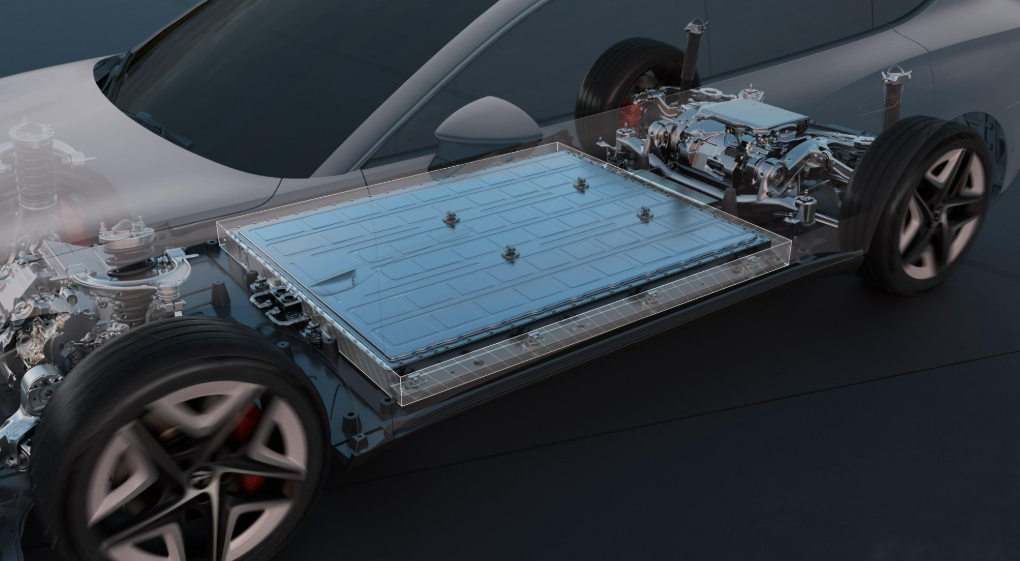
- Yibin’s power battery base creates a large-scale stage for AI application
Yibin has completed its transformation from the country’s liquor capital to China’s power battery capital. The city has built power battery production capacity of 300GWh. One in every ten power batteries worldwide is produced in Yibin. The output value of the power battery industry has exceeded RMB100 billion, making it the city’s second 100-billion-level pillar industry after liquor. This concentrated power battery industrial base gives Yibin a distinctive advantage in testing AI solutions in real power battery scenarios, because the city combines power battery manufacturing capacity, power battery supply chains and a growing power battery research community.
For the power battery industry, scale is not only a manufacturing issue. It also creates data-rich environments for power battery materials, power battery cells, power battery systems and power battery quality control. The concentration of power battery enterprises in Yibin provides a local market for intelligent research services, and it allows new AI tools for the power battery sector to be tested, refined and transferred to production more efficiently. The event’s participants therefore treated Yibin’s power battery base not only as an output centre but also as an innovation platform for the next stage of power battery development.
The power battery industry in Yibin has moved beyond a single production milestone. It now represents an ecosystem in which power battery manufacturing, power battery materials, power battery equipment and power battery research can reinforce one another. As the power battery sector enters a phase in which performance improvement, cost control and research efficiency matter simultaneously, the ability to apply AI across the power battery value chain becomes more important. Yibin’s power battery capacity and its power battery industry output value provide a practical backdrop for such experiments, and the discussions at the side event reflected this reality.
- AI and physical modeling shift power battery R&D from experience to data
As a key enterprise under Yibin’s Jiangyuan Action, Deep Potential Technology combines AI with physical modeling to promote battery research and development from experience-driven work to data-driven work. The company relies on smart laboratories and a digital-intelligent innovation center to move AI plus power battery cooperation from concept validation to implementation demonstration. This path is intended to create a replicable industrial development model, one in which AI is not separated from physical understanding but is integrated with the scientific principles that underpin power battery materials and power battery performance.
The power battery industry has long depended on repeated experiments and accumulated experience. AI and physical modeling can help organize experimental knowledge, improve the use of research data and support more systematic decision-making in power battery development. In this sense, the shift from experience-driven to data-driven research is directly relevant to power battery materials discovery, electrolyte design, solid-state electrolyte development and power battery characterization. The side event placed this shift at the centre of the discussion because the power battery industry needs research methods that can handle complexity while reducing unnecessary repetition.
Deep Potential Technology’s work in Yibin illustrates how AI plus power battery can be connected to a physical research environment. The company’s approach links intelligent computing with laboratory work, allowing models and experiments to inform each other. For the power battery sector, this is significant because power battery research often requires cooperation among materials scientists, battery engineers, data scientists and production teams. The integration of AI and physical modeling offers a common language for these groups and supports the development of more efficient power battery research workflows.
- A one-plus-one-plus-one innovation matrix supports power battery research
Qin Fengqing, vice chairman of the Yibin Municipal Committee of the Chinese People’s Political Consultative Conference, said that Yibin is seizing the opportunity of technological change and promoting the deep coupling of artificial intelligence with new energy and new materials. Deep Potential Technology is one of the first batch of new research and development institutions under the city’s Jiangyuan Action. The company has established a read-compute-do-intelligence integrated electrolyte intelligent research and development large device and has built a one-plus-one-plus-one innovation service matrix. These efforts are directly connected to the power battery industry because electrolytes are central to power battery performance, safety and lifetime.
The electrolyte intelligent research and development large device has won an industry benchmark award and has participated in a national key research and development program project. In its first year after landing in Yibin, the company’s revenue exceeded RMB10 million. It has also reached cooperation with multiple universities and multiple local lithium battery enterprises. For the power battery industry, these developments show that an AI-enabled research institution can take root in a power battery manufacturing city, serve local power battery enterprises and connect power battery research with broader scientific resources.
The one-plus-one-plus-one innovation service matrix is intended to organize different capabilities around a shared research goal. In the context of the power battery industry, such a matrix can support the connection between intelligent devices, laboratory validation and industrial application. The power battery sector requires not only new ideas but also repeated verification, data accumulation and transfer to production. The matrix therefore reflects a practical approach to power battery innovation, one that treats AI as part of an integrated research system rather than as a standalone software tool.
| Indicator | Reported figure |
|---|---|
| Power battery production capacity in Yibin | 300GWh |
| Global share of power battery output | One in every ten power batteries worldwide is produced in Yibin |
| Power battery industry output value | More than RMB100 billion |
| Position of the power battery industry in Yibin | Second 100-billion-level pillar industry after liquor |
| Electrolyte intelligent large device R&D efficiency | 10 times higher |
| Electrolyte intelligent large device R&D cost | 90 percent lower |
| Electrolyte intelligent large device battery performance | 50 percent higher |
| Master’s and doctoral share in the Yibin New Energy New Materials Digital-Intelligent Innovation Center team | More than 50 percent |
| Time from company registration to laboratory operation | 3 months |
| Dry-wet closed-loop laboratory area | 1,000 square meters |
| First-year revenue after landing in Yibin | More than RMB10 million |
| Electron microscopy recognition efficiency for Libao New Materials | 100 times higher |
| Product development cycle for Libao New Materials | 30 percent shorter |
| Experiments replaced by model screening in cooperation with Saike Power | 90 percent |
- Power battery research infrastructure shortens the lab-to-industry path
Sun Weijie, founder and CEO of Deep Potential Technology, said that it took only three months from company registration to laboratory operation. The company has built a 1,000-square-meter dry-wet closed-loop laboratory. The electrolyte intelligent large device can increase research and development efficiency by 10 times, reduce research and development cost by 90 percent and improve battery performance by 50 percent. A solid-state electrolyte intelligent large device and an intelligent characterization laboratory can greatly reduce the input of experimental labor. These capabilities are closely related to the power battery industry because they address the time, cost and labor intensity of power battery research.
In the power battery sector, the distance between a laboratory result and an industrial application can be long. Research infrastructure that combines dry and wet processes can help reduce that distance by allowing models, experiments and characterization to interact within a closed loop. For power battery developers, this means that data generated in one stage can inform the next stage more quickly. The power battery industry therefore gains not only faster experiments but also a more organized research process in which power battery materials, power battery electrolytes and power battery performance targets can be studied together.
The solid-state electrolyte intelligent large device and the intelligent characterization laboratory extend the same logic to other critical areas of power battery research. Solid-state electrolytes are an important direction for the next generation of power battery technology, and characterization is essential for understanding what happens inside power battery materials and power battery cells. By reducing experimental labor and improving the use of intelligent tools, these facilities support a more efficient power battery research pipeline. The power battery industry can benefit from such infrastructure because it connects scientific discovery with repeated validation and eventual industrial adoption.
The dry-wet closed-loop laboratory also reflects the importance of physical space in AI-enabled research. AI for the power battery industry cannot rely on computing alone. It needs experimental data, standardized processes and close coordination between researchers and equipment. The laboratory in Yibin provides this physical foundation for power battery innovation. It allows AI models to be tested against real power battery materials and real power battery processes, which is essential for building confidence in AI-generated recommendations and for moving those recommendations toward practical power battery applications.
- AI-enabled services reach local power battery and traditional industry partners
Technology does not remain only in the laboratory. Deep Potential Technology is also serving local industries. The company customized the Bohr Scientific Platform for Wuliangye to support research into liquor flavor. It empowered Libao New Materials by increasing electron microscopy recognition efficiency by 100 times and shortening the product development cycle by 30 percent. In cooperation with Saike Power, the company used model screening to replace 90 percent of experiments. These examples show how AI-enabled research services can reach different industrial settings, while the power battery industry remains a central application field because of its demanding materials and process requirements.
For the power battery industry, the cooperation with Libao New Materials and Saike Power is especially relevant. Electron microscopy recognition is connected to the analysis of power battery materials, and improved recognition efficiency can support faster evaluation of power battery components. A shorter product development cycle can help power battery enterprises respond more quickly to changing requirements. The use of model screening to replace a large share of experiments can reduce the experimental burden in power battery development. These outcomes do not stand alone; they form part of a broader effort to apply AI to power battery research and to local industrial upgrading.
The power battery industry often requires cooperation between materials suppliers, battery manufacturers and research institutions. AI-enabled services can support this cooperation by making data analysis more efficient and by helping different partners interpret experimental results. In Yibin, the presence of local lithium battery enterprises gives Deep Potential Technology opportunities to test its methods in realistic power battery scenarios. At the same time, the power battery enterprises gain access to intelligent research tools that can be adapted to their own materials systems and product development goals. This two-way relationship strengthens the local power battery innovation ecosystem.
The application of AI in the power battery sector also has implications beyond individual experiments. Power battery enterprises need to manage large amounts of data from materials synthesis, cell assembly, testing and characterization. AI can help organize this data and identify patterns that may not be obvious through conventional analysis. When such capabilities are combined with physical modeling, the power battery industry can pursue a more systematic approach to research. The work in Yibin reflects this direction, with AI plus power battery cooperation moving from concept validation toward implementation demonstration.
- Yibin’s power battery ecosystem expands cooperation beyond the city
Deep Potential Technology is a global pioneer in AI for Science and has research centers in multiple locations. Its Yibin New Energy New Materials Digital-Intelligent Innovation Center is the first industrial research platform of its kind in Yibin. The team has a master’s and doctoral share of more than 50 percent and provides intelligent research solutions to the whole industry. This combination of talent and platform capacity is important for the power battery industry because power battery innovation requires both scientific depth and the ability to translate research into industrial services.
The company has won local key research and development projects and has reached cooperation intentions with CATL, BYD, Chongqing University and other partners. Multiple intelligent large devices have been pre-ordered. These developments suggest that solutions born in Yibin can serve the power battery industry beyond the city. The power battery sector is highly interconnected, with materials, equipment, cells and systems spanning many regions. A power battery research solution developed in Yibin can therefore contribute to power battery innovation in other industrial clusters and support broader cooperation across the power battery supply chain.
For Yibin, the expansion of cooperation beyond the city is a natural extension of its power battery base. The city has already established a strong position in power battery production capacity and power battery industry output value. The next step is to strengthen the connection between power battery manufacturing and power battery research. By hosting intelligent research platforms and supporting cooperation with universities and enterprises, Yibin can use its power battery base as a source of research demand and as a testing ground for new power battery solutions. This approach helps the power battery industry move from scale expansion to innovation-driven development.
The power battery industry also benefits from the participation of universities. University research can contribute to materials science, modeling, characterization and process understanding, all of which are relevant to power battery development. When such research is connected to industrial platforms and local power battery enterprises, the results can be validated more quickly. The cooperation intentions with Chongqing University and other partners reflect this logic. The power battery sector needs long-term research capacity, and Yibin’s power battery ecosystem can provide a practical environment for such capacity to grow.
- The power battery and AI convergence offers a replicable model
The side event showed that the convergence of AI and the power battery industry is moving along a practical path. The power battery industry provides real problems, real data and real application scenarios. AI provides tools for modeling, data analysis, experimental design and research management. When these elements are connected through laboratories, research platforms and industrial partnerships, the power battery industry can improve the efficiency of research and development while maintaining scientific rigor. The discussions in Yibin emphasized that this connection must be built step by step, with physical modeling, experimental validation and industrial feedback working together.
Yibin’s experience is particularly instructive because the city combines a large power battery manufacturing base with a new power battery research platform. The power battery industry in Yibin has reached 300GWh of production capacity, and one in every ten power batteries worldwide is produced in the city. The power battery industry output value has exceeded RMB100 billion. These facts provide a strong foundation for AI plus power battery collaboration. At the same time, the city is building research infrastructure, talent teams and cooperation networks that can support the next phase of power battery innovation.
The electrolyte intelligent large device, the solid-state electrolyte intelligent large device, the intelligent characterization laboratory and the dry-wet closed-loop laboratory all point to a common direction: power battery research is becoming more data-intensive, more automated and more integrated. AI can help the power battery industry make better use of data, but the power battery industry also gives AI a demanding environment in which to prove its value. This two-way relationship is the core of the AI plus power battery model discussed at the event. It is a model in which the power battery industry and AI innovation reinforce each other.
The power battery sector is expected to continue facing pressure to improve performance, reduce costs and shorten development cycles. The reported results from the electrolyte intelligent large device, including 10 times higher research and development efficiency, 90 percent lower research and development cost and 50 percent higher battery performance, illustrate the kind of improvements that AI-enabled research infrastructure can pursue. These results are connected to the power battery industry because they address the core challenges of power battery materials and power battery development. They also show why the power battery industry is a strategic field for AI application.
At the same time, the power battery industry needs a reliable path from innovation to implementation. The work in Yibin emphasizes implementation demonstration, local cooperation and service to industry. The cooperation with Wuliangye, Libao New Materials and Saike Power shows that AI-enabled research services can be applied in different sectors, while the cooperation intentions with CATL, BYD, Chongqing University and other partners show that the power battery industry can connect local innovation with broader markets. The power battery sector therefore benefits from a model that combines local application with external cooperation.
The power battery industry in Yibin has become the city’s second 100-billion-level pillar industry after liquor. This milestone reflects the scale of the power battery base, but the side event focused on what comes next. The next stage of power battery development will depend not only on production capacity but also on research capacity, data capacity and the ability to integrate AI with physical understanding. Deep Potential Technology’s work in Yibin is part of this next stage. Its smart laboratories, intelligent large devices and innovation service matrix are intended to support power battery research and to help the power battery industry move toward a more data-driven future.
The event also underlined the importance of talent in the power battery and AI convergence. The Yibin New Energy New Materials Digital-Intelligent Innovation Center team has a master’s and doctoral share of more than 50 percent. Such a talent base is essential for power battery innovation because the field requires expertise in materials, chemistry, physics, computing and engineering. The power battery industry cannot achieve deep AI integration without people who understand both the scientific problems and the digital tools. Yibin’s effort to build this talent base is therefore part of its broader power battery strategy.
For the power battery industry, the significance of the Yibin side event lies in its practical orientation. The discussion did not stop at the general idea that AI can help the power battery sector. It highlighted specific platforms, laboratories, devices and cooperation arrangements. It described how AI can be connected to electrolyte research, solid-state electrolyte development, characterization, electron microscopy recognition and model screening. It also described how these capabilities can serve local power battery enterprises and reach partners beyond the city. This practical orientation is important for the power battery industry because implementation, not concept alone, determines industrial value.
The power battery industry is large, complex and continuously evolving. The power battery supply chain includes materials, cells, modules, packs, testing, equipment and recycling, and each link can benefit from better data use and more efficient research. AI plus power battery cooperation can therefore take many forms. In Yibin, the focus is on intelligent research infrastructure that can support power battery materials and power battery development. This focus aligns with the city’s power battery industrial base and with the goal of building a replicable model for the power battery industry.
The power battery sector’s future will depend on the ability to combine scientific understanding with digital capability. The work described at the event shows that this combination is being pursued through physical modeling, smart laboratories, intelligent large devices and industrial partnerships. The power battery industry provides the application context, and AI provides the methods. When the two are connected in a structured way, the power battery industry can improve research efficiency, reduce unnecessary experiments and accelerate the movement of ideas from the laboratory to production. Yibin’s power battery innovation ecosystem is an example of this approach in action.
The side event concluded with a clear message for the power battery industry: AI and the power battery sector can empower each other. The power battery industry offers real scenarios and real demand, while AI offers new ways to analyze data, design experiments and manage research. Yibin’s power battery base, its intelligent research platforms and its cooperation network provide a setting in which this mutual empowerment can be tested and demonstrated. As the power battery industry continues to develop, such integration will remain an important source of innovation and a practical route toward a more efficient and more capable power battery future.