
In my assessment, the solid state battery has become one of the most compelling pathways toward high energy density and intrinsically safer electrochemical energy storage. By replacing flammable liquid electrolytes with solid electrolytes, a solid state battery can potentially tolerate lithium metal anodes, enable high-voltage cathodes, and reduce the risk of thermal runaway. Yet the practical promise of the solid state battery remains constrained by lithium dendrite evolution. In my reading of the field, dendrite-induced internal short circuits are not a secondary reliability issue but a central failure mode that couples electrochemistry, mechanics, interfacial chemistry, and microstructure. Conventional intuition often states that a solid electrolyte with high elastic modulus can mechanically suppress lithium dendrites. I find this intuition insufficient. Many experimental and modeling studies now show that dendrites can nucleate, propagate, and penetrate even high-modulus ceramic electrolytes through pores, grain boundaries, cracks, and chemically degraded interfaces. Therefore, I construct here a unified first-person analytical framework for the solid state battery dendrite problem. I focus on three connected themes: the electrochemical–mechanical mechanisms of dendrite evolution, interface-dominated multiphysics modeling, and intrinsic-property-dominated multiphysics modeling. I also compare phase-field methods, finite element methods, and continuum models, because each provides a different lens on the same coupled failure process.
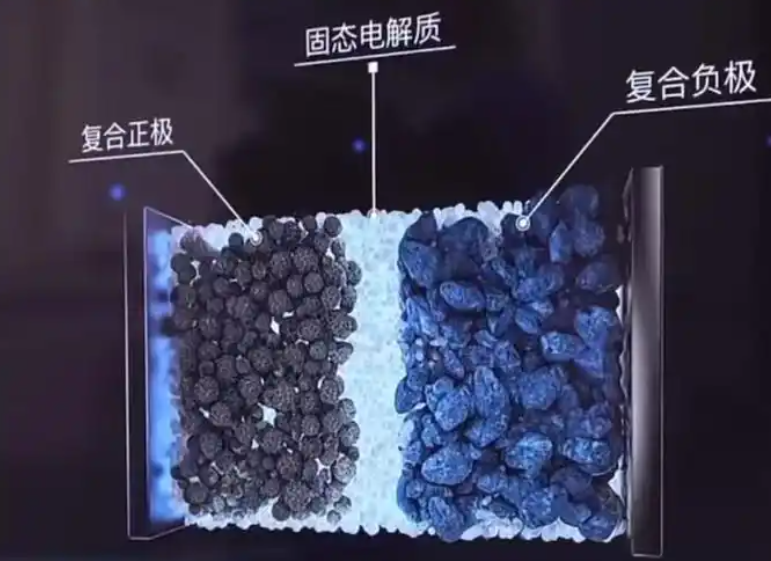
I begin from a simple observation: in a solid state battery, lithium deposition occurs at a buried solid–solid interface. This interface is not an ideal mathematical plane. It possesses roughness, contact patches, voids, reaction layers, local electronic defects, and stress concentrations. As a result, the solid state battery dendrite problem cannot be reduced to a single material parameter such as shear modulus. Instead, I argue that it is a multistage instability in which local electrochemical driving forces are amplified by mechanical deformation and interfacial degradation. The central question is not whether high modulus helps, but under what combinations of interface state, fracture resistance, microstructure, and operating condition a solid state battery can avoid dendrite penetration.
Mechanistic Foundations of Lithium Dendrite Evolution in Solid-State Batteries
In my framework, the evolution of lithium dendrites in a solid state battery can be decomposed into electrochemical initiation, mechanical feedback, and coupled propagation. These stages are not sequential in a strict sense; they overlap and reinforce each other. A local perturbation in current density can create a lithium protrusion, which changes stress and contact, which in turn changes the local current density. This feedback loop is the essence of dendrite evolution in the solid state battery.
Electrochemical Driving Forces and Interfacial Instability
I first consider the electrochemical field. During charging, lithium ions migrate through the solid electrolyte and are reduced at the anode. The local reaction rate is commonly described by Butler–Volmer kinetics:
$$i = i_0 \left[ \exp\left( \frac{\alpha_a F \eta}{RT} \right) – \exp\left( -\frac{\alpha_c F \eta}{RT} \right) \right]$$
Here, i is the local current density, i0 is the exchange current density, alpha_a and alpha_c are anodic and cathodic transfer coefficients, F is the Faraday constant, R is the gas constant, T is temperature, and eta is the local overpotential. The overpotential is itself a function of the local potential difference and the lithium chemical potential:
$$\eta = \phi_s – \phi_e – \frac{\mu_{\mathrm{Li}^+}}{F}$$
In a perfect solid state battery, one might imagine that this current density is uniform. In reality, roughness, pores, second phases, grain boundaries, and reaction layers make the current density spatially heterogeneous. The solid state battery therefore tends to deposit lithium preferentially at locations where the local current density or lithium flux is highest. This is the electrochemical origin of dendrite nucleation.
I identify three electrochemical instability modes that are especially relevant to the solid state battery. First, geometric current focusing occurs at surface protrusions, crack tips, and contact edges. A small protrusion attracts more lithium flux, grows further, and creates a positive feedback. Second, transport heterogeneity arises from grain boundaries, amorphous regions, impurity phases, and interphase layers. These features alter ionic conductivity and lithium-ion pathways, producing local flux imbalances. Third, space-charge and electronic leakage effects change the boundary conditions at the lithium–solid electrolyte interface. A space-charge layer can shift local ion concentrations and potentials, while weak electronic conductivity can allow electrons to enter the solid electrolyte and reduce lithium internally.
I can express the transport of charged species in a continuum form using the Nernst–Planck equation:
$$\mathbf{J}_i = -D_i \nabla c_i – \frac{z_i F D_i}{RT} c_i \nabla \phi + c_i \mathbf{v}$$
where J_i is the flux of species i, D_i is its diffusivity, c_i is its concentration, z_i is its charge number, phi is the electrostatic potential, and v is the convective or deformation velocity of the medium. In a solid state battery, the last term is often small compared with diffusion and migration, but mechanical deformation can still modify local pathways and contact. The Poisson equation links charge distribution to potential:
$$\nabla \cdot \left( \varepsilon \nabla \phi \right) = -F \sum_i z_i c_i$$
These equations show why I cannot treat the solid state battery as a simple resistor network. The local ionic and electronic fields are coupled to concentration gradients and interfacial charge distributions. When the solid electrolyte has nonuniform defect chemistry, the electrochemical field itself becomes a source of instability.
Mechanical Fields and Chemo-Mechanical Coupling
I now turn to mechanics. In a solid state battery, lithium deposition involves volume expansion and interface displacement. Because the electrolyte is solid, this expansion cannot be accommodated by liquid flow. Instead, it generates stress. The chemical potential of lithium depends on stress, which means that mechanics directly modifies the thermodynamic driving force for deposition. A widely used relation is:
$$\mu_{\mathrm{Li}} = \mu_{\mathrm{Li}}^0 + RT \ln a_{\mathrm{Li}} – \Omega \sigma_h$$
Here, mu_Li is the lithium chemical potential, mu_Li^0 is a reference potential, a_Li is activity, Omega is the partial molar volume of lithium, and sigma_h is the hydrostatic stress, often defined as one third of the trace of the stress tensor. I emphasize this equation because it explains a key conflict in the solid state battery literature. Compressive stress can reduce the driving force for lithium deposition, but tensile stress or stress gradients can redirect deposition. A high-modulus electrolyte may generate compressive stress at some locations, yet the same stiffness can also produce stress concentrations at cracks, voids, and grain boundaries.
Mechanical equilibrium in the solid electrolyte and electrodes is governed by:
$$\nabla \cdot \boldsymbol{\sigma} = \mathbf{0}$$
For linear elastic response, I can write:
$$\boldsymbol{\sigma} = \mathbf{C} : \left( \boldsymbol{\varepsilon} – \boldsymbol{\varepsilon}_0 \right)$$
where C is the stiffness tensor, epsilon is the total strain, and epsilon_0 is the eigenstrain or stress-free strain. In a solid state battery, epsilon_0 can arise from lithium insertion, thermal expansion, or chemical reaction. When local stress exceeds the strength of the solid electrolyte, fracture occurs. I use the energy release rate criterion:
$$G = \frac{K_I^2}{E’} \ge G_c$$
where G is the energy release rate, K_I is the mode I stress intensity factor, E’ is an effective modulus, and G_c is the critical energy release rate. This criterion is central to my analysis because dendrite penetration in a solid state battery often requires crack propagation. If the fracture toughness is low, even a high-modulus electrolyte can crack and provide a pathway for lithium.
I summarize the main mechanical feedbacks in Table 1.
| Mechanical process | Physical origin | Effect on solid state battery dendrite evolution |
|---|---|---|
| Deposition-induced stress concentration | Volume expansion at protrusions, contact edges, grain boundaries | Creates tensile regions and microcracks that guide lithium deposition |
| Contact loss during stripping | Void formation at the lithium–electrolyte interface | Reduces effective contact area and increases local current density |
| Stack pressure | External mechanical load | Improves contact at moderate pressure but can accelerate fracture at high pressure |
| Creep and viscoplastic flow of lithium | Low melting point and high atomic mobility of lithium | Allows lithium to fill cracks and voids, sustaining internal deposition |
| Fracture of solid electrolyte | Stress intensity exceeding fracture toughness | Provides new surfaces and channels for dendrite propagation |
Coupled Pathways of Failure
In my view, the most important insight for the solid state battery is that electrochemical and mechanical fields are not additive. They are multiplicatively coupled. I group the coupling into three pathways. First, stress shifts deposition thermodynamics. A tensile stress region lowers the chemical potential barrier for lithium deposition, while a compressive region raises it. Therefore, stress gradients can act like electrochemical potential gradients. Second, contact state feeds back into reaction kinetics. A growing lithium protrusion changes the local contact pressure, which changes the interfacial resistance and exchange current density. A void formed during stripping removes contact and forces current through remaining contact spots, increasing local current density. Third, concentration, stress, and diffusion are coupled. Ion depletion near the interface increases polarization, which concentrates deposition. The resulting nonuniform volume change creates stress gradients, which in turn alter diffusion pathways. This triad is the core of dendrite evolution in a solid state battery.
I can summarize these coupled pathways in a compact conceptual equation for the local deposition rate:
$$\frac{\partial h}{\partial t} = f\left( \eta, \sigma_h, c_{\mathrm{Li}^+}, R_{\mathrm{int}}, \sigma_e \right)$$
where h is the local interface displacement, eta is overpotential, sigma_h is hydrostatic stress, c_Li+ is lithium-ion concentration, R_int is interfacial resistance, and sigma_e is local electronic conductivity of the solid electrolyte. This expression is deliberately qualitative, but it captures the dependence that I believe should guide multiphysics modeling of the solid state battery.
Modeling Methods for Lithium Dendrite Evolution in Solid-State Batteries
I now compare the main modeling methods used for dendrite evolution in the solid state battery. I do not treat them as mutually exclusive. In my own view, the most robust approach is to use continuum theory to define the governing equations, finite element methods to solve them in complex geometries, and phase-field variables to track evolving interfaces and damage. Table 2 summarizes the methodological landscape.
| Modeling approach | Core concept | Typical outputs | Strengths | Limitations |
|---|---|---|---|---|
| Phase-field method | Diffuse interface described by continuous order parameters | Dendrite morphology, crack paths, void evolution, phase transformation | Strong interface tracking, natural multiphysics coupling, handles topological changes | High computational cost, sensitive to free-energy parameters |
| Finite element method | Discretized solution of coupled partial differential equations | Current density, stress, contact pressure, temperature, displacement | Complex geometry, local field resolution, contact mechanics | Limited interface tracking unless combined with phase-field or damage variables |
| Continuum model | Conservation laws and constitutive relations in a unified framework | Critical current density, failure criteria, parameter sensitivity | Thermodynamic consistency, macroscale interpretation, analytical insight | Limited microstructural resolution |
Phase-Field Models
I find phase-field modeling especially powerful for the solid state battery because dendrite growth, crack propagation, and void evolution all involve moving boundaries. A phase-field model replaces a sharp interface with a diffuse region described by one or more order parameters. The free energy functional typically includes chemical, gradient, electrostatic, elastic, and damage contributions:
$$\mathcal{F} = \int_V \left[ f_{\mathrm{chem}}(c,\eta) + \frac{\kappa_c}{2} |\nabla c|^2 + \frac{\kappa_\eta}{2} |\nabla \eta|^2 + f_{\mathrm{elec}}(c,\phi) + f_{\mathrm{mech}}(\boldsymbol{\varepsilon},\eta) + f_{\mathrm{damage}}(d) \right] dV$$
Here, c is concentration, eta is the phase-field variable distinguishing lithium metal from solid electrolyte, kappa_c and kappa_eta are gradient coefficients, phi is electric potential, epsilon is strain, and d is a damage variable. The evolution of the non-conserved order parameter follows Allen–Cahn dynamics:
$$\frac{\partial \eta}{\partial t} = -L_\eta \frac{\delta \mathcal{F}}{\delta \eta}$$
For conserved species such as lithium ions, I use Cahn–Hilliard dynamics:
$$\frac{\partial c}{\partial t} = \nabla \cdot \left( M \nabla \frac{\delta \mathcal{F}}{\delta c} \right)$$
Damage evolution can be written in a simple degraded stiffness form:
$$d = 1 – \frac{E}{E_0}$$
In my assessment, phase-field models are particularly useful for exploring how cracks and dendrites interact in a solid state battery. They can show that a crack is not merely a passive void but an active pathway that changes local ion transport and stress. They can also reveal mode transitions, such as growth along grain boundaries versus transgranular growth. The main challenge is parameter calibration. Interfacial energy, grain-boundary fracture energy, and kinetic coefficients are difficult to measure directly, and model predictions can shift significantly when these parameters change.
Finite Element Models
For the solid state battery, finite element methods are indispensable when the geometry is complex, the contact state evolves, and local fields must be resolved. I typically see finite element models solving for concentration, electric potential, stress, displacement, and sometimes temperature. The weak form of the coupled equations is discretized over a mesh, and nonlinear solvers handle reaction kinetics, contact, and damage. A representative set of governing equations includes mass conservation:
$$\frac{\partial c}{\partial t} + \nabla \cdot \mathbf{J} = 0$$
charge conservation:
$$\nabla \cdot \mathbf{i} = 0$$
and mechanical equilibrium:
$$\nabla \cdot \boldsymbol{\sigma} = \mathbf{0}$$
Finite element models are especially valuable for interface contact, void growth, and current constriction. They can predict how contact area decreases during stripping, how local current density increases at remaining contact spots, and how stack pressure redistributes stresses. However, standard finite element methods struggle with arbitrary crack paths and interface topology changes unless they are coupled with cohesive zones, damage variables, or phase-field descriptions. This is why I regard the combination of finite element and phase-field methods as particularly promising for the solid state battery.
Continuum Models
Continuum models provide the thermodynamic and mechanical framework that makes multiphysics modeling of the solid state battery meaningful. Rather than tracking every microstructural feature, they seek averaged or effective relations between material properties and failure conditions. A continuum model may combine mass conservation, charge conservation, momentum conservation, and constitutive laws for viscoplasticity, elasticity, and damage. For example, the electrochemical potential can be written as:
$$\tilde{\mu}_i = \mu_i^0 + RT \ln a_i + z_i F \phi + \Omega_i \sigma_h$$
This equation shows how chemical, electrical, and mechanical contributions enter a unified driving force. Continuum models are well suited for deriving critical current density expressions and failure maps. They can answer questions such as: what combination of fracture toughness, modulus, ionic conductivity, and interfacial resistance allows a solid state battery to avoid short circuit? The limitation is that continuum models often smear out grain boundaries, pores, and reaction layers. Therefore, I see them as complementary to phase-field and finite element models rather than replacements.
Interface-Dominated Modeling of Lithium Dendrites in Solid-State Batteries
In my framework, the interface is where the solid state battery dendrite problem begins. A solid state battery interface is not a perfect boundary. It contains topographic defects, contact patches, voids, cracks, reaction layers, and local electronic states. I organize interface-dominated modeling into three areas: surface topography and initial defects, crack–void–contact evolution, and interphase side reactions.
Surface Topography and Initial Defects
I begin with surface topography. Early analytical work on lithium deposition considered a sinusoidal perturbation at the lithium–electrolyte interface. The key result was that stress can stabilize or destabilize the perturbation depending on the modulus ratio and interfacial resistance. However, this early picture assumed an ideal interface. In a real solid state battery, the interface has cracks, pits, grain-boundary grooves, and impurity particles. These features concentrate current. I can approximate the current density at a crack tip as:
$$i_{\mathrm{tip}} \approx i_0 \left( 1 + \frac{\Delta \phi_{\mathrm{tip}}}{\eta_0} \right)$$
where Delta phi_tip is the local potential perturbation at the crack tip and eta_0 is a reference overpotential. This equation captures the idea that geometric defects amplify the local electrochemical driving force. As the crack length increases and the interfacial resistance decreases, the current concentration becomes stronger. Therefore, a low-resistance interface is not always beneficial. If it is too low, surface defects can dominate the current distribution and accelerate dendrite nucleation in a solid state battery.
I also note that defects can be hidden. Particle agglomeration in a composite solid electrolyte, local compositional fluctuations, and discontinuous ion-conducting pathways can all create nonuniform lithium flux without an obvious macroscopic crack. I call these hidden interfacial defects. They are important because they change the effective transport network and can trigger preferential deposition. Table 3 summarizes common interfacial factors and their modeled effects.
| Interfacial factor | Modeled physical effect | Consequence for solid state battery dendrites |
|---|---|---|
| Surface roughness | Nonuniform current density and local stress | Preferential lithium nucleation at protrusions |
| Crack-like defects | Current concentration at crack tips | Lithium deposition inside cracks and crack extension |
| Voids | Contact loss and current constriction | Soft short, local hot spots, and accelerated degradation |
| Interfacial resistance | Potential drop and reaction distribution | Low resistance can amplify defect-induced current focusing |
| Reaction layer | Mixed ionic–electronic transport | Internal lithium reduction and altered potential distribution |
| Particle agglomeration | Tortuous ion pathways and flux imbalance | Nonuniform deposition in composite solid electrolytes |
Cracks, Voids, and Contact Evolution
Once a defect initiates lithium deposition, the solid state battery enters a more dangerous stage. Cracks can propagate, voids can grow, and contact can be lost. I model crack propagation using a kinetic relation:
$$v_{\mathrm{crack}} = A \exp\left( -\frac{\Delta G^{\ddagger}}{RT} \right) \left( \frac{K_I}{K_{Ic}} \right)^m$$
where v_crack is crack velocity, A is a pre-exponential factor, Delta G_double dagger is an activation energy, K_I is the stress intensity factor, K_Ic is fracture toughness, and m is an empirical exponent. This relation emphasizes that crack growth depends on both stress intensity and thermal activation. In a solid state battery, lithium deposition inside the crack can reduce the local stress intensity or change the crack-face boundary condition. The crack and the dendrite co-evolve.
Void evolution is another critical interface process. During stripping, lithium is removed from the interface, and voids can form if the flux cannot be replenished by creep or diffusion. I write a simplified void growth relation as:
$$\frac{\partial V}{\partial t} = -\Omega \nabla \cdot \mathbf{J}_{\mathrm{Li}}$$
where V is void volume, Omega is the partial molar volume of lithium, and J_Li is the lithium flux. A void reduces contact area, which increases local current density at remaining contact spots. This can create a feedback loop: current constriction causes faster local deposition or stripping, which further changes contact. In a solid state battery, this feedback is a major source of nonuniform degradation.
Contact mechanics also matters. I can describe the fractional contact area using a pressure-dependent relation such as:
$$\frac{A}{A_0} = \mathrm{erf}\left( \frac{p}{\sqrt{2} \sigma_s} \right)$$
where A/A0 is the normalized contact area, p is applied pressure, and sigma_s is the standard deviation of surface asperity heights. As pressure increases, contact improves, interfacial resistance decreases, and current distribution becomes more uniform. However, excessive pressure can cause fracture or plastic deformation. In my view, the solid state battery has a pressure window. Too little pressure leads to contact loss and current constriction. Too much pressure leads to mechanical damage and crack-assisted penetration. This trade-off is central to interface-dominated modeling.
I find that porous solid electrolytes introduce another layer of complexity. Pores can act as preferential deposition sites. Under moderate pressure, lithium may fill pores and form a network rather than a single continuous filament. This can produce a soft short, where leakage current increases gradually rather than abruptly. Under higher pressure, pore surfaces experience stress concentration, and lithium can fracture or disconnect, creating dead lithium and fluctuating electrochemical signatures. A solid state battery model that ignores pores may therefore overestimate the sharpness of short-circuit onset.
Interphase Layers and Side Reactions
Interphase layers are chemically and electrochemically active regions between lithium and the solid electrolyte. In sulfide-based solid state batteries, for example, lithium can reduce the electrolyte and form a reaction layer with mixed ionic–electronic conductivity. This layer changes the boundary conditions. Instead of a two-phase lithium–electrolyte contact, I must consider a three-phase lithium–interphase–electrolyte system. The potential and flux distributions can be described by coupled ionic and electronic transport equations:
$$\nabla \cdot \left( \sigma_{\mathrm{ion}} \nabla \phi_{\mathrm{ion}} + \sigma_{\mathrm{elec}} \nabla \phi_{\mathrm{elec}} \right) = 0$$
where sigma_ion and sigma_elec are ionic and electronic conductivities, and phi_ion and phi_elec are the corresponding potentials. If the interphase is a mixed conductor, electrons can reach the solid electrolyte and reduce lithium internally. The side reaction rate can be written as:
$$R_{\mathrm{side}} = k_0 \exp\left( -\frac{E_a}{RT} \right) a_{\mathrm{Li}} a_{\mathrm{SE}}$$
where R_side is the reaction rate, k0 is a rate constant, E_a is activation energy, and a_Li and a_SE are activities of lithium and solid electrolyte species. This reaction consumes the solid electrolyte, thickens the interphase, and changes the local potential distribution.
Not all interphases are harmful. I distinguish between three types: stable passivating interphases, mixed conducting destabilizing interphases, and controlled artificial interphases. A stable passivating interphase has low electronic conductivity and sufficient ionic conductivity, so it blocks further reaction without blocking lithium transport. A mixed conducting interphase allows electrons and ions to move, so it can continue to grow and promote internal lithium deposition. A controlled artificial interphase is engineered to be chemically stable, electronically insulating, and ionically conductive. In my view, this classification is one of the most useful interface-level frameworks for the solid state battery. It shifts the question from whether a reaction occurs to whether the reaction product is self-limiting or self-amplifying.
Intrinsic-Property-Dominated Modeling of Lithium Dendrites in Solid-State Batteries
While interface factors determine where deposition begins, intrinsic properties of the solid electrolyte determine how far and how fast a dendrite can propagate. I focus on three intrinsic-property families: mechanical parameters, microstructural heterogeneity, and defect electronic structure.
Mechanical Parameters: Modulus, Toughness, and Critical Current Density
I have already argued that high modulus alone is not sufficient. The more relevant property is often fracture toughness. A brittle solid electrolyte with high modulus can crack easily if its toughness is low. Once a crack forms, it provides a low-resistance pathway for lithium. I therefore define two normalized parameters that are helpful for comparing solid state battery electrolytes:
$$E^* = \frac{E_{\mathrm{SE}}}{E_{\mathrm{Li}}}$$
$$K^* = \frac{K_{\mathrm{SE}}}{\sigma_{Y,\mathrm{Li}} L_{\mathrm{el}}^{1/2}}$$
Here, E_SE is the Young’s modulus of the solid electrolyte, E_Li is the Young’s modulus of lithium, K_SE is the fracture toughness of the solid electrolyte, sigma_Y,Li is the yield strength of lithium, and L_el is a characteristic electrolyte length. These parameters allow me to map short-circuit risk. In general, a high E* can provide mechanical constraint, but only if K* is also high enough to resist crack propagation. A simple scaling for critical current density can be written as:
$$i_{\mathrm{crit}} \propto \frac{K_{Ic}^2}{E_{\mathrm{SE}} \Omega^2 L}$$
This expression shows that improving fracture toughness is a powerful way to increase the critical current density of a solid state battery. Increasing modulus without increasing toughness may not help and can even worsen stress concentrations.
I summarize the roles of mechanical parameters in Table 4.
| Mechanical property | Primary role in solid state battery dendrites | Modeling implication |
|---|---|---|
| Young’s modulus | Controls stress magnitude and deformation constraint | Higher modulus is not always beneficial; it can intensify stress concentrations |
| Fracture toughness | Resists crack initiation and propagation | Directly raises critical current density and delays short circuit |
| Yield strength | Determines onset of plastic deformation | Plasticity can blunt cracks but also localize deformation |
| Creep resistance | Controls time-dependent deformation under stack pressure | Creep can improve contact or allow lithium flow into cracks |
| Interfacial adhesion | Governs debonding and contact loss | Weak adhesion promotes void formation and current constriction |
Microstructural Heterogeneity and Grain-Boundary Pathways
In my analysis, polycrystalline solid electrolytes are not homogeneous continua. They contain grains, grain boundaries, pores, secondary phases, and impurity pockets. Grain boundaries are often mechanically weaker and chemically different from grain interiors. If the grain boundary modulus is lower than the grain modulus, the compressive stress at the lithium–grain-boundary interface can be lower, which reduces mechanical suppression and promotes lithium deposition. The energy release rate along a grain boundary can be approximated as:
$$G_{\mathrm{GB}} = \frac{K_I^2}{E_{\mathrm{GB}}}$$
where E_GB is the effective modulus of the grain-boundary region. If G_GB exceeds the grain-boundary fracture energy, the boundary opens and fills with lithium. This creates an intergranular pathway. If the grain-boundary fracture energy approaches the bulk fracture energy, the propagation mode can shift from intergranular to transgranular. This mode transition is important because transgranular cracks may penetrate more directly, while intergranular networks may spread laterally before connecting to a short circuit.
I also consider effective transport properties. In a porous or polycrystalline solid electrolyte, the effective ionic conductivity is reduced by porosity and tortuosity. A simple Bruggeman-type relation is:
$$\sigma_{\mathrm{eff}} = \sigma_{\mathrm{bulk}} \frac{1 – \phi}{(1 + \phi/2)^2}$$
where sigma_eff is effective conductivity, sigma_bulk is bulk conductivity, and phi is porosity. This relation is approximate, but it illustrates a key point: microstructural heterogeneity changes both transport and mechanics. A region with high porosity may have lower conductivity, which can divert current, and lower stiffness, which can concentrate strain. The combination can make pores and grain boundaries preferred penetration paths in a solid state battery.
I also note that grain size and stack pressure interact. At low grain-boundary strength, lithium deposition may not advance continuously. Instead, it can proceed in cycles: stress builds at a grain boundary, the boundary fractures, a new void forms, and lithium fills the void. Under higher stack pressure, grain boundaries may fail earlier, and the filling process may be faster. This dynamic sequence is difficult to capture with static property arguments alone. It requires coupled electrochemical–mechanical modeling with explicit microstructure.
Electronic Defects and Internal Lithium Nucleation
A final intrinsic-property family is defect electronics. In an ideal solid electrolyte, electronic conductivity is negligible. In reality, defects, grain boundaries, impurities, and surfaces can introduce electronic states within the bandgap. These states can trap electrons and enable local reduction of lithium inside the electrolyte. I can describe nucleation using classical nucleation theory:
$$J_{\mathrm{nuc}} = A \exp\left( -\frac{\Delta G^*}{kT} \right)$$
where J_nuc is nucleation rate, A is a prefactor, Delta G* is the nucleation barrier, k is Boltzmann’s constant, and T is temperature. If defect states lower the nucleation barrier, internal lithium nuclei can form. These nuclei may not be connected to the anode initially, but they can grow and eventually link with interfacial dendrites or with each other. When that happens, the effective penetration path can jump discontinuously, leading to a sudden increase in leakage current or short-circuit risk.
I find it useful to combine mechanical and electronic descriptors. For example, a phase diagram can be constructed with grain-boundary modulus mismatch on one axis and trapped electron concentration on the other. In such a diagram, lithium morphology can transition from uniform deposition to intergranular network growth to fast penetration with isolated nucleation. This is a powerful way to think about the solid state battery because it shows that mechanical weakness and electronic defects are not independent. Mechanical weakness determines which pathway is easier to open. Electronic defects determine whether new nucleation sites appear along that pathway. When both are present, dendrite penetration can change from gradual to abrupt.
Challenges in Multiphysics Modeling of Solid-State Battery Dendrites
Although multiphysics modeling of the solid state battery has advanced considerably, I see several persistent challenges. These challenges are not merely computational. They concern physical fidelity, parameter reliability, experimental validation, and cross-scale integration.
Real Interface Complexity
Most models still simplify the interface as a flat plane, a sinusoidal perturbation, or a small number of pre-existing cracks. Real solid state battery interfaces have roughness, local debonding, void accumulation, interphase thickening, and local electronic leakage. These features evolve during cycling. In sulfide-based solid state batteries, the reaction layer can grow, change composition, and alter transport properties. A model that fixes the interface geometry or chemistry cannot capture the long-term feedback between interface evolution and dendrite growth. I believe this is one of the largest sources of uncertainty in predicting short-circuit time and critical current density.
Parameter Calibration
Parameter uncertainty is another major issue. Electrochemical parameters such as conductivity, diffusivity, and exchange current density can be measured with reasonable confidence in some systems. Mechanical parameters are more difficult. Young’s modulus, fracture toughness, interfacial adhesion, and grain-boundary fracture energy are scale-dependent, environment-sensitive, and often time-dependent. For moisture-sensitive solid electrolytes, sample preparation and testing conditions can strongly affect the measured values. As a result, many models still rely on literature values or assumed parameters. This limits comparability between studies and reduces confidence in quantitative predictions. In my view, the solid state battery modeling community needs standardized mechanical and electrochemical testing protocols that report not only mean values but also distributions and environmental conditions.
Experimental Validation
Validation is difficult because the key events occur at buried interfaces. Post-mortem analysis can reveal dendrites and cracks, but it cannot capture the continuous evolution. The sample may change during disassembly or transfer. In situ and operando techniques are improving, but they often trade spatial resolution for temporal resolution or vice versa. I think the field needs validation protocols that compare model outputs with experimental observables such as leakage current evolution, impedance spectra, acoustic emission, or X-ray tomography. A model should not only reproduce a final morphology. It should reproduce the sequence of events: when a void forms, when a crack initiates, when lithium fills a crack, and when the leakage current rises. Without such dynamic validation, multiphysics models remain plausible but underconstrained.
Cross-Scale Integration
Dendrite evolution in a solid state battery spans atomistic, microstructural, and cell scales. Atomistic calculations provide defect energies, reaction barriers, and electronic structure. Microstructural models describe grain boundaries, pores, and crack paths. Cell-level models describe current distribution, temperature, and short-circuit risk. These scales are often studied separately. I see a need for parameter transfer and information feedback. For example, atomistic calculations can constrain the nucleation barrier and interface reaction rate. Phase-field or finite element simulations can extract local failure features. These features can then be mapped to cell-level degradation and life models. Without this chain, each scale remains isolated, and predictions remain qualitative.
Future Directions for Solid-State Battery Dendrite Modeling
I now propose four directions that I believe can move the solid state battery dendrite field from mechanism explanation toward predictive design.
Real Three-Dimensional Interface Reconstruction
I recommend that future models import real microstructures from focused ion beam–scanning electron microscopy tomography or X-ray computed tomography. This would allow grain orientation, grain-boundary geometry, pore distribution, and second-phase morphology to be represented explicitly. Image segmentation and mesh generation methods should be developed for polycrystalline solid electrolytes. Mechanical and electrochemical properties can then be assigned locally, with grain-boundary regions having different modulus, fracture energy, and ionic conductivity from grain interiors. This would improve predictions of preferred penetration paths and short-circuit locations in a solid state battery.
State-Dependent Dynamic Parameters
I argue that the next generation of models should not use fixed parameters. Fracture toughness, interfacial adhesion, local electronic conductivity, and interphase transport properties change with state of charge, cycle number, and interface chemistry. Nanomechanical testing can provide local modulus and hardness. In situ impedance spectroscopy can track interfacial resistance. First-principles calculations can provide defect electronic structure and reaction energies. These data can be fused using Bayesian inference or surrogate models to produce state-dependent constitutive laws. This would make the solid state battery model more adaptive and more comparable across laboratories.
Quantitative Prediction of Failure Metrics
I want solid state battery models to output quantities that can be compared directly with experiments. Examples include critical current density, time to short circuit, probability distribution of dendrite penetration paths, and improvement in cycle life from a given interface modification. Models should be compared with in situ microscopy, synchrotron phase-contrast imaging, or electrochemical signatures in a time-resolved manner. Metrics such as dendrite length, crack area, and local strain field can be extracted and compared statistically. Only then can modeling become a true design tool for the solid state battery.
Cross-Scale Prediction Chain
Finally, I envision a cross-scale prediction chain. First-principles calculations can constrain nucleation criteria, electronic structure, and interface reaction parameters. Phase-field or finite element models can simulate local crack and dendrite evolution. Machine learning and data-driven methods can perform high-dimensional parameter sensitivity analysis, reconstruct three-dimensional microstructures, and build surrogate models for fast screening. The goal is not to replace physics-based models but to accelerate parameter search and scale bridging. This chain would allow the solid state battery community to move from isolated mechanism studies to integrated failure prediction.
Conclusion
In this first-person synthesis, I have argued that lithium dendrite evolution in a solid state battery is a coupled electrochemical–mechanical–interfacial failure process. High modulus alone does not guarantee dendrite suppression. Interface defects, cracks, voids, contact loss, interphase reactions, grain-boundary weakness, fracture toughness, and defect electronic states all participate. Phase-field methods, finite element methods, and continuum models each provide essential capabilities. Interface-dominated modeling shows where deposition begins and how it is amplified. Intrinsic-property-dominated modeling shows how far and how fast penetration can proceed. In my view, the most important future advance will be a multiscale framework that combines real three-dimensional microstructures, dynamic interface chemistry, state-dependent parameters, and quantitative experimental validation. Such a framework would greatly improve the predictive power for the solid state battery and provide a rational basis for interface engineering and solid electrolyte design.