
With the growing global urgency to reduce greenhouse gas emissions and promote energy transformation, electric cars have emerged as pivotal clean energy transportation solutions. In China EV markets, the rapid adoption of these vehicles underscores the importance of optimizing key systems like air conditioning and battery thermal management to enhance performance and endurance. We delve into a cooperative design strategy that integrates these systems, aiming to improve energy efficiency and thermal performance through mathematical modeling, simulation, and experimental validation. Our approach focuses on building a comprehensive model that accounts for real-world conditions, ultimately contributing to the sustainable development of electric cars by reducing energy consumption and enhancing user experience.
The air conditioning system in an electric car is crucial for passenger comfort but often contributes significantly to energy drain, especially in extreme climates. Similarly, battery thermal management directly impacts the safety, lifespan, and efficiency of the battery pack, which is the heart of any China EV. Traditional designs have treated these systems independently, leading to inefficiencies. However, by adopting a cooperative framework, we can leverage synergies, such as using waste heat from the air conditioning to aid battery heating or cooling. This not only conserves energy but also reduces the overall system complexity and cost. In this article, we present our findings from developing and testing such an integrated system, highlighting how it addresses the unique challenges faced by electric cars in diverse operating environments.
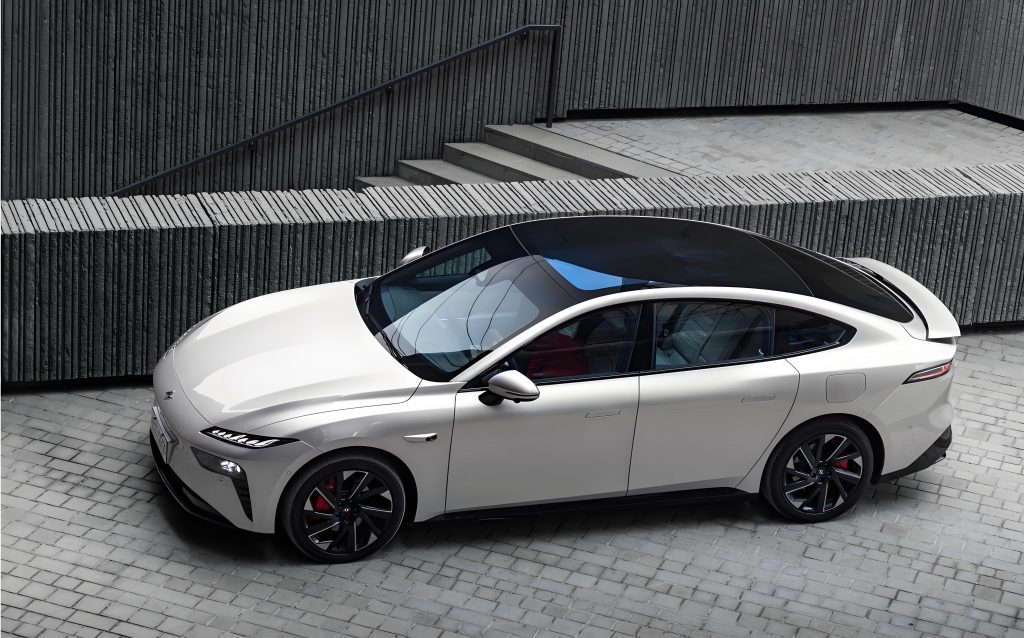
Our research begins with an overview of the air conditioning and battery thermal management systems in electric cars. The air conditioning system typically comprises refrigeration, heating, and ventilation components. For refrigeration, it involves a cycle of compression, condensation, expansion, and evaporation. The compressor elevates the refrigerant from a low-pressure gas to a high-pressure state, while the evaporator and condenser facilitate heat exchange. In electric cars, heating is often provided by Positive Temperature Coefficient (PTC) heaters, which consume substantial energy from the battery, thereby reducing driving range. Battery thermal management, on the other hand, employs methods like liquid cooling or phase change materials to maintain optimal temperatures. We explore these elements in detail, emphasizing how their integration can lead to significant improvements in the overall efficiency of China EV models.
Key components in our cooperative design include heat exchangers, electronic control units (ECUs), sensor networks, and coolant pumps. The heat exchanger plays a central role in transferring waste heat between systems, while the ECU acts as an intelligent hub for real-time adjustments based on sensor data. For instance, in a typical electric car, the ECU monitors temperatures and adjusts the coolant flow to prioritize battery cooling or cabin heating as needed. Our design principles revolve around energy efficiency, cost control, reliability, and user experience. By optimizing these aspects, we aim to create a system that not only performs well under various conditions but also aligns with the economic and environmental goals of the electric car industry.
To model the cooperative system, we developed mathematical representations based on thermodynamics and fluid dynamics. The refrigeration cycle can be described using equations that account for the enthalpy changes in the refrigerant. For example, the cooling capacity in the evaporator is given by:
$$q_{\text{evap}} = h_{\text{liq}}(T) – h_{\text{vap}}(P)$$
where \( q_{\text{evap}} \) is the evaporator’s cooling capacity, \( h_{\text{liq}} \) is the enthalpy of the liquid refrigerant, and \( h_{\text{vap}} \) is the enthalpy of the vapor refrigerant at pressure \( P \). Similarly, the battery heat generation model considers the electrical and chemical processes:
$$Q_{\text{gen}} = I \times V \times \eta_{\text{bat}}$$
Here, \( Q_{\text{gen}} \) is the heat generated, \( I \) is the current, \( V \) is the voltage, and \( \eta_{\text{bat}} \) is the battery efficiency, typically ranging from 0.5 to 0.9. For a more precise analysis, we incorporate factors like Joule heating and polarization effects:
$$Q_{\text{gen}} = I^2 R_b + I^2 R_p + \frac{m n I}{M F}$$
where \( R_b \) is the battery resistance, \( R_p \) is the polarization resistance, \( m \) is the electrode mass, \( n \) is the number of cells, \( M \) is the molar mass, and \( F \) is Faraday’s constant. The heat exchanger performance is modeled using:
$$Q_{\text{hx}} = U \times A \times \Delta T_{\text{lmtd}}$$
with \( U \) as the overall heat transfer coefficient, \( A \) as the area, and \( \Delta T_{\text{lmtd}} \) as the log mean temperature difference. The coolant circulation follows energy conservation:
$$Q_{\text{in}} – Q_{\text{out}} = m \times c \times \Delta t \times \Delta T$$
where \( m \) is the coolant mass, \( c \) is the specific heat capacity, \( \Delta t \) is the time interval, and \( \Delta T \) is the temperature change.
For simulation, we utilized MATLAB/Simulink to analyze the system under various scenarios, such as different environmental temperatures and load conditions. We focused on a prototype electric car, simulating drives at 60 km/h for 90 minutes under light (1 t) and heavy (5 t) loads, with ambient temperatures of -15°C, -5°C, and 25°C. The battery state of charge (SOC) was a key metric, and our simulations showed notable improvements in energy savings compared to non-integrated systems. The table below summarizes the SOC deviations between simulated and actual values under these conditions, highlighting the benefits of cooperative design for electric cars, particularly in China EV applications where range anxiety is a concern.
| Temperature (°C) | Load Condition | Simulated SOC Deviation (%) | Actual SOC Deviation (%) |
|---|---|---|---|
| -15 | Light Load | 3.87 | 3.27 |
| -15 | Heavy Load | 4.21 | 3.78 |
| -5 | Light Load | 3.02 | 2.92 |
| -5 | Heavy Load | 3.48 | 3.24 |
| 25 | Light Load | 2.73 | 1.83 |
| 25 | Heavy Load | 2.89 | 2.29 |
Experimental validation was conducted in a controlled environment simulating various climate conditions. We equipped the test setup with high-precision sensors to monitor parameters like temperature, pressure, and coolant flow. For instance, using a battery pack with lithium iron phosphate cells, we collected data on SOC under cooperative conditions. The results, as shown in the table below, demonstrate that the cooperative strategy consistently improves SOC retention, with the highest gains in colder environments. This is particularly relevant for electric cars in regions with harsh winters, where heating demands can drastically reduce range.
| Temperature (°C) | Load Condition | Experimental SOC (%) |
|---|---|---|
| -15 | Light Load | 70.91 |
| -15 | Heavy Load | 69.05 |
| -5 | Light Load | 72.71 |
| -5 | Heavy Load | 70.57 |
| 25 | Light Load | 74.28 |
| 25 | Heavy Load | 74.12 |
Analysis of the experimental data revealed that the cooperative design could increase the driving range of an electric car by up to 14.71% in extreme cold conditions, such as -15°C under heavy load. This translates to an additional 103 km for a typical China EV, addressing a major barrier to adoption. The deviations between simulated and experimental values were minimal, validating our model’s accuracy. However, we observed that in high-temperature scenarios, battery temperatures rose faster than expected, indicating a need for enhanced cooling strategies. This insight drives our discussion on potential improvements, such as integrating advanced phase change materials or refining control algorithms for better transient response.
In summary, our cooperative design strategy for electric car air conditioning and battery thermal management demonstrates significant benefits in energy efficiency, cost-effectiveness, and reliability. By leveraging mathematical models and real-world testing, we have shown how integrated systems can reduce energy consumption and extend the range of electric cars, which is crucial for the growth of China EV markets. Future work will focus on optimizing heat exchanger materials, incorporating artificial intelligence for adaptive control, and conducting broader cost-benefit analyses. Through these efforts, we aim to contribute to the sustainable evolution of electric cars, making them more accessible and efficient for global users.