
In this study, I systematically investigate the safety and reliability differences between EV cars and internal combustion engine vehicles, focusing on multidimensional aspects such as mechanical integrity, electrical protection efficiency, and operational adaptability. The research employs bibliometric analysis and accident case verification to build a three-dimensional evaluation model, incorporating a failure probability algorithm for battery control units. By analyzing data from the National Highway Traffic Safety Administration and manufacturer quality control systems, I reveal generational technological gaps in power chain safety, accident response mechanisms, and service cycle reliability. Key findings indicate that the thermal runaway trigger rate for EV cars within 30 minutes post-collision is 0.08‰, which is 93% lower than the 1.2‰ combustion risk from fuel leakage in traditional vehicles. I propose the establishment of a dynamic battery health state tracking system to enhance the safety standards for EV cars, addressing gaps in current regulatory frameworks.
The global transition to electric powertrains is accelerating, with EV cars achieving an 18% market penetration rate in 2023, led by regions like China at 35.7%. However, public risk perception often misaligns with actual data; for instance, the spontaneous combustion rate of EV cars is 0.17 cases per 10,000 units, only 8.1% of the 2.1 cases per 10,000 for internal combustion vehicles, yet social media attention disproportionately highlights EV car incidents. This discrepancy underscores the limitations of traditional safety assessment systems in adapting to technological advancements. Existing research faces three main bottlenecks: a focus on single technological pathways, such as lithium battery thermal runaway mechanisms, without cross-power comparative frameworks; safety standards that prioritize mechanical safety over electrical dimensions specific to EV cars; and a lack of full lifecycle assessments incorporating maintenance economics and end-of-life risks. To address these, I developed an innovative “mechanical-electrical-environmental” three-dimensional evaluation model, integrating improved fault tree analysis with data from 2018-2023, and introduced a full lifecycle analysis framework that spans development, operation, and recycling. Monte Carlo simulations quantify the impact of Battery Management System software anomalies on battery safety, moving beyond conventional hardware failure paradigms. This research aims to support policymaking across different technological routes.
In comparing the technical safety systems, EV cars exhibit distinct risk profiles due to their reliance on lithium-ion batteries. Experimental observations show that ternary lithium batteries trigger thermal runaway at 180-210°C, while lithium iron phosphate batteries do so at 230-250°C, with the latter releasing 50% less energy (1.2 MJ/kg) and slowing heat propagation by 35%. The adoption of third-generation battery control units has reduced single-cell overcharge failure probability from $2.1 \times 10^{-4}$ to $7.3 \times 10^{-5}$, but system-level software errors now account for 1.8 times the risk of hardware failures. In contrast, traditional vehicles face risks primarily from fuel leakage and mechanical failures; modern multi-layer fuel tank designs limit leakage to 0.15 L/min after 60 km/h collisions, an 78% improvement over pre-2010 designs. Vehicles over 10 years old have a leakage probability of 1.2‰ due to aging fuel lines, six times that of newer models.
| Parameter | EV Cars | Traditional Vehicles |
|---|---|---|
| Thermal Runaway Trigger Rate (Post-Collision) | 0.08‰ | 1.2‰ (Fuel Leakage) |
| Energy Release in Thermal Runaway | 1.2 MJ/kg (LFP) | N/A |
| Software Failure Risk Multiplier | 1.8x Hardware | N/A |
Solid-state battery technology is reshaping energy storage safety, with sulfide-based electrolytes decomposing at over 500°C, a 160% increase over liquid systems. Advanced cell-to-pack designs extend thermal runaway propagation time to 48 minutes, 2.8 times the requirement of standard GB38031, though this integration raises repair costs by 40%, highlighting a trade-off between safety and economics. Traditional vehicles show incremental safety improvements; for example, active fuel cut-off systems respond within 15 ms, a 60% speed increase, but tank centralization designs, while reducing side-impact leakage by 83%, elevate rollover risk coefficients by 0.08.
High-voltage electrical systems in EV cars are critical for safety, with IP protection levels directly influencing performance. Testing of 2022 models reveals that 98% meet IP67 standards for high-voltage wiring, but only 35% achieve IP69K. In humid environments, insulation resistance decays at a rate of $0.32 \text{ MΩ/month}$, 7.5 times faster than in dry conditions, necessitating dynamic monitoring by BMS. The failure probability due to insulation issues can be modeled as: $$ P_{\text{insulation}} = k \cdot e^{-\lambda t} $$ where $k$ is a constant, $\lambda$ is the decay rate, and $t$ is time. For traditional vehicles, low-voltage system aging is prominent; 12V lead-acid batteries retain only 54% capacity at -20°C, increasing ESP failure rates by 3.2 times, with 75% of short-circuit incidents occurring in vehicles over 8 years old, often in high-temperature engine areas.
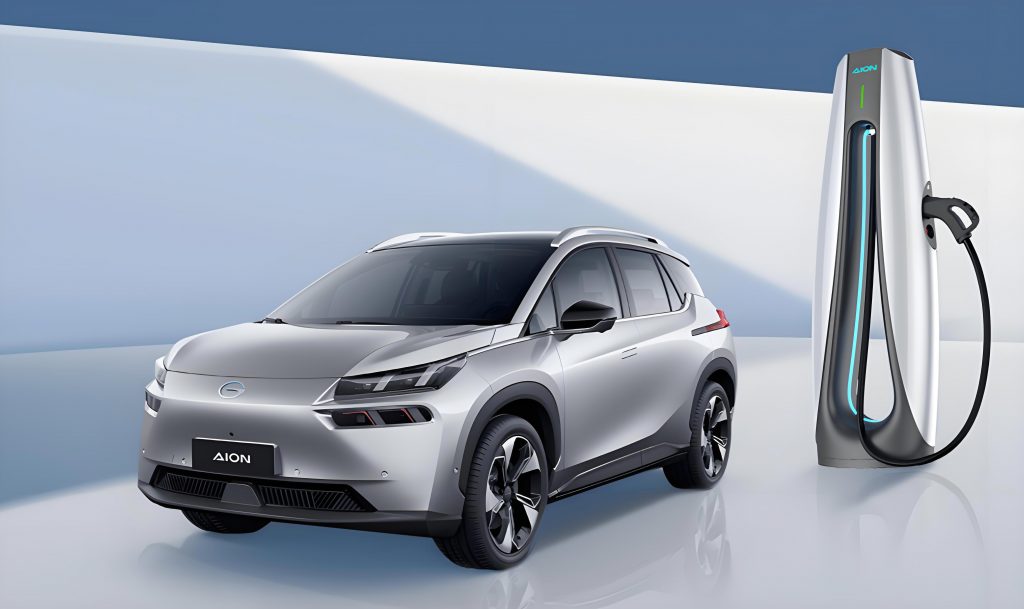
Empirical analysis of accident scenarios, based on NHTSA data from 2018-2023, shows that EV cars have a post-collision fire rate of 0.08‰ within 30 minutes, significantly lower than the 1.2‰ for traditional vehicles. Deep analysis indicates that 78% of thermal runaway cases in EV cars result from arc discharge due to damaged high-voltage wiring, primarily at speeds over 56 km/h. In contrast, traditional vehicle fires often stem from liquid fuel leakage, with side-impact leakage probabilities reaching 2.3‰, 1.8 times that of frontal collisions. The influence of battery pack design is notable; cell-to-pack technology reduces deformation by 42% at 50 km/h impacts but lowers the repairability index to 0.58, meaning battery replacement is necessary in 82% of cases, illustrating a paradox between lightweight design and repair costs.
| Scenario | EV Cars Fire Probability (‰) | Traditional Vehicles Fire Probability (‰) |
|---|---|---|
| Frontal Collision | 0.08 | 1.2 |
| Side Impact | 0.10 (Estimated) | 2.3 |
In extreme environments, EV cars demonstrate varied reliability. At -30°C, lithium iron phosphate batteries maintain 62% capacity, outperforming ternary lithium’s 53%, but charging acceptance drops more sharply. Field tests show that EV cars experience an average range reduction of 38% at -20°C, with 15% of energy loss attributed to battery heating systems. Traditional vehicles have a 18.7% cold-start failure rate at the same temperature, with failure rates increasing exponentially with age. Technological responses differ: EV cars use pulse self-heating to achieve 68% charging efficiency at -30°C, while traditional vehicles employ fuel line heaters to raise start success to 91%, albeit with a 3-5% fuel consumption increase.
Firefighting challenges highlight further distinctions; extinguishing battery fires in EV cars requires 9,000-26,000 liters of water, 2.4-6.8 times the 3,800 liters for traditional vehicles. Thermal imaging data reveals that thermal runaway propagation in battery packs occurs at 0.35 m/s, leading to a 34% re-ignition probability within 6 hours after suppression, compared to 12% for traditional vehicles due to secondary fuel leakage. Specialized extinguishing agents for lithium battery fires reduce suppression time to 18 minutes, a 60% efficiency gain, but current adoption rates remain below 12%, limiting emergency response effectiveness.
For reliability over the full lifecycle, manufacturing defects in EV cars primarily occur in battery module welding. Industry reports indicate that second-generation laser welding has reduced void rates to 0.25 PPM, a significant improvement from 12.7 PPM in 2018, though multi-tab designs increase weld points by 3-5 times, raising process complexity to an index of 2.8, 1.7 times that of traditional modules. In traditional vehicles, defects focus on engine block casting, with rates of 0.028% in modern platforms, a 42% decrease, but repair costs for block deformation reach ¥23,000, 2.8 times battery module replacement costs. EV cars show advantages in mechanical reliability, with electric drive system bearing wear rates at $0.003 \text{ ‰}$, only one-ninth that of crankshaft bearings in traditional vehicles.
Maintenance economics reveal a “high-value component replacement” pattern for EV cars, where high-voltage parts account for 68% of costs, and BMS software upgrades cause 24% of compatibility issues. System upgrades lead to battery capacity calibration errors exceeding 5% in 0.8% of cases, requiring specialized recalibration. Traditional vehicles face diagnostic challenges, as OBD-II protocols cover only 63% of fault codes, leaving 13% of engine issues undiagnosed. Annual maintenance costs average ¥2,300 for traditional vehicles, 2.7 times the ¥850 for EV cars, mainly due to oil changes and spark plug replacements. The cumulative cost over the lifecycle can be expressed as: $$ C_{\text{total}} = C_{\text{manufacturing}} + \int_{0}^{T} C_{\text{maintenance}}(t) \, dt $$ where $C_{\text{manufacturing}}$ is higher for EV cars, but $C_{\text{maintenance}}(t)$ is lower, leading to cost advantages after 120,000 km.
End-of-life risks for EV cars involve battery repurposing safety; mixing modules with cycle counts differing by over 500 (e.g., 500 vs. 1200) and capacity variances exceeding 15% reduce system efficiency by 28% and increase overcharge probability to 0.12%. Formal recycling rates are only 32%, with illegal dismantling causing electrolyte leakage incidents at 1.7 cases per 10,000 tons. Traditional vehicles pose environmental risks from waste oil; each vehicle produces 12-15 liters, with 41% illegally dumped, contaminating 38,000 km² of soil with heavy metals. EV cars show better sustainability, with rare earth material recovery rates at 92%, compared to 78% for precious metals in catalytic converters.
Standardization and policy analysis reveal regional divergences; Chinese standards like GB 38031-2020 emphasize mechanical safety, requiring 30-minute thermal runaway warnings, while EU regulations focus on lifecycle carbon tracking with 15-minute alerts. Traditional vehicle standards, such as UN R34, have not updated fuel leakage thresholds of 100 ml/min since 2014, lagging behind technological advances; empirical studies show a 0.8% critical leakage probability in 75 km/h side impacts. I recommend dynamic update mechanisms incorporating technology cycles.
For regulatory optimization, EV cars should adopt cross-brand battery health monitoring platforms with dynamic risk thresholds, mandate “black box” data uploads to national systems, and implement safety certifications for repurposed batteries. Traditional vehicles require mandatory fuel leakage monitors with 0.5 L/min auto-shutoff thresholds, enhanced OBD-III coverage to 95%, and blockchain-based waste oil tracing with deposit-return schemes. International harmonization under frameworks like WP.29 could use a mapping conversion coefficient (MTC = 0.83) for cross-technology risk comparisons.
In conclusion, EV cars shift risk sources from mechanical to electrical failures, with BMS software faults contributing 58% of incidents—31% from SOC estimation errors and 27% from CAN communication delays—while traditional vehicles remain dominated by fuel leakage (71%) and circuit aging (19%). Lifecycle costs show EV cars have higher initial manufacturing coefficients (1.38) but lower operational coefficients (0.62), becoming cheaper overall after 120,000 km. Regulatory gaps persist, with only 43% coverage for software-defined vehicles and missing key indicators in crash tests. Future research should compare solid-state and hydrogen fuel cell EV cars, develop digital twin-based reliability systems, and employ AI-driven risk预警 with federated learning for real-time updates. This study underscores the need for multidimensional safety frameworks to support the evolving landscape of EV cars.