
In recent years, the EV car industry has experienced rapid growth, alleviating the conflict between economic development and ecological sustainability to some extent. The progression of EV car manufacturers heavily relies on financial strategies, making it essential for companies to select optimal approaches to gain a competitive edge. This paper examines the financial strategy of Company B, a representative EV car producer, using financial data from 2019 to 2023. I analyze the company’s financing, investment, and dividend distribution strategies, and employ the financial strategy matrix to evaluate its positioning based on sales growth, sustainable growth rates, and Economic Value Added (EVA). Based on the findings, I propose optimization recommendations to support long-term healthy development for EV car companies like B.
The analysis is structured around key financial aspects, incorporating formulas and tables to summarize data. For instance, the sustainable growth rate (g) is calculated using the formula: $$ g = \text{Net Profit Margin} \times \text{Asset Turnover} \times \text{Equity Multiplier} \times \text{Retention Ratio} $$ where the retention ratio is derived from dividend policies. Similarly, EVA is computed as: $$ \text{EVA} = \text{NOPAT} – (\text{WACC} \times \text{Invested Capital}) $$ with NOPAT representing net operating profit after taxes and WACC as the weighted average cost of capital. These metrics help assess the company’s value creation and financial health in the dynamic EV car market.
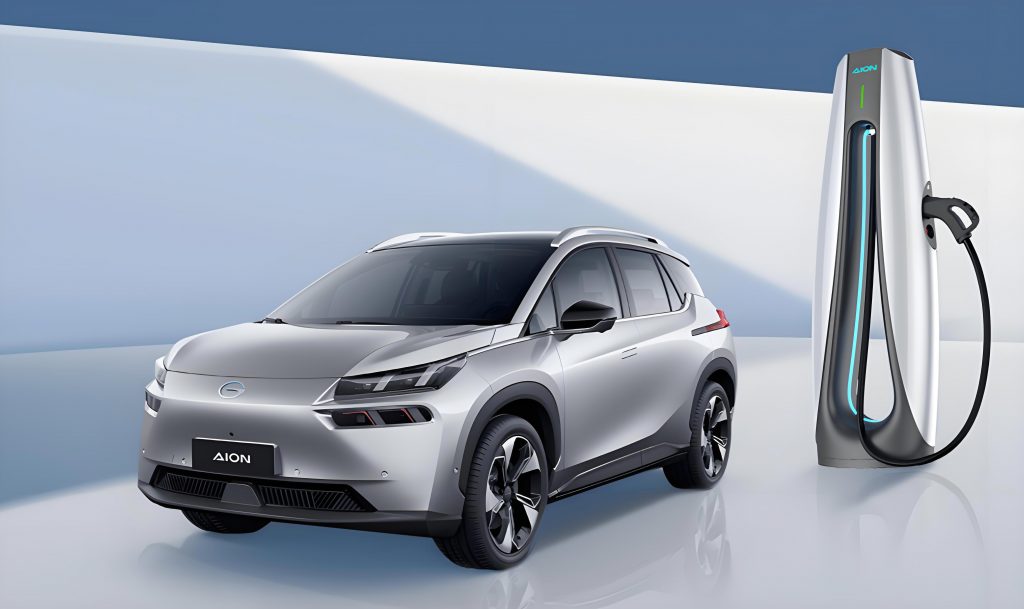
EV car manufacturers like Company B face unique challenges in scaling operations, and their financial strategies play a pivotal role in sustaining growth. In the following sections, I delve into detailed analyses of financing, investment, and dividend strategies, using empirical data to highlight trends and issues. The financial strategy matrix serves as a framework to identify quadrants of value creation and fund availability, guiding strategic adjustments for EV car firms aiming to lead the industry.
Analysis of Financing Strategy
From a financing perspective, Company B adopts a combined approach of internal and external funding. Internal financing primarily comes from retained earnings, which have shown a consistent upward trend, indicating ample funds for reinvestment in EV car projects. External financing involves debt and equity instruments to support investment initiatives. The reliance on debt financing is notable, as it generally offers lower costs compared to equity and minimizes dilution of control. However, this strategy increases financial risk due to higher leverage.
To quantify this, I present data on retained earnings and debt levels in Table 1. The retained earnings ratio reflects the proportion of profits reinvested, while the asset-liability ratio highlights debt dependency. For EV car companies, maintaining a balance is crucial to avoid excessive financial strain.
| Year | Retained Earnings Ratio (%) | Asset-Liability Ratio (%) |
|---|---|---|
| 2019 | 89.86 | 68.00 |
| 2020 | 90.00 | 67.94 |
| 2021 | 89.96 | 64.76 |
| 2022 | 80.00 | 75.42 |
| 2023 | 70.00 | 77.86 |
The data shows that retained earnings remained high initially but declined in later years, whereas the asset-liability ratio increased, peaking at 77.86% in 2023. This suggests that Company B relied more on debt to fuel expansion in the EV car sector, raising concerns about cost of capital and financial stability. The weighted average cost of capital (WACC) can be expressed as: $$ \text{WACC} = \frac{E}{V} \times r_e + \frac{D}{V} \times r_d \times (1 – T_c) $$ where E is equity, D is debt, V is total value, r_e is cost of equity, r_d is cost of debt, and T_c is corporate tax rate. For EV car manufacturers, a high WACC due to elevated debt can erode value, as seen in subsequent EVA calculations.
Analysis of Investment Strategy
Company B’s investment strategy is expansion-oriented, focusing on internal investments in fixed assets, construction in progress, intangible assets, and R&D expenses, complemented by external investments in related EV car businesses. Internal investments are critical for technological advancement and infrastructure development, essential for competing in the EV car market. External investments aim to secure supply chains and enhance integration of key components like batteries and control systems.
I summarize the internal investment components in Table 2, highlighting the annual trends. The surge in fixed assets and R&D underscores the company’s commitment to scaling EV car production and innovation.
| Year | Fixed Assets | Construction in Progress | Intangible Assets | R&D Expenses |
|---|---|---|---|---|
| 2019 | 50.0 | 20.0 | 10.0 | 15.0 |
| 2020 | 60.0 | 25.0 | 12.0 | 18.0 |
| 2021 | 75.0 | 30.0 | 15.0 | 22.0 |
| 2022 | 90.0 | 35.0 | 18.0 | 25.0 |
| 2023 | 110.0 | 40.0 | 20.0 | 30.0 |
External investments, particularly in equity stakes of EV car-related firms, have grown steadily, as shown in Table 3. This strategy helps mitigate risks like production shortages and boosts technological synergies, but it may dilute focus if not managed properly. The return on investment (ROI) for such activities can be modeled as: $$ \text{ROI} = \frac{\text{Net Gain from Investment}}{\text{Cost of Investment}} \times 100\% $$ For EV car companies, achieving high ROI is challenging due to capital-intensive nature and market volatility.
| Year | External Equity Investment | Year-on-Year Growth Rate (%) |
|---|---|---|
| 2019 | 5.0 | — |
| 2020 | 6.5 | 30.0 |
| 2021 | 8.0 | 23.1 |
| 2022 | 10.0 | 25.0 |
| 2023 | 12.0 | 20.0 |
The increasing investments align with the global expansion of EV car sales, but efficiency issues arise if resources are spread too thinly across multiple projects. As an analyst, I recommend prioritizing core EV car operations to maximize returns.
Analysis of Dividend Distribution Strategy
Company B’s dividend policy has evolved, initially including stock dividends but shifting to cash dividends with a low payout ratio after its A-share listing. This conservative approach reflects the company’s focus on retaining earnings for reinvestment in EV car development. The dividend payout ratio fluctuates based on profitability, increasing during high-earning periods to reward shareholders but decreasing when internal funding needs prevail.
I illustrate the dividend trends in Table 4, emphasizing the relationship with net profit. For EV car manufacturers, such flexibility can support growth but may undermine investor confidence if perceived as unstable.
| Year | Dividend Payout Ratio (%) | Net Profit (Billions of Currency) |
|---|---|---|
| 2019 | 10.0 | 5.0 |
| 2020 | 10.0 | 6.0 |
| 2021 | 10.0 | 4.0 |
| 2022 | 15.0 | 10.0 |
| 2023 | 20.0 | 12.0 |
The dividend policy can be assessed using the formula for payout ratio: $$ \text{Payout Ratio} = \frac{\text{Dividends}}{\text{Net Income}} \times 100\% $$ In the context of EV car companies, a stable policy helps attract long-term investors, whereas volatility might signal operational uncertainties. Company B’s strategy, while prudent, requires refinement to balance shareholder returns and growth needs in the competitive EV car sector.
Financial Strategy Matrix Analysis
The financial strategy matrix provides a quadrant-based evaluation of Company B’s position, combining sales growth, sustainable growth, and EVA metrics. The horizontal axis represents fund status (surplus or shortage), determined by the difference between sales growth rate and sustainable growth rate. The vertical axis indicates value creation, based on EVA. This framework is particularly relevant for EV car manufacturers navigating growth phases.
Horizontal Axis: Fund Status Analysis
I calculate the sales growth rate and sustainable growth rate for 2019-2023 to assess fund availability. The sustainable growth rate (g) is derived from financial ratios, as shown in Table 5. Sales growth reflects market performance, while sustainable growth indicates internal capacity without external financing.
| Year | Sales Growth Rate (%) | Net Profit Margin (%) | Asset Turnover (%) | Equity Multiplier | Retention Ratio (%) | Sustainable Growth Rate (%) | Sales Growth – Sustainable Growth (%) | Fund Status |
|---|---|---|---|---|---|---|---|---|
| 2019 | -1.78 | 1.66 | 65.47 | 3.13 | 89.86 | 3.15 | -4.93 | Surplus |
| 2020 | 22.60 | 3.84 | 78.96 | 3.12 | 90.00 | 9.31 | 13.29 | Shortage |
| 2021 | 38.02 | 1.84 | 87.01 | 2.84 | 89.96 | 4.26 | 33.76 | Shortage |
| 2022 | 96.20 | 4.18 | 107.41 | 4.07 | 80.00 | 17.12 | 79.08 | Shortage |
| 2023 | 42.04 | 5.20 | 102.66 | 4.52 | 70.00 | 20.32 | 21.72 | Shortage |
The data reveals that from 2020 onwards, sales growth exceeded sustainable growth, leading to fund shortages. This is common in fast-growing EV car companies where expansion outpaces internal funding. The sustainable growth formula: $$ g = \text{Net Profit Margin} \times \text{Asset Turnover} \times \text{Equity Multiplier} \times \text{Retention Ratio} $$ highlights how operational efficiency and financial policies influence growth limits. For instance, the decline in retention ratio in 2022-2023 contributed to higher sustainable growth but also increased reliance on external funds.
Vertical Axis: Value Creation Analysis
Value creation is measured using EVA, which subtracts the cost of capital from operating profits. Table 6 presents NOPAT, invested capital, WACC, and EVA for Company B. Positive EVA indicates value creation, while negative EVA suggests destruction, crucial for assessing the performance of EV car investments.
| Year | NOPAT (Billions of Currency) | Invested Capital (Billions of Currency) | WACC (%) | EVA (Billions of Currency) |
|---|---|---|---|---|
| 2019 | 98.37 | 1216.87 | 4.38 | 45.07 |
| 2020 | 124.60 | 1093.66 | 4.77 | 72.43 |
| 2021 | 73.64 | 1174.44 | 6.12 | 1.76 |
| 2022 | 191.64 | 957.65 | 4.33 | 150.17 |
| 2023 | 313.62 | 2304.95 | 3.82 | 225.57 |
EVA fluctuated, with a significant drop in 2021 due to reduced profitability and higher WACC, possibly from aggressive pricing and rising material costs in the EV car industry. The recovery in 2022-2023, driven by increased NOPAT and lower WACC, underscores improved operational efficiency. The EVA formula: $$ \text{EVA} = \text{NOPAT} – (\text{WACC} \times \text{Invested Capital}) $$ emphasizes the importance of managing capital costs and investment returns for EV car manufacturers aiming to sustain value.
Quadrant Positioning in Financial Strategy Matrix
Integrating the horizontal and vertical analyses, I map Company B’s quadrant positions in Table 7. The matrix categorizes companies into four quadrants: I (value-creating, fund-shortage), II (value-creating, fund-surplus), III (value-destroying, fund-surplus), and IV (value-destroying, fund-shortage). This helps identify strategic priorities for EV car firms.
| Year | Sales Growth – Sustainable Growth (%) | EVA (Billions of Currency) | Quadrant |
|---|---|---|---|
| 2019 | -4.93 | 45.07 | II |
| 2020 | 13.29 | 72.43 | I |
| 2021 | 33.76 | 1.76 | I |
| 2022 | 79.08 | 150.17 | I |
| 2023 | 21.72 | 225.57 | I |
In 2019, Company B was in Quadrant II (value-creating with fund surplus), attributed to lower sales growth amid industry challenges like subsidy reductions for EV cars. From 2020 to 2023, it consistently occupied Quadrant I (value-creating with fund shortage), indicating rapid growth that outstripped internal funds. This positioning is typical of expanding EV car manufacturers that leverage excess cash for growth but face potential liquidity constraints. Strategic responses include optimizing financing and investment to maintain value creation while addressing fund gaps.
Issues in Company B’s Financial Strategy
First, the capital structure is imbalanced, with a high reliance on debt financing increasing financial risk. The rising asset-liability ratio, as shown in Table 1, elevates the cost of capital and vulnerability to economic downturns. For EV car companies, which require substantial capital for R&D and production, excessive debt can strain cash flows and hinder flexibility. The debt-to-equity ratio, calculated as: $$ \text{Debt-to-Equity} = \frac{\text{Total Debt}}{\text{Total Equity}} $$ has increased over time, signaling potential over-leverage. Moreover, the neglect of equity financing may limit funding options and increase dependence on volatile debt markets.
Second, investment efficiency is suboptimal due to resource dispersion across multiple ventures. While Company B invests heavily in EV car technologies and external partnerships, the broad scope dilutes focus and may reduce overall returns. The return on assets (ROA) formula: $$ \text{ROA} = \frac{\text{Net Income}}{\text{Total Assets}} \times 100\% $$ could decline if investments do not generate sufficient profits. In the EV car industry, where innovation is key, concentrating resources on core areas like battery technology and production scalability is essential to avoid wasted capital and maintain competitive advantage.
Third, the dividend distribution policy is unstable, fluctuating with profitability. This inconsistency may erode investor trust and affect the company’s reputation in the EV car market. A stable dividend policy, aligned with long-term growth, can enhance shareholder loyalty and support stock performance. The irregular payouts, as seen in Table 4, reflect a reactive approach rather than a strategic framework, potentially leading to perceptions of financial unpredictability among stakeholders focused on EV car investments.
Optimization Strategies for Financial Strategy
To address these issues, I propose several optimization strategies tailored for EV car manufacturers like Company B. First, optimizing the capital structure by increasing the proportion of internal financing and diversifying equity sources can reduce leverage and financial risk. For instance, utilizing retained earnings more effectively and issuing new shares or conducting rights offerings can lower the debt burden. The target capital structure can be modeled using the formula: $$ \text{Optimal Debt Ratio} = \frac{\text{Tax Shield Benefits}}{\text{Financial Distress Costs}} $$ balancing tax advantages with bankruptcy risks. Additionally, shifting towards long-term debt instruments can alleviate short-term repayment pressures, ensuring stable cash flow for EV car operations.
Second, clarifying strategic direction and optimizing resource allocation are vital. Company B should prioritize core EV car activities, such as R&D and production, by setting clear investment priorities and establishing rigorous project evaluation mechanisms. The net present value (NPV) formula: $$ \text{NPV} = \sum \frac{C_t}{(1 + r)^t} – C_0 $$ where C_t is cash flow at time t, r is discount rate, and C_0 is initial investment, can be used to assess project viability. By focusing on high-NPV initiatives in the EV car sector, the company can improve ROI and avoid resource wastage on non-core ventures. This approach supports sustained innovation and market leadership in the competitive EV car landscape.
Third, implementing a stable dividend policy can enhance investor relations and financial predictability. Company B should base dividend payouts on consistent profitability metrics and long-term growth plans, rather than short-term fluctuations. For example, adopting a residual dividend policy, where dividends are paid from earnings after funding all positive-NPV projects, aligns with the needs of EV car companies in growth phases. The formula: $$ \text{Dividends} = \text{Net Income} – \text{Retained Earnings for Investment} $$ ensures that shareholder returns do not compromise expansion efforts. By communicating a clear policy, the company can build trust and attract investors interested in the evolving EV car market.
Conclusion
In summary, the financial strategy of Company B, as a leading EV car manufacturer, demonstrates both strengths and areas for improvement. The analysis of financing, investment, and dividend strategies, combined with the financial strategy matrix, reveals a pattern of value creation accompanied by fund shortages. By optimizing capital structure, refining investment focus, and stabilizing dividend policies, Company B can enhance its financial resilience and support long-term growth in the dynamic EV car industry. These recommendations are applicable to other EV car firms seeking to balance expansion with financial health, ultimately contributing to sustainable development in the sector.
The EV car market continues to evolve, and financial strategies must adapt to technological advancements and regulatory changes. Future research could explore dynamic modeling of financial ratios or comparative studies across multiple EV car companies to identify best practices. As an analyst, I emphasize the importance of continuous evaluation and adjustment to navigate the complexities of the EV car ecosystem.